IPC-CC-830B.pdf - 第11页
3-1 are satisfied. T ests shall be performed in accordance with the test methods specified using test specimens pre- pared in compliance with 4.7 at a frequency defined in 4.3.3. Pertinent results shall be compared with the…

2.4.5.1 Flexibility
2.5.7.1 Dielectric Withstanding Voltage - Polymeric
Conformal Coating
2.6.1.1 Fungus Resistance - Conformal Coating
2.6.3.4 Moisture and Insulation Resistance - Conformal
Coating
2.6.7.1 Thermal Shock - Conformal Coating
2.6.11.1 Hydrolytic Stability - Conformal Coating
IPC-4101 Specification for Base Materials for Rigid and
Multilayer Printed Boards
IPC-6012 Sectional Standard for Qualification of Rigid
Printed Boards
2.2 Government
3
MIL-I-46058 Insulating Compound, Electrical (For Coating
Printed Circuit Assemblies)
MIL-STD-1188 Commercial Packaging of Suppliers and
Equipment
FED-STD-141 Paint, Varnish, Lacquer and Related Materi-
als: Methods of Inspection, Sampling and Testing, Method
4061 and Method 2012
2.3 American Society for Testing of Materials
4
ASTM-D-1005 Measurement of Dry Film Thickness of
Organic Coatings
ASTM-D-1084 Viscosity of Adhesives, Tests for
2.4 Underwriters Laboratories
5
UL 94 Flammability
2.5 ANSI
6
NCSL Z540-1 Calibration Calibration Laboratories and
Measuring and Test Equipment
2.6 ISO
7
ISO 10012-1 Quality Assurance Requirements for Measur-
ing Equipment - Part 1: Metrological Confirmation System
for Measuring Equipment
3 REQUIREMENTS
3.1 General Requirements
3.1.1 Terms and Definitions
Definitions of terminology
applicable to this standard shall be in accordance with IPC-
T-50.
3.1.2 Conflict In the event of a conflict between the
requirements of this standard and procurement document,
the procurement document shall take precedence. In the
event of a conflict between the test parameters of this stan-
dard and the test methods, or a conflict between the
requirements in this standard and the applicable documents
listed in Section 2, this standard shall take precedence.
3.2 Inspection and Testing Requirements Groups of
inspection and test listed in Table 3-1 shall be performed
to verify the ability of a conformal coating product to meet
the qualification and/or conformance requirements of this
standard using the test methods described herein.
3.2.1 Qualification Inspection and Testing Qualifica-
tion to this standard is achieved when a conformal coating
product meets the requirements listed in Column A of Table
3-1. Tests shall be performed in accordance with the test
methods specified using test specimens prepared in compli-
ance with 4.7. A qualification inspection report shall be
completed in accordance with 4.9 and relevant test data
retained as substantiation for the qualification. An example
of qualification inspection report format is shown in
Appendix A.
When a primer material is used in conjuction with a coat-
ing in qualification testing, the primer used will be docu-
mented in the qualification report.
Conformal coatings presently qualified to MIL-I-46058
shall also be recognized as meeting the requirements of
IPC-CC-830. These products currently qualified or in the
process of being requalified to MIL-I-46058 prior to the
publish date of this document will also be recognized as
meeting the requirements of this document.
3.2.2 Qualification Retention Inspection and Testing
Qualification to this standard can be retained when a con-
formal coating product meets the requirements listed in
Column B of Table 3-1. Tests shall be performed in accor-
dance with the test methods specified using test specimens
prepared in compliance with 4.7 at a frequency defined in
4.3.2. Pertinent test results shall be compared with the
results of the original qualification testing. An inspection
report shall be completed in accordance with 4.9 and rel-
evant test data retained as substantiation for the qualifica-
tion retention. An example of the qualification retention
inspection report format is shown in Appendix B.
3.2.3 Quality Conformance Inspection Testing The
consistency in quality of a conformal coating product is
verified when the requirements listed in Column C of Table
3. http://astimage.daps.dla.mil/quicksearch/
4. www.astm.org
5. www.ul.com
6. www.ansi.org
7. www.iso.org
IPC-CC-830B August 2002
2
Copyright Association Connecting Electronics Industries
Provided by IHS under license with IPC
Not for Resale
No reproduction or networking permitted without license from IHS
--```-`-`,,`,,`,`,,`---
3-1 are satisfied. Tests shall be performed in accordance
with the test methods specified using test specimens pre-
pared in compliance with 4.7 at a frequency defined in
4.3.3. Pertinent results shall be compared with the results
of the original qualification testing. An inspection report
shall be completed in accordance with 4.9 and relevant test
data retained as substantiation for the quality conformance.
An example of quality conformance inspection report is
shown in Appendix C.
Conformal coating quality conformance inspection is gen-
erally performed by the coating manufacturer, but may
with appropriate agreement be used as an incoming mate-
rial inspection procedure by the customers.
3.2.4 Additional Testing Additional testing on different
test vehicles, at different test frequency or conditions, or
for properties outside the scope of this standard may be
agreed upon between the manufacturers and the customers.
It shall not be used as a substitute for any testing require-
ment specified herein.
3.3 Materials Requirements
3.3.1 Materials
The conformal coating materials shall
be free of deleterious substances.
3.3.2 Shelf Life The conformal coating shall meet all
requirements of this standard within the shelf life and stor-
age conditions specified by the conformal coating manufac-
turer. Shelf life of coating with two or more components
shall be that of the component with the shortest shelf life.
The tests shall consist of Insulation Resistance (IR) and
Dielectric Withstanding Voltage (DWV).
3.3.3 Cure The conformal coating shall exhibit all
desired properties when applied and cured using the proce-
dures specified by the conformal coating manufacturer.
When coating materials are tested as specified, the coating
material shall be cured to full hardness in the time and
temperature recommended by the supplier.
3.4 Chemical Requirements
3.4.1 Fourier Transform Infrared Spectroscopy Test
(FTIR)
Fourier Transform Infrared Spectroscopy (FTIR)
test shall be performed in accordance with IPC-TM-650,
Test Method 2.3.42, or equivalent, as part of data gathering
for the conformal coating during qualification inspection.
When used in qualification retention inspection, FTIR
spectra shall be compared to those obtained during qualifi-
cation inspection. Absorption peaks completely missing or
additional peaks signify change in chemistry present within
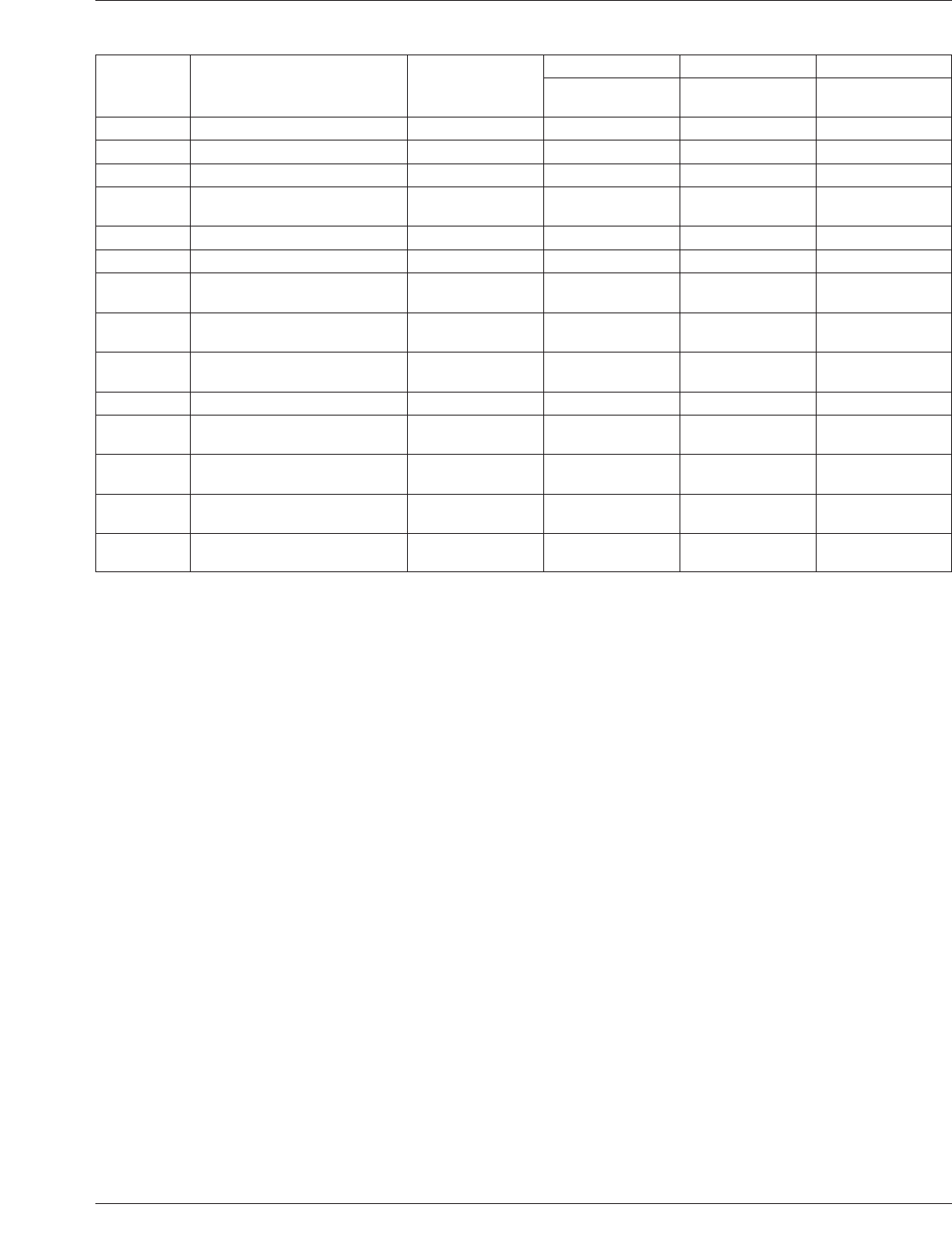
Table 3-1 Requirements for Qualification, Qualification Retention
and Quality Conformance of Conformal Coating Products
Paragraph Requirement Test Method
Column A Column B Column C
Qualification
Retention of
Qualification
Quality
Conformance
3.3.1 Materials Visual X X X
3.3.2 Shelf Life — X
3.3.3 Cure — X X X
3.4.1 Fourier Transform Infrared
Spectroscopy Test (FTIR)
IPC-TM-650
2.3.42
XX
3.5.1 Viscosity ASTM D-1084 X X
3.5.2 Appearance Visual X X X
3.5.3 Fluorescence Visual under
UV light
XXX
3.5.4 Fungus Resistance IPC-TM-650
2.6.1.1
XX
3.5.5 Flexibility IPC-TM-650
2.4.5.1
X
3.5.6 Flammability UL 94 HB X X
3.6.1 Dielectric Withstanding Voltage IPC-TM-650
2.5.7.1
X
3.7.1 Moisture and Insulation
Resistance
IPC-TM-650
2.6.3.4
X* X*
3.7.2 Thermal Shock IPC-TM-650
2.6.7.1
X
3.7.3 Temperature and Humidity
Aging (Hydrolytic Stability)
IPC-TM-650
2.6.11.1
Required for Class
B Products Only
X Denotes inspection and test required for all classes.
* Denotes requirement is different for Class A and Class B. See 3.7.1 for Class A and B requirements.
August 2002 IPC-CC-830B
3
Copyright Association Connecting Electronics Industries
Provided by IHS under license with IPC
Not for Resale
No reproduction or networking permitted without license from IHS
--```-`-`,,`,,`,`,,`---

the conformal coating product. A change in chemistry as
detected by FTIR may or may not constitute a product
change. See 4.4 for the definition of product change.
3.5 Physical Requirements
3.5.1 Viscosity
Viscosity of uncured conformal coating
materials, except type xy, shall be measured per ASTM
D-1084 and the test conditions shall be defined by the
coating manufacturer. Viscosity shall be measured as part
of data gathering for the conformal coating during qualifi-
cation inspection. This viscosity data shall be used by the
manufacturer to pre-determine an acceptable viscosity
range for quality conformance inspection.
3.5.2 Appearance Appearance of conformal coating on
the test vehicle specified herein shall be observed visually
with the aid of a 3-diopter (approximately 1.75x) minimum
magnification. Referee inspections shall be accomplished
at 10x magnification.
The uncured conformal coating materials shall be free of
deleterious substances, bubbles, pinholes, whitish spots,
blistering, wrinkling, cracking, and peeling. The cured con-
formal coating shall be smooth, homogenous, transparent
or translucent, and tack-free when observed at ambient
conditions. In addition, the conformal coating on the test
vehicles shall have no bubbles, pinholes, blisters, cracking,
crazing, peeling, wrinkles, mealing, or evidence of rever-
sion, or cause a corrosion.
3.5.3 Fluorescence Conformal coating materials, except
type XY, shall be fluorescent by ultra-violet illumination
(black light).
3.5.4 Fungus Resistance The resistance of the confor-
mal coating material to support or be attacked by biologi-
cal growth shall be determined in accordance with IPC-
TM-650, Test Method 2.6.1.1.
The cured conformal coating shall not contribute to or be
attacked by biological growth.
3.5.5 Flexibility Tin panels prepared in accordance with
FED-STD-141, Method 2012 shall be used as test vehicles
for flexibility testing. When the coated panels are tested in
accordance with IPC-TM-650, Test Method 2.4.5.1, there
shall be no evidence of cracking or crazing on the cured
conformal coating.
3.5.6 Flammability Flammability testing of the cured
conformal coating shall be performed in accordance with
the detailed requirements of UL 94 HB (Horizontal Burn-
ing Test) test methods.
The cured conformal coating shall meet UL 94 HB (Hori-
zontal Burning Test) requirements:
a. Not have a burning rate exceeding 40 mm [1.57 in] per
minute over a 75 mm [2.95 in] span for specimens hav-
ing a thickness of 3.0 to 13 mm [0.118 to 0.512 in], or
b. Not have a burning rate exceeding 75 mm [2.95 in] per
minute over a 75 mm [2.95 in] span for specimens hav-
ing a thickness less than 3.0 mm [0.118 in], or
c. Cease to burn before the 100 mm [3.937 in] reference
mark.
3.6 Electrical Requirements
3.6.1 Dielectric Withstanding Voltage (DWV)
Dielectric
withstanding voltage of the cured conformal coating shall
be measured in accordance with IPC-TM-650, Test Method
2.5.7.1.
There shall be no disruptive discharge evidenced by flash-
over (surface discharge), sparkover (air discharge) or
breakdown (puncture discharge). The leakage rate shall not
exceed 10 microamperes.
3.7 Environmental Requirements
3.7.1 Moisture and Insulation Resistance
The confor-
mal coating materials shall be tested in accordance with
IPC-TM-650, Test Method 2.6.3.4. After the completion of
temperature and humidity testing cycles, the panels shall
be maintained at the reference conditions at a temperature
of 25 ± 5°C [77 ± 9°F] and a relative humidity of 50 ± 5%,
for a period of 24 hours.
The minimum insulation resistance shall be 100 MΩ for
Class A and 500 MΩ for Class B products during humid-
ity, after humidity and one to two hours at reference con-
ditions, and after 24 hours at reference conditions.
Appearance shall be assessed and dielectric withstanding
voltage shall be tested and meet the requirements as speci-
fied in 3.5.2 and 3.6.1 respectively; after 24 hours at the
reference conditions.
3.7.2 Thermal Shock Conformal coating products shall
be tested in accordance with IPC-TM-650, Test Method
2.6.7.1, with test conditions of -65°C [-85°F] to 125°C
[257°F], 100 cycles.
After the temperature cycles are completed, the coated test
vehicles shall be maintained at the reference conditions at
a temperature of 25 ± 5°C [77 ± 9°F] and a relative humid-
ity of 50 ± 5% for a period of 24 hours; after which appear-
ance shall be assessed and dielectric withstanding voltage
shall be tested and meet the requirements as specified in
3.5.2 and 3.6.1 respectively.
3.7.3 Temperature and Humidity Aging (Hydrolytic Sta-
bility)
Class B conformal coating products shall be tested
in accordance with IPC-TM-650, Test Method 2.6.11.1.
IPC-CC-830B August 2002
4
Copyright Association Connecting Electronics Industries
Provided by IHS under license with IPC
Not for Resale
No reproduction or networking permitted without license from IHS
--```-`-`,,`,,`,`,,`---