KE-3010_SPE_EN.pdf - 第38页
- 33 - 5.2.10. A pplicabi lity to long PWB (factor y - set option) The P W B size in the X direction can be extended by P W B twice - feed transport. T his permits producing long P W Bs to be used for LED lighting. W ith…
- 32 -
5.2.9. High resolution camera (Factory-Set Option)
When a line unit that permits switching between reflection and transmission recognition and
switching among wavelengths (red, blue, and green) is combined, fine-pitch components
(leads and balls) that cannot be recognized by standard camera can be recognized.
D
imensions of applicable components
(Unit: mm)
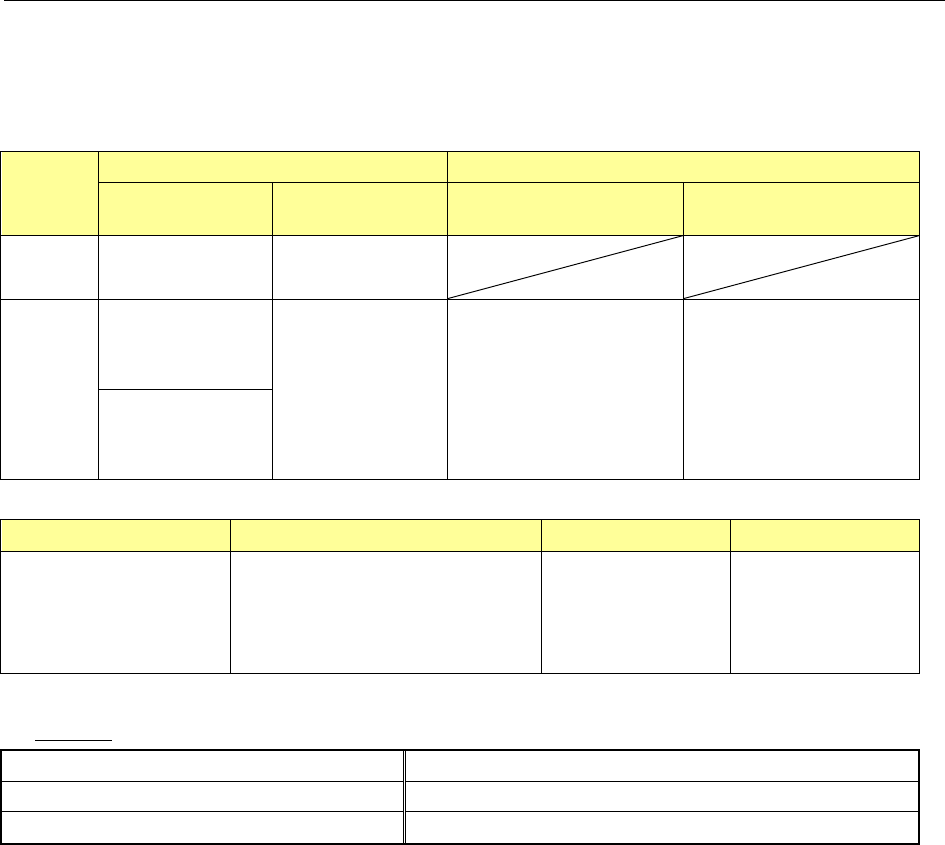
VCS batch recognition VCS Divided-image recognition
Reflection
lighting
Pass-through
lighting
Reflection lighting Pass-through lighting
MNVC
Min:1.0×0.5
Max:□20.0
Min:□3.0
Max:□6.0
IC head
KE-3020V
Min:□3.0
Max:□24.0
Min:□3.0
Max:□24.0
Maximum:
50×150(1x3 division)
or □74(2x2 division)
Maximum:
24×72 (1x3 division)
or □48(2x2 division)
KE-3020VR
Min:1.0×0.5
Max:□24.0
* Even though the dimensions exceed □ 20 mm, 24 mm×11 mm is acceptable.
Lead pitch Component height Ball pitch Ball diameter
0.2~2.54
SC specification 0.08~6.0
NC specification 0.08~12.0
HC specification 0.08~20.0
EC specification 0.08~25.0
0.25~2.0 φ0.10~φ0.63
Lighting
Lead components reflection lighting Coaxial, downward and sideward lighting via red LEDs
Area array components sideward lighting Ball sideward lighting via blue LEDs
Pass-through lighting Profile pass-through lighting via green LEDs
* The quantity of light for lighting can be set for each component.
- 33 -
5.2.10. Applicability to long PWB (factory-set option)
The PWB size in the X direction can be extended by PWB twice-feed transport. This
permits producing long PWBs to be used for LED lighting. With the PWB exceeding the
single-feed size of the maximum size in the X direction shown in the following table,
twice-feed transport is performed.
Single-feed
Twice-feed
M PWB
330×250mm
650x250mm
L PWB
410×360mm
800×360mm
L-Wide PWB
510×360mm
1010×360mm
XL PWB
610×560mm
1210×560mm
Re
strictions
- The IN buffer/OUT buffer function is disabled.
- When MTC is used, a limitation is put on the maximum PWB size in the X direction that
can be transported.
5.2.11. Solder recognition lighting (factory-set option)
When there is no BOC mark on a PWB or circuit, the solder print is recognized as a BOC
mark. When executing twice-feed transport of long PWBs, the placement pad for which
solder print is performed can be used as a BOC mark in placement in a range without any
BOC mark.
*
I
n the case of the solder print, the shape is not clear as a mark, so that satisfactory
placement accuracy may not be obtained.
5.2.12. Residual number-of-components control function (option)
This function controls product lots of placement components (LED components, etc.). The
function checks whether the necessary number of placement components exists in the
feeder in carrying in PWBs without mixing different-lot components into the same PWB. If
the number is less than the necessary number, an alarm is displayed before placement is
started.
5.2.13. Auto PWB width adjusting function (Automatic Board Adjustment/AWC
factory-set option)
This function can adjust the rail width automatically according to the PWB width.
The minimum value of applicable PWB dimensions is 50mm x 50 mm.

- 34 -
5.2.14. Coplanarity (Factory-Set Option)
By moving a target component that is to be measured at constant speed in the direction
(Y-direction) perpendicular to the laser line (X-direction), the camera shoots the diffuse
reflection of laser beam emitted to the component and the device creates 3-D image to
measure displacement without touching the component. This device determines if a
component is appropriate or not based on the 3-D image obtained from the component
information sent by the mounter in advance (that is, checks the height of the electrode).
Accordingly, lead bend in the up/down direction of a lead component or a nick of a ball
component can be recognized, thereby preventing a contact fault between a PWB and a
component.
Colinearity check:
The colinearity check inspects “how much a side on which leads are located is bent in the
up/down directions.”
Coplanarity check:
This check can check coplanarity (uniformity of the bottom of a terminal) of a component with
the three-point method (JEDEC standard: JESD22-B108A) or the method of least squares
(JEDEC standard: JESD22-B108A).
A
pplicable components
- Components to be recognized with a VCS only.
- BGA, FBGA, connector, and lead components (SOP and QFP) whose respective pitch
is the same and whose respective lead width is the same
*
1. If you do not enter the correct lead width and electrode size of a component whose
lead width is less than 0.3 mm on the “Component” data screen of the Program Editor,
the system may not be able to detect its terminal correctly.
*2. Component height:SC specification: 6 mm, NC specification: 12 .0 mm
HC specification: 20.0mm, EC specification:25.0mm
A product whose laser class is 3b is used in the coplanarity sensor.
- K
ey switch
The front section of the machine is equipped with a key switch. Only when the key
switch is set to ON, you can use the coplanarity function.
- Cover open
Regardless of the key switch state, any laser is not emitted when the cover opens.
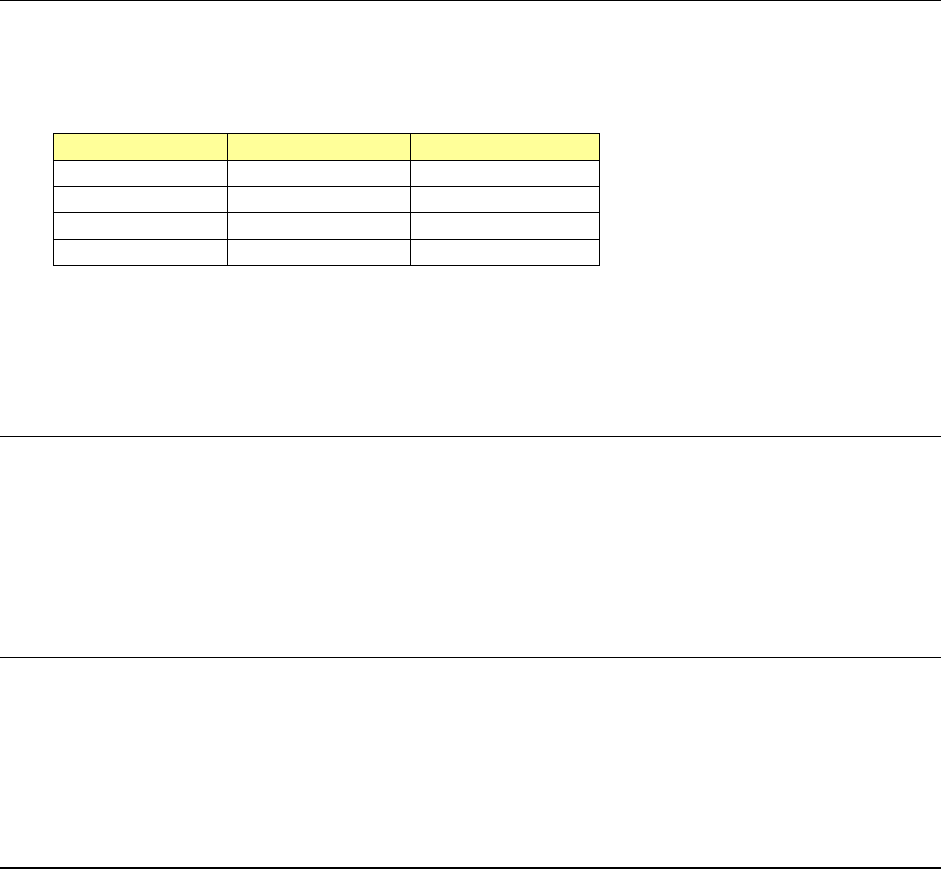
Item
Dimensions
Lead
component
Pitch 0.4 mm or more
Lead width
*1
0.18 mm or more
Lead length 0.5 mm or more
Component size 48 mm×150 mm or less
Ball
component
Pitch 0.8 mm or more
Ball diameter 0.4 mm or more
Component size 48 mm×150 mm or less