00198574-01_Process_Foundation_DEK_Micron_EN.pdf - 第14页
4 Process Hardware 4.1 Board (Substrate) 14 Process Foundation DEK Micron-Series 12/2017 Washed Board Procedure ● Check washed boards thoroughly to ensure that no stray solder particles remain either on the surface or in…
4 Process Hardware
4.1 Board (Substrate)
Process Foundation DEK Micron-Series 12/2017 13
4 Process Hardware
The hardware used is dictated by the process design. This will specify the print material and the
design of the stencil, tooling, etc. Just as important as getting the design right is ensuring that the
resulting hardware is correctly used and maintained.
This objective reviews each of the main elements of process hardware and offers advice on their
use and maintenance. This includes:
●
Board (Substrate)
●
Print Material
●
Tooling
●
Squeegees
●
Stencil
4.1 Board (Substrate)
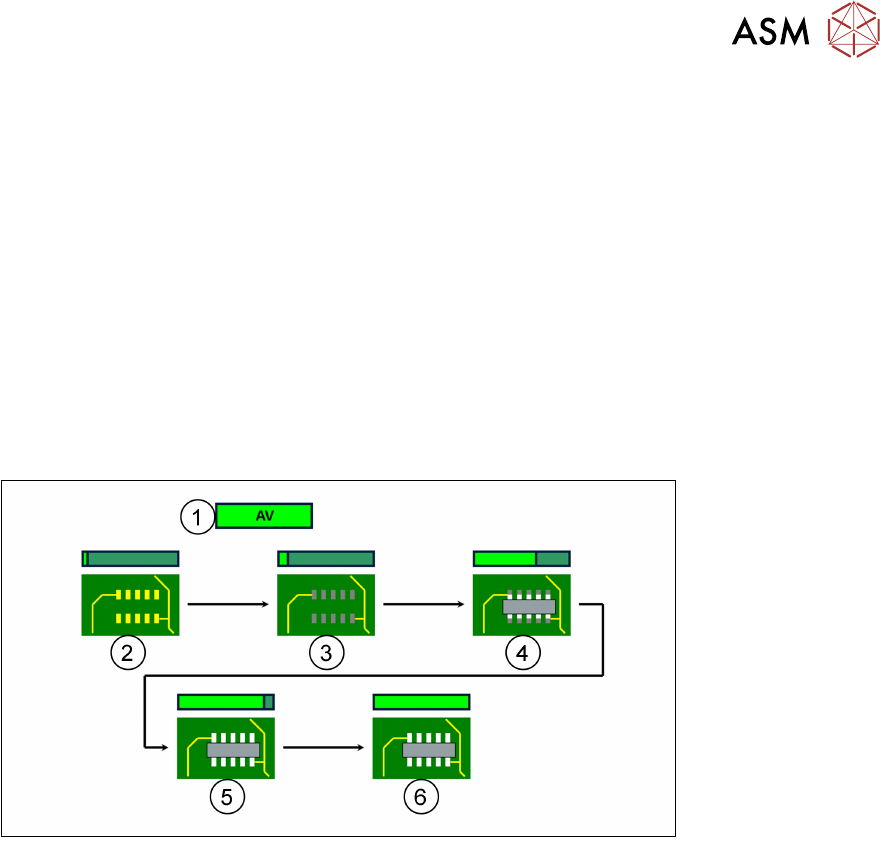
1. Added Value
2. Bare board
3. Print
4. Place
5. Reflow
6. Test
Storage/ Unpacking
●
Ideally boards should be stored in a temperature and humidity controlled environment
●
Boards should be unpacked just in time for production
●
Unpacking in small batches will further minimize the risk of contamination
Cleanliness and Condition
●
Boards should be unpacked and handled in a clean area free form debris
●
Reject boards if there are any noticeable fibres or dust on the board surface as these can
adhere to the underside of the stencil and block the apertures
●
Check board for damage to its surface, edges and fiducials
●
Check board for warpage. Warped boards can cause print problems – a possible solution is to
increase print pressure to flatten the board
Handling
●
Boards should be handled by their edges and as little as possible
●
Cotton gloves should be worn when handling boards
Labelling
●
Bar code labels, stickers, etc. can create a print gap and affect the print quality and height
●
Position labels away from components (especially fine pitch)
●
If possible, apply labels after the printer stage
4 Process Hardware
4.1 Board (Substrate)
14 Process Foundation DEK Micron-Series 12/2017
Washed Board Procedure
●
Check washed boards thoroughly to ensure that no stray solder particles remain either on the
surface or in via holes – this is especially important if there is to be no further cleaning after
reflow
●
Consider creating a procedure for running washed boards: i.e. to run them together at the end
of the batch and use 100% inspection
Substrate Problems
●
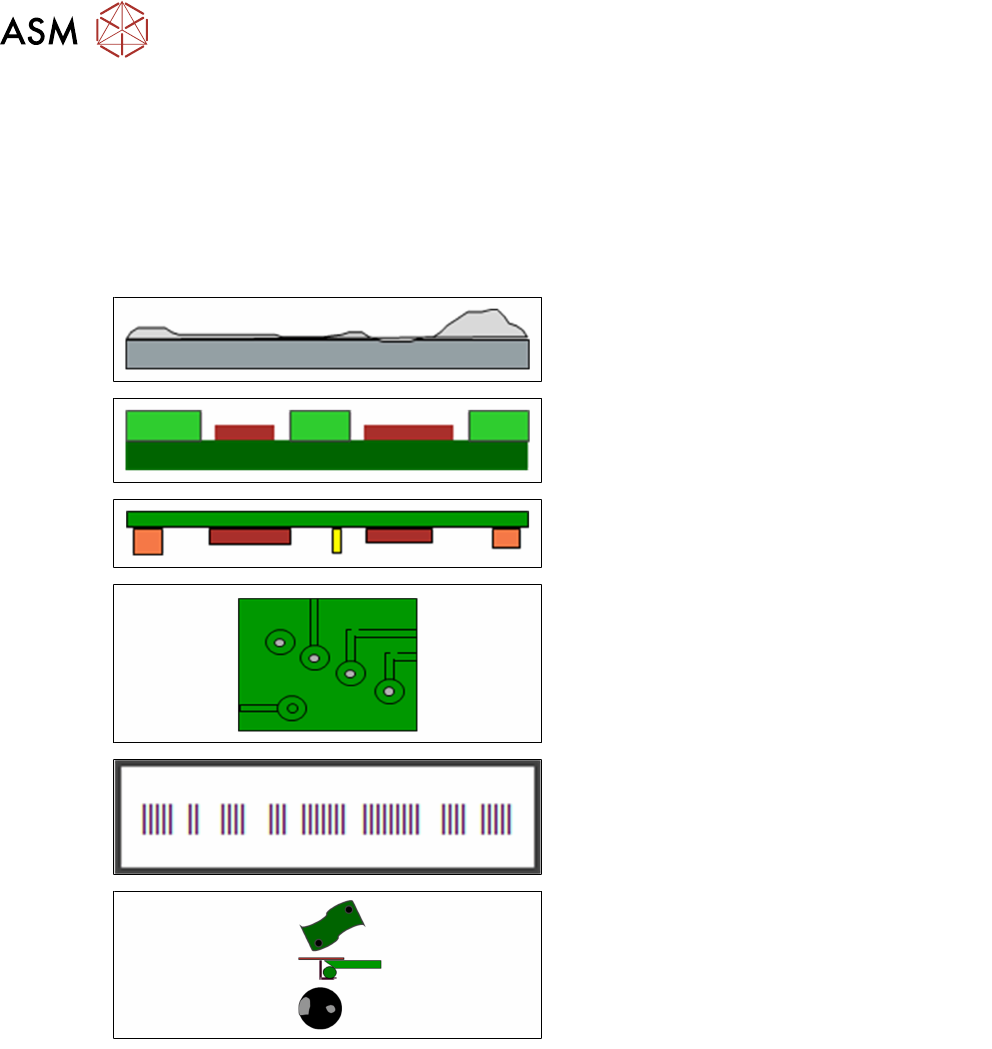
Uneven pad surface
●
Solder resist too height
●
Underside components restricts tooling
●
Material in via holes (washed boards)
●
Barcode labels
●
Warping and stretch
●
Chamfered edges
●
Fiducial quality
●
Colour changes, surface finish
Exercise
If excessive print volumes were observed in your production what problems might there be with the
boards that could be causing it?
……………………………………………………………………………………………………………
……………………………………………………………………………………………………………
……………………………………………………………………………………………………………
……………………………………………………………………………………………………………
4 Process Hardware
4.2 Tooling
Process Foundation DEK Micron-Series 12/2017 15
4.2 Tooling
The importance of good board support during the print stroke cannot be over- emphasized.
Inappropriate, poorly designed or badly maintained tooling can be a contributing factor to every
type of print defect. Tooling should offer a flat, solid support, and should support the board to
ensure good print definitions across the board.
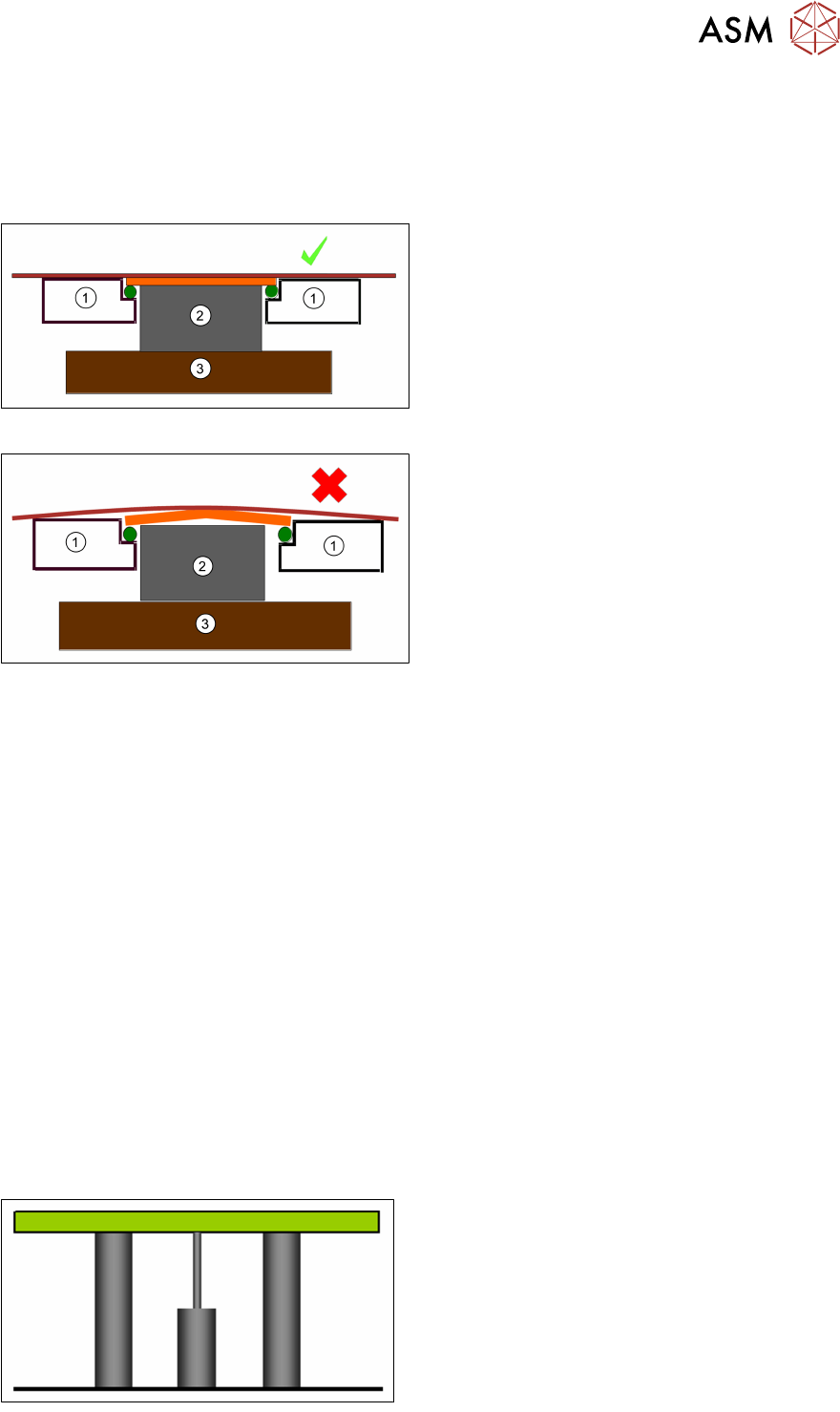
Good
1. Rail
2. Tool Block
3. Table
The secret to good printing is to have everything flat and parallel.
Bad
1. Rail
2. Tooling Block
3. Table
Check
●
Cleanliness of table
●
Cleanliness of pins
●
Board clamps for damage
●
Transport belt condition
●
Board thickness
●
Board warpage
●
Stencil for damage
●
Position of tooling pins
●
Dowel pin location
●
Underside components
Anything that distorts the board or causes it to bend during the print will result in poor printing.
4.2.1 Suitable Tooling Type
●
Magnetic pillars
●
Gridlok
TM
●
Dedicated
●
Custom
There are many tooling types available reflecting the variety of products which they may support.
For instance whether the product is thick or thin, single- or double-sided, partially or densely
populated, small batch or high volume, low or high profit. It is important to set-up tooling carefully
as per the process design specification.
Magnetic Tooling
●
Simple and robust construction
●
19 mm and 4 mm pin diameter
●
Inexpensive
●
Slow changeover
●
Poor repeatability