00198574-01_Process_Foundation_DEK_Micron_EN.pdf - 第50页
7 Product File and Machine Optimisation 7.3 Design a Paste Knead Strategy 50 Process Foundation DEK Micron-Series 12/2017 7.3 Design a Paste Knead Strategy Why Knead? A characteristic of some print materials (solder past…

7 Product File and Machine Optimisation
7.2 Design an Under Screen Cleaning Strategy
Process Foundation DEK Micron-Series 12/2017 49
Exercise
Discuss with your instructor the merits of using a downtime strategy in your current production
environment. Consider the paste characteristics, stencil design, and the frequency and duration of
line stoppages. Using this information estimate likely values for the parameters below:
Clean After Downtime ………………………………
Clean After ………………………………
7 Product File and Machine Optimisation
7.3 Design a Paste Knead Strategy
50 Process Foundation DEK Micron-Series 12/2017
7.3 Design a Paste Knead Strategy
Why Knead?
A characteristic of some print materials (solder paste, for example) is that when a force is applied
to it from a squeegee, spatula, etc. it becomes thinner and more liquid – its viscosity decreases.
Conversely, when the force is removed, i.e. when production stops, the material’s viscosity will
increase. This is why some materials that have been inactive for a certain time may require a
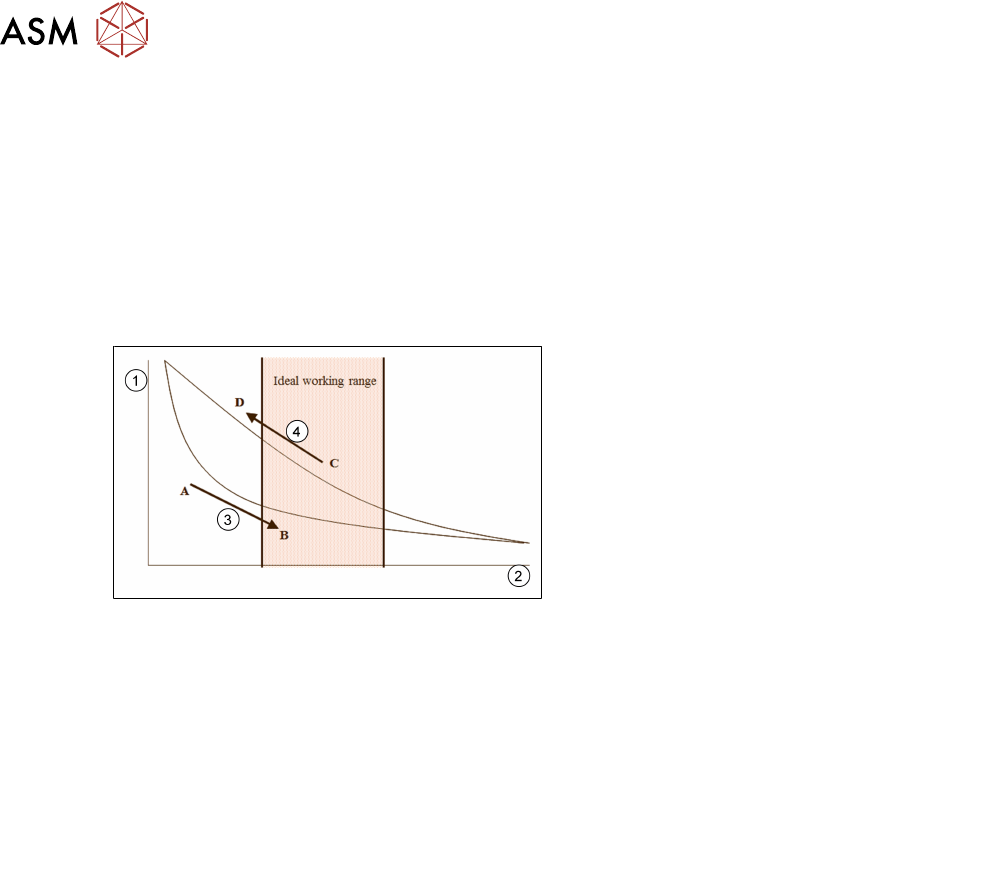
‘knead’ in order to return its viscosity to the desired working condition. To maintain a good process
the material must be kept within its optimum operating range on the viscosity chart as
demonstrated below.
1. Viscosity
2. Print strokes/ min
3. To go from A – B (i.e. to reach working
viscosity) may take several print strokes
4. To go from C – D (i.e. from working to non-
working) may only take a few minutes of
paste inactivity
When to Knead?
There are three occasions when a knead operation is required:
Start of Production When fresh material is loaded onto the stencil it may require kneading to
condition it for printing, i.e. to bring it onto its working viscosity range.
During Production When fresh material is added to the main mass, it may need to be mixed
thoroughly and conditioned to ensure process stability.
After Downtime If the line is prone to periods of downtime, an automatic knead strategy
may help to recover the material to working viscosity and hence reduce
defective printed boards.
Multiple print boards
The process of "kneading" across a board may result in bridging or high volume deposits on that
board. Some customers will choose to automatically reject the kneaded board. Another option is to
use a board covered with mylar or similar clear plastic which can be re-used every time a knead is
required or at the initial set up of a new print run.
Programming Options
There are several knead parameters that can be used to help ensure that the material is kept in
good working condition.
7 Product File and Machine Optimisation
7.3 Design a Paste Knead Strategy
Process Foundation DEK Micron-Series 12/2017 51
Exercise
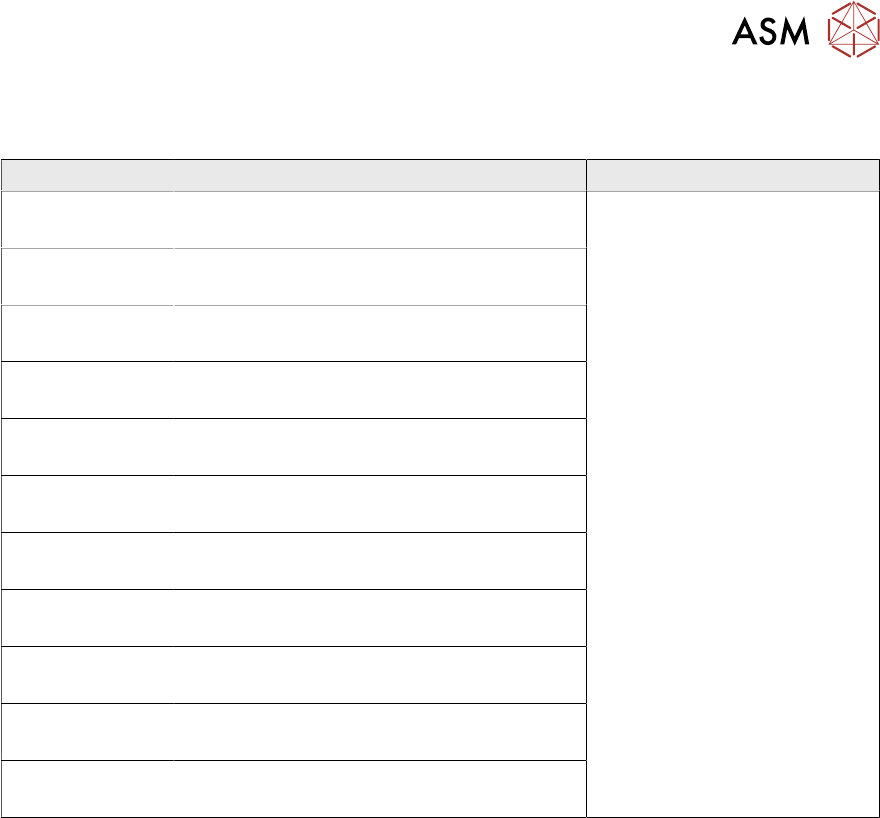
Discuss the knead parameters with your instructor and complete the table below.
Parameter Description Comments
A careful inspection should be
made of the print quality on a
board that has been used for
kneading. Multiple print strokes
can increase the risk of
excessive print deposits or
bridging.