00198574-01_Process_Foundation_DEK_Micron_EN.pdf - 第8页
2 Introduction 8 Process Foundation DEK Micron-Series 12/2017
2 Introduction
Process Foundation DEK Micron-Series 12/2017 7
2 Introduction
Course Aim
The aim of this course is to provide the skills necessary to design and optimize a new product file
and to maintain the quality of the print throughout production thus maximizing throughput and yield.
The course progresses in units, from basic theory right through to process optimization. It also
provides the opportunity to review a process and identify areas for improvement.
Course Goals
Upon completion of the Process Foundation training program you will be able to:
●
Understand the Screen Print Theory and Critical Success Factors
●
Design and Optimise a new Product File
●
Optimise Machine Setup Parameters
●
Maintain the Process Throughout the Production Run
●
Control Print Hardware and Environment to Prevent Defects
●
Identify and Troubleshoot Print Defects
●
Perform a Review of the Printing Process Using a Checklist
Course Content
●
Screen Print Theory *
#
●
Hardware Best Working Practices
#
●
Product File and Machine Basic set-up *
●
Process Maintenance
#
●
Product File and Machine Optimisation *
●
Troubleshooting and Process Review *
#
* : Product File Design Module
#
: Process Maintenance Module

2 Introduction
8 Process Foundation DEK Micron-Series 12/2017
3 Stencil Print
Process Foundation DEK Micron-Series 12/2017 9
3 Stencil Print
Introduction to Stencil Printing
●
What is the objective of the surface mount assembly process?
To provide a conducting path between the board (or substrate*) and components throughout
the designed life of the product.
●
What is the objective of the stencil print process?
To transfer the specified volume of material to the correct place on the board (or substrate*) at
the right time.
*Sometimes we print onto ceramic plates, PCBs (also known as PWBs – printed wire board), or
other things. The collective name for them is "substrate".
In addition we wish to achieve this objective at the required throughput with maximum yield and
minimum defects. The design of the product file and continued maintenance of the process is vital
in achieving this aim.
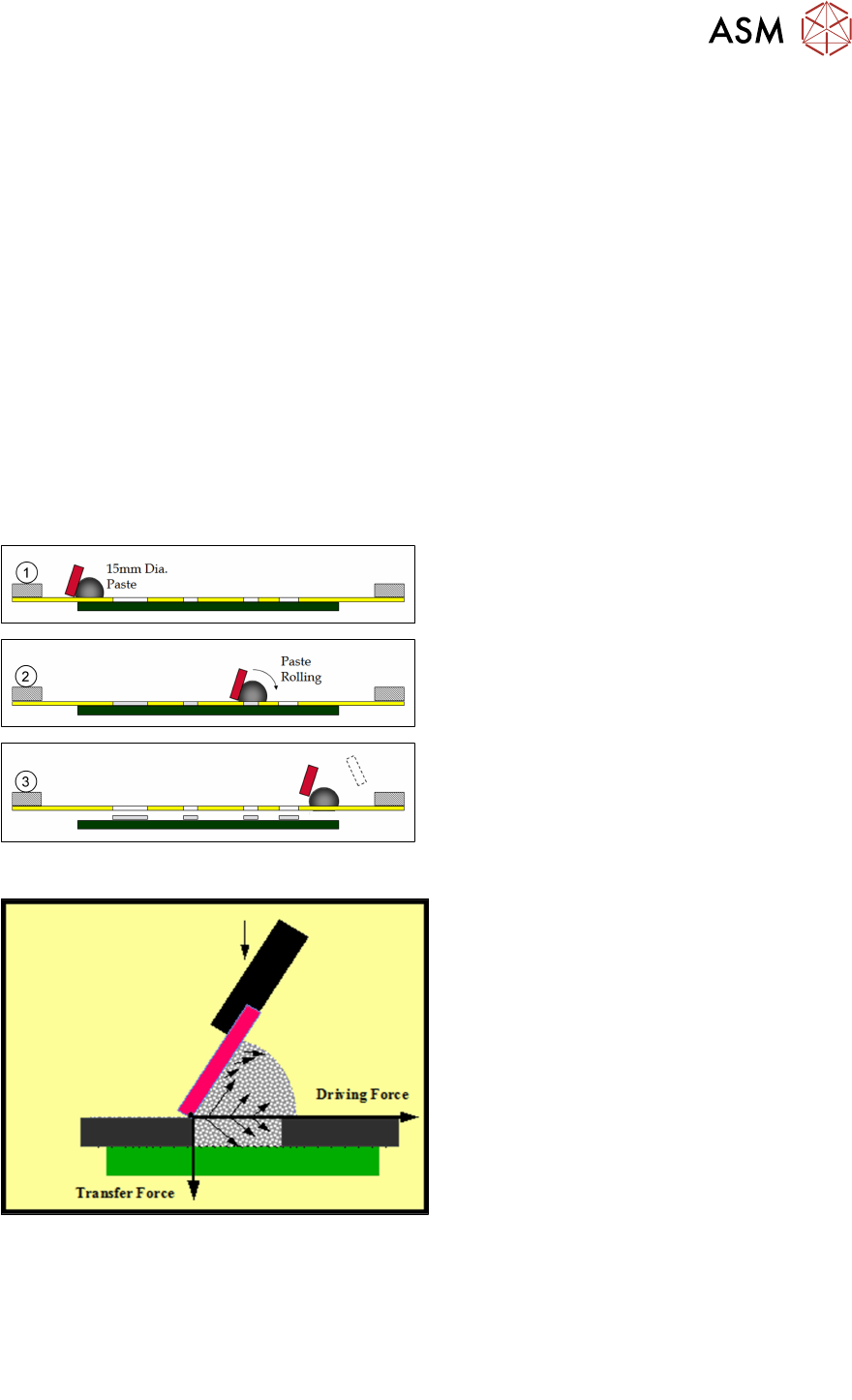
Stencil Print Process
1. Zero "Print Gap"
2. Controlled "Print Speed"
Even "Squeegee Pressure"
3. Board is lowered under controlled
"Separation Speed"
Stencil Print Theory
Squeegee Process
●
Transfer/ driving forces influenced by:
– Squeegee Angle
– Print Speed
– Paste Rheology
– Paste Roll Volume