2019-BTU-web-Vacuum-reflow-Dimock.pdf - 第6页
Why V acuum reflow? “Low void” pastes have shown that void reduction is possibl e, but void levels are still higher than desired. T ypical reflow results in ~ 40% voids in thermal pad s Initially there was hope that the …

• Voids form for many reasons including:
▫Paste solvent volatilization
▫Paste solids volatilization
▫Oxide volatilization
▫Outgassing (PCB, Component)
Void formation and growth
• Voids grow by merging
• Then escape the solder if they contact an
exposed surface.

Why Vacuum reflow?
“Low void” pastes have shown that void reduction is possible,
but void levels are still higher than desired.
Typical reflow results in ~ 40% voids in thermal pads
Initially there was hope that the solder paste guys could
find a way to reliably lower or eliminate voids with flux
and thermal profile modifications.
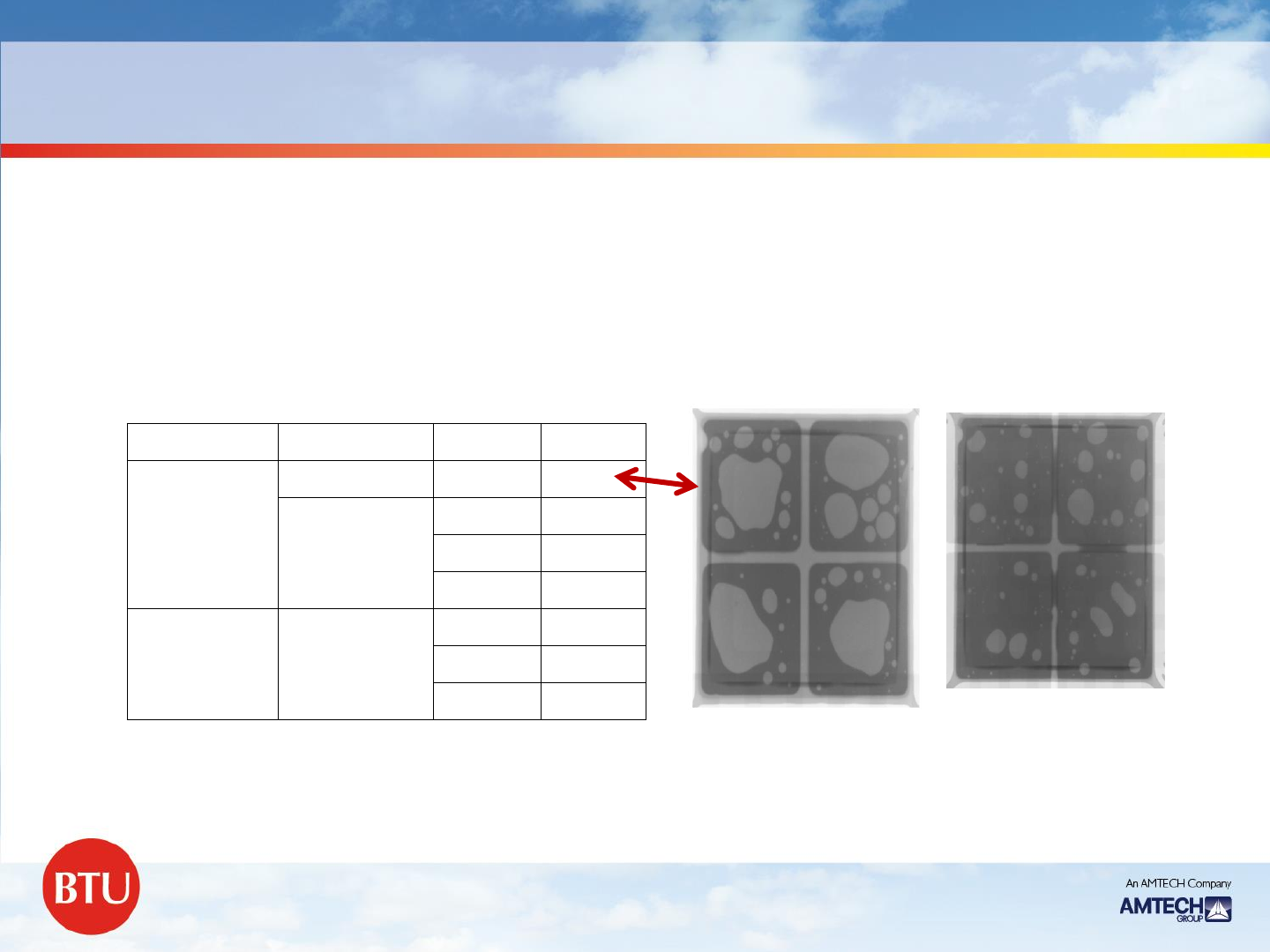
Why Vacuum reflow?
“Low void” pastes
Michael Meilunas, “Solder Joint Void Analysis: Effects of Paste and Reflow Parameters”
AREA Consortium
Low Void Paste
Hot Profile
Average Cumulative Void %
Standard Paste
Cold Profile - Air
Atmosphere
Paste
Profile
MFL100
Standard NC
Cold 33%
Air Cold 19%
Low Void Hot 13%
very Hot
13%
Cold 18%
Nitrogen Low Void Hot 13%
very Hot
10%