2019-BTU-web-Vacuum-reflow-Dimock.pdf - 第7页
Why V acuum reflow? “Low void” pastes Michael Meilunas, “ Solder Joint V oid Analysis: Ef fects of Paste and Reflow Parameters” AREA Consortium Low V oid Paste Hot Profile Average Cumulative V oid % Standard Paste Cold P…

Why Vacuum reflow?
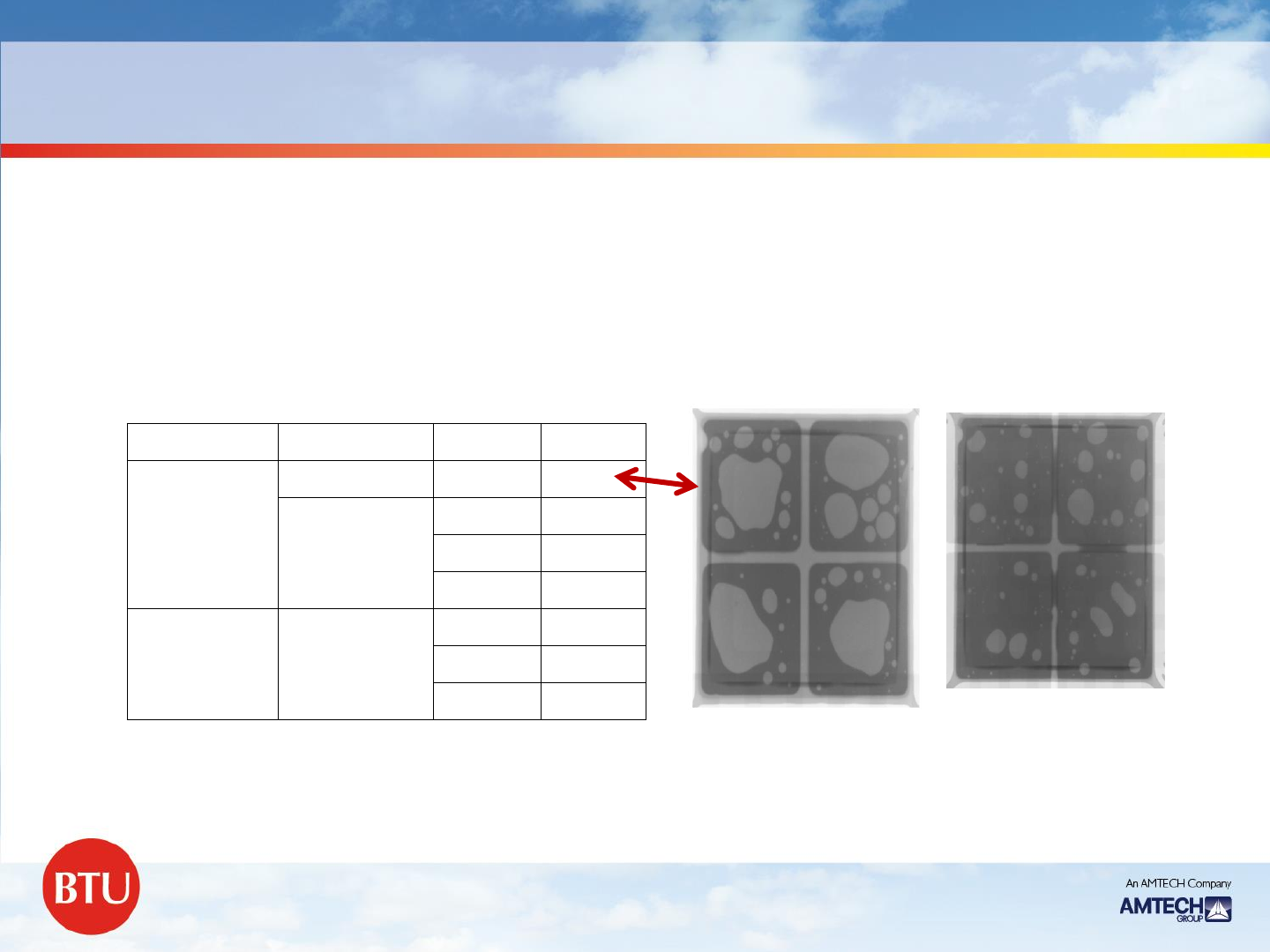
“Low void” pastes have shown that void reduction is possible,
but void levels are still higher than desired.
Typical reflow results in ~ 40% voids in thermal pads
Initially there was hope that the solder paste guys could
find a way to reliably lower or eliminate voids with flux
and thermal profile modifications.
Why Vacuum reflow?
“Low void” pastes
Michael Meilunas, “Solder Joint Void Analysis: Effects of Paste and Reflow Parameters”
AREA Consortium
Low Void Paste
Hot Profile
Average Cumulative Void %
Standard Paste
Cold Profile - Air
Atmosphere
Paste
Profile
MFL100
Standard NC
Cold 33%
Air Cold 19%
Low Void Hot 13%
very Hot
13%
Cold 18%
Nitrogen Low Void Hot 13%
very Hot
10%

Vapor phase reflow + vacuum: expensive, slow, messy
Large voids are more likely to contact exposed solder surfaces and escape
Why Vacuum reflow?
Convection reflow + vacuum:
no vapor, faster throughput, minimum mess
Vacuum reflow has been shown to be effective at reducing solder voids
Voids grow as surrounding pressure decreases (Pascal’s Law)
Large voids have an opportunity to combine and become larger voids