QP-242E 工程师培训手册 (6.0).pdf.pdf - 第46页
FK-9F98-07 QP242E Schooling Text for Service Engineer 6th edition 6. Proper Data Measurement [ 5 /20] Fuji Machine Mfg. Co., Ltd. Okazaki SMT Equipment Quality Assurance Dept. Technical Support Div. Section No.2 6- 5 [6 …
FK-9F98-07 QP242E Schooling Text for Service Engineer
6th edition 6. Proper Data Measurement [4/20]
Fuji Machine Mfg. Co., Ltd. Okazaki
SMT Equipment Quality Assurance Dept.
Technical Support Div. Section No.2
6-4
[6-5] Checking the X-axis Stroke
1) Remove the camera measurement plate jig and turn on the “Y022 CVR BD STPR IN” I/O at
the relevant module to raise the stopper. Clamp a maximum sized board with the board
against the stopper.
2) Move the head until the left edge of the maximum sized board is aligned with the mark
camera’s cross-hairs (vertical line), and check the servo counter value at this position. If the
counter value is 400 pulses (1mm) or more from the Min Limit or Max Limit, the board
stopper position (see above) and camera tilt adjustments are OK.
3) Check the right edge of the board in the same manner.
If the adjustment results are not OK, readjust the board stopper position and the camera tilt.
[6-6] Mark Camera X,Y,Q
1) Clamp a camera measurement plate jig, and, while watching the monitor, move the head until
the center of the plate jig’s mark is aligned with the camera center.
2) With the jig mark centered, use the following command sequence to perform an automatic
measurement: [RESOLUTION] à [MARK CAMERA] à [START].
3) Following the automatic measurement, check the measurement resolution. If it is within a
“1140326 (17.4um) to 1218969 (18.6um)” range for the Mark Camera X and Y, proceed to the
[Mark Camera Q] adjustment. If the measurement resolution is not within the above range,
the camera height (focus) is incorrect. In this case, readjust the camera height, then check the
Mark Camera X and Y values again.
[Ex] If the measured values are too low, raise the camera.
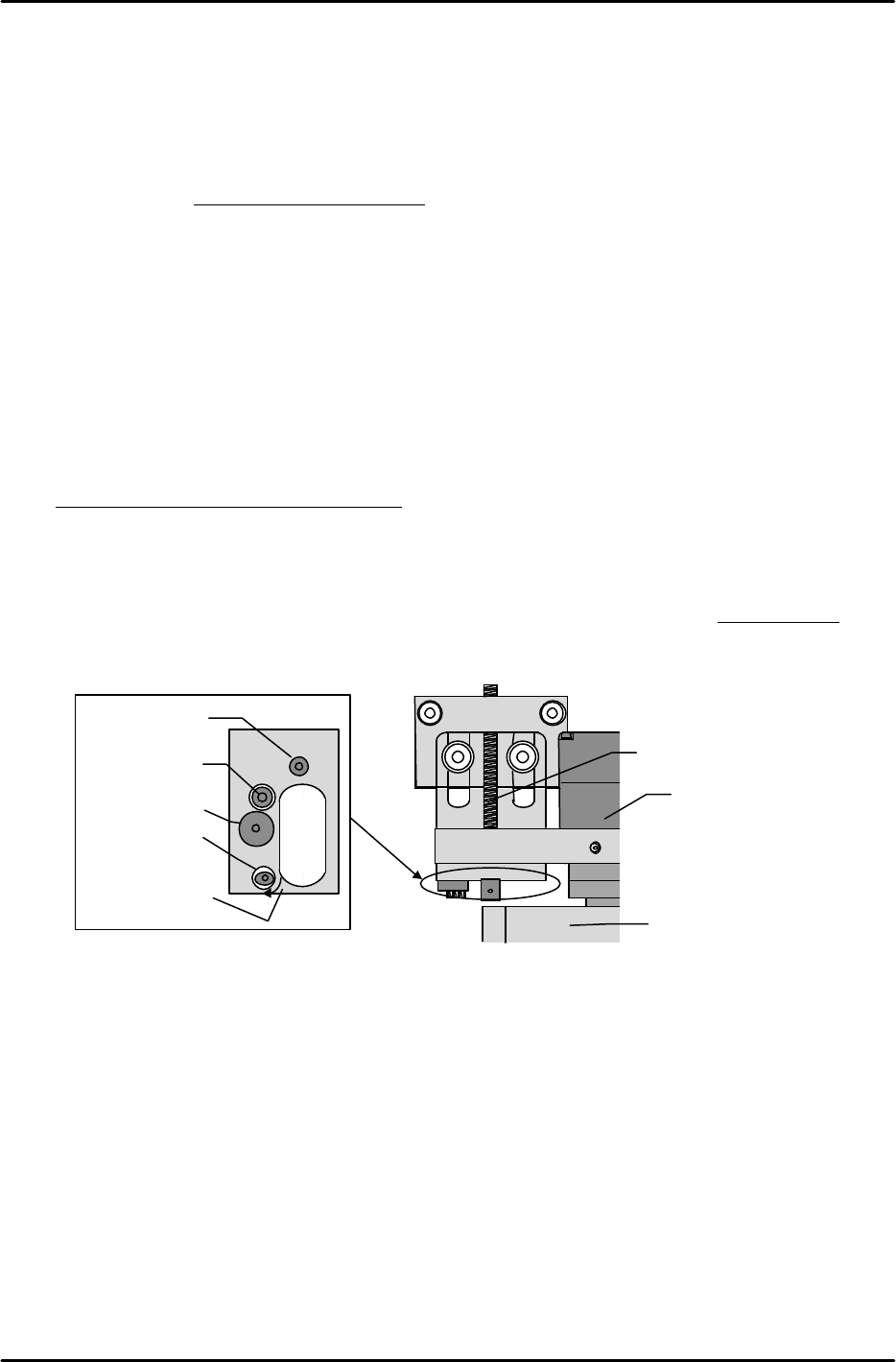
4) Loosen the lock bolt beside the camera and turn the eccentric bolt until the Q-value is “0”.
After re-tightening the lock bolt, check the measurement again.
Bottom View
Set screw
Fulcrum pin
Lock bolt
Eccentric pin
M/C rear
M/C front
+
Arrow indicates
“+” direction
Set screw
Camera
Light source unit
FK-9F98-07 QP242E Schooling Text for Service Engineer
6th edition 6. Proper Data Measurement [5/20]
Fuji Machine Mfg. Co., Ltd. Okazaki
SMT Equipment Quality Assurance Dept.
Technical Support Div. Section No.2
6-5
[6-7] Mark Read Pos. X,Y
1) Execute the following command sequence to turn on the camera lamp: [CAMERA] à
[CAMERA POS] à [MARK CAMERA].
2) While watching the image monitor, move the head so that the plate jig’s reference pin hole is
at the camera center.
3) With the reference pin hole centered, press the [SET] button to begin the automatic [Mark
Read Pos. X,Y] measurement. Leave the plate jig as it is when proceeding to the next
measurement item.
[6-8] Program_Origin_X0,Y0
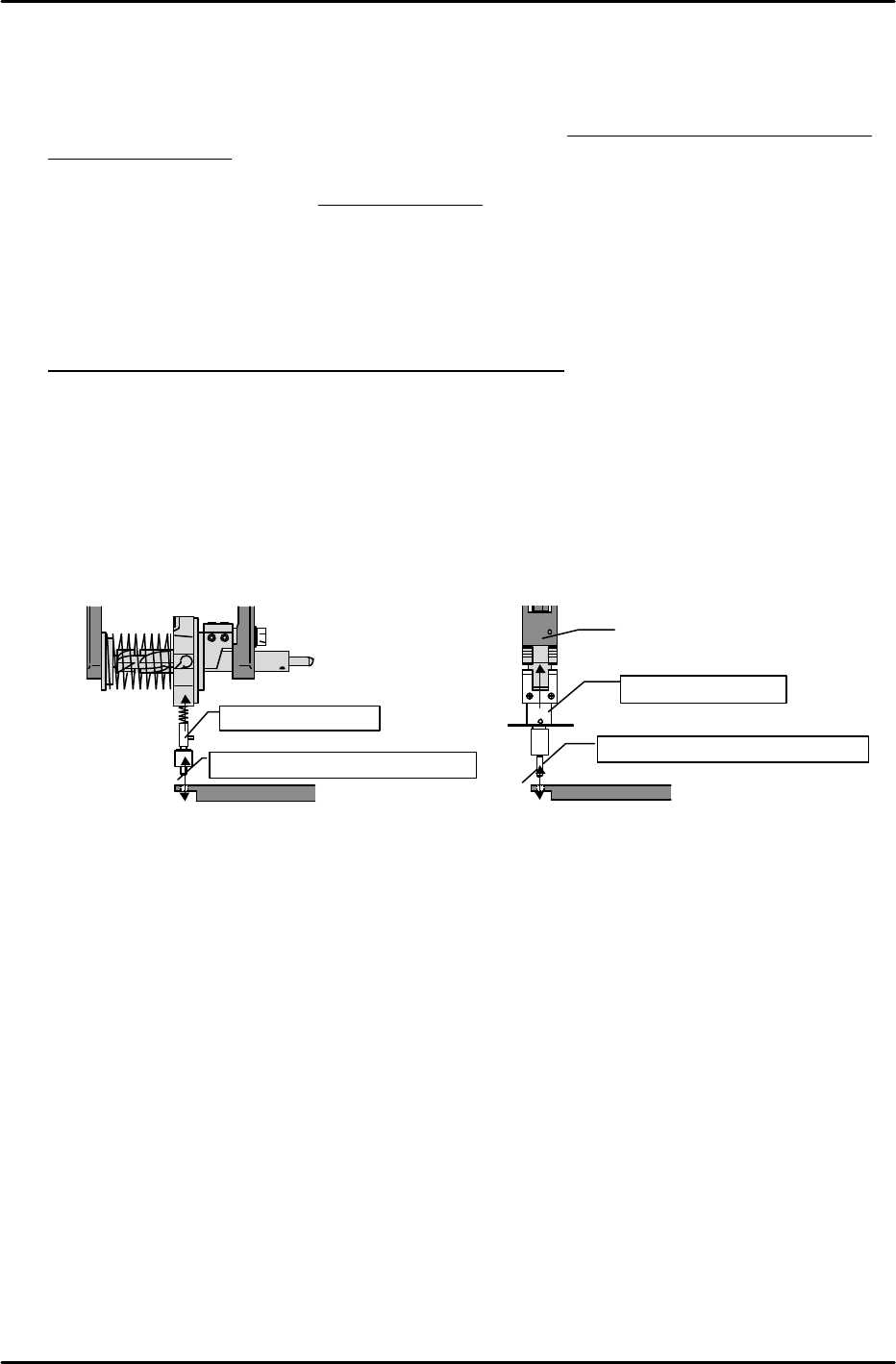
1) Mount an X0, Y0 Proper data measurement jig in the holder.
2) With the plate jig still clamped as described at [7-7] above, move the head to find the position
where the measurement jig (mounted in holder) can be inserted smoothly into the reference
pin hole.
3) This is the Program_Origin_X0,Y0 position. Execute the following command sequence to
automatically enter this data:
[ETC] à [REF. POS.] à [X0/Y0] à [SET].
Jig for index type
Position where insertion is smooth
Plate jig
Jig for single type
Position where insertion is smooth
Nozzle shaft
Plate jig
FK-9F98-07 QP242E Schooling Text for Service Engineer
6th edition 6. Proper Data Measurement [6/20]
Fuji Machine Mfg. Co., Ltd. Okazaki
SMT Equipment Quality Assurance Dept.
Technical Support Div. Section No.2
6-6
[6-9] Placement_Height_Z0
* If measuring with a dial gauge, be sure that the gauge is calibrated.
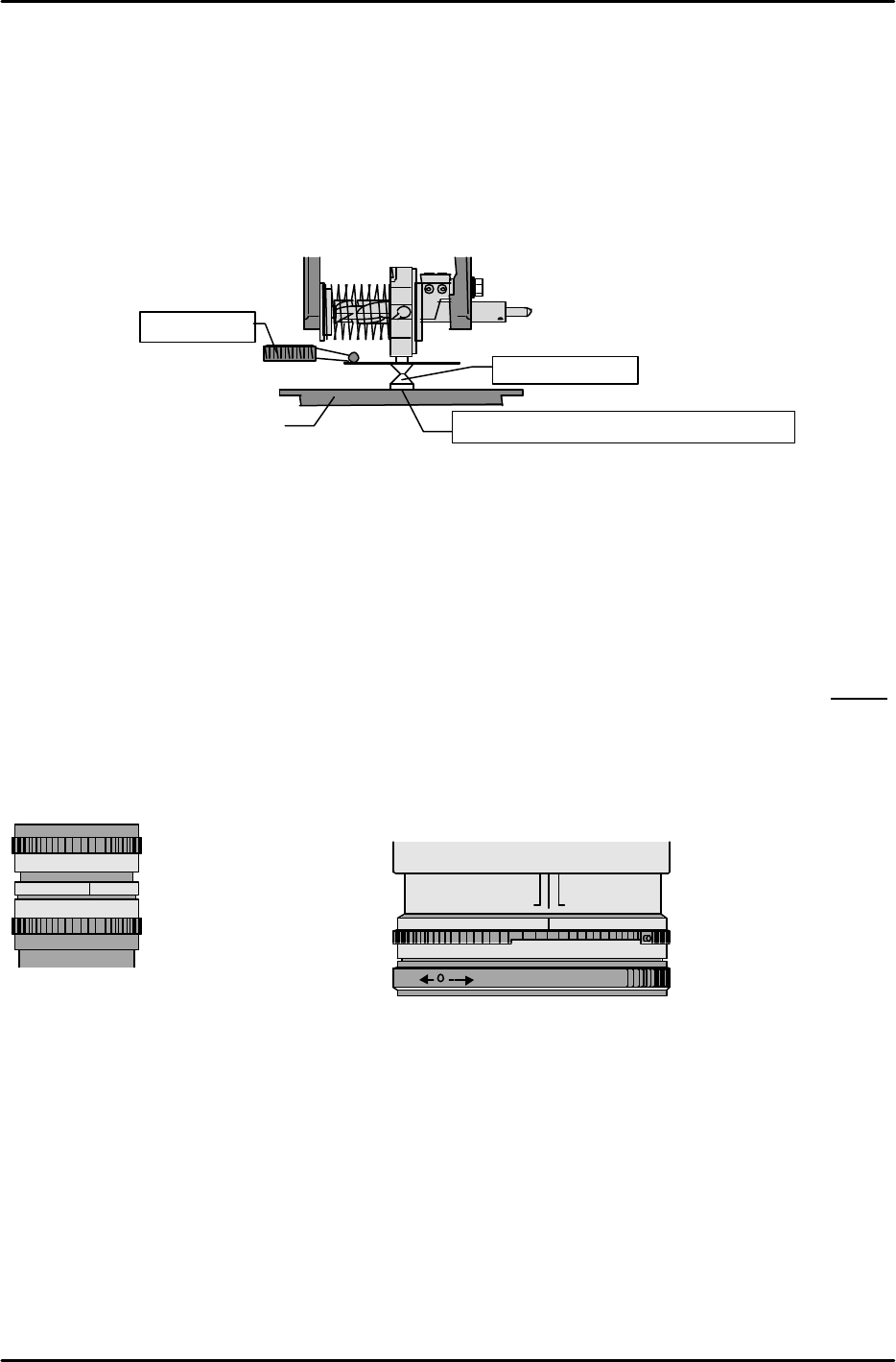
1) Mount a 10mm adjustment nozzle at the index holder or the nozzle shaft.
2) Lower the Z-axis until the top face of the clamped jig makes contact with the nozzle bottom,
then set a dial gauge on top of the nozzle disk.
3) Slowly raise the Z-axis to the point where the dial gauge needle begins to move.
4) This is the Z0 position. Execute the following command sequence to automatically enter the
Placement_Height_Z0 value: [REF. POS.] à [Z0] à [SET].
[6-10] Adjusting the Parts Camera Height, the Lens Aperture, and
the Temporary Focus
* There are six parts camera types (types 1, 2, 3, 4, 6, 7). Be sure that the correct camera type
is mounted (check specifications) before performing these adjustments.
1) Set the camera lens aperture and temporary focus as suitable for the camera type in question.
Note: The thickness of the collar between the camera and lens varies according to the camera type.
2) Adjust so that the distance from the side of the base to the end of the camera bracket is 42mm
(this applies for all camera types). (Details regarding 1-camera and 2-camera systems are
given later.)
3) Turn the adjusting bolt until the distance from the machine base to the camera bracket is
suitable for the camera type in question.
Plate jig
Dial gauge
10mm nozzle
Point where nozzle and jig make contact
For line scan cameras:
(Camera types 4, 7)
Aperture…2.8
Temporary focus…0.27
Align top face of lens
with the top face of the
blue lens bracket. This
position should be
approximately 0.27.
LOCK UNLOCK
2,8
4 A
22 22
0.25
0.3
4
8C16
2 1,4
0.4
JAPAN
For CCD cameras:
Aperture:
Camera type 1…2
Camera type 2…5
Camera type 3…4
b)Temporary focus:
Camera type 1…A little before 5
Camera type 2…Midway between 1 and 0.5
Camera type 3…Midway between 1 and 0.5