Seagate_IronWolf_Pro_SATA_Product_Manual_24-20-16-12TB_206815300B.pdf - 第17页
Seagate IronWolf Pro SAT A Pro duct Manua l, Rev B 17 www.seagate.com Linear random non-operating vibration The d r ive will not incur phy sical damage or have non-rec overable errors after being subjected to the pow er …
Seagate IronWolf Pro SATA Product Manual, Rev B 16
www.seagate.com
2.6.4.1 Shock
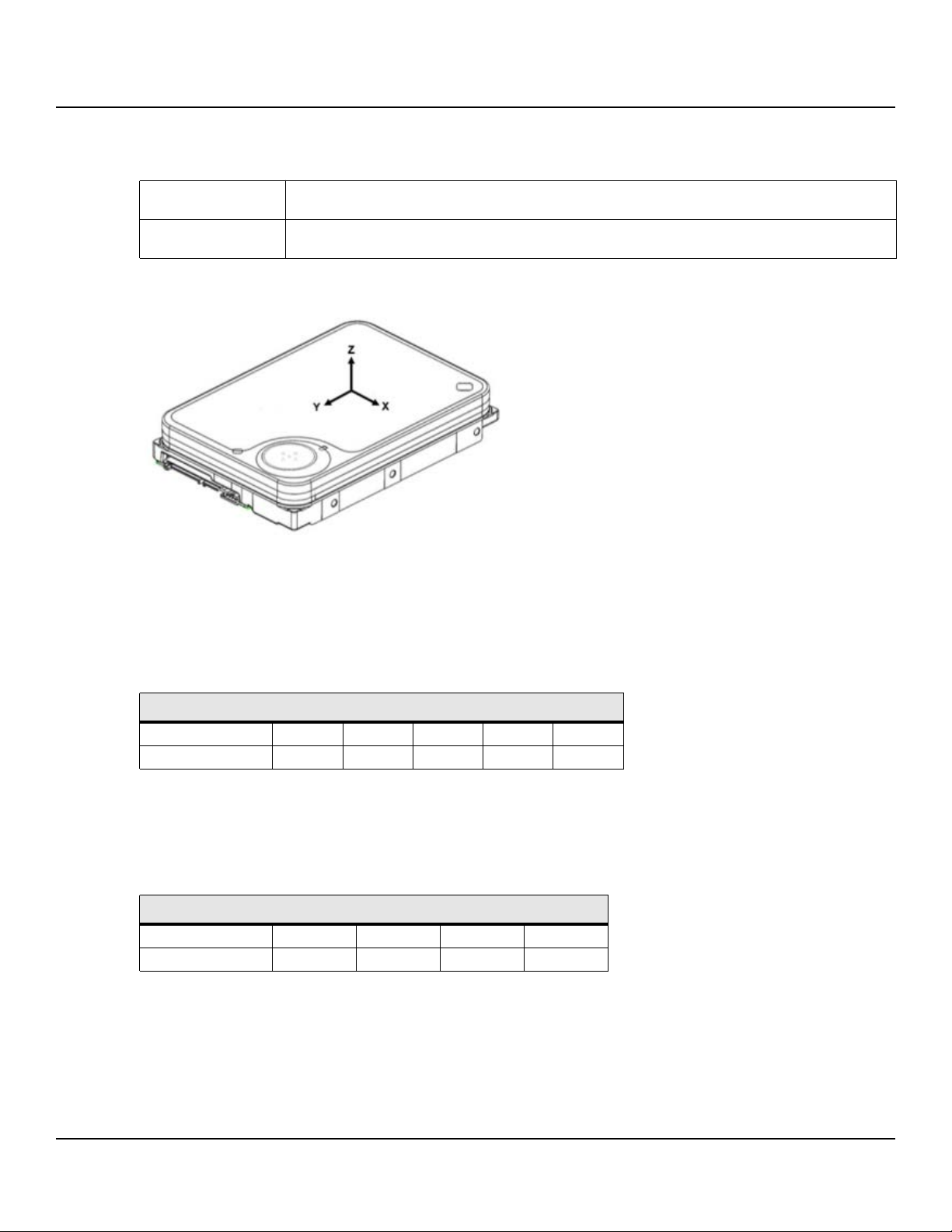
Figure 2 Drive orientation
2.6.4.2 Vibration
Linear random operating vibration
The drive will operate without non-recoverable errors while being subjected to the random power spectral density
noise specified below.
Random rotary operating vibration
The drive will exhibit greater than 90% throughput for sequential and random write operations while subjected to the
shaped random power spectral density noise specified below.
Table 14 - Shock
Operating
The drive will operate without error while subjected to intermittent shock pulses not exceeding 40 g
typical at a 2ms duration limited by Z-axis, shown in Figure 2, Drive orientation.
Non-operating
The drive will operate without non-recoverable errors after being subjected to shock pulses not
exceeding 200 g at a duration of 2ms.
Table 15 - Linear random operating vibration
PSD OF 5-500 Hz random noise at 0.70 Grms
Frequency (Hz) 5 20 200 250 500
G^2/Hz 0.00025 0.00210 0.00210 0.00020 0.00020
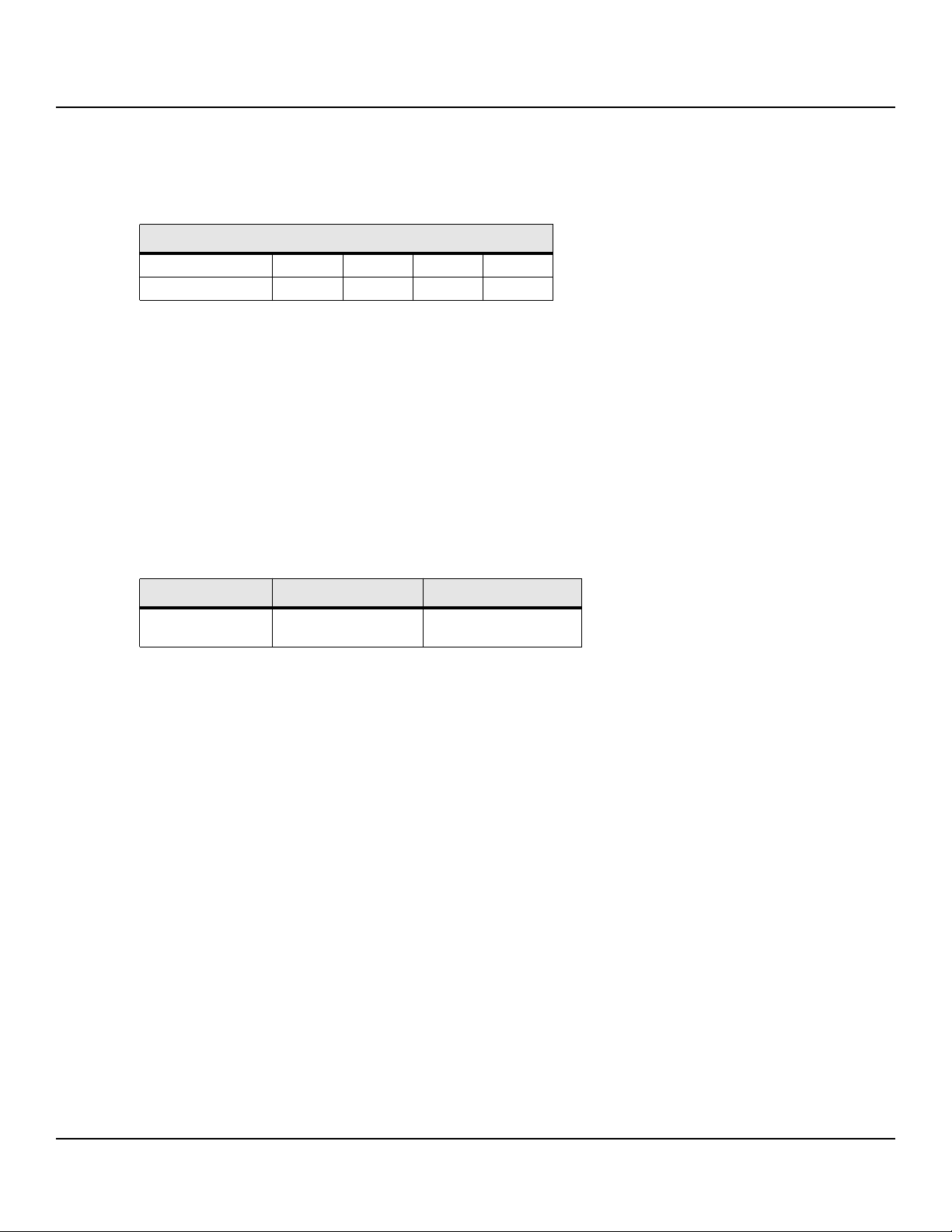
Table 16 - Random rotary operating vibration
PSD OF 20-1500 Hz at 12.5 rad/sec^2
Frequency (Hz) 20 200 800 1500
(rad/sec^2)^2/Hz 5.53E-02 5.53E-02 3.49E-01 6.14E-04
Seagate IronWolf Pro SATA Product Manual, Rev B 17
www.seagate.com
Linear random non-operating vibration
The drive will not incur physical damage or have non-recoverable errors after being subjected to the power spectral
density noise specified below.
2.7 Acoustics
Drive acoustics are measured as overall A-weighted acoustic sound power levels (no pure tones). All measurements
are consistent with ISO document 7779. Sound power measurements are taken under essentially free-field conditions
over a reflecting plane. For all tests, the drive is oriented with the cover facing upward.
NOTE For seek mode tests, the drive is placed in seek mode only. The number of seeks
per second is defined by the following equation:
(Number of seeks per second = 0.4 / (average latency + average access time))
* During periods of drive idle, some offline activity may occur according to the SMART specification, which may increase acoustic and power to
operational levels.
2.7.1 Test for Prominent Discrete Tones (PDTs)
Seagate follows the ECMA-74 standards for measurement and identification of PDTs. An exception to this process is
the use of the absolute threshold of hearing. Seagate uses this threshold curve (originated in ISO 389-7) to discern
tone audibility and to compensate for the inaudible components of sound prior to computation of tone ratios
according to Annex D of the ECMA-74 standards.
Table 17 - Linear random non-operating vibration
PSD Profile 2-500 Hz at 2.27 Grms
Frequency (Hz) 2 4 100 500
G^2/Hz 0.001 0.030 0.030 0.001
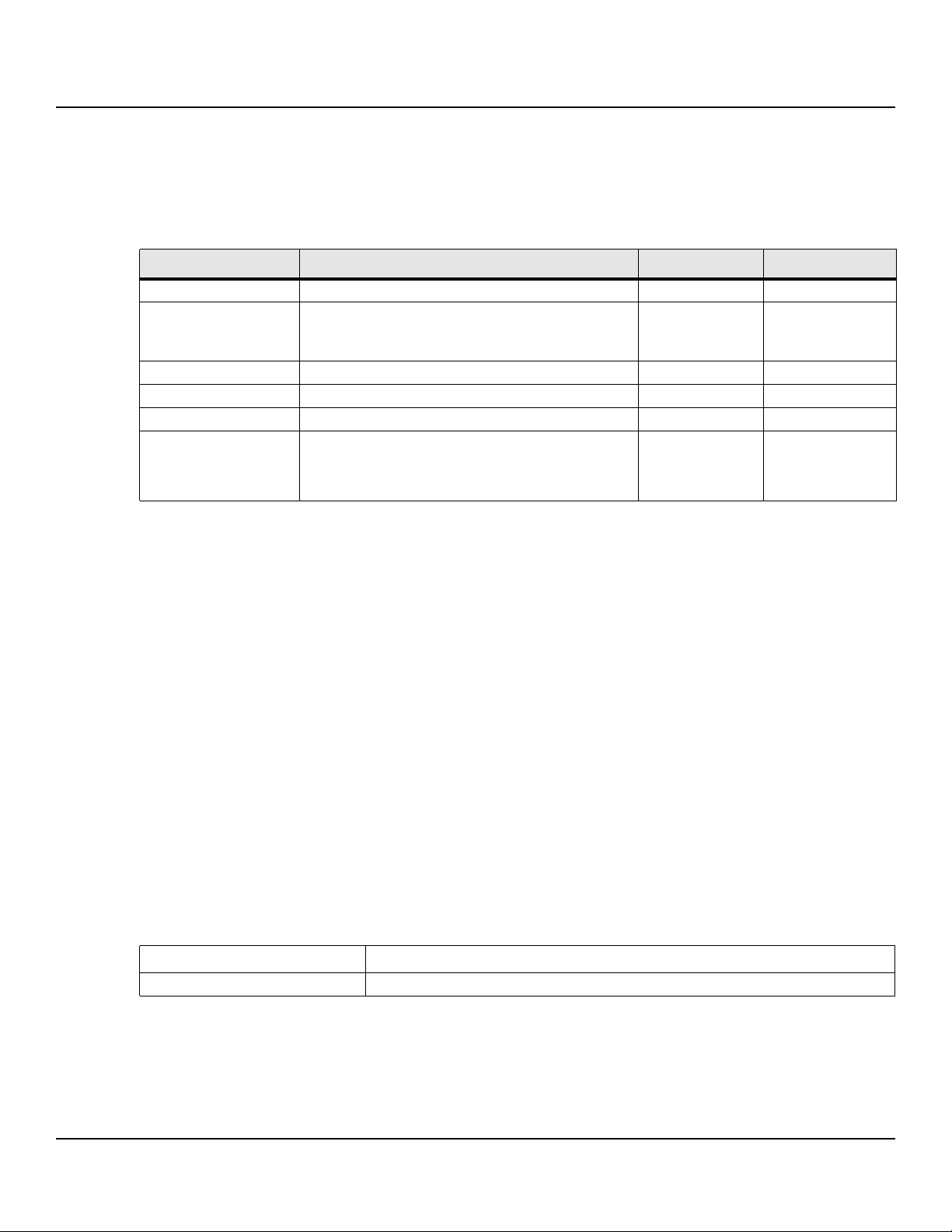
Table 18 - Fluid Dynamic Bearing (FDB) motor acoustics
Idle* Performance seek
All models
2.8 bels (typ)
3.0 bels (max)
3.2 bels (typ)
3.4 bels (max)
Seagate IronWolf Pro SATA Product Manual, Rev B 18
www.seagate.com
2.8 Electromagnetic immunity
When properly installed in a representative host system, the drive operates without errors or degradation in
performance when subjected to the radio frequency (RF) environments defined in the following table:
2.9 Reliability
2.9.1 Annualized Failure Rate (AFR) and Mean Time Between Failures (MTBF)
The production disk drive will achieve an annualized failure-rate of 0.35% (MTBF of 2,500,000 hours) over a 5 year
service life when used in Enterprise Storage field conditions as limited by the following:
8760 power-on hours per year
HDA temperature as reported by the drive >= 10°C and <= 30°C
Ambient wet bulb temp <= 26°C
Typical workload
The AFR (MTBF) is a population statistic not relevant to individual units
ANSI/ISA S71.04-2013 G2 classification levels and dust contamination to ISO 14644-1 Class 8 standards (as
measured at the device)
The MTBF specification for the drive assumes the operating environment is designed to maintain nominal drive
temperature and humidity. Occasional excursions in operating conditions between the rated MTBF conditions and
the maximum drive operating conditions may occur without significant impact to the rated MTBF. However, continual
or sustained operation beyond the rated MTBF conditions will degrade the drive MTBF and reduce product reliability.
Table 19 - Radio frequency environments
Test Description Performance level Reference standard
Electrostatic discharge Contact, HCP, VCP: ± 4 kV; Air: ± 8 kV B EN 61000-4-2: 95
Radiated RF immunity
80 to 1000 MHz, 3 V/m,
80% AM with 1 kHz sine
900 MHz, 3 V/m, 50% pulse modulation @ 200 Hz
A
EN 61000-4-3: 96
ENV 50204: 95
Electrical fast transient ± 1 kV on AC mains, ± 0.5 kV on external I/O B EN 61000-4-4: 95
Surge immunity ± 1 kV differential, ± 2 kV common, AC mains B EN 61000-4-5: 95
Conducted RF immunity 150 kHz to 80 MHz, 3 Vrms, 80% AM with 1 kHz sine A EN 61000-4-6: 97
Voltage dips, interrupts 0% open, 5 seconds
0% short, 5 seconds
40%, 0.10 seconds
70%, 0.01 seconds
C
C
C
B
EN 61000-4-11: 94
Non-recoverable read errors
1 per 10
15
bits read, max
Load unload cycles 600,000 cycles