OM-1076-001.pdf - 第118页
0206-001 2-88-3 Tg0502-PM-CL B02 Recognition Data (B02_04) (B02_04) Back Ltg Recog Algo or Front Ltg Recog Algo Set a recognition system. Select one of the following options according to the component shape and the light…
0206-001 2-88-2 Tg0502-PM-CL
B02 Recognition Data (B02_03)
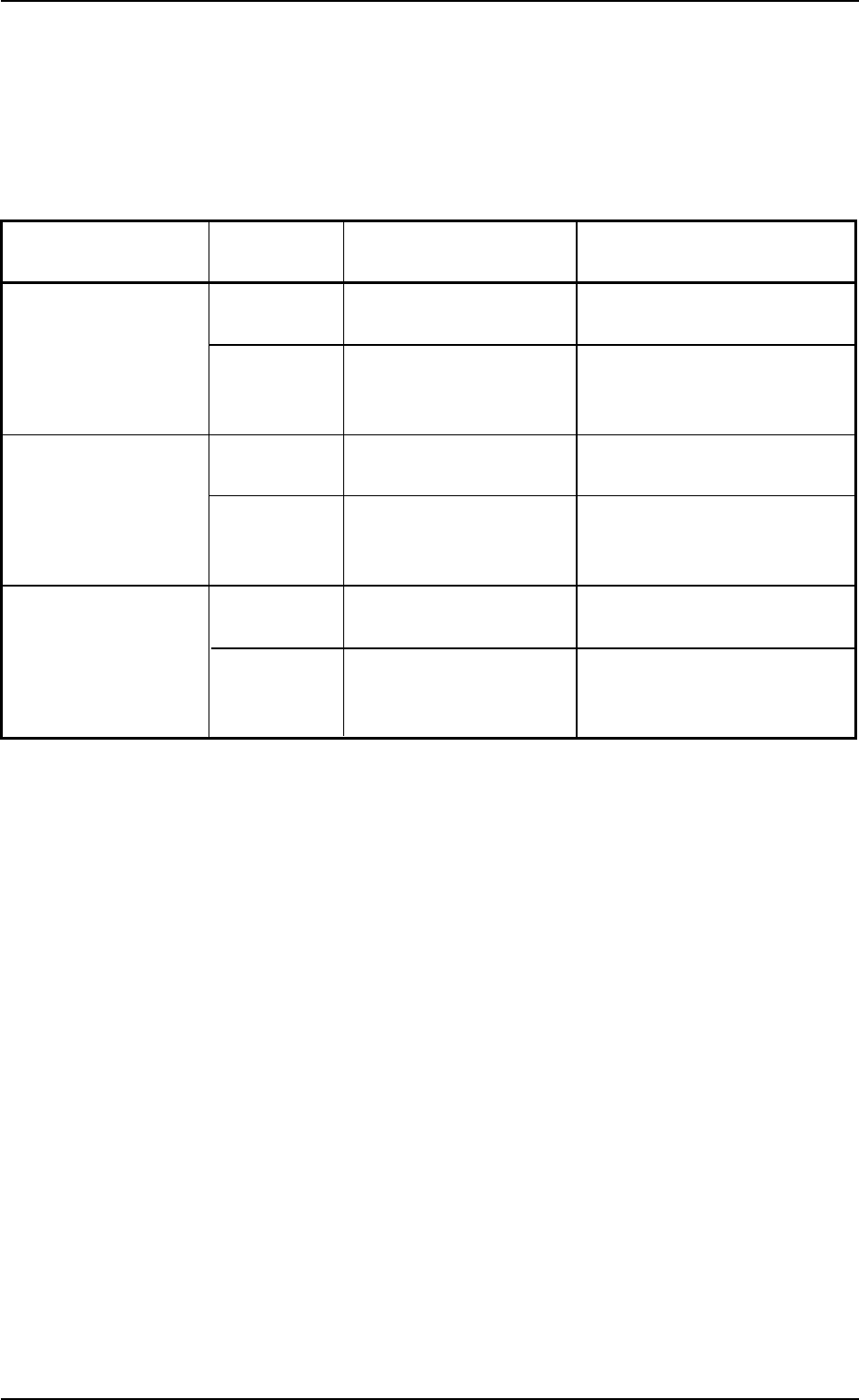
(c) Automatically Specified Parameters as Algorithm for Mul-
tiple Pin Lead
When "Auto" is selected in the "Recognition data set" text
box or "1" in the "Recognition level" text box, the coarse
recognition mode becomes as shown in the table below.
Table B19-5
Component Shape
Lead Type
Coarse
Remarks
Recognition Mode
IC Leadless Electrodes Components This is equivalent to
Components "Recognition Level = 21".
Components Ordinary Leaded This is equivalent to
other than the Components "Recognition Level = 31".
above
Connectors Electrodes Electrodes Components This is equivalent to
Components "Recognition Level = 21".
Components Ordinary Leaded This is equivalent to
other than the Components "Recognition Level = 31".
above
Others Electrodes Electrodes Components This is equivalent to
Components "Recognition Level = 21".
Components Ordinary Leaded This is equivalent to
other than the Components "Recognition Level = 31".
above
0206-001 2-88-3 Tg0502-PM-CL
B02 Recognition Data (B02_04)
(B02_04) Back Ltg Recog Algo or Front Ltg Recog Algo
Set a recognition system.
Select one of the following options according to the component shape
and the lighting mode.
Auto : Each condition of the component data is con-
sidered and one of the shadowed recognition
systems in the table is selected.
Corner : The corner of the mold is detected.
Example: Cylindrical and Square Components,
etc.
Edge (General Purpose):
The edge of the mold is detected.
Example: General Leadless Components
CG (Angle Detected):
The area center of gravity is detected for the
entire component image.
Example: Special Components Angle is de-
tected. This angle shows the inclina-
tion degree of the long axis for the
entire component image.
CG (No Angle): The center of gravity is detected for the entire
component image.
Example: Special Components Angle is not de-
tected. The angle correction is zero
regardless of component posture.
Edge (Rectangle): This is a edge detection system used exclu-
sively for the front recognition of rectangular
microcomponents.
Example: Rectangular Microcomponents
Line : Straight Line Edge is detected.
Example: Shield Case, etc.
Lead : This is a lead detection system used for small
components (components for small view) and
components with a small number of leads.
Example: Transistors, Diodes, SOP, etc.
Fig. B191
Back ltg recog algo
Corner

0206-001 2-88-4 Tg0502-PM-CL
B02 Recognition Data (B02_04)
Lead (Standard 2)
: This is the lead detection method for front light-
ing for the smaller component (components for
small view) and components with smaller num-
ber of leads.
Example: Transistor, Diode and SOP, etc.It is
only applicable for the components
with black mold Leads smaller than
standard can be detected. However,
each lead has to shine indepen-
dently. (Molded leads or leads which
appear stuck together with their ad-
jacent leads can not be detected).
Lead (Special) : Round, eccentric, and rectangular electric con-
tacts and holes are detected.
Example: Shield Case, etc.
Multiple Pin Leads (Standard):
: This is a lead detection system for components
with multiple leads (flat-package type).
It is possible to perform processing at higher
speed than the multiple pin leads (general pur-
pose).
This system can be applied only to the compo-
nents having black molds.
Example: General ICs (SOP, QFP, PLCC, etc.)
Multiple Pin Leads (Standard 2)
: Speed processing higher than that of Flat Pack-
aged Components (Standard) is available.
It is applicable only for components with black
mold.
Example: General ICs (SOP, QFP, PLCC, etc)
This function is exclusive to all recognition with
back lighting or front lighting.
Multiple Pin Leads (General Purpose):
This is a general-purpose lead detection sys-
tem.
Example: Connectors, etc.
Grid Pattern : The electrodes consisting of meshes (grids),
and the bumps, etc., can be detected.