Fast_Firing_System_EN.pdf - 第10页
10 Rehm F ader Function for optimized fr ont- and backside ring The Fader function had rst been intr oduced in 2009. Top and bottom IR lamps are contr olled separately and thus enhancing the prole flexibility . By ach…
9
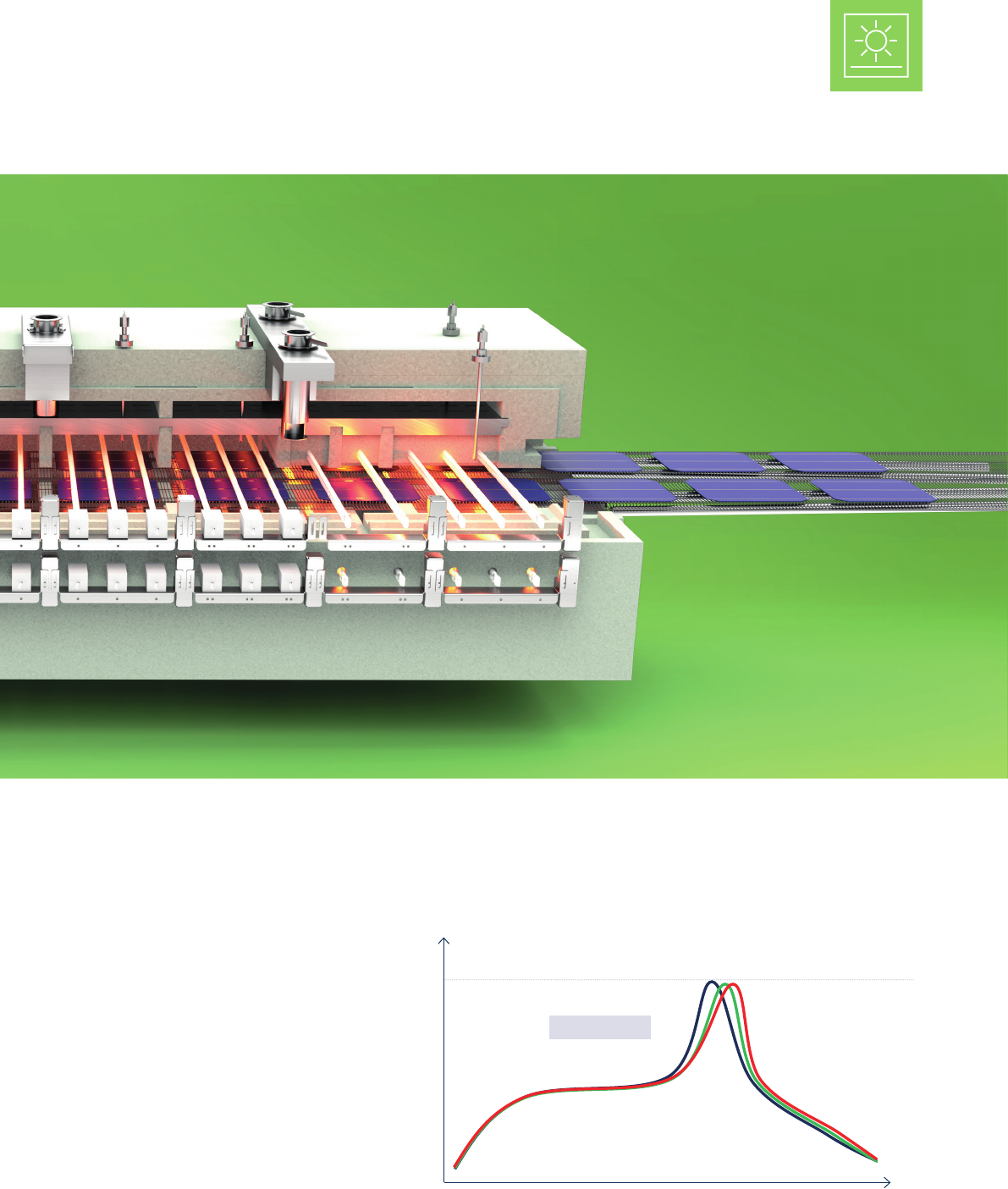
Large process window
at 5300 w/h due to modularity of zones
Large process window through higher zone flexibility
The modularity of the Speedre zones allows the
user to achieve full polymer binder burn off and
fast ring at temperatures up to 900 °C while
processing 5300 wafers/hour. Even at belt speeds
of up to 10 m/min the Rehm Fast ring furnace
offers a large process window in the peak zones,
allowing for the most customized temperature
proles.
T °C
850 °C
t (min)
10 m /min
10
Rehm Fader Function
for optimized front- and backside ring
The Fader function had rst been introduced in 2009. Top
and bottom IR lamps are controlled separately and thus
enhancing the prole flexibility.
By achieving up to 30 °C difference between the top side
and the bottom side of the wafer, the Speedre enables the
user to re the wafer sides at different temperatures. These
temperatures are close loop controlled and easily managed
in the furnace software.
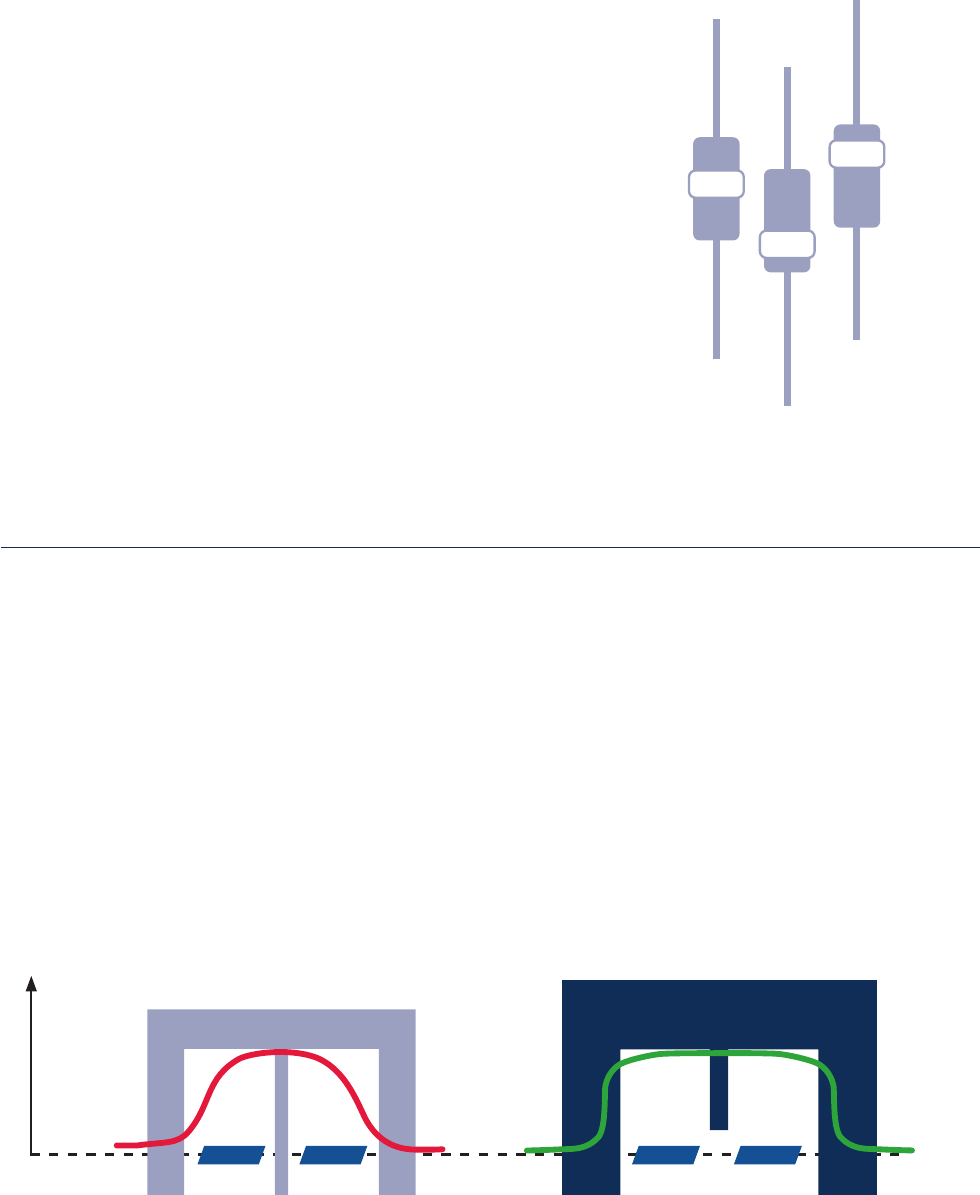
Multi-layer insulation
for stable process temperature
The Rehm Speedre chamber insulation design, based
on 25 years of oven building experience, is the best in the
industry. The well insulated chamber guarantees an ex-
tremely homogenous heat distribution inside the process
chamber, resulting in a stable process temperature at the
wafer.
A lower housing temperature and the better electrical
efciency of the oven are favorable side effects of the
multi-layer Insulation.
Standard ring furnace
insulation
Rehm Speedre ring
furnace insulation
Oven
chamber
Temp °C
fader
function
Comparison of the heat distribution inside the process chamber
11
Regenerate your cells
by reducing the LID effect
Mono crystalline solar cells experience a loss in efciency of
more than 1 % within the rst hour of their exposure to sun
rays. It depends on the wafer material and the cell architec-
ture. This effect is called Light-Induced-Degradation (LID).
Because the prices for solar cells and modules are linked
to their absolute efciency, a cancellation of the LID effect
bears a large economical potential.
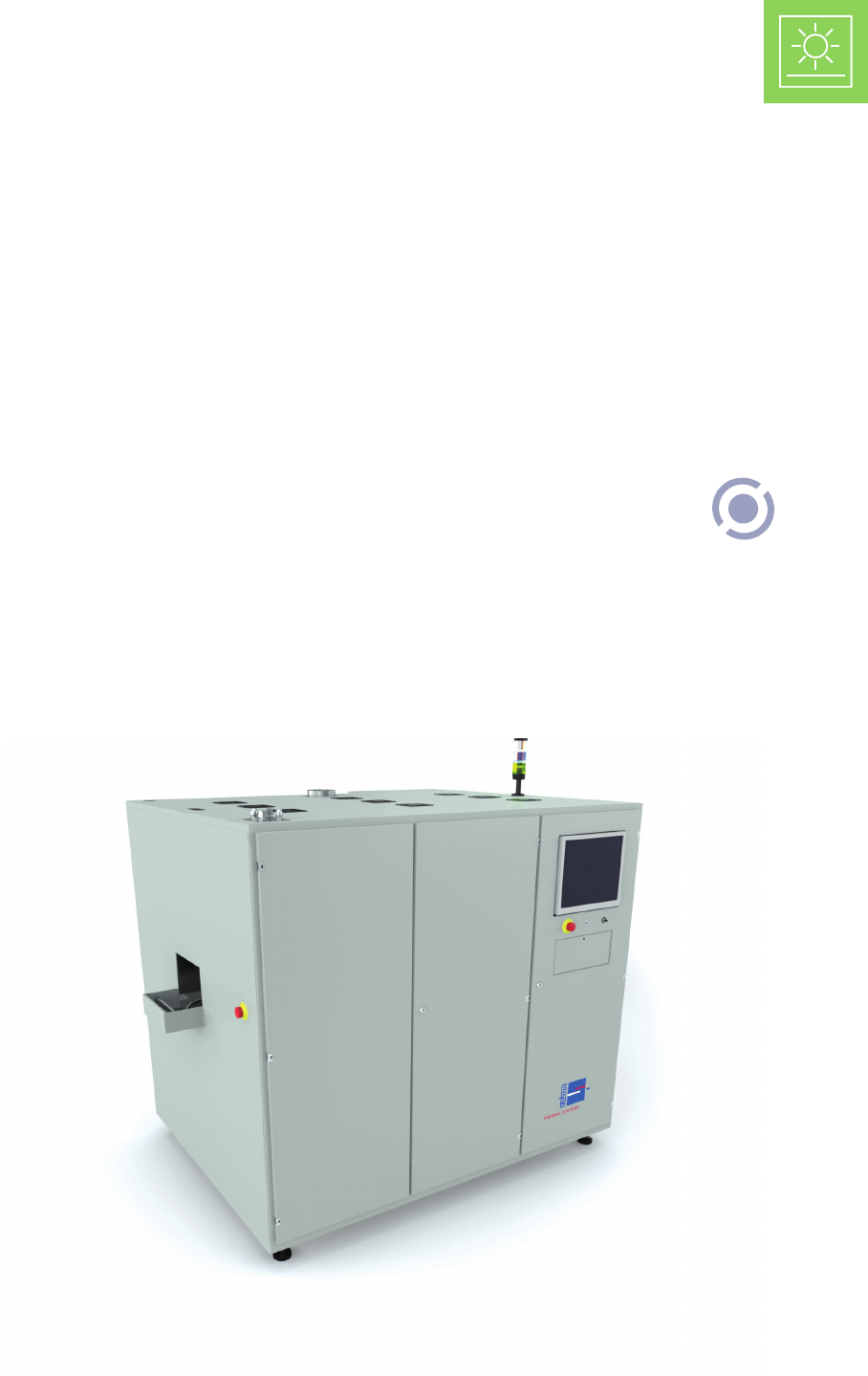
Rehm Thermal Systems has developed an equipment
which will reduce the LID by exposing the metallized cell to
a light source for a dened period of time under a dened
light intensity. The LID tool convinces with a very short and
compact layout. The large light density of the laser modules
create a notably higher control flexibility than standard LED
light sources.
The laser modules have a higher life cycle and don’t deterio-
rate in infrequent of high frequent utilization.
The emitted laser radiation can be controlled exactly to the
requirements of the customers. Partially enhanced energy
transfer can be realized in order to create a perfect homoge-
neous result throughout the cell surface, even on and around
the cell edges.
process
technology