IPC-7526-2007 模板和误印板清洗指南.pdf - 第16页
www.bzfxw.com be included in the automated program. While not necessar- ily more ef fective, an automated system can be more con- sistent than a semiautomatic system because of reduced user interface. Automation itself m…

www.bzfxw.com
6.3 Semimanual Stencil Cleaning A number of designs
are available for semiautomatic wiping. Common designs
used within industry employ ultrasonic agitation.
Design #1: A large sponge is placed into a prefabed stain-
less steel tray. Solvent cleaners are added to the tray. The
sponge absorbs the solder paste or adhesive dislodged from
the stencil during the cleaning process. The cleaning sol-
vent will saturate the sponge such that solvent leaks from
the sponge upon touch. The stencil is placed on top of the
sponge. Solvent is applied to the top of the stencil. The
stencil must remain wet during the cleaning process. An
ultrasonic handheld cleaning head is applied to the stencil
in a motion similar to ‘‘ironing clothes.’’ Minimal pressure
is applied to the cleaning head during the cleaning process.
After cleaning, the stencil is removed from the tray and
wiped on the top and bottom of the stencil with a clean,
wet SMT wipe to remove any remaining solder balls or
adhesive. After wiping, the stencil is examined using a
magnifying glass to inspect for solder paste in the aper-
tures, especially fine pitch. A note of caution, ‘‘fugitive’’
solder balls may be pushed back into stencil apertures.
Design #2: Semiautomatic ultrasonic stencil cleaners
require the operator to move the stencil or substrate from
the wash tank, to the rinse tank while drying the stencil
manually. The actual cleaning is accomplished automati-
cally by the chemistry and ultrasonic cavitation.
Handheld sprays or spray nozzles that are usually operated
by a foot switch may accomplish rinsing. Drying is accom-
plished by hand-held low-pressure dry compressed air or
by natural ambient drying.
Consistent cleaning is accomplished by programmed wash
cycles and is less dependent on the operator interface. Cau-
tion should be taken not to allow a stencil to ‘‘soak’’ for
long periods because of the potential for moisture absorp-
tion to the stencil adhesive, which could weaken the bond
interface to the frame.
6.4 Single Chamber Equipment Most stencil cleaners
operate with a single chamber utilized for both washing
and rinsing operations. Although segregated wash and rinse
tanks are utilized, single chambers have a tendency to cre-
ate extensive chemical drag-out (wash solution entering the
rinse tank). This is an issue when the process chamber is
large and when common plumbing between the wash and
rinse is utilized. When a single process chamber is used,
the customer should expect increased drag-out due to the
surface area of the chamber. This increased drag out makes
close looping the stencil cleaner economically difficult.
6.5 Ultrasonic Agitation Ultrasonic Agitation is created
by the generation of high frequency sound waves (above
20 kHz) vibrating through a liquid cleaning medium. This
action, known as cavitation, consists of the formation and
instantaneous collapse of millions of microscopic vapor
pockets, or bubbles in the liquid. These vapor pockets
occur throughout the liquid even in recesses and tight tol-
erance areas such as fine-pitch apertures and substrate vias.
40 kHz is most commonly used for stencil cleaning. Lower
frequencies create higher mechanical agitation, which
could potentially damage the stencil or misprinted PCA.
While higher frequencies could technically clean solder
paste from stencils, the cycle time would normally need to
increase to compensate for the more gentle agitation. The
use of higher frequencies is generally more costly and,
because the adhesives used to construct stencils are hygro-
scopic, longer exposure to moisture could weaken the
adhesive bond. ‘‘Sweep’’ or ‘‘Multiple’’ frequency technol-
ogy is standard throughout the industry and is used to dis-
tribute the ultrasonic energy evenly to eliminate ‘‘hot
spots’’ in the cleaning bath.
An ultrasonic cleaning system consists of four fundamental
components: Generator, Transducer, Cleaning Chemistry
and Tank. Performance and reliability of the system
depends upon the design and construction of the transduc-
ers and generators. The number of transducers and genera-
tor size is predicated on the tank size, and efficiency of the
cleaning chemistry used. Process effectiveness of the clean-
ing is dependent on the cleaning chemistry. The use of
ultrasonics without the proper cleaning chemistry is
equivalent to cleaning rosin flux with water only. The tank
should be stainless steel and not plastic. Plastic will absorb
the sound waves and reduce efficiency. The size of the tank
is dictated by the size of the stencil, loading and unloading
ergonomics and determines a large portion of the waste-
water generated - the remainder being determined by the
rinse cycle.
Cavitation is produced by the alternating patterns of com-
pression and rarefaction generated by the rapidly expand-
ing and contracting transducers during sound wave trans-
mission. As the liquid is stretched beyond its tensile
strength during rareification, these bubbles grow from
microscopic nuclei and then upon compression, they
implode violently. This phenomenon occurs at the rate pro-
portional to the ultrasonic frequency generated. Individu-
ally, these minute vapor pockets release only an extremely
small amount of energy. However, their cumulative effect
can be intense resulting is a very effective mechanical
scrubbing action which literally ‘‘pulls’’ the contaminant
away from the substrate after the chemistry loosens it.
6.6 Automated Ultrasonic Stencil Cleaning Automatic
stencil cleaners either transport the stencil or misprinted
substrate automatically from wash tank to rinse tank, or
transport the wash and rinse solutions into and out of a
single process tank. Usually PLC controlled; the operator
need only load the substrate into the carrier mechanism and
press a start button. Ultrasonic wash, rinse, and drying can
February 2007 IPC-7526
9

www.bzfxw.com
be included in the automated program. While not necessar-
ily more effective, an automated system can be more con-
sistent than a semiautomatic system because of reduced
user interface.
Automation itself may be more effective due to the consis-
tent nature of automation. Semiautomated stencil cleaners
rely on an operator’s selective judgments to determine the
degree of rinsing required to effectively displace the wash
solution and remove residual solderpaste or adhesive resi-
dues from the stencil. Additionally, the operator must deter-
mine how long to subject the stencil to a drying process.
Automation allows all stencils to be subjected to specified
cycle parameters, therefore providing results that are more
consistent.
The wash tank features multiple side-mounted ultrasonic
transducers for thorough paste/adhesive removal. Depend-
ing on the chemistry used, automatic wash-solution filtra-
tion may be required and can be achieved via a built-in fil-
tration pump. Particle waste is captured in a solder paste
tray for fast and easy removal. Some ultrasonic stencil
cleaners use just a solder paste trap while others utilize
only a pump-driven filtration system.
Rinse tank predrained filtration systems are needed to auto-
matically filter rinse water prior to treatment and discharge.
A summary of rinse water treatment: (1) filtered for reuse,
(2) potentially drain disposed, (3) evaporated to atmo-
sphere in standard wastewater evaporation equipment.
Certain cleaning agent characteristics can simplify the
cleaning operation. A ‘‘no rinse’’ chemistry eliminates the
need for a rinse cycle/chamber. Some cleaning chemistries
displace the residue with the soil while not dissolving in
the wash bath. Light residues that float can be removed
from the ultrasonic chamber surface via an overflowing
cascade stream. Heavy residues that sink can be collected
via a trough shaped floor and entrained into a drainage
stream. These streams are continuously cleared of the resi-
due content by filtration or routine maintenance and the
residue free cleaning media is returned to the cleaning
chamber. A no-rinse process should be qualified to assure
that chemical agents remaining on the stencil cause no
effect on future printing or on stencil life (delamination of
the elastomer frame) before use in production.
6.7 Rotating Wand/Fixed Nozzle Spray-In-Air Cleaning
These systems consist of a rotating spray wand, which cre-
ates zones of constantly changing force for improved
cleaning performance. The systems are fully automatic and
do not require transferring the stencil between wash, rinse,
and dry. The systems are PLC control with a wide range of
options.
The systems are designed to use a wide range of engi-
neered cleaning fluids. Aqueous, semiaqueous and solvent
technologies can be selected to remove nonreflowed solder
paste, uncured adhesive, and reflowed flux residues from
stencils and pallets. Solvent systems require flame suppres-
sion systems (or intrinsically safe design). Managing rinse
water and soil load are critical process items that need to
be configured to meet the overall-cleaning requirement.
6.8 Automated Ultrasonic Sponge Stencil Cleaning The
stencil is fixtured into a cleaning cabinet. A stainless steel
tray that holds a sponge is placed over the stencil apertures.
The sponge is wetted with IPA (isopropyl alcohol) or other
compatible solvent. Ultrasonic transducers vibrate the
uncured paste or adhesive into the sponge material. The
waste from the process is accumulated into the sponge. The
sponges are dual hazardous waste due to heavy metal and
solvent content. Fugitive solder balls are commonly rede-
posited onto the stencil surface and require wiping. Wiping
the stencil surface caused solder balls to be redeposited
into the stencil apertures.
6.9 Multifunctional Batch System for Stencils, Boards,
and Maintenance Cleaning
Given the proper chemis-
try(s), many stencil cleaner styles provide multi-
functionality for cleaning stencils, misprints and production
circuit assemblies. In the age of no clean, many assemblers
have eliminated the cleaning process. Multifunctional sys-
tem designs provide a footprint for stencil cleaning, deflux-
ing of populated circuit cards, and cleaning of maintenance
items such as pallets. Many spray or ultrasonic systems
have process variables that are PLC controlled with pro-
grammable process settings. These systems are usually
designed for aqueous engineered cleaning fluids. Filtration
and water management options need to be configured to
meet the process requirement.
7 CLEANING CHEMISTRY OPTIONS
7.1 Cleaning Chemistry Selection
Removal of solder
paste deposits requires a cleaning chemistry that wets, dis-
solves, saponifies, or displaces the flux vehicle. Cleaning
process development hinges on the cleaning chemistry.
Wetting occurs by reducing surface and interfacial tension
by using low surface tension materials that allow the
cleaner to penetrate and undercut the soil-substrate bond.
Dissolution of the flux vehicle allows the metallic spheres
to separate and drop from the aperture. Saponification is
the reaction of free alkalinity that reduces the flux resin
while forming a water-soluble soap. Displacement occurs
by bombarding the contaminant with mechanical force that
facilitates the removal of soil from the tiny apertures. The
cleaning equipment greatly facilitates the cleaning process
and impacts reproducibility. Process variables influencing
cleanliness include cleaning chemistry, concentration, bath
temperature, cleaning time, and mechanical action
imparted by the equipment used.
7.2 Chemistry Choices and the Cleaning Process Sten-
cil cleaning products fall into three broad categories:
IPC-7526 February 2007
10
标准分享网 www.bzfxw.com 免费下载
www.bzfxw.com
1. DI-water only, 2. Aqueous with additives, and 3. Organic
solvents. No one product or classes of products are likely
to satisfy all cleaning requirements. The cleaning agent
must be matched to the soil, the substrate, the cleaning
requirements, drying requirements, and other performance
and environmental constraints. Inorganic soils are often
referred to as hydrophilic; they dissolve effectively in
water. Organic-based soils, often referred to as hydropho-
bic, tend to dissolve more effectively in organic solvents.
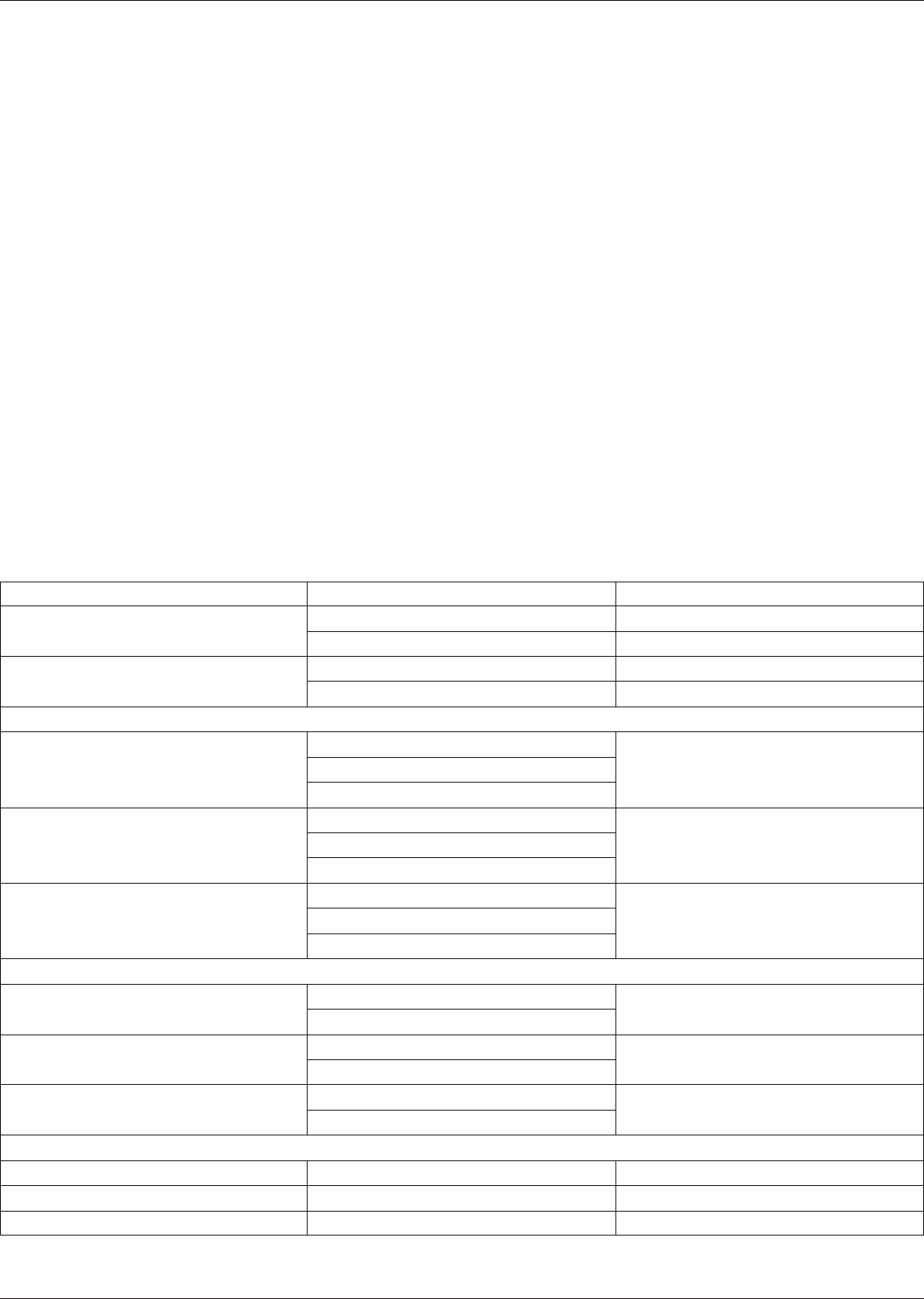
Table 7-1 is a guide for choosing the right cleaning chem-
istry for stencil and/or misprint cleaning applications.
7.3 Solvent Cleaning A hydrocarbon solvent represents
an organic compound containing the elements carbon and
hydrogen. These compounds are primarily from petro-
leum’s, coal tar and plant sources. The principle types of
organic solvents include alcohols, aliphatic petroleum’s,
aromatic hydrocarbons, oxygenated and halogenated sol-
vents, esters and terpenes. A general rule of solvent clean-
ing is ‘‘like dissolves like,’’ which means that usually non-
polar contaminants are best removed by nonpolar solvents,
while polar or ionic contaminants are best removed by
polar solvents.
7.4 Aqueous Cleaning Aqueous cleaning refers to those
processes in which a substrate is first washed with a water
based cleaning agent, generally followed by a water rinse
(DI or facility water). Water based cleaning agents can be
defined as a combination of water and an additive, usually
organic. These agents are generally combined with some
form of mechanical agitation, such as spray in air, spray
under immersion or ultrasonic that promotes the removal of
the contamination such as solder paste and SMT adhesives.
When cleaning stencils and misprinted electronic assem-
blies, the objective is remove contaminates such as solder
paste, flux residue (one side misprinted the other reflowed
or wave soldered) from the surface of stencil or electronic
assembly. Once the wash step is completed, the parts are
rinsed with water, either DI or facility water, to remove the
cleaning agent and contamination. The parts are then dried,
through either heated air or ambient air in the case of sten-
cils. The quality of the rinse water needed in a cleaning
application depends on the substrate; for example, facilities
water can be sufficient for stencils but is usually not suffi-
cient for electronic assemblies.
Table 7-1 Cleaning Chemistry Selection Guide
Process Nonreflowed Solder Paste/Flux Uncured Adhesive
Manual Stencil Cleaning
Solvent Wipe Solvent Wipe
Aqueous Wipe Aqueous/Solvent Wipe
Stencil Printer Understencil Wipe
Solvent Wipe Solvent Wipe
Aqueous Wipe Aqueous/Solvent Wipe
Aqueous/DI-Water Rinse
Spray Under Immersion
Aqueous
Aqueous/Solvent Mix
Aqueous Surfactant
Aqueous Surfactant
Aqueous/Solvent Mix
Ultrasonic Agitation
Aqueous
Aqueous/Solvent Mix
Aqueous Surfactant
Aqueous Surfactant
Aqueous/Solvent Mix
Spray in Air
Aqueous
Aqueous/Solvent MixAqueous Surfactant
Aqueous/Solvent Mix
Aqueous/No Rinse
Spray Under Immersion
Aqueous Surfactant
Aqueous/Solvent Mix
Aqueous/Solvent Mix
Ultrasonic Agitation
Aqueous Surfactant
Aqueous/Solvent Mix
Aqueous/Solvent Mix
Spray In Air
Aqueous Surfactant
Aqueous/Solvent Mix
Aqueous/Solvent Emulsion
Solvent Cleaning
Spray Under Immersion Solvent Solvent
Ultrasonic Solvent Solvent
Spray in Air Solvent Solvent
February 2007 IPC-7526
11