YSi-V_Ope_E.pdf - 第106页
A-7 Appendix 3.4 Maintenance T he UPS battery will wear down, reaching the end of its service life after the UPS has been operated for a long time. When the battery is low , the UPS backup time during power failures beco…
A-6
Appendix
3.3 Operation and setting
3.3.1 Front panel
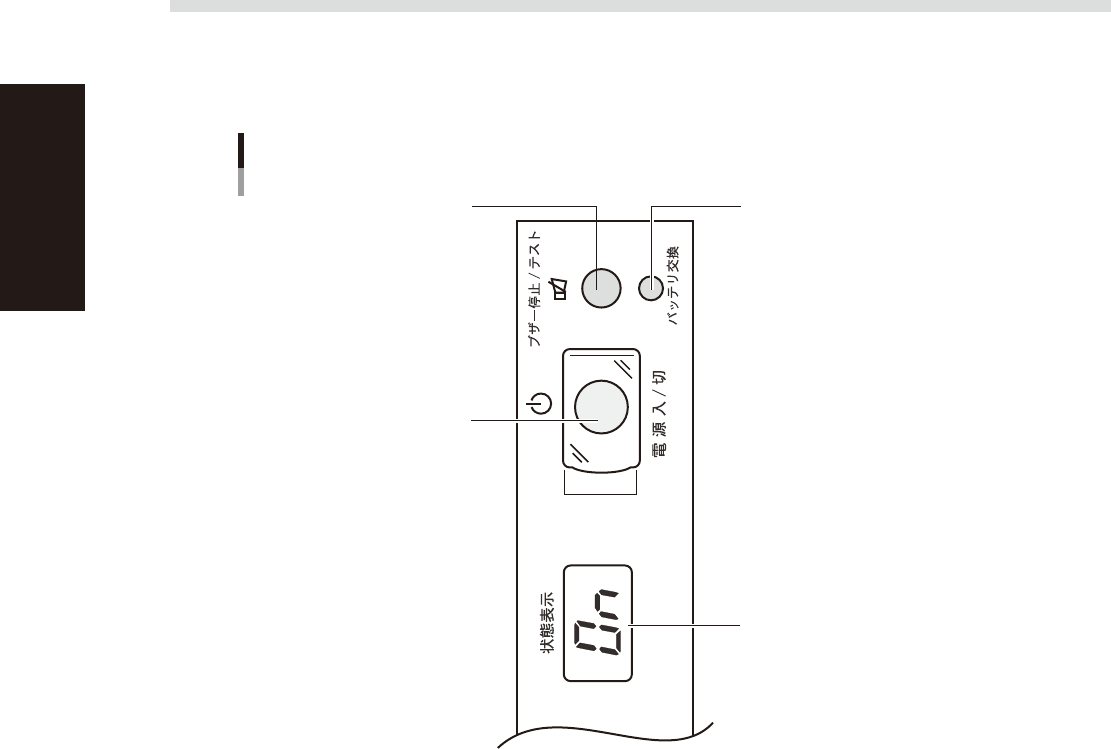
The USP front panel is shown below.
Front panel
"Beep Stop / Test" switch "Battery Replacement" indicator lamp
"Power" switch
Digital "Status" display
23A02-K1-00
3.3.2 Operation during normal operation (power is normal)
No special operations are required as long as the UPS operates normally. Use the YSi-V power switch to turn
the YSi-V on and off, just as operating a YSi-V not equipped with a UPS.
3.3.3 Operation during power failure or trouble
If trouble occurs with the power supply due to a power failure or other reasons, the UPS detects the error and
automatically starts providing backup power. At the same time, the YSi-V application software receives the
error signal from the UPS and sets the YSi-V to emergency stop. The backup state is then maintained for 1
minute while waiting for the power to be restored.
When the power is restored:
Take out the board and then resume inspection.
If the power does not recover when 1 minute has passed after a power failure:
The YSi-V automatically starts shutting down the YSi software. To protect the hard disk during this shutdown
process, the data that was being edited is not saved. After AC power is restored, the YSi-V automatically turns
on and restarts YSi software.
A-7
Appendix
3.4 Maintenance
The UPS battery will wear down, reaching the end of its service life after the UPS has been operated for a long
time. When the battery is low, the UPS backup time during power failures becomes short and in worst cases
the battery dies before the machine shutdown process is finished. To prevent this, the UPS battery must be
replaced periodically.
The UPS itself will also gradually wear down after extended operation time and must be replaced when the end
of its service life is reached.
3.4.1 Battery replacement period
If the auto battery test or the self-diagnostic test results in any of the following, see "3.5 Troubleshooting".
· The “Status” display flashes.
· The “Battery replacement” indicator lamp flashes.
· The “Beep” sound goes off.
n
Auto battery test function
This test checks once per 4 weeks whether the battery needs to be replaced and whether the internal circuit is operating
normally.
n
Self-diagnostic test
Press the "Beep Stop / Test" switch on the UPS for at least 0.5 seconds and then release it. A self-diagnostic test will be
run.
n
Expected UPS battery life
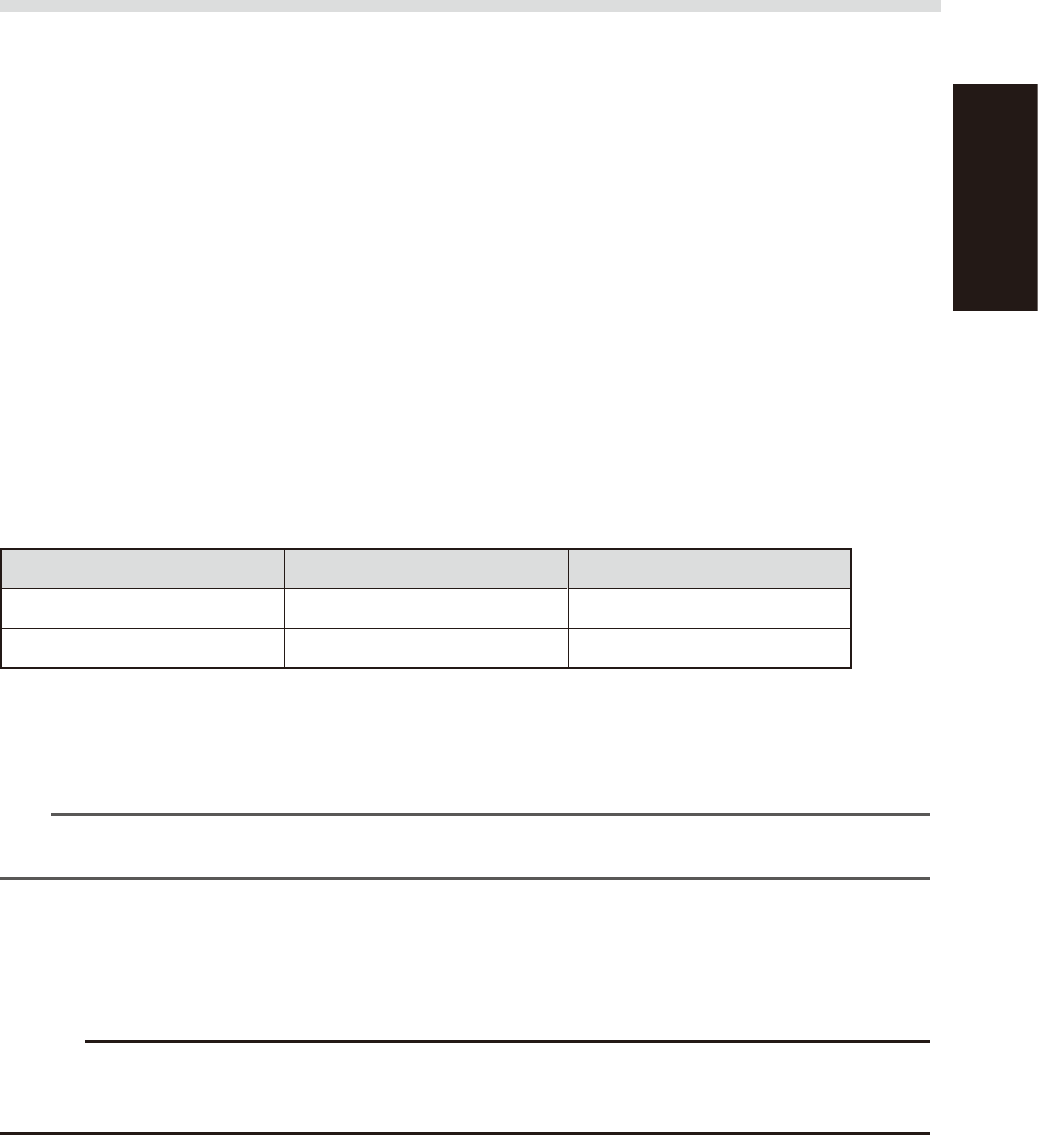
Average ambient temperature Expected battery life Replacement period
20°C 4 to 5 years 4 to 5 years after starting use
20°C 2 to 2.5 years 2.5 years after starting use
3.4.2 Battery replacement
When replacing the UPS battery, refer to the instruction manual that comes with the UPS. A Phillips
screwdriver is required to replace the battery.
n
NOTE
After replacing the UPS battery, write the date you replaced the battery on the labels which are stuck to the UPS and
the left side of the main switch.
3.4.3 Replacement battery storage
When the replacement battery has been stored for a long time, it must be recharged periodically. This is
because the battery gradually discharges if left stored without being recharged and will finally reach a level
where recharging is impossible.
c
CAUTION
When you store a UPS battery as a spare, connect the "AC input" plug into a power outlet once every 3 months for 12
hours or more in order to recharge the UPS. Avoid storing the UPS battery in locations subject to high temperatures.
Store it at room temperature.
A-8
Appendix
3.5 Troubleshooting
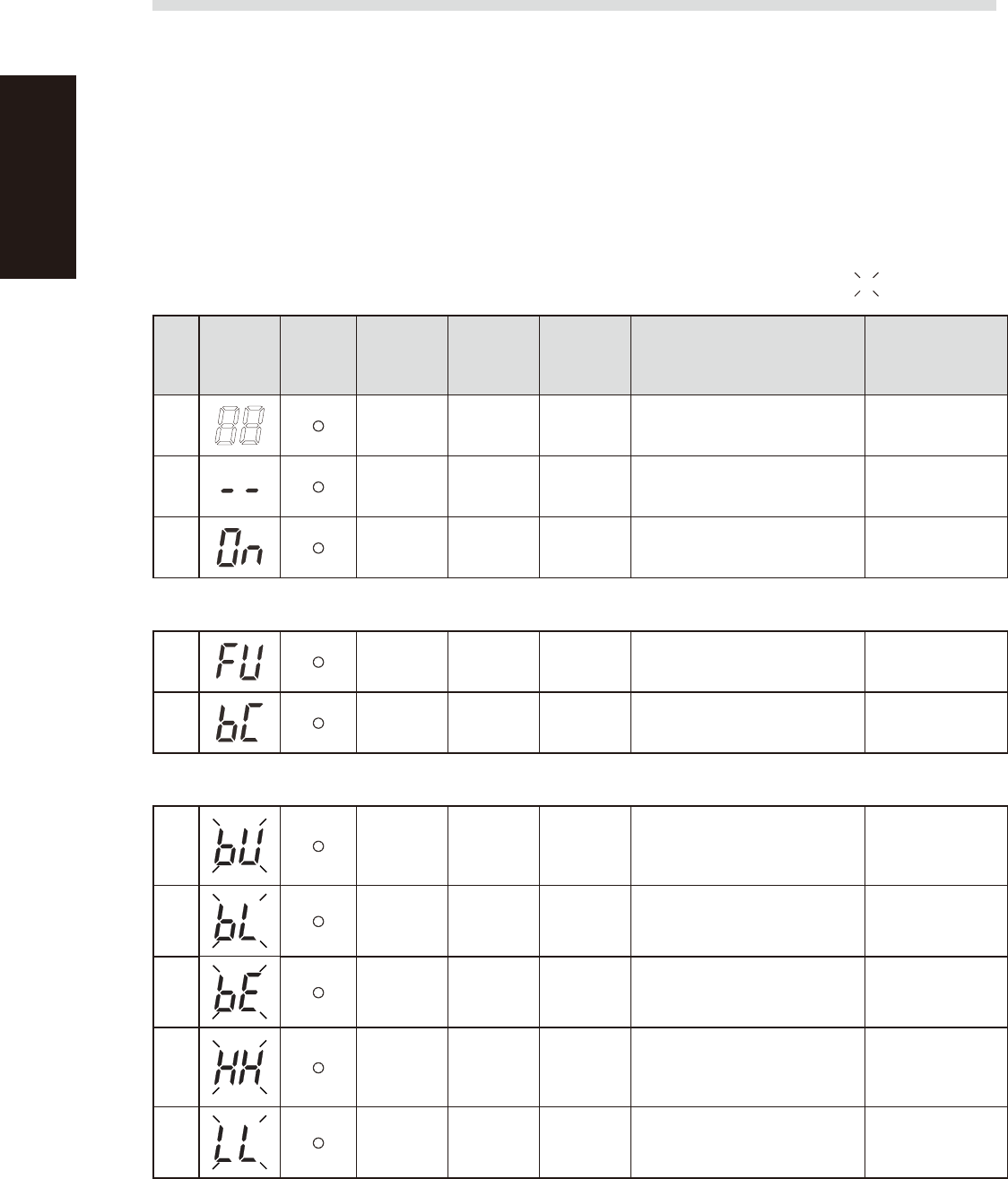
The UPS shows the status on the digital display and sounds a beep to alert you of an error or problem. See
the table below ("Meaning of beeps and displays") for information on alarms and UPS operation status and
their solutions.
n
To stop the beep
To stop the beep sound triggered by an error or problem, press the "Beep Stop / Test" button.
If another error or problem occurs, then a beep will sound regardless of whether the previous peep was stopped with this
button.
n
Meaning of beeps and displays
Displays and beeps during normal operation : Blinking
No.
Status
display
Battery
replacement
indicator
lamp
Beep Output Charging Description Solution
1
None OFF OFF
No AC power input
Operation stopped
–
2
None OFF ON
AC power is input
Power switch “OFF”
–
3
None ON ON
Power switch “ON”
Operating normally
–
Displays and beeps while testing
4 None ON
OFF
Discharging
Self-diagnostic test in progress –
5
None ON
OFF
Discharging
Auto battery test in progress –
Displays and beeps during power failure or AC input error
6
Intermittent
4-second
intervals
ON
OFF
Discharging
Backup is operating due to power
failure or AC input error. The
battery will be depleted if backup
operation continues.
Perform shutdown
operations for the
connected devices
and stop them.
7
Intermittent
1-second
intervals
ON
OFF
Discharging
(Same as above.)
Battery level is low, so output will
stop soon.
(Same as above.)
8
None OFF
OFF
Discharging
Battery is dead, so output stopped.
(This is displayed only for a few
seconds.)
Charge the battery.
9
None OFF (ON)
AC input voltage or frequency is
too high (over)
Power switch “OFF”
Use within the input
voltage/frequency
range described in
the specifications.
10
None OFF (ON)
AC input voltage or frequency is
too low (under)
Power switch “OFF”
(Same as above.)