IPC-2223-Design-Standard-for-Flex-and-Rigid-Flex-Circuits.pdf - 第15页
Important Element #7 Pre-bake Requirements The pre-baking of ex circuits, immediately prior to assembly , is an industry standard requirement that is called out in IPC 2223 section 5.3.5, IPC- F A-251 section 3.2.1.1.2 …
“
EPOXY STRAIN RELIEFS ARE AN OPTIONAL
FEATURE THAT MAY BE REQUIRED TO ENSURE
BEND RELIABILITY
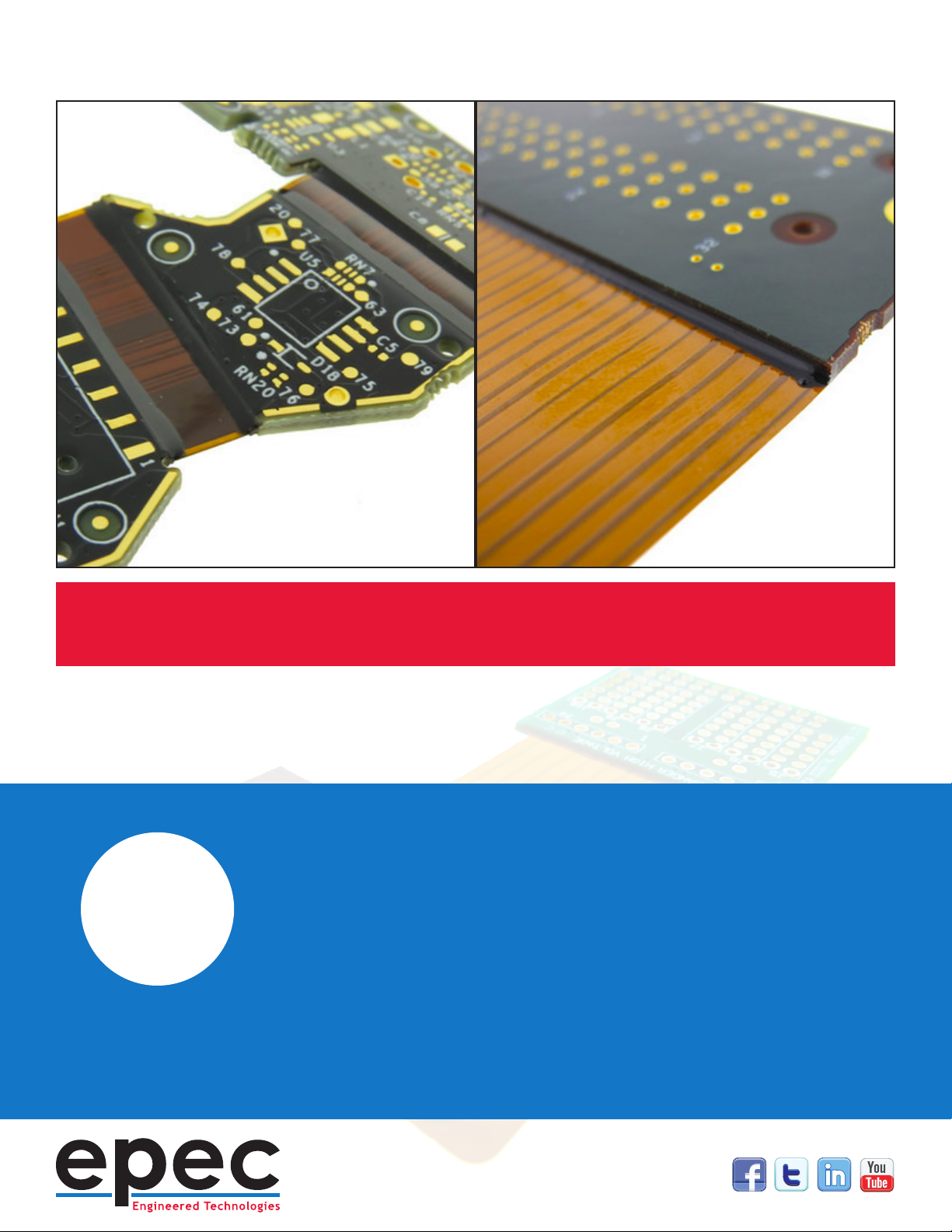
Epoxy strain relief examples. Black bead of Eccobond 45/15 applied at rigid to flex transitions.
Important Element
#7
Pre-bake Requirements
The pre-baking of ex circuits, immediately prior to assembly, is an industry
standard requirement that is called out in IPC 2223 section 5.3.5, IPC-
FA-251 section 3.2.1.1.2 and by material suppliers (i.e. DuPont Pyralux
Technical Manual section 5.23). This applies to all polyimide based ex and
rigid-ex designs. Polyimide is hydroscopic and will adsorb approximately
2% by weight in moisture at 20°C and 50% relative humidity. The moisture
must be removed otherwise it will lead to delamination of the ex area
coverlays and/or rigid areas. If multiple assembly cycles are required,
additional pre-bakes may be required depending upon time between
cycles.
Pre-bake is performed at 120°C for 2-10 hours depending upon the specic
design. Parts need to be congured in the pre-bake oven to allow air ow
around all sides.
Pre-baking parts at the manufacturing stage is not a viable or practical
option. Parts that are shipped vacuum packed with a desiccant will still
contain moisture and require a pre-bake. Pre-baking the parts in advance
of assembly and then storing the parts in a “dry box” is not an IPC or
material supplier recommended practice.
“
PRE-BAKING OF FLEX AND RIGID-FLEX
CIRCUITS PRIOR TO ASSEMBLY PREVENTS
COVERLAY, SITFFENER, AND LAYER TO LAYER
DELAMINATION
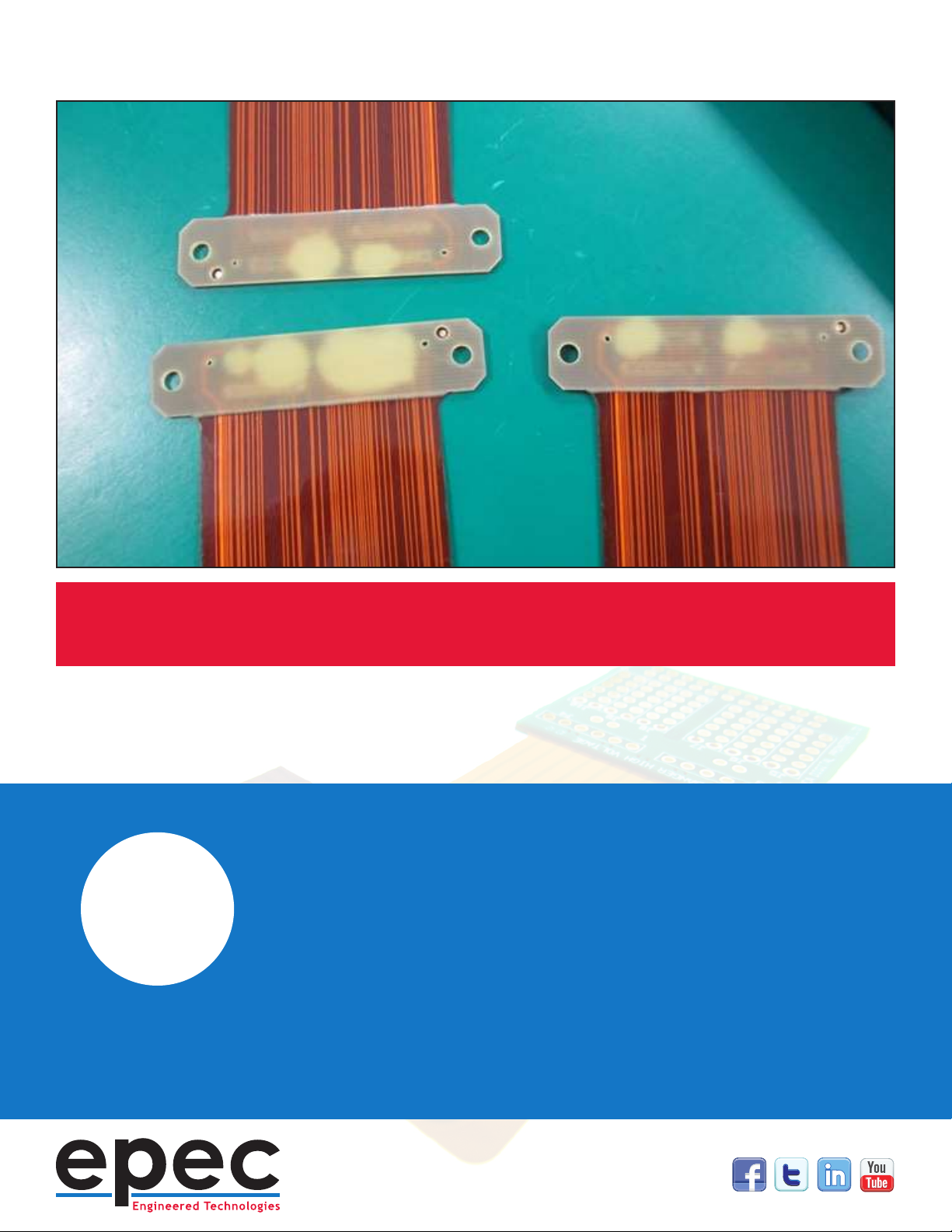
Image of stiffener delamination due to lack of pre-bake prior to assembly.