IPC-2223-Design-Standard-for-Flex-and-Rigid-Flex-Circuits.pdf - 第8页
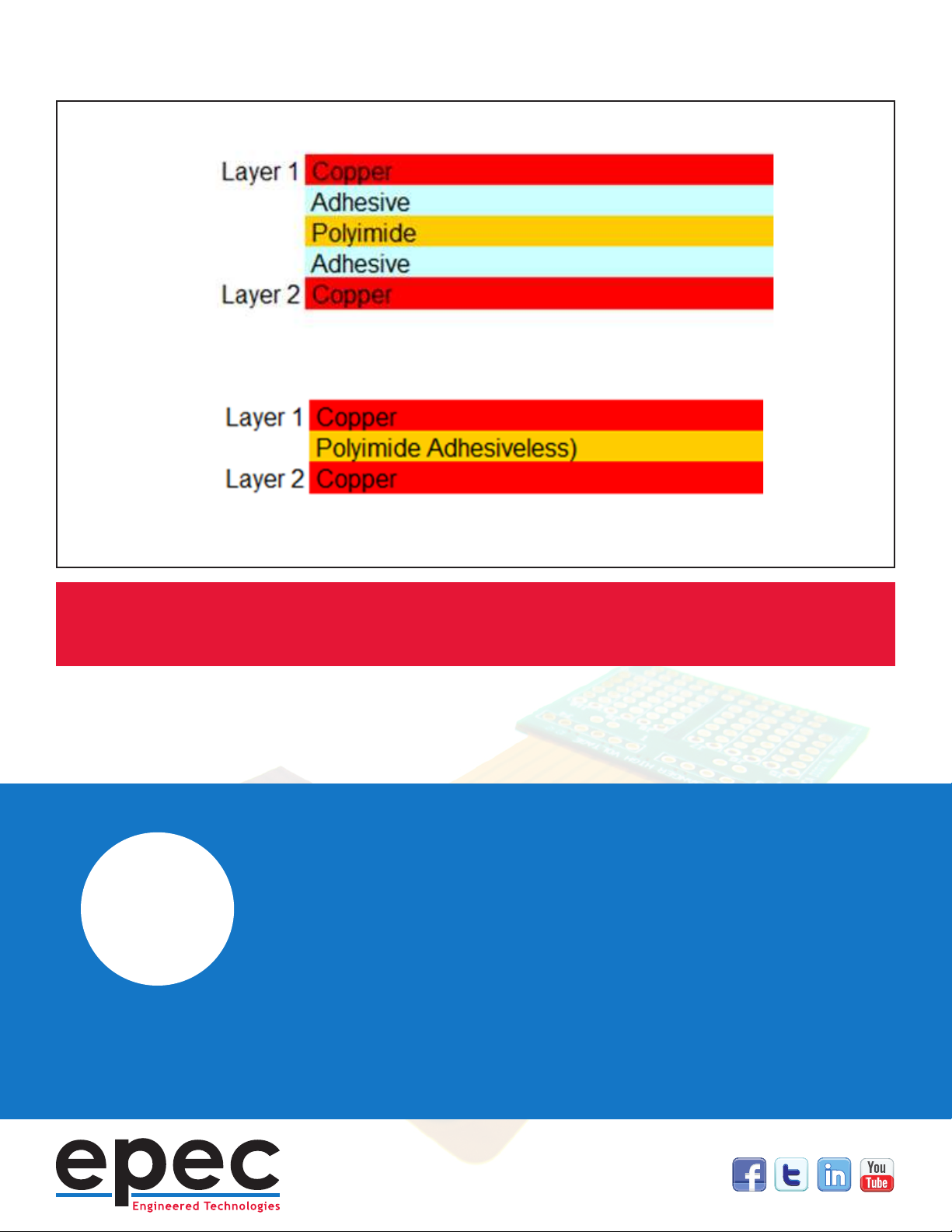
“ SPECIFY ADHESIVELESS FLEX CORE BY THE IPC SPECIFICA TION IN THE DRA WING NO TES AND GRAPHICALL Y IN THE MA TERIAL ST A CKUP IN THE F ABRICA TION DRA WING Adhesive flex cor e (top), adhesiveless flex cor e (bottom).
Important Element
#3
Adhesiveless Flex Cores
The ex core materials used play an important part in meet IPC 2223
requirements. Flex cores are available in two congurations that dier in
how the copper is attached to the polyimide core. The original generation
ex cores utilize a exible adhesive to bond the copper layer to the
polyimide. The latest generation has the copper directly attached to the
polyimide without the use of an adhesive. This material is referred to as
“adhesiveless” throughout the industry.
IPC 2223 specically calls out the use of adhesiveless ex cores only.
As the ex cores exist throughout the entire part using adhesiveless ex
cores eliminates a source of adhesive from within the rigid areas and the
associated via hole reliability concerns dened earlier in this Ebook. An
added benet is the reduced thickness, improved exibility and improved
bend reliability of thinner adhesiveless ex cores.
“
SPECIFY ADHESIVELESS FLEX CORE BY THE
IPC SPECIFICATION IN THE DRAWING NOTES
AND GRAPHICALLY IN THE MATERIAL STACKUP
IN THE FABRICATION DRAWING
Adhesive flex core (top), adhesiveless flex core (bottom).
Important Element
#4
Rigid-Flex Air Gap
Some designs require higher ex layer counts to meet the circuit routing
requirements. Minimizing the ex layer count to 1 or 2 layers has the
multiple advantages of improved exibility, tighter bend capabilities, and
reduced cost but is not always achievable in higher density designs. For 3
ex layers or more IPC recommends, whenever possible, conguring the
ex layers as independent pairs rather than laminating all the ex layers
together into one stack. This conguration is referred to as an “air gap”
construction due to the open space between ex layers. The recommended
air gap construction eliminates the all ex adhesives within the rigid
sections and the associated via hole reliability concerns.
IPC 2223 does allow laminating all ex layers together for designs with two
sided shielding or stripline impedance control requirements. This is with the
recommendation that the use of adhesive layers be minimized and is not to
exceed 10% of the total ex thickness.
An added benet of the air gap construction is signicantly improved
exibility. The ex pairs act individually when bent and provide almost as
much exibility as a two layer only conguration