IPC-2223-Design-Standard-for-Flex-and-Rigid-Flex-Circuits.pdf - 第5页
Rigid-Flex Selective Coverlay Construction Evolving technology and design complexity , smaller VIA holes and RoHS assembly temperatures necessitated a change in the construction method of the ex area coverlays. Previous…
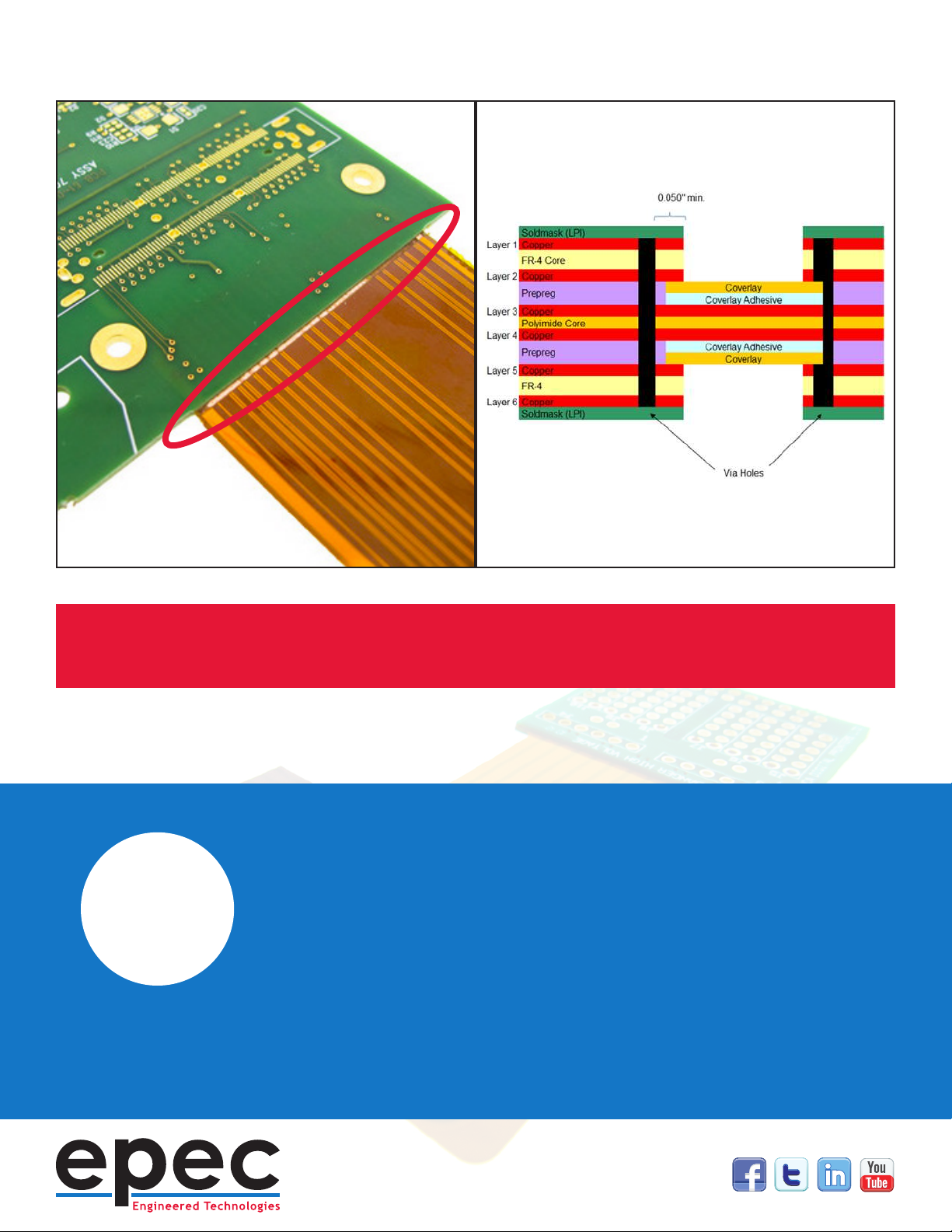
Image (left) via hole location meets IPC requirements. Image (right) is in violation.
“
VIA AND PTH SPACING TO THE RIGID/FLEX
TRANSITION IS CRITICAL TO FINISHED PART
RELIABILITY
Rigid-Flex Selective Coverlay Construction
Evolving technology and design complexity, smaller VIA holes and RoHS
assembly temperatures necessitated a change in the construction method
of the ex area coverlays. Previous methods applied the coverlays
throughout the entire design, including rigid areas. This old method resulted
in all vias and PTH holes being drilled through the coverlay adhesives. As
mentioned in the previous section, this exposes the vias to the thermal
expansion issue of the adhesive and incurs the associated reliability issues.
IPC Section 5.2.2.2 denes that coverlays are to be applied “selectively”
to the ex areas only with only a small distance of engagement into the
rigid sections. This method has the added benet that the coverlays and
adhesives are not a component in the rigid area lamination which results
in a stronger lamination. This method does have a slight cost impact as
the coverlays require an additional machining process to remove the
material from the rigid areas. It is important to dene a selective coverlay
construction in the data set to ensure the nished parts meet IPC 2223.
Important Element
#2
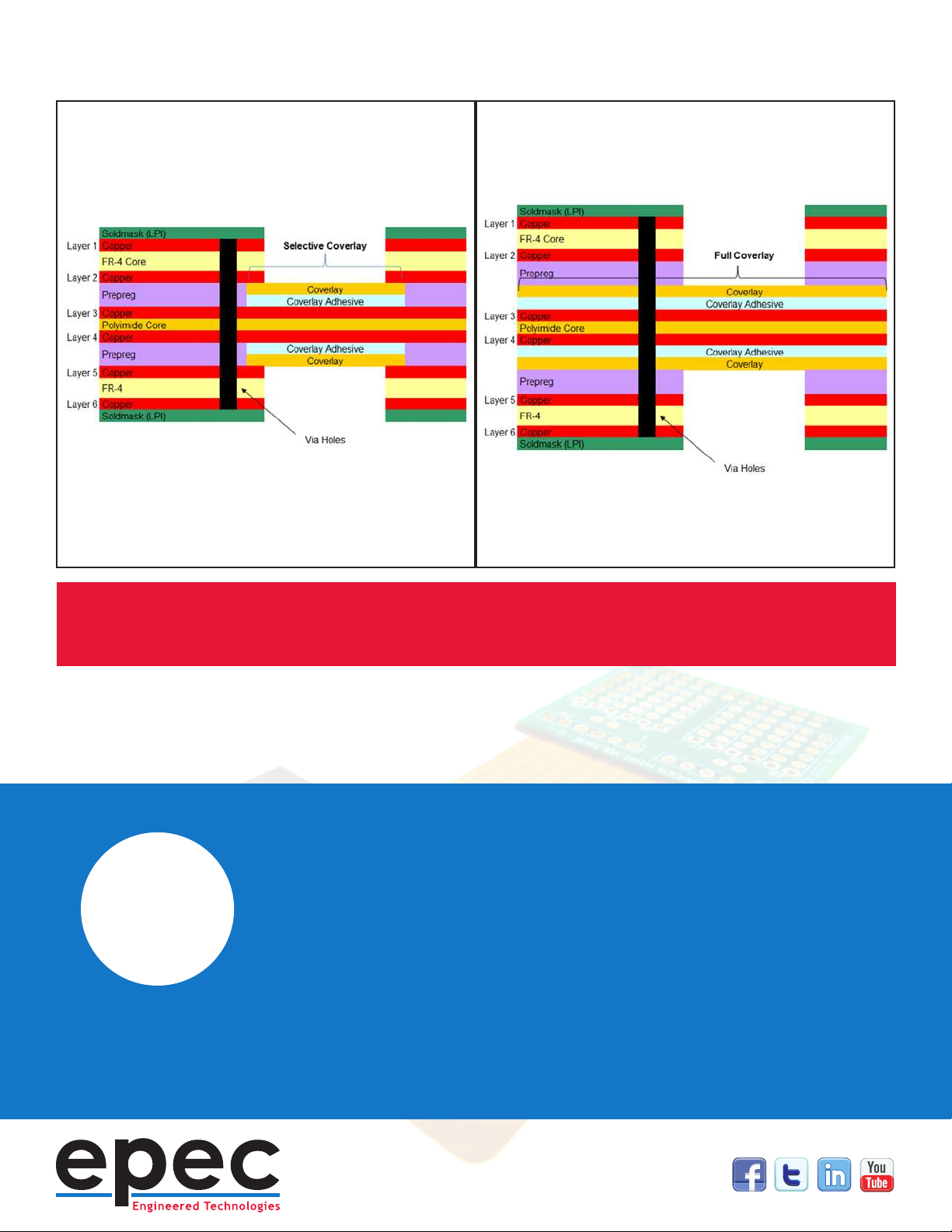
Correct selective coverlay (left). Coverlays engage rigid areas by approximately 0.025”.
“
A SELECTIVE COVERLAY CONSTRUCTION IS
ALSO KNOWN AS A “BIKINI BUILD” SINCE THE
COVERLAYS COVER ONLY WHAT NEEDS TO BE
COVERED, THE FLEX SECTIONS.