N5194A矢量适配器数据表.pdf - 第19页
Page 19 Find us at www .keysight.com Level ac curacy Rel ative to CW signa l T es t condi tions: ALC off, with powe r alignm ent pe rfo rmed Frequency 1 50 MHz to 1 5 GHz ± 0. 75 dB > 1 5 G Hz to 2 0 G Hz ± 1 .0 dB &g…
Page 18
Find us at www.keysight.com
Pulse Modulation
Pulse types
Defined by waveform
Pulse Waveform Maker – a built-in feature to define simple IQ pulse types. These can be called by the PDW. However, it does not have
marker capability.
On/Off ratio
Integrated over 100 Hz bandwidth
External LO mode 100 dB
Internal LO mode 105 dB
Rise/fall times
1
Defined by IQ waveform. Minimum rise/fall time
Vector mode 4.0 ns (nom)
Enhanced vector mode (opt BB2) 2.0 ns (nom)
Wideband vector mode (opt BB1) 0.5 ns (nom)
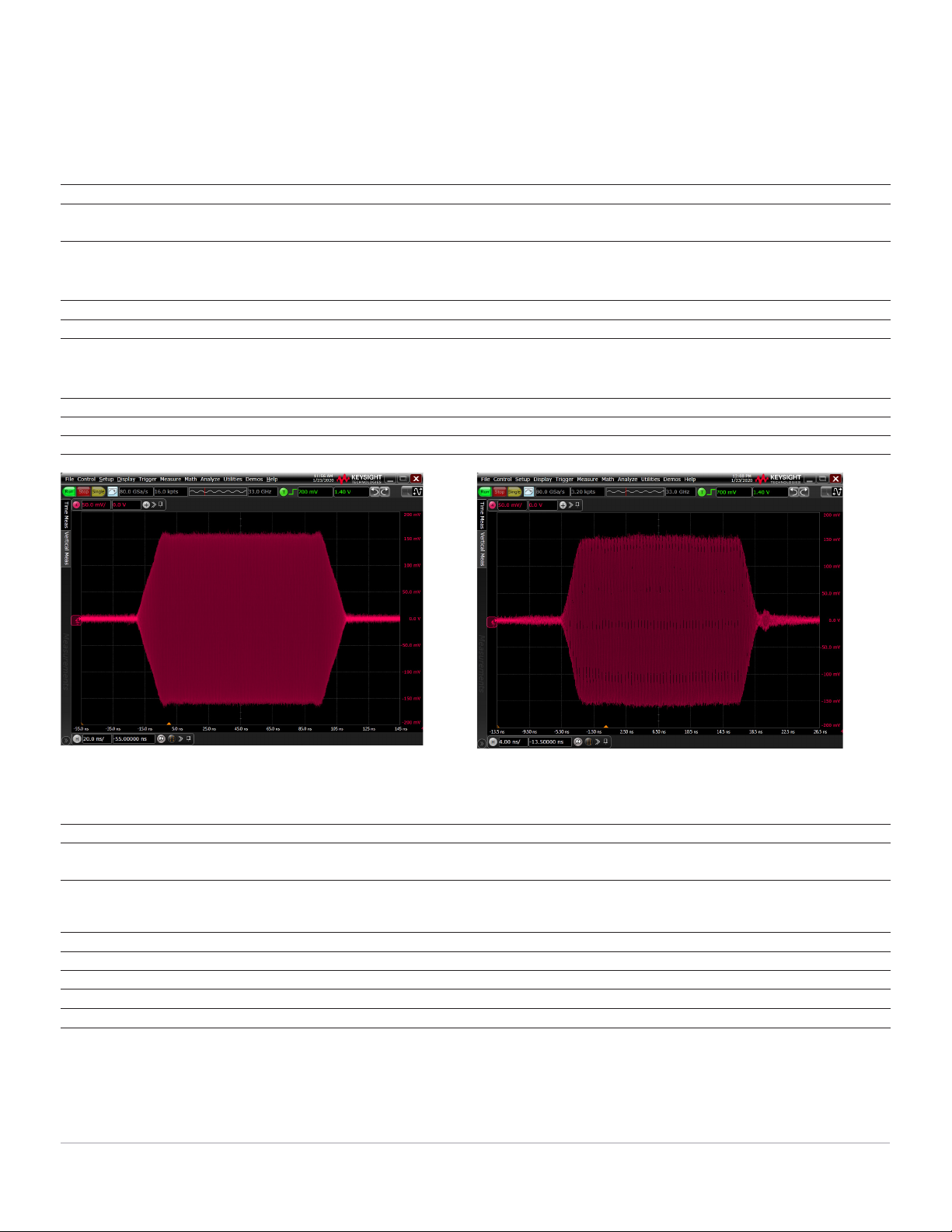
Figure 11. 100 ns pulse with 16 ns rise/fall times. Figure 12. 20 ns pulse with 2 ns rise/fall times.
Overshoot
Vector mode 4 % (typ) up to 32 GHz
Enhanced vector mode (opt BB2) or
Wideband vector mode (opt BB1)
10 % (typ) up to 32 GHz
3
Pulse Width
2
Minimum Maximum
Vector mode 8 ns (nom) 8 ns (nom)
Enhanced vector mode 2 s (nom) 4 ns (nom)
Wideband vector mode 2 s (nom) 1 ns (nom)
Pulse repetition interval 250 ns (nom)
1. Rise/fall times are determined by the sample rate, but may experience degradation of pulse shape with extremely short rise/fall times. A minimum of 4 or more
samples is recommended for better rise/fall shape quality.
2. Pulse width is specified as the width of the RF ON pulse measured from the 50% points on the rising and falling edges. Minimum pulse width is determined
by the sample rate, but may experience degradation of pulse shape with extremely short rise/fall times. A minimum of 8 or more samples is recommended for
better pulse shape quality. Maximum pulse width is determined by the available baseband generator memory and sample rate.
3. Except at 2.199 GHz, where overshoot is 12% (nom).

Page 19
Find us at www.keysight.com
Level accuracy
Relative to CW signal
Test conditions: ALC off, with power alignment performed
Frequency
1
50 MHz to 15 GHz ± 0.75 dB
> 15 GHz to 20 GHz ± 1.0 dB
> 20 GHz to 32 GHz ± 0.75 dB
Video feed through
Frequency Vector mode, spec (typ) Wideband or enhanced vector mode
< 1.8 GHz 250 mV p–p (100) —
≥ 1.8 GHz 25 mV p–p (20) —
< 1.2 GHz — 250 mV p–p (100)
≥ 1.2 GHz — 25 mV p–p (20)
Pulse compression
Mode Vector mode
2
Wideband or enhanced vector mode
3
External LO ± 5 ns ± 2.5 ns
Internal LO
4
± 5 ns
1. Measured at the RF center frequency of the pulse.
2. Measurement conditions: pulse rise/fall times are 16 ns each, pulse width = 100 ns, pulse period = 1 us.
3. Measurement conditions: pulse rise/fall times are 5 ns each, pulse width = 20 ns, pulse period = 500 ns.
4. Internal LO specifcation only applies up to 20 GHz.

Page 20
Find us at www.keysight.com
Internal Baseband Generator
Channels
2 digital channels, I and Q. (no analog inputs or outputs)
Resolution
16 bits (1/65,536)
Baseband waveform memory (playback)
Sample rate Standard memory size Option BBM
250 MSa/s 512 MSa per channel 6 GSa per channel
2 GSa/s (opt BB1 or BB2 only) 512 MSa per channel 4 GSa per channel
Waveform memory (non–volatile storage on removable SSD drive)
512 GBytes
Waveform segments
Vector mode Wideband or enhanced vector
mode
Minimum segment length 64 samples (256 ns) 256 samples (128 ns)
Maximum segment length Standard memory size 512 MSa 512 MSa
Option BBM 2 GSa 4 GSa
Maximum number of segments 65,536 65,536
Minimum memory allocation 256 samples or 1 kbyte blocks 256 samples or 1 kbyte blocks
Minimum quantums
1
1 sample 32 samples
Sample clock
Standard clock rate Option BB1 or BB2
Sample rate 250 MSa/s 250 MSa/s and 2 GSa/s
RF modulation bandwidth
Clock rate Bandwidth
250 MSa/s (standard) 200 MHz
2 GSa/s (Opt BB1) 1.6 GHz
2, 3
2 GSa/s (Opt BB2) 400 MHz
3
Triggers
Source External, trigger key, external, remote SCPI trigger over LAN or USB
External trigger inputs Triggers 1–2: SMA rear–panel connectors
Triggers 3–10: SMB rear–panel connectors
Trigger In: SMB rear–panel connector
All trigger ports have 4 ns input delay resolution
External polarity Negative, positive
Types Single, Continuous free run, Continuous trigger and run
1. A quantum is the minimum number of samples needed to describe a waveform segment.
2. At band crossings at 24, 28.5, 32, 36, and 40 GHz, bandwidth is limited to 800 MHz.
3. Full bandwidth applies for center frequencies > 1.2 GHz.