A000062-datasheet.pdf - 第16页
6.5 Product Topology In the following dr awing you can see the main integrated cir cuits and passive components of the Arduino Due board. Arduino Due T opology Ref. Description U1 Atmel SAM3X8E ARM Cortex-M3 USB1 Native …
6.4 Power Supply
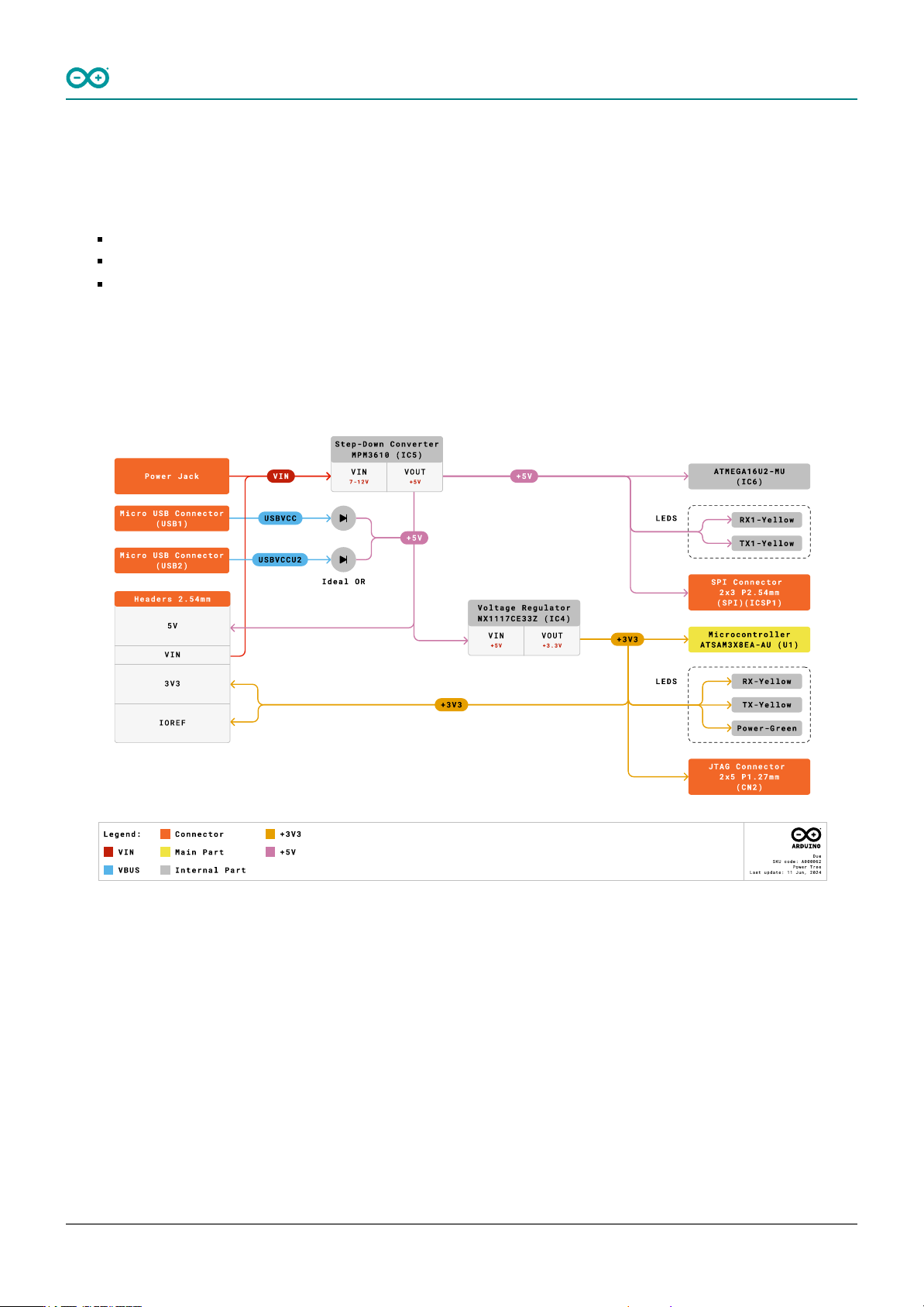
The Arduino Due can be powered in multiple ways:
USB Type-B port (Native port and Programming port).
Using an external voltage source connected to VIN pin, which has a recommended voltage range of 7-12 VCC.
The Power Jack: The Due can be powered using a DC power supply connected to the power jack, which accepts
a voltage range of 7 to 12 V.
It is essential to note that the Arduino Due operates at 3.3 V, so any external power source must be
regulated to this voltage level. Additionally, the power supply should be able to provide sufficient current
for the board's operation and any connected peripherals.
Arduino Due Power Tree
Arduino® Due
15 / 50 Arduino® Due Modified: 15/09/2026
6.5 Product Topology
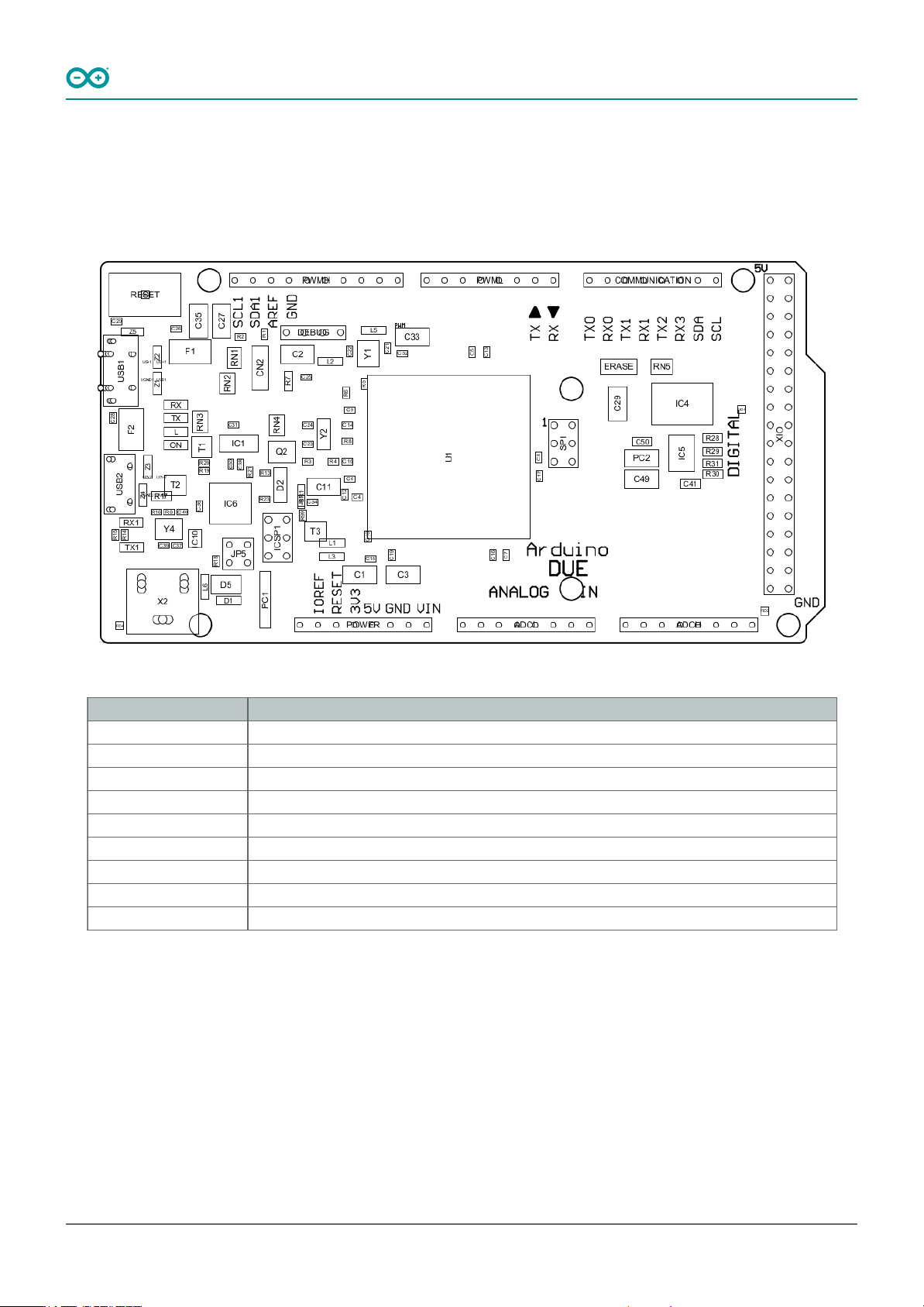
In the following drawing you can see the main integrated circuits and passive components of the Arduino Due
board.
Arduino Due Topology
Ref. Description
U1 Atmel SAM3X8E ARM Cortex-M3
USB1 Native USB port
USB2 Programming USB port
X2 Power Jack VIN 7-12 VCC
ERASE ERASE Button
RESET Reset Button
DEBUG Debug JTAG pinnout
SPI SPI pinout
ICSP1 ICSPI1 Pinout
Arduino® Due
16 / 50 Arduino® Due Modified: 15/09/2026
6.5.1 JTAG Connector
Debugging capabilities are integrated directly into the Arduino Due and are accessible via the 6-pin JTAG connector.
Pin Function Type Description
1 Reset Reset Reset
2 GND Power GROUND
3 TDI Digital Test Data In
4 N/C - Not Connected
5 TDO Digital Test Data Out
6 GND Power GROUND
7 TCK Digital Test Clock
8 GND Power GROUND
9 TMS Digital Test Mode Select
10 +3V3 Power +3V3 Power Rail
JTAG pinout
6.5.2 Native USB Port
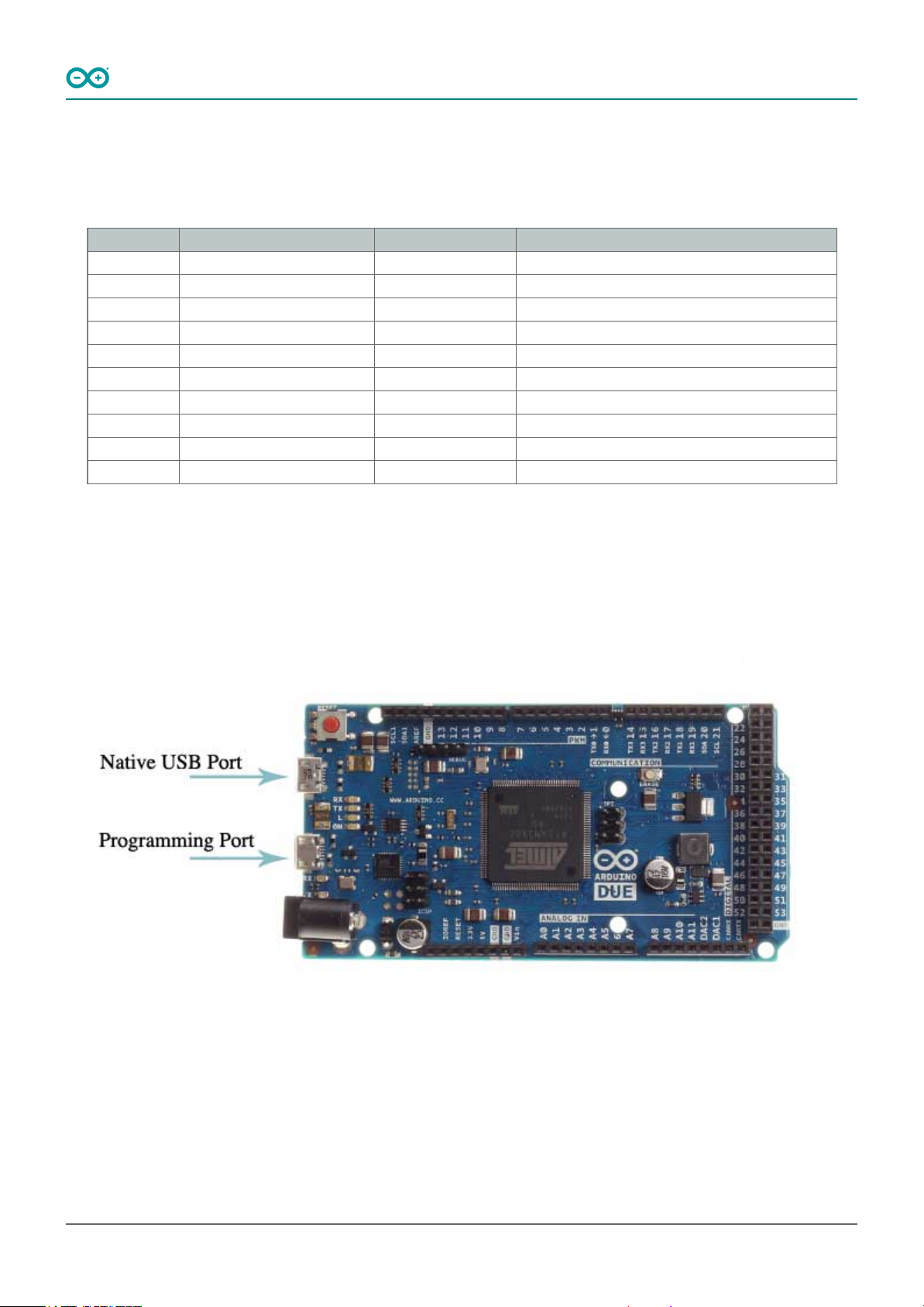
The Arduino Due's Native USB port features a USB Type-B connector. This port allows the board to communicate
directly with a computer as a USB device, enabling functionalities such as USB host/device capabilities and USB OTG
(On-The-Go) functionality.
Arduino Due USB port
Arduino® Due
17 / 50 Arduino® Due Modified: 15/09/2026