LA 302 Pressure Controller Manual.pdf - 第13页
Safety 1-7 SIG05_EN_A_0100 2000 Nordson Corporation Cleaning NOTE: Always refer to the manufacturer ’s Material Safety Data Sheet or material information sheet before working with any cleaning fluids. W ARNING: Never cle…
Safety
1-6
SIG05_EN_A_0100
2000 Nordson Corporation
Maintenance / Repair
Allow only qualified personnel to perform the procedures described in this
document. Work should only be carried out on a completely depressurized
system, following all safety procedures.
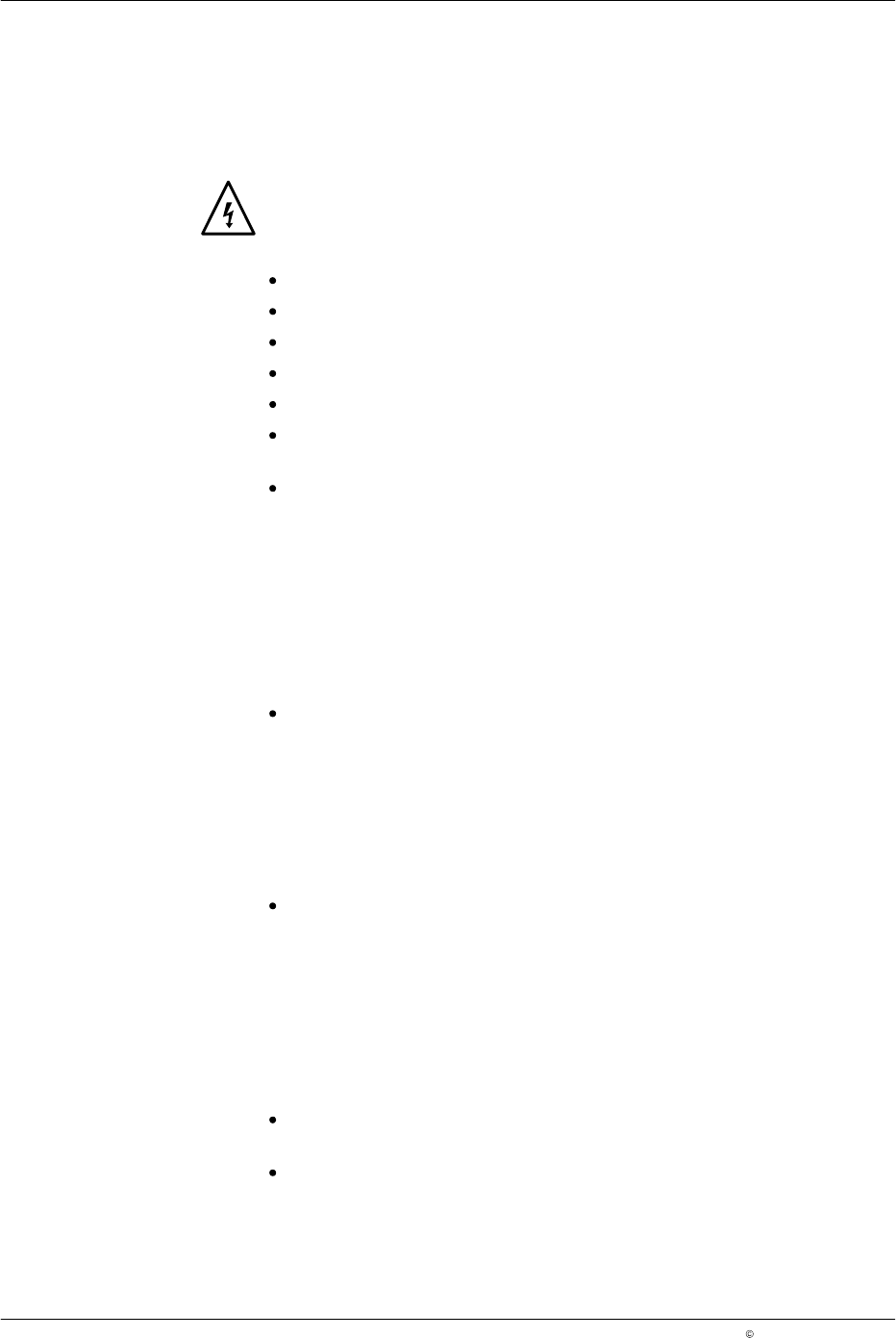
WARNING: Some voltage is still present in the control cabinet even after
equipment has been turned off at the main switch. Complete the following
steps prior to maintenance or repair:
Disconnect external power supply.
Lock out external power supply.
Check no voltage is present.
Ground and short.
Cover nearby live sections.
Secure pneumatically- and hydraulically-operated equipment against
uncontrolled movement.
Only use genuine Nordson parts.
Liquid Adhesive
NOTE: Depending on the configuration of the liquid adhesive application
system, high pressure may remain between application head and pressure
regulator or pump even after the system has been switched off using the
main switch or the emergency stop. This especially applies to multi−hose
configurations between pumps and application heads.
Prior to maintenance and repair work it is therefore essential to ensure
that all liquid adhesive application system components are
depressurized as follows:
1. Release input pressure in front of pump by shutting off customer
compressed air supply.
2. Release any remaining system pressure behind the pumps by
manually operating the application heads.
Switch off system electrically.
If liquid adhesive application system is left idle for extended periods (e.g.
overnight or long breaks) Nordson recommends applying Vaseline to the
application head nozzles to prevent them from drying out and becoming
blocked as a result.
Hot Melt Material
Follow the specific instructions provided in this manual to relieve the
system pressure in the entire unit.
Always use tools with insulated handles when removing or installing
components.
Safety
1-7
SIG05_EN_A_0100
2000 Nordson Corporation
Cleaning
NOTE: Always refer to the manufacturer’s Material Safety Data Sheet or
material information sheet before working with any cleaning fluids.
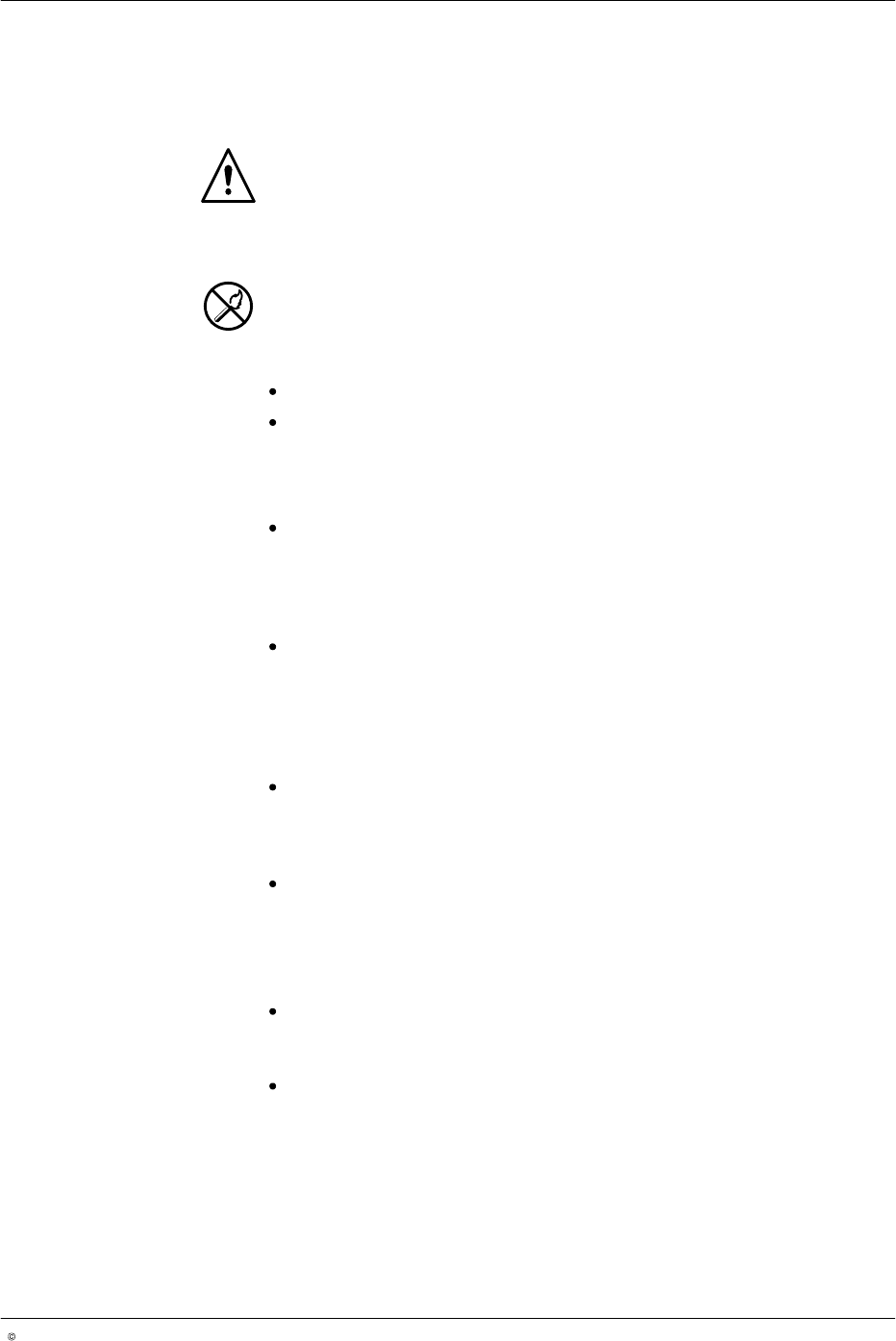
WARNING: Never clean any aluminum part or flush any system using
halogenated hydrocarbon fluids. Examples of common halogenated
hydrocarbons are: dichloromethylene, 1,1,1-trichloroethylene, and
perchloroethylene. Halogenated hydrocarbons may react violently with
aluminum parts.
WARNING: Fire, open flame, and smoking are prohibited when cleaning
fluids are used. Observe all explosion prevention regulations. Cleaning
fluids may only be heated using temperature-controlled and
explosion-protected heaters.
Never use an open flame to clean the system or its components.
Ensure sufficient room ventilation to draw off vapors.
Liquid Adhesive
Check that (warm) water can be used to clean the liquid adhesive
system components, possibly with the addition of household
washing−up liquid. If this is not possible, use only the cleaning fluid
stated in the liquid adhesive manufacturer’s information. If the
manufacturer recommends heating the cleaner, note the flash point.
Disposal must be according to the waste key in the DIN Safety Data
Sheet. Liquid adhesives or residue, solvent or separating agents must
not be released into open waterways. In the case of a leak or spillage,
contain liquid and if necessary use an absorbant material e.g. sawdust
to soak it up; then proceed according to the relevant waste disposal
regulations.
If the liquid adhesive application system is to be idle for an extended
period, the entire system should be flushed and outlets sealed with
Vaseline. Warm water is usually used to flush application systems with
which water based liquid adhesives are processed.
If the liquid adhesive manufacturer specially recommends a flushing
agent, the manufacturer’s safety and disposal details must be followed.
Hot Melt Material
Use only cleaning fluids designed or intended to be used with the hot
melt material being used in the unit. Never use paint fluids under any
circumstances.
Note the flash point of the cleaning fluid used. Only use a controlled
heating method to heat fluids.
Safety
1-8
SIG05_EN_A_0100
2000 Nordson Corporation
Liquid Adhesives
As there is a wide variety of liquid adhesives available with different
compositions and characteristics, it is impossible here to give an exhaustive
list of safety notes reflecting the typical characteristics of liquid adhesives.
The use of liquid adhesives in Nordson’s liquid adhesive application
systems therefore requires reference to the liquid adhesive manufacturer’s
documents beforehand.
Information relating to safety aspects e.g. concerning solvent content,
hazards and countermeasures in the event of liquid adhesive coming into
contact with skin or mucous membranes are contained in the technical data
sheets and the DIN Safety Data Sheets from the manufacturer.
NOTE:
It may be necessary to refer to the manufacturer’s notes on the use of
materials from a third party. These may be required for processing a
liquid adhesive, but hazards arising from their use are not necessarily
mentioned by the manufacturer of the liquid adhesive.
Liquid adhesives may still give off vapors when they are processed
correctly. The smell produced can cause some annoyance. This is
especially true where liquid adhesives are used that contain solvent,
thus requiring the use of breathing equipment e.g. a filter.
If the prescribed processing conditions are not followed, harmful
decomposition products may develop. Therefore, the vapors must be
removed.
Wash hands well before breaks and when work is finished.
If liquid adhesive comes into contact with eyes or mucous membranes,
rinse well with water − especially the eyes. Change damp clothes, and
seek medical advice if it is swallowed.
If solvents or separating agents are used to process a liquid adhesive,
follow the safety and disposal information from the manufacturer.