M20_Ope_E.pdf - 第71页
Chapter 2 Creating and Editing a Program 2-27 ① PC B Transfer Mode Two kinds of PCB transfer modes are available as shown below. Transfer mode PCB load timing Normal transfer After a component-mounte d PCB passes the con…
Chapter 2 Creating and Editing a Program
2-26
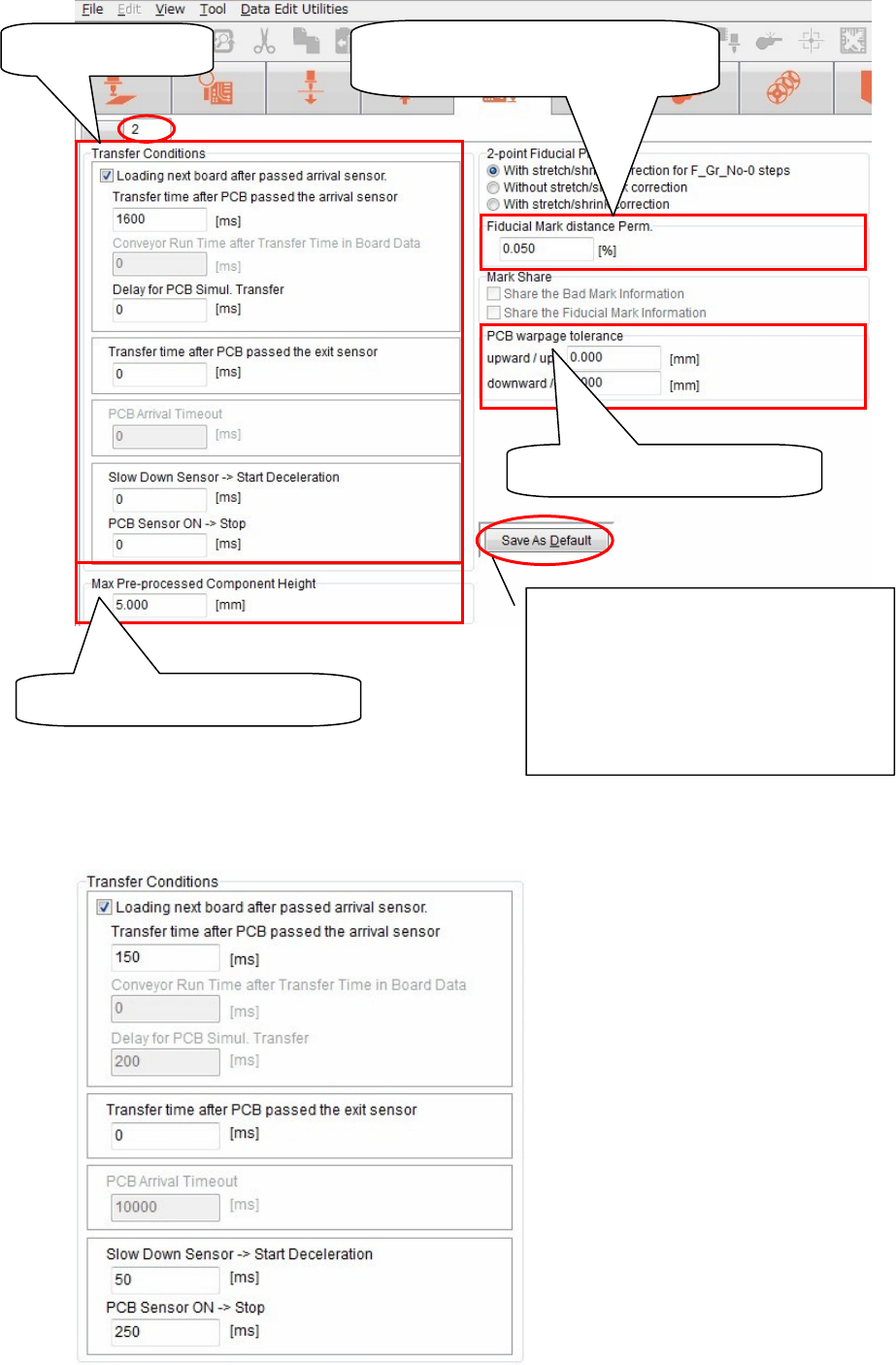
Menu: Board Data> Page 2
Transfer Conditions
The board loading timing and unloading timing can be adjusted.
Transfer Conditions
Height of pre-processed component
Permissible value of distance between
fiducial marks
PCB warpage tolerance value
<Save As Default> button
Saves the board data you have entered as
default values.
When clicking this button, the currently
set values become the default values that
are used when creating subsequent board
data newly.
Chapter 2 Creating and Editing a Program
2-27
① PCB Transfer Mode
Two kinds of PCB transfer modes are available as shown below.
Transfer mode PCB load timing
Normal transfer After a component-mounted PCB passes the conveyor exit sensor
Anticipate transfer After a component-mounted PCB passes the board arrival sensor
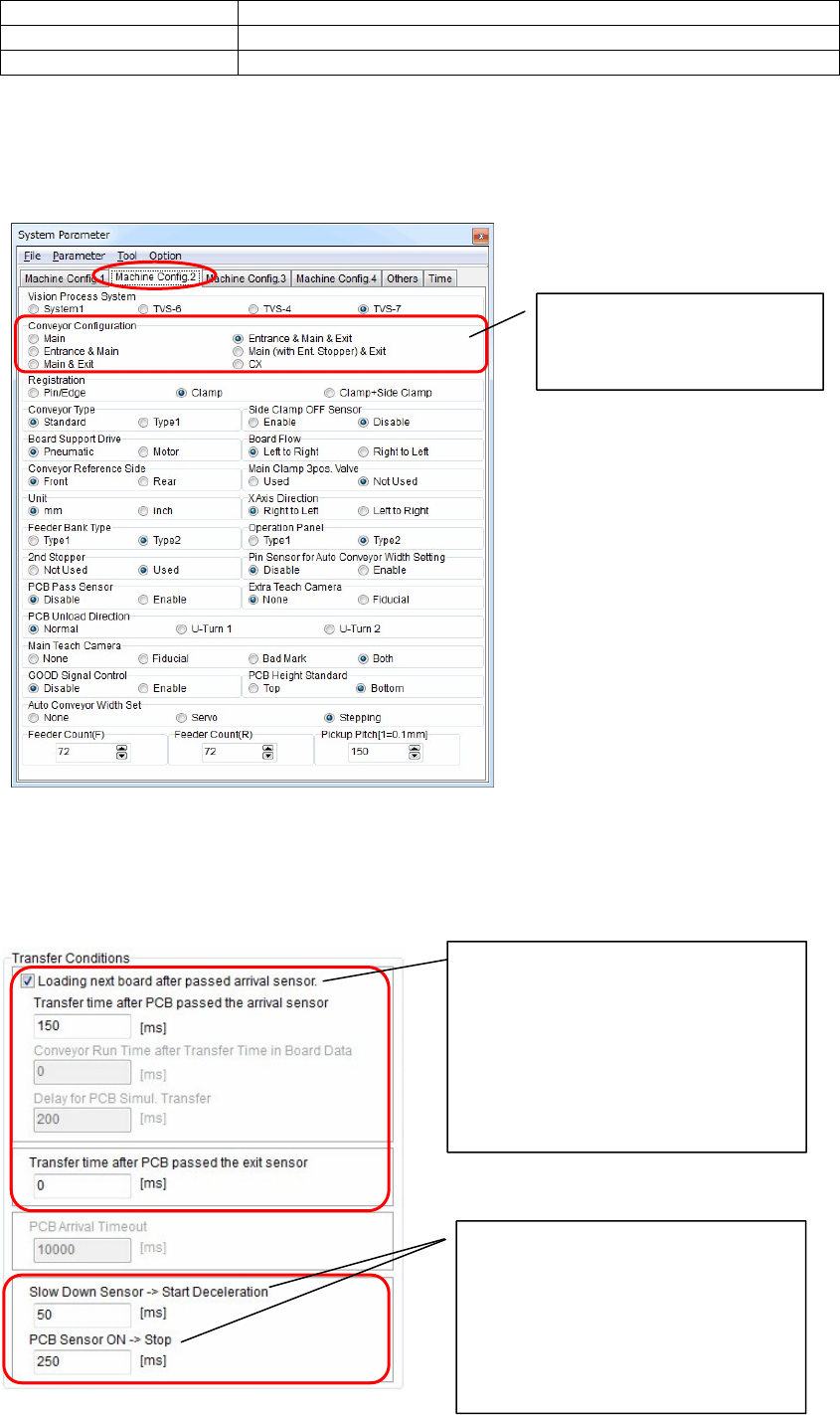
② Checking the conveyor configuration
Menu: System>SystemParameter>MachineConfig.2
You can check the conveyor configuration.
③ Setting the PCB transfer conditions
Change the transfer mode. Additionally, set a period of time for each item to adjust the transfer
timing.
Check the conveyor
configuration.
(You cannot change the data.)
When [Loading next board after passed
arrival sensor] is checked on, the
transfer mode enters the anticipate
transfer mode.
When this check box is checked off, the
transfer mode enters the normal
transfer mode.
Next, set a period of time for each item.
Adjust the conveyor deceleration start
timing in the [Slow Down Sensor ->
Start Deceleration] area.
Adjust the conveyor stop timing in the
[PCB Sensor ON -> Stop] area.
If the PCB does not reach the stopper,
increase the time.
Chapter 2 Creating and Editing a Program
2-28
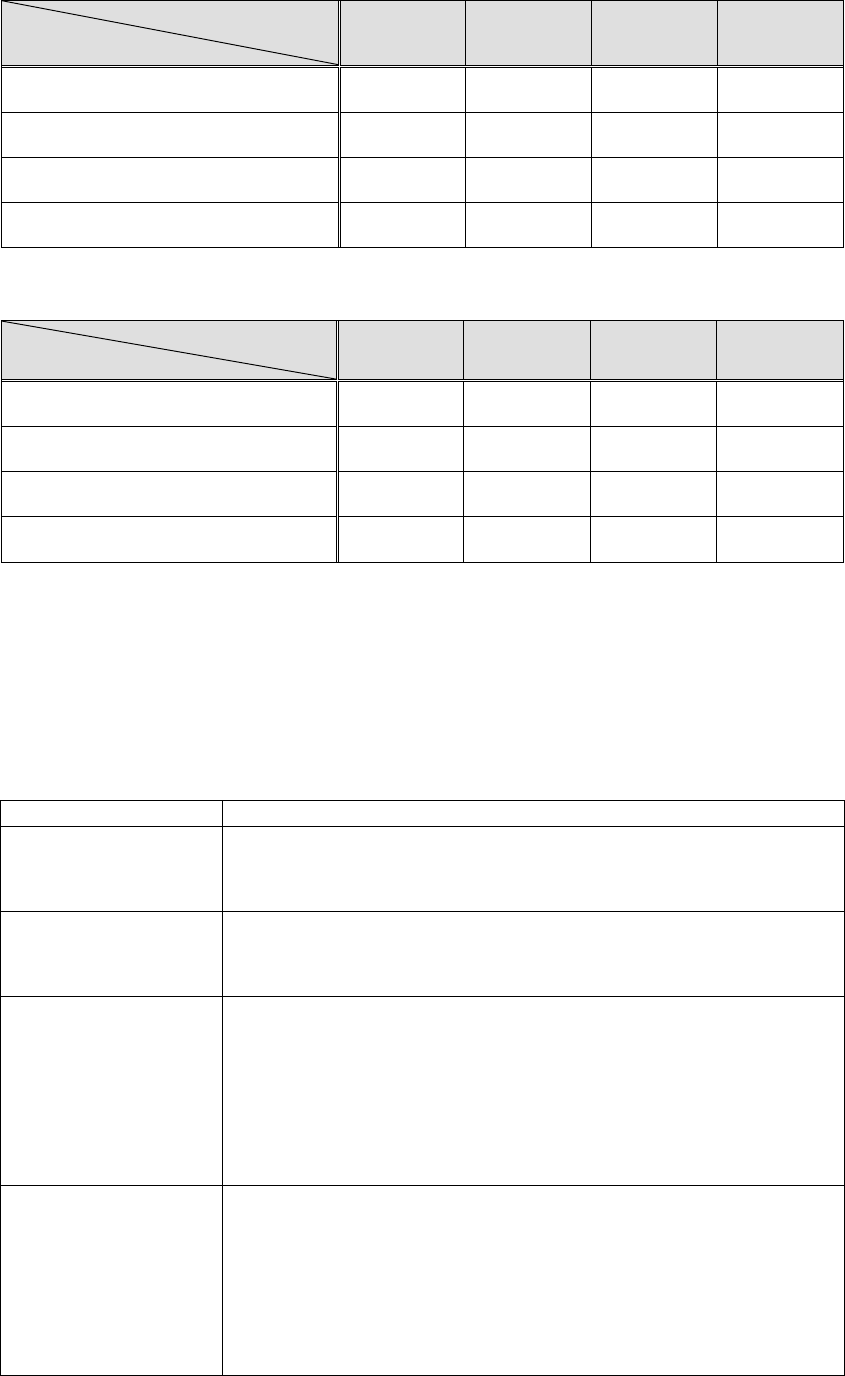
Normal transfer mode ([Loading next board after passed arrival sensor] is not checked on.)
Conveyor configuration
Time setting
Main
Entrance &
Main
Main & Exit
Entrance &
Main & Exit
Transfer time after PCB passed the
arrival sensor
X (Not
effective)
X (Not
effective)
X (Not
effective)
X (Not
effective)
Conveyor Run Time after Transfer Time
in Board Data
X (Not
effective)
X (Not
effective)
X (Not
effective)
X (Not
effective)
Delay for PCB Simul. Transfer
X (Not
effective)
X (Not
effective)
X (Not
effective)
X (Not
effective)
Transfer time after PCB passed the exit
sensor
○(Effective)
○(Effective)
○(Effective) ○(Effective)
Anticipate transfer ([Loading next board after passed arrival sensor] is checked on.)
Conveyor configuration
Time setting
Main
Entrance &
Main
Main & Exit
Entrance &
Main & Exit
Transfer time after PCB passed the
arrival sensor
○ (Effective)
○ (Effective)
○ (Effective) ○ (Effective)
Conveyor Run Time after Transfer
Time in Board Data
X (Not
effective)
○ (Effective)
X (Not
effective)
X (Not
effective)
Delay for PCB Simul. Transfer
X (Not
effective)
X (Not
effective)
X (Not
effective)
X (Not
effective)
Transfer time after PCB passed the exit
sensor
X (Not
effective)
X (Not
effective)
○(Effective) ○(Effective)
④ Detailed description of transfer mode
Normal transfer mode
If [Loading next board after passed arrival sensor] is not checked on, the normal transfer mode
will be activated.
The next board is loaded at the timings shown in the table below. For the normal transfer mode,
only the “Transfer time after PCB passed the exit sensor” timing setting is effective and other
timing settings will not be effective.
Conveyor configuration Board loading timing
Main After a component-mounted PCB has passed the exit sensor and then it has
been transferred only for a period of time set in [Transfer time after PCB
passed the exit sensor], the PCB stopper will be turned ON and the next
PCB will be loaded from the previous process.
Entrance & Main
(with entrance buffer)
After a component-mounted PCB has passed the exit sensor and then it has
been transferred only for a period of time set in [Transfer time after PCB
passed the exit sensor], the PCB stopper will be turned ON and the next
PCB will be loaded from the entrance buffer.
Main & Exit
(with exit buffer)
When a component-mounted PCB makes the exit buffer sensor turns on, the
PCB stopper will be turned ON and the next PCB will be loaded from the
previous process.
If the request signal is received from the next process when a
component-mounted PCB waits on the main conveyor and exit buffer, the
component-mounted PCB on the exit conveyor passes the exit sensor, and
then it is transferred only for a period of time set in [Transfer time after PCB
passed the exit sensor]. After that, the component-mounted PCB on the
main conveyor is unloaded to the exit buffer.
Entrance & Main & Exit
(with entrance buffer &
exit buffer)
When a component-mounted PCB makes the exit buffer sensor turns on, the
PCB stopper will be turned ON and the next PCB will be loaded from the
entrance buffer.
If the request signal is received from the next process when a
component-mounted PCB waits on the main conveyor and exit buffer, the
component-mounted PCB on the exit conveyor passes the exit sensor, and
then it is transferred only for a period of time set in [Transfer time after PCB
passed the exit sensor]. After that, the component-mounted PCB on the
main conveyor is unloaded to the exit buffer.