96722_AX-201 AX-301 AX501 Spec bookl.pdf - 第12页
Placement Head Placement Head Placement Head Placement Head Single Vision Laser Vision Dual Vision High Accuracy Maximum stroke 27mm 27mm 40mm 77mm Placement force Programmable Programmable Programmable Programmable betw…
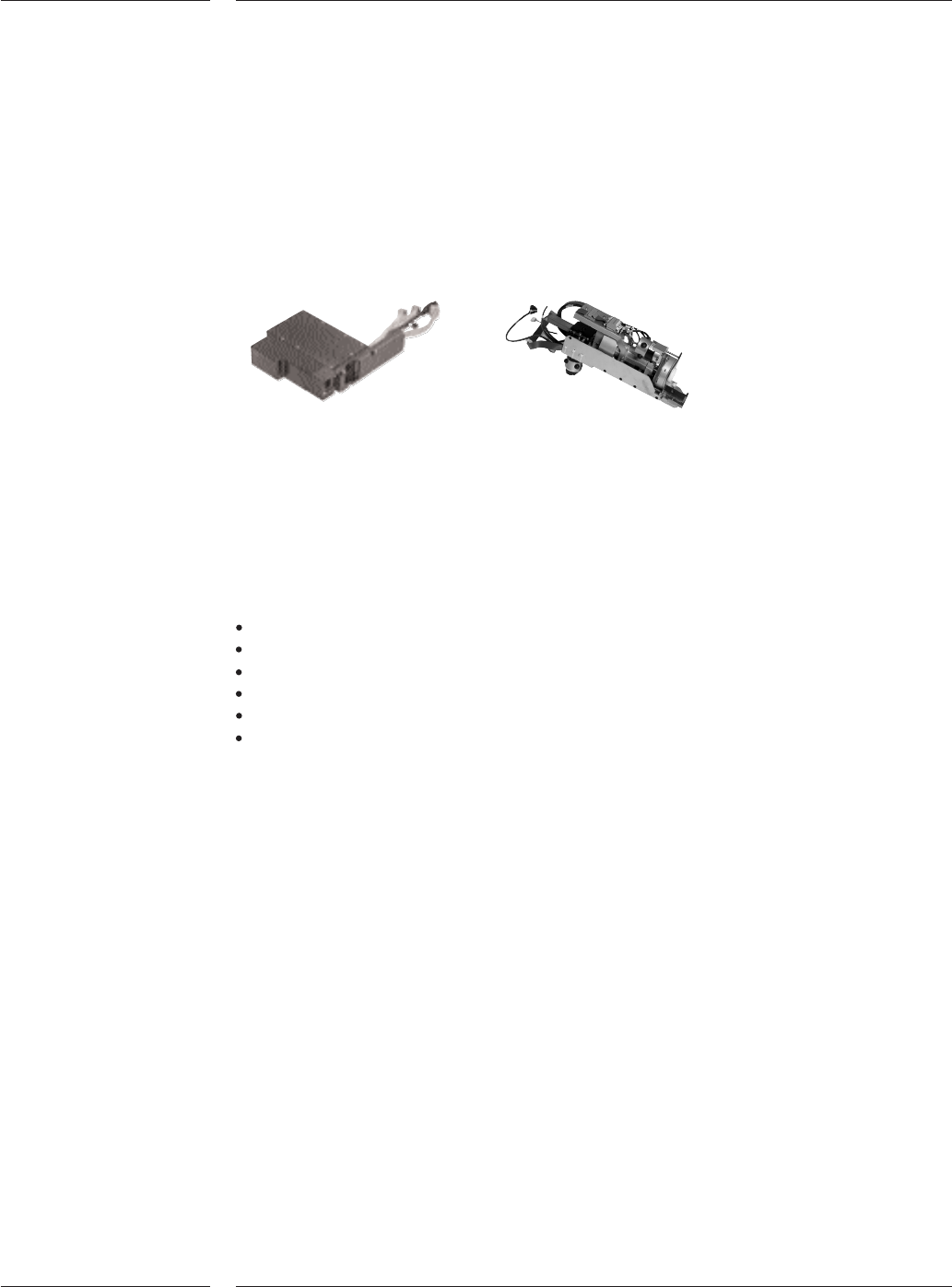
Each placement robot is fitted with one or more placement heads, which is
equipped with Z-height, phi-rotation and real time force control. With every
component placement, the placement head measures the impact position and
calculates the appropriate Z-height to correct for any applicable board warpage.
This adaptive Z-height feature (Board- and component thickness variation
correction) enables that the appropriate placement dwell time and force is well
within the tolerance of process requirements. All placement heads can use vacuum
toolbits for component pick-up, detection and placement.
Placement heads
Four types of placement heads are available:
1. Placement Head Single Vision (PH-SV)
2. Placement Head Laser Vision (PH-LV)
3. Placement Head Dual Vision (PH-DV)
4. Placement Head High Accuracy (PH-HA)
They execute the following tasks:
Align components
Pick and place components
Z-movement
Rz-movement
Force sensing and control
Board- and component thickness variation correction
The Placement Head Single Vision uses a Z-stroke linear motor. This linear motor
controls the pick force, placement Z-speed, dwell time and force. On top of these
control functions, the Placement Head Laser Vision has the capability to perform
component presence check and 'on the fly' laser alignment for components down
to 01005.
The Placement Head Dual Vision (which consists of two placement heads in a single
assembly) is configured in a doubled up configuration, effectively giving four
placement heads. This can pick, rotate and place components with the highest
speed. Component presence as well as the relative position will be checked by the
component vision system.
The Placement Head High Accuracy (configured in a set of two) combines accuracy
with placement forces up to 40N. It also has the capability to detect bent leads of
through-hole components using "variable through hole check". When a lead is bent
the placement head will measure a resistance force when the lead touches the
board. If the force exceeds the programmable limit (between 4 and 14 N) the
component will be rejected. For the most challenging components the PH-HA can
also use mechanical gripper to pick and place components.
3.3.2 Placement
heads
Figure 3
Features
9 of 34
Placement Head Placement Head Placement Head Placement Head
Single Vision Laser Vision Dual Vision High Accuracy
Maximum stroke 27mm 27mm 40mm 77mm
Placement force Programmable Programmable Programmable Programmable
between 1.5 - 8N between 1.5 - 8N between 2 - 8N between 0.9- 40N
in 0.1N steps
*1
in 0.1N steps
*1
in 0.1N steps in 0.1N steps
*1
Lower forces down
to 0.06N with
restrictions
Variable through Not applicable Not applicable Not applicable Programmable
hole check between 4 and
14 N
Configured in One One Two (four heads Two heads
set of: in total) in total
Toolbits Nozzles Nozzles Nozzles Nozzles and
grippers
*1 Depending on nozzle type
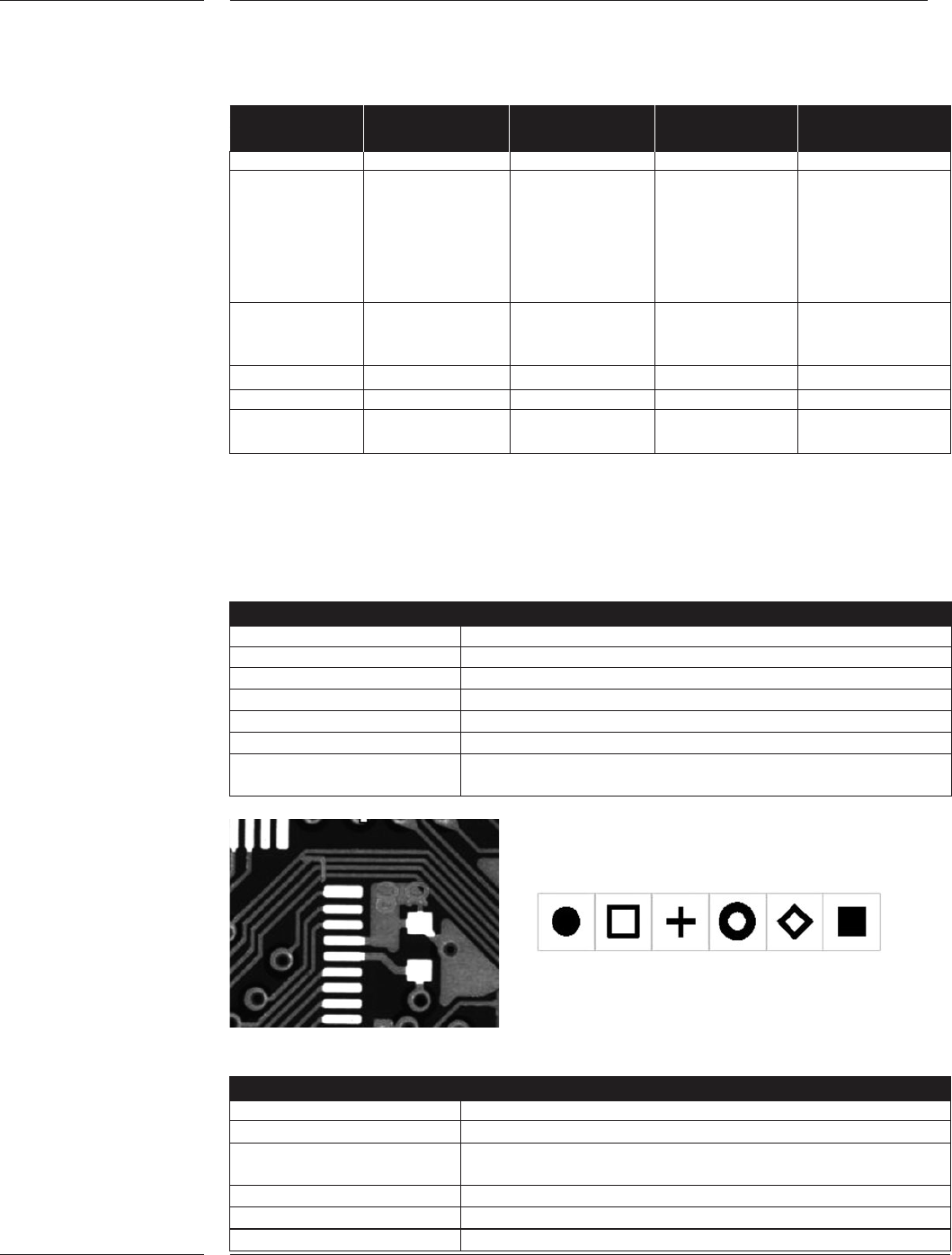
The board alignment camera is used for fiducial and artwork alignment, and is also
used for badmark sensing, position detection of feeder trolleys, toolbit exchange unit,
dump bin and the component vision camera.
Board alignment camera
Camera Field of View 8.6 x 6.8mm
Camera pixels 1024 x 768
Camera pixel resolution 8.4 µm
Illumination Bright field & dark field
Fiducial types All regular types with a contrast level of >30%
Fiducial shape size Fiducial shape size >0.3mm, <3.0 mm
Free zone around fiducial No features allowed within 0.1mm, no look-a-likes
within 2.6mm from fiducial
Examples of artwork and typical fiducials
Badmark sensing
Bad mark type Black or white dot, or fiducial shape
Size >φ 1mm
Color Bad marks can be dark in a light background or light in
a dark background
Contrast At least 30 %
Badmark levels 3
Number of bad marks <2048
per board
3.4 Board
alignment
Figure 4
Features
10 of 34
3.5 Component
alignment
3.5.1 Laser
alignment
3.5.2 Vision
alignment
3.5.2.1 Component
vision
alignment
Figure 5
Features
11 of 34
Component alignment is used for the alignment of components on leads, edges or
bumps, prior to placement on the board. Depending on the configuration of the
machine there are four alignment options available.
The component laser module is part of the Placement Head Laser Vision. The
component laser module is used for component presence check, component
alignment, toolbit type identification and toolbit verification.
Laser alignment
Component size 0.4 x 0.2mm (01005) to 17.5 x 17.5mm
(max diagonal 24.75mm)
Length & width including leads
Height: 10.5mm and higher with restrictions
Min. component thickness 0.130mm
The Component Vision (CV) system is used for the alignment of components on
leads, edges or bumps. Component Alignment is achieved by moving the
component above the lens of an upward-facing digital camera. A combination of
multiple light sources (dark- ,mid-, and bright field illumination and for LFOV also
back light illumination) ensure sufficient contrast between the component (leads)
and the background. Utilizing these light sources the A-Series are capable of
aligning a large range of components. The illumination intensity is automatically
chosen based upon the reflectivity of the respective components. The CV camera
determines the position of the component with respect to a reference plate. The
deviations, together with the fiducial alignment values, will be used to determine the
correct placement position.
There are three component vision modules available for the A-Series.
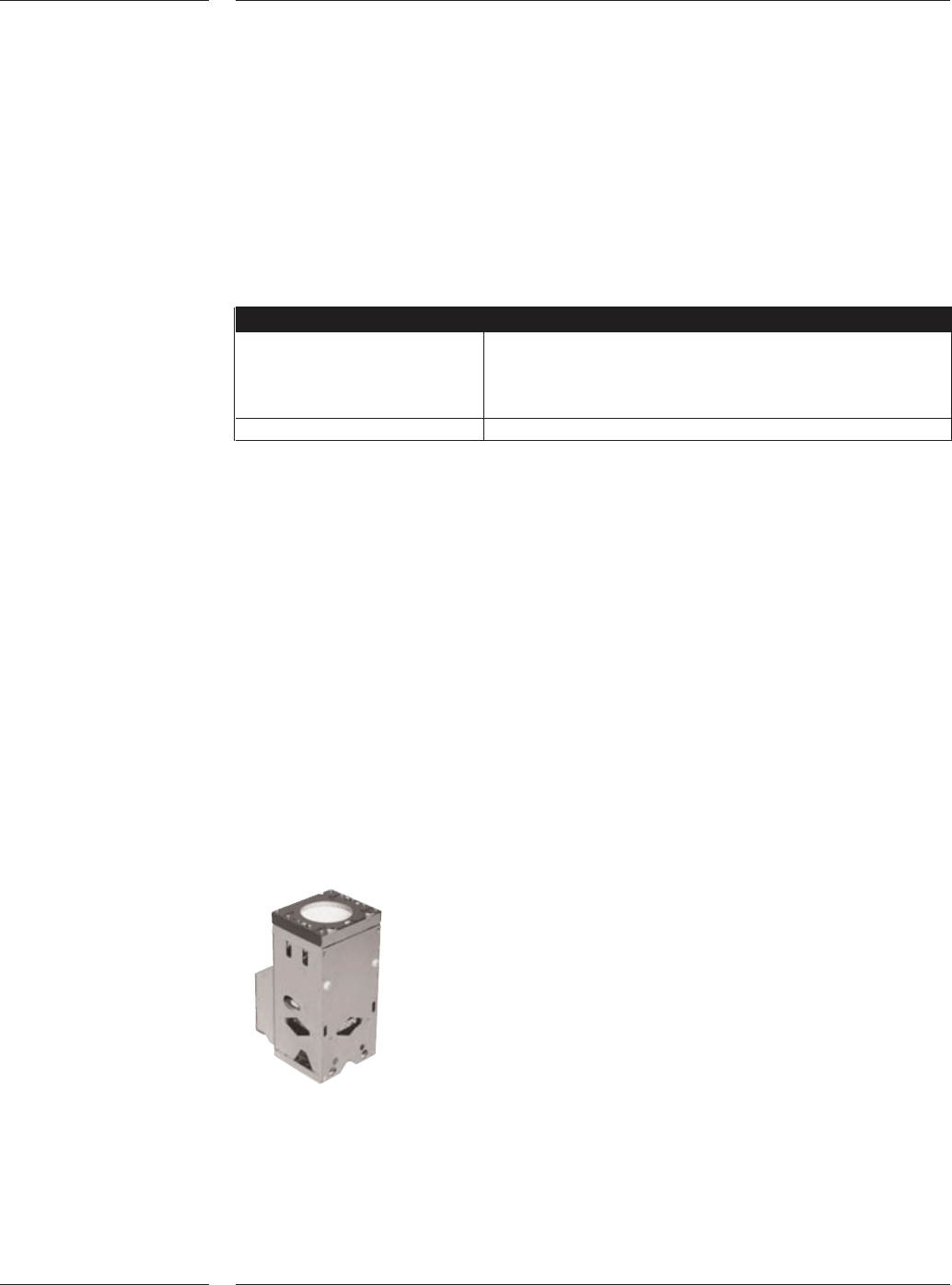
The Component Vision Camera holds one upward looking camera and can inspect
a single component up to 45 x 45mm in one view. Components with bumps down
to 300 micron with a 500 micron pitch can be measured.
AX Component Vision camera