KE-750_QA表.pdf - 第26页
FUNCTION NAME Lens Length Function/ Performance CHECK/ADJUSTMENT MET HODS (REMEDIAL ACTION PROCEDURE) ASSURED QUALITY Reliability QUALITY CHARACTERISTI CS (SPECIFIC ATION VALUES) CATEGORY Safety Product Image ROLE IN FUN…
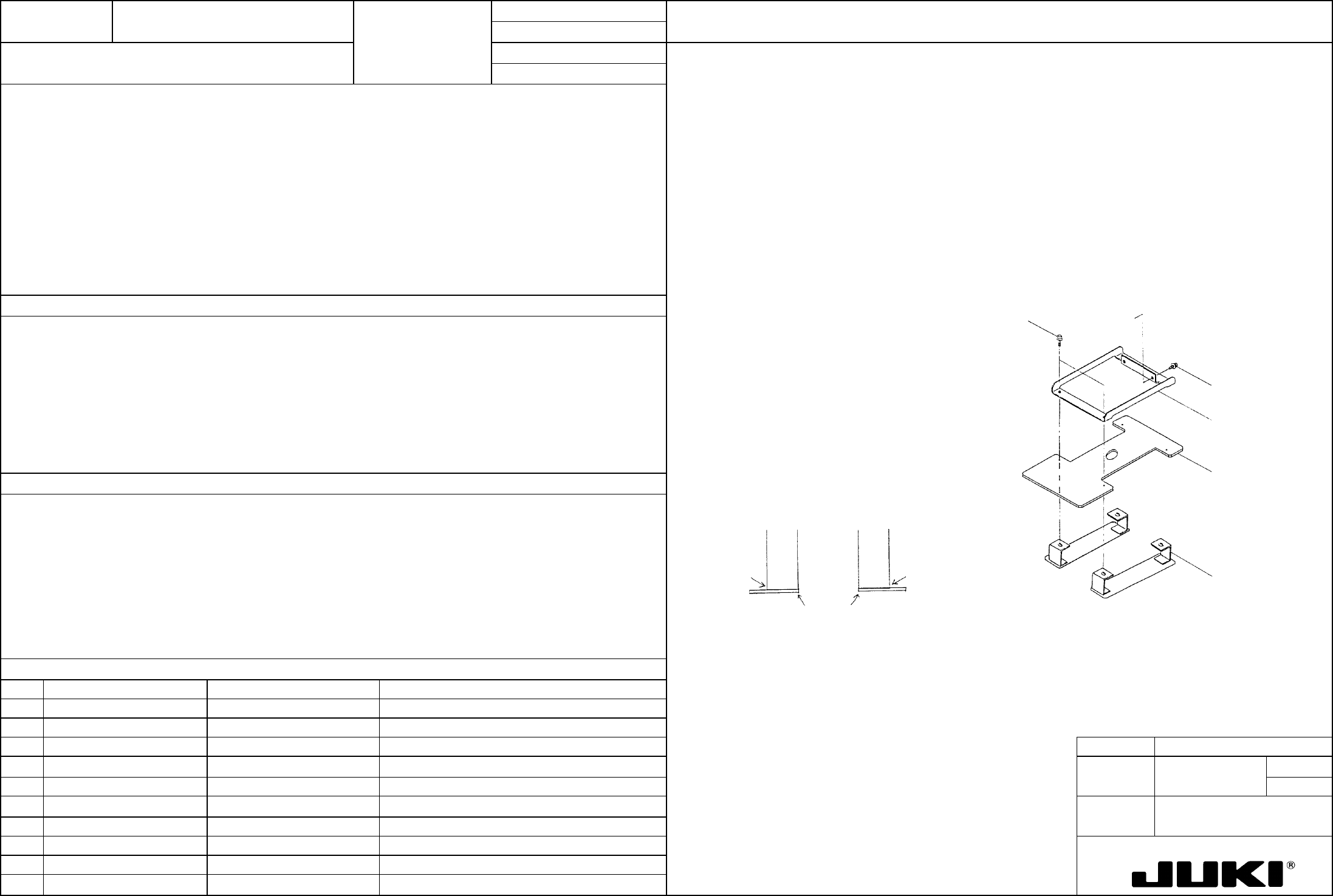
FUNCTION NAME Diffuser Mounting Position Function/Performance CHECK/ADJUSTMENT METHODS (REMEDIAL ACTION PROCEDURE)
ASSURED QUALITY Reliability
QUALITY CHARACTERISTICS (SPECIFICATION VALUES) CATEGORY Safety
Product Image
ROLE IN FUNCTION (MEANING OF SPECIFICATION VALUES)
POSSIBLE MALFUNCTIONS (CAUSED BY INCORRECT SPECIFICATION VALUES)
COMPONENTS
NO. Part No. Part Name Associated Quality Characteristics
1
2
3 MODEL KE-750/760
4
UNIT Head
REF. NO.
5
NAME
22
6
FUNCTION Diffuser Mounting Position
7
NAME
8
9
10
QA Table
Check procedure:
When the Z-slide shaft is rotated about 360 degrees, the diffuser should not contact the nozzle outer surface.
(LAIC head only)
Turn the Z-slide shaft 360 degrees and check that the φ22.5-hole in the diffuser is not in contact with the
nozzle outer surface.
Adjustment procedure:
Temporarily secure the diffuser support to head bracket IC with SEMS cap (a). Using SEMS cap (b), install
the raxa paper base assembly to sandwich the diffuser. At this time, adjust the position of the diffuser
support to allow no clearance between the raxa paper base assembly and the bottom surface of FMLA; then
secure it in position. (See the illustration below.)
Adjust the position of the diffuser so that it does not contact the nozzle outer surface; then, secure it in
position. At this time, align the end face of the raxa paper base assembly with that of FMLA so that VCS
will not pick up the image of the bottom surface of FMLA. (See the illustration below.)
A
lign end faces.
Clearance 0
Clearance 0
Raxa paper base
assembly
E3219725OAO
(Make sure there
are RH and LH.)
Diffuser
E3213735000
Diffuser support
E3214725000
(a) SEMS cap x2
SL6040692TN
Bracket IC
(b) SEMS cap x4
SL6031092TN
– Damaged diffuser
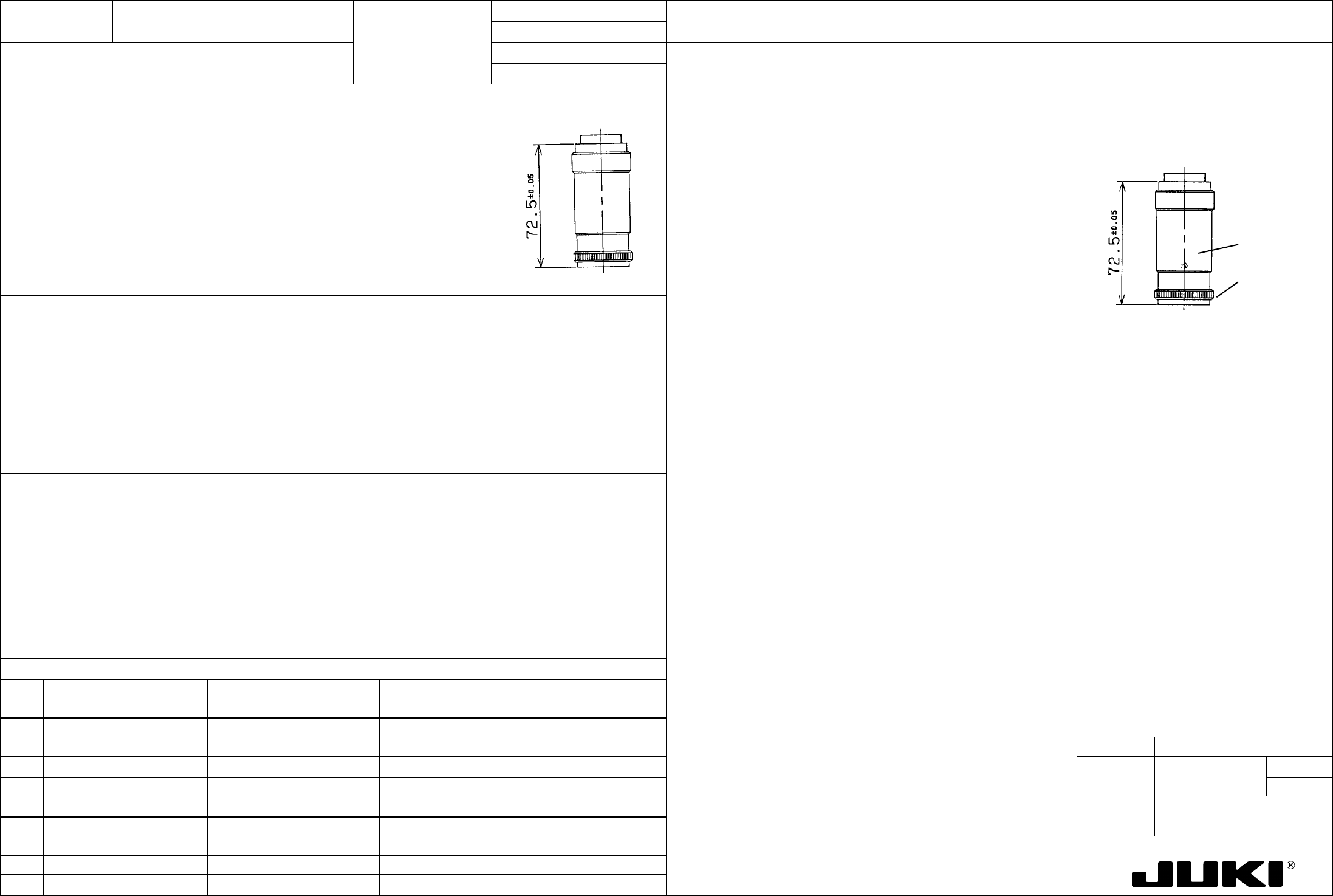
FUNCTION NAME Lens Length Function/Performance CHECK/ADJUSTMENT METHODS (REMEDIAL ACTION PROCEDURE)
ASSURED QUALITY Reliability
QUALITY CHARACTERISTICS (SPECIFICATION VALUES) CATEGORY Safety
Product Image
ROLE IN FUNCTION (MEANING OF SPECIFICATION VALUES)
POSSIBLE MALFUNCTIONS (CAUSED BY INCORRECT SPECIFICATION VALUES)
COMPONENTS
NO. Part No. Part Name Associated Quality Characteristics
1 E9618721000 Lens
2
3 MODEL KE-750/760
4
UNIT Head
REF. NO.
5
NAME
23
6
FUNCTION Lens Length
7
NAME
8
9
10
QA Table
Loosen screws (a) (at three places) and turn the knob on the end so that the lens becomes 72.5 ±0.05 mm in
length.
Lens length: 72.5 ±0.05 mm
(a)
Knob
Determines the magnification of the camera to obtain the required field of view.
– Narrow field of view
– Degraded recognition accuracy
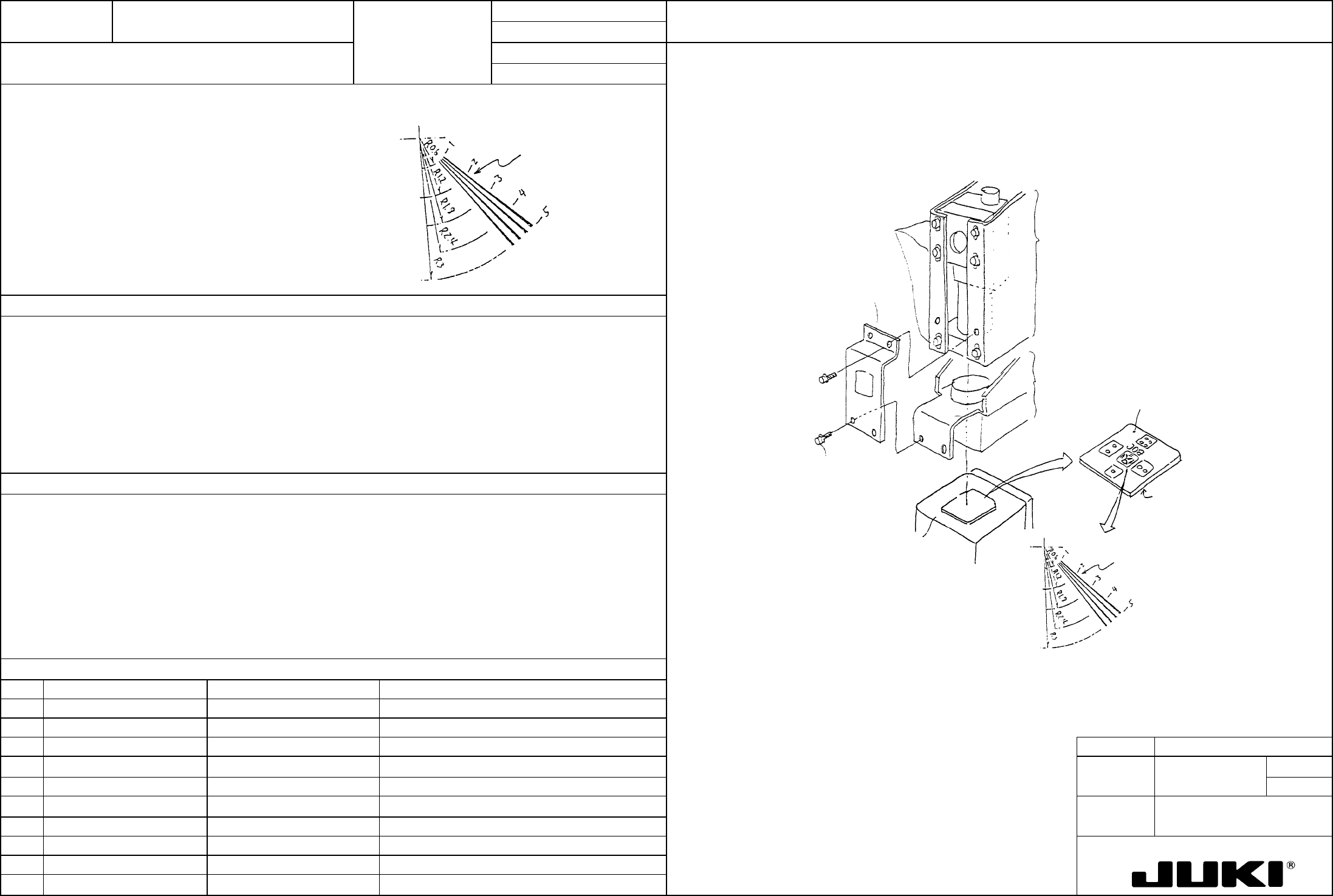
FUNCTION NAME Focus Adjustment Function/Performance CHECK/ADJUSTMENT METHODS (REMEDIAL ACTION PROCEDURE)
ASSURED QUALITY Reliability
QUALITY CHARACTERISTICS (SPECIFICATION VALUES) CATEGORY Safety
Product Image
ROLE IN FUNCTION (MEANING OF SPECIFICATION VALUES)
POSSIBLE MALFUNCTIONS (CAUSED BY INCORRECT SPECIFICATION VALUES)
COMPONENTS
NO. Part No. Part Name Associated Quality Characteristics
1 E38017250A0 Camera unit assembly
2
3 MODEL KE-750/760
4
UNIT Head
REF. NO.
5
NAME
24
6
FUNCTION Focus Adjustment
7
NAME
8
9
10
QA Table
Place the camera adjustment jig on the top surface of the calibration block, facing its etching surface down.
Lines up to 2 on the etching surface of the camera adjustment jig must be clearly visible.
Loosen six SEMS cap bolts (1) that secure the camera, move the camera up and down, and when lines up to 2
on the etching surface are clearly visible, secure the camera in position.
Lines up to 2 must be
clearly visible.
Lines up to 2
must be visible
Etching surface
(back side)
Camera adjustment jig
T110
Light unit L assembl
y
E3811725OAO
Light unit R assembly
E3821725OAO
Camera unit assembl
y
E3801725OAO
Calibration bloc
k
SEMS cap x2
SL6030692TN
SEMS cap x2
SL6030692TN
Camera bracket D
E3809725000
SEMS cap (1)
(SL6041092TN)
Concerned with camera recognition accuracy, it greatly affects placement accuracy and component pickup
reliability.
– Degraded placement accuracy when BOC mark is used
– Degraded bank recognition accuracy and teaching accuracy, resulting in poorer pickup reliability