KE-750_QA表.pdf - 第45页
FUNCTION NAME Changing the Transport Rail Widt h Function/Performance CHECK/ADJUSTMENT METHODS (REMEDIAL ACT ION PROCEDURE) ASSURED QUALITY Reliability QUALITY CHARACTERISTI CS (SPECIFICATION VALUES) CATEGORY Safety Prod…
FUNCTION NAME Stabilization of Movable Rail Function/Performance CHECK/ADJUSTMENT METHODS (REMEDIAL ACTION PROCEDURE)
ASSURED QUALITY Reliability
QUALITY CHARACTERISTICS (SPECIFICATION VALUES) CATEGORY Safety
Product Image
ROLE IN FUNCTION (MEANING OF SPECIFICATION VALUES)
POSSIBLE MALFUNCTIONS (CAUSED BY INCORRECT SPECIFICATION VALUES)
COMPONENTS
NO. Part No. Part Name Associated Quality Characteristics
1 E2010725000 Screw shaft
2
3 MODEL KE-750/760
4 UNIT Transport REF. NO.
5
NAME
15
6 FUNCTION Stabilization of Movable Rail
7
NAME
8
9
10
QA Table
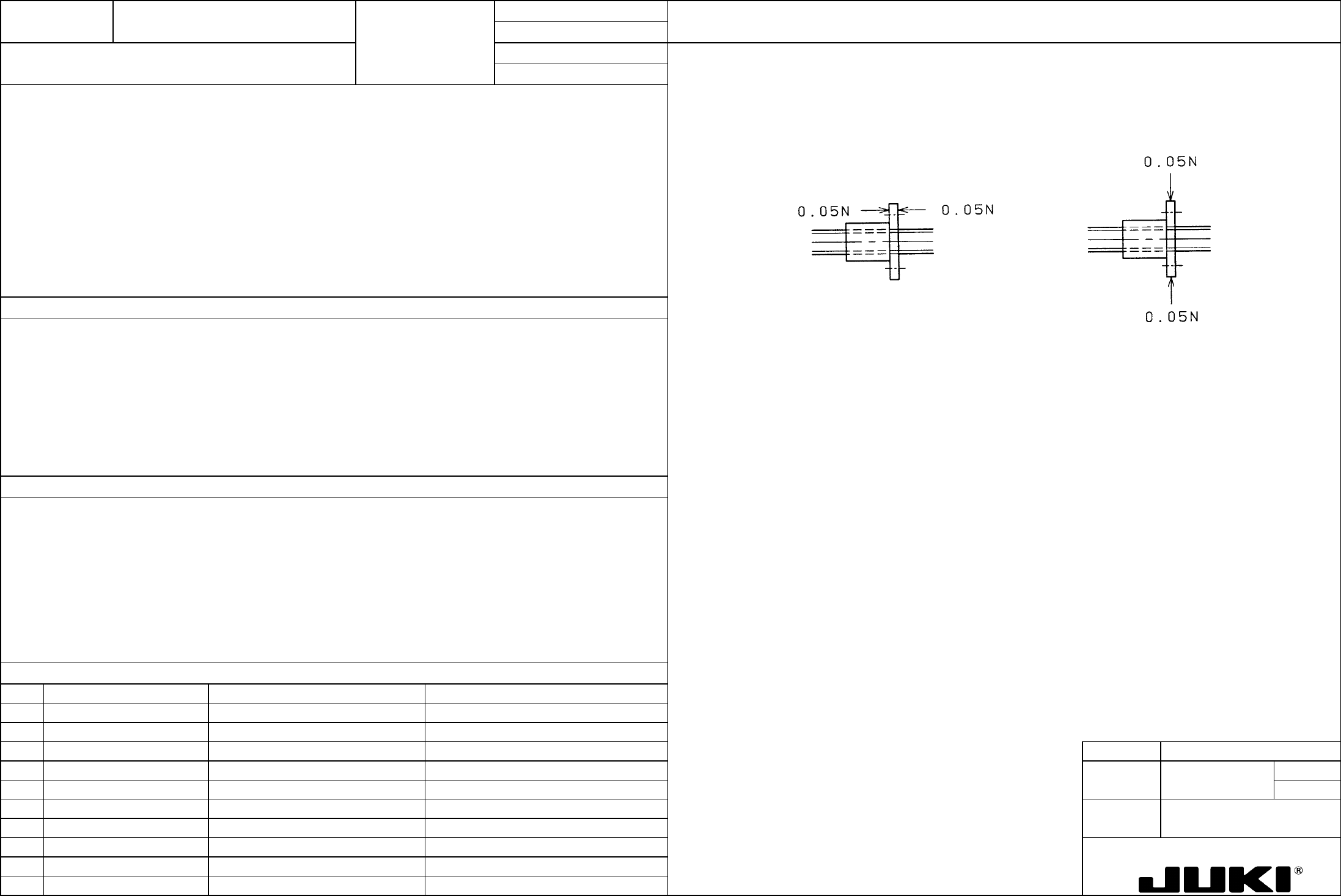
Apply a lever dial indicator to the nut. Measure the movement of the nut when a load is applied to it alternately from the
opposite directions as illustrated below.
1. The movement of the screw shaft nut should be within 50 um when a 0.05-N load is applied to it alternately from the
opposite thrust directions.
2. The movement of the screw shaft nut should be within 100 um when a 0.05-N load is applied to it alternately from the
opposite radial directions.
1, 2. To minimize play in the movable rail, thereby minimizing vibration during operation.
Thrust direction Radial direction
1, 2. When the movable rail oscillates during placement of components, it causes the PWB to oscillate, resulting in poor
placement accuracy.
FUNCTION NAME Changing the Transport Rail Width Function/Performance CHECK/ADJUSTMENT METHODS (REMEDIAL ACTION PROCEDURE)
ASSURED QUALITY Reliability
QUALITY CHARACTERISTICS (SPECIFICATION VALUES) CATEGORY Safety
Product Image
ROLE IN FUNCTION (MEANING OF SPECIFICATION VALUES)
POSSIBLE MALFUNCTIONS (CAUSED BY INCORRECT SPECIFICATION VALUES)
COMPONENTS
NO. Part No. Part Name Associated Quality Characteristics
1 E2010725000 Screw shaft
2 E2009725000 Guide shaft
3 MODEL KE-750/760
4 UNIT Transport REF. NO.
5
NAME
16
6 FUNCTION Changing the Transport Rail
7
NAME Width
8
9
10
QA Table
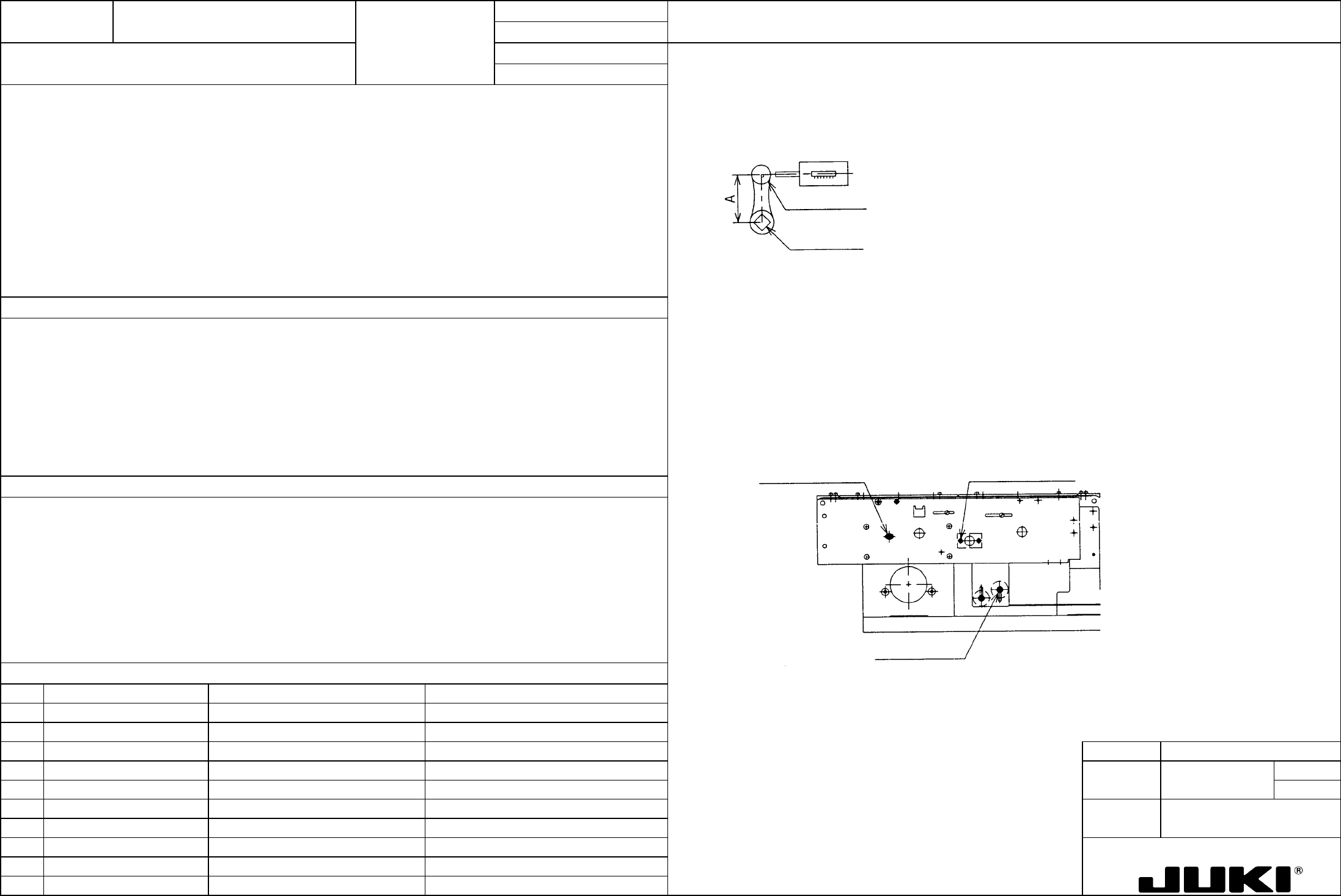
1. Apply a spring balance to the handle shaft knob and pull it in the tangential direction to measure torque in the handle shaft.
1. Handle shaft torque: 0.2 N.m or less
2. Drive belt tension: 2 to 2.5 kgf
Handle shaft axis
Handle shaft knob
Spring balance
Guide shaft parallelism adjustment:
At a 254-mm transport rail width position, fix the ball bushing position.
Loosen the screw on the end of guide shaft on the rail plate F side and tighten that screw at a 31-mm rail width position.
Screw shaft parallelism adjustment:
1. To ensure optimum torque of the PWB width adjusting handle shaft
Fix the nut position at a 254-mm PWB width position.
2. To ensure optimum tension in the timing belt that connects the right and left screw shafts
Loosen the screw on the adjust plate and tighten that screw at a 31-mm rail width position.
2. Drive belt tension
Adjust the tension by changing the height of the idler pulley. It, however, also changes the timing belt height; so be
careful about its contact with T-PIN sensor.
Take tension measurements using an acoustic wave type belt tensiometer (manufactured by Unitta).
Idler pulley set scre
w
A
djust plate set scre
w
Guide shaft end set scre
w
1. If the torque is too large, feel of operation of the rail width adjustment is not positive.
If the guide shaft and screw shaft do not run parallel, it could result in "narrow gap" and "galling" in the movable rail.
2. Tension too tight: The screw shaft flexes causing a heavy torque.
Tension too weak: Belt cogs are skipped at the pulley.
FUNCTION NAME Clamping PWB in Vertical Direction Function/Performance CHECK/ADJUSTMENT METHODS (REMEDIAL ACTION PROCEDURE)
ASSURED QUALITY Reliability
QUALITY CHARACTERISTICS (SPECIFICATION VALUES) CATEGORY Safety
Product Image
ROLE IN FUNCTION (MEANING OF SPECIFICATION VALUES)
POSSIBLE MALFUNCTIONS (CAUSED BY INCORRECT SPECIFICATION VALUES)
COMPONENTS
NO. Part No. Part Name Associated Quality Characteristics
1 E2010725000 Screw shaft
2 E2009725000 Guide shaft
3 MODEL KE-750/760
4 UNIT Transport REF. NO.
5
NAME
17
6 FUNCTION Clamping PWB in Vertical
7
NAME Direction
8
9
10
QA Table
1. As the BU table moves up and down, the transport rail CF and CR move up and down smoothly.
Check procedure:
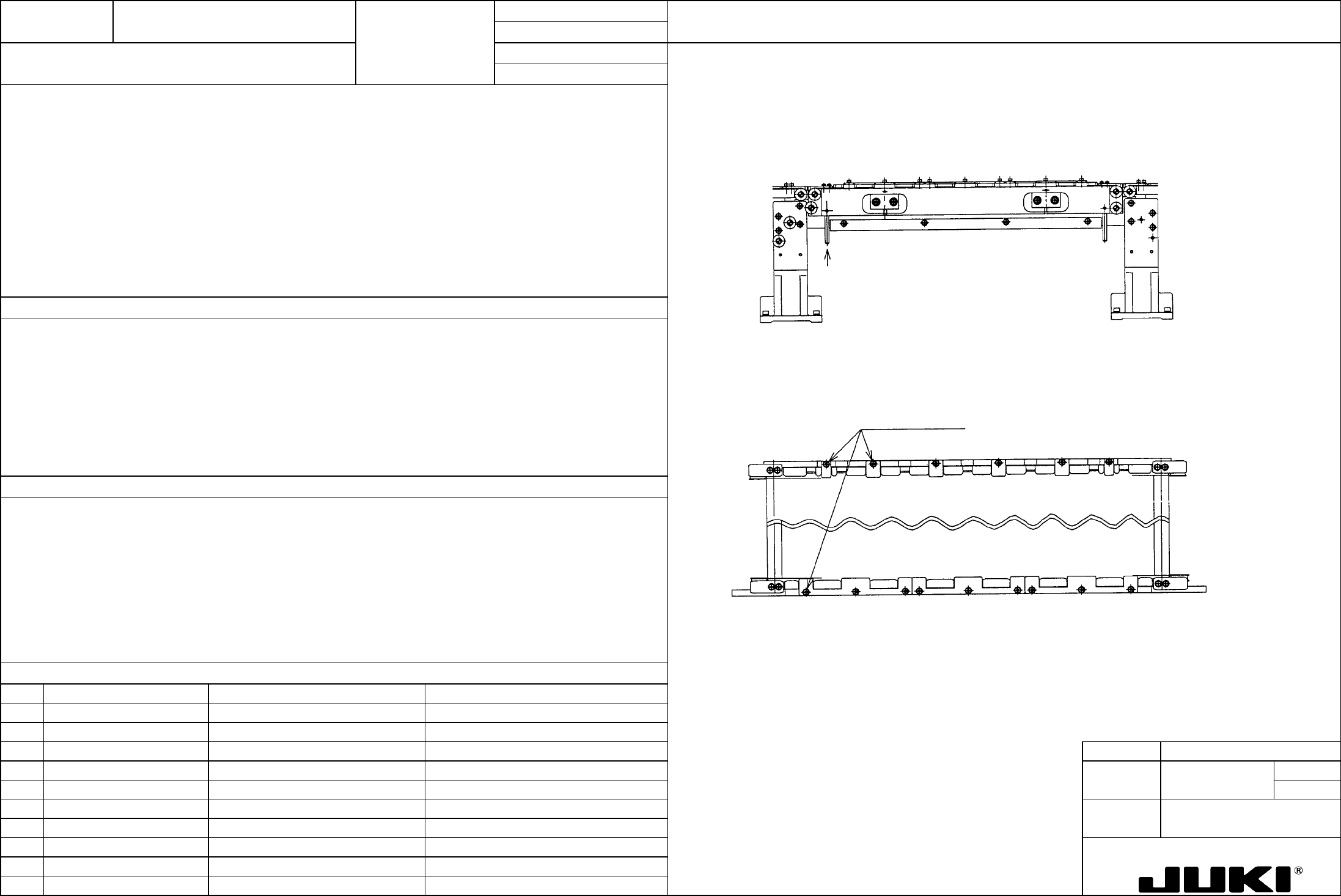
Check to see if the transport rails follow the up-and-down movement of the transport rails.
Push up the rail guide shaft with a finger to determine if the transport rails lightly move up.
PWB guide set screws
If the PWB guide interferes with the rails, loosen the screws shown
below and adjust.
Press with a finger.
1. To clamp the PWB smoothly in the vertical direction
1. Interference with the PWB guide prevents the transport rail from moving up.
The right and left shaft support assemblies do to run parallel with each other, causing the rails to bind.
A defective shaft support bearing causes the rails to bind.