O_03._DE68_04547E_03_IB_FULL_MW3500K_MS23K3513AK_SP_EN_061025.pdf - 第20页
20 English Cooking guide Cooking guide Micro wav es Microw ave energy actually penetr ates food, attr acted and absorbed by its wat er , fat and sugar c ontent. The microw aves cause the molecules in the food to mo ve r …
English 19
Cookware guide
Cookware guide
To cook food in the microwave oven, the microwaves must be able to penetrate
the food, without being reflected or absorbed by the dish used.
Care must therefore be taken when choosing the cookware. If the cookware is
marked microwave-safe, you do not need to worry.
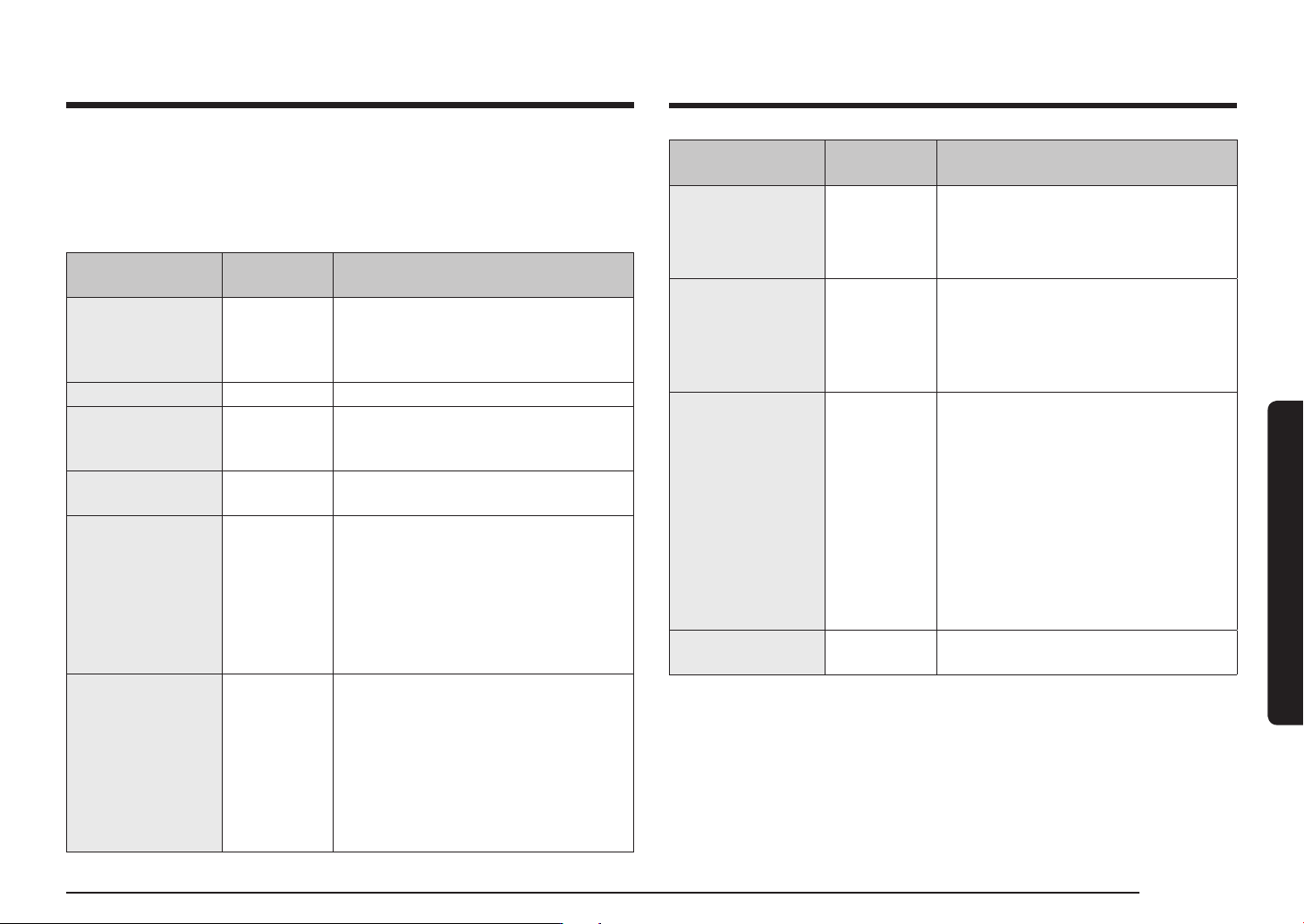
The following table lists various types of cookware and indicates whether and how
they should be used in a microwave oven.
Cookware
Microwave-
safe
Comments
Aluminum foil
✓✗
Can be used in small quantities to protect
areas against overcooking. Arcing can
occur if the foil is too close to the oven
wall or if too much foil is used.
Crust plate
✓
Do not preheat for more than 8 minutes.
China and
earthenware
✓
Porcelain, pottery, glazed earthenware
and bone china are usually suitable,
unless decorated with a metal trim.
Disposable polyester
cardboard dishes
✓
Some frozen foods are packaged in these
dishes.
Fast-food packaging
• Polystyrene
cups containers
✓
Can be used to warm food. Overheating
may cause the polystyrene to melt.
• Paper bags or
newspaper
✗
May catch fire.
• Recycled paper
or metal trims
✗
May cause arcing.
Glassware
• Oven-to-
tableware
✓
Can be used, unless decorated with a
metal trim.
• Fine glassware
✓
Can be used to warm foods or liquids.
Delicate glass may break or crack if
heated suddenly.
• Glass jars
✓
Must remove the lid. Suitable for
warming only.
Cookware
Microwave-
safe
Comments
Metal
• Dishes
✗
May cause arcing or fire.
• Freezer bag
twist ties
✗
Paper
• Plates, cups,
napkins and
kitchen paper
✓
For short cooking times and warming.
Also to absorb excess moisture.
• Recycled paper
✗
May cause arcing.
Plastic
• Containers
✓
Particularly if heat-resistant
thermoplastic. Some other plastics may
warp or discolour at high temperatures.
Do not use Melamine plastic.
• Cling film
✓
Can be used to retain moisture. Should
not touch the food. Take care when
removing the film as hot steam will
escape.
• Freezer bags
✓✗
Only if boilable or oven-proof. Should not
be airtight. Prick with a fork, if necessary.
Wax or grease-
proof paper
✓
Can be used to retain moisture and
prevent spattering.
✓
: Recommended
✓✗
: Use caution
✗
: Unsafe
20 English
Cooking guide
Cooking guide
Microwaves
Microwave energy actually penetrates food, attracted and absorbed by its water,
fat and sugar content.
The microwaves cause the molecules in the food to move rapidly. The rapid
movement of these molecules creates friction and the resulting heat cooks the
food.
Cooking
Cookware for microwave cooking:
Cookware must allow microwave energy to pass through it for maximum
efficiency. Microwaves are reflected by metal, such as stainless steel, aluminium
and copper, but they can penetrate through ceramic, glass, porcelain and plastic as
well as paper and wood. So food must never be cooked in metal containers.
Food suitable for microwave cooking:
Many kinds of food are suitable for microwave cooking, including fresh or frozen
vegetables, fruit, pasta, rice, grains, beans, fish, and meat. Sauces, custard, soups,
steamed puddings, preserves, and chutneys can also be cooked in a microwave
oven. Generally speaking, microwave cooking is ideal for any food that would
normally be prepared on a hob. Melting butter or chocolate, for example (see the
chapter with tips, techniques and hints).
Covering during cooking
To cover the food during cooking is very important, as the evaporated water rises
as steam and contributes to cooking process. Food can be covered in different
ways: e.g. with a ceramic plate, plastic cover or microwave suitable cling film.
Standing times
After cooking is over food the standing time is important to allow the temperature
to even out within the food.
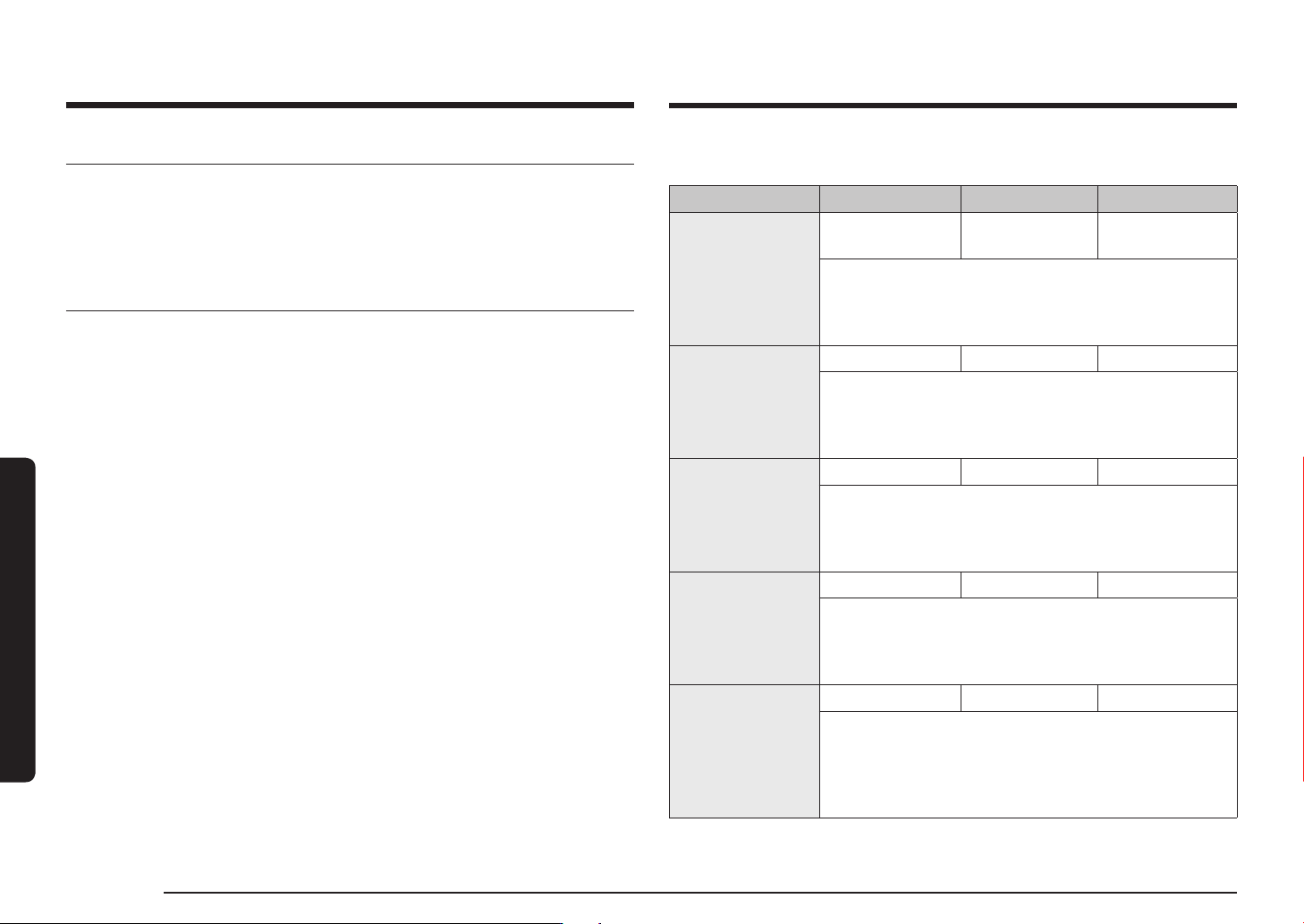
Reheating Liquids and Food
Use the power levels and times in this table as a guide lines for reheating.
Food Serving Size Power Time (min.)
Drinks (Coffee, Tea
and Water)
150 ml (1 cup)
250 ml (1 mug)
800 W 1-1½
1½-2
Instructions
Pour into cup and reheat uncovered. Put cup / mug in
the centre of turntable. Keep in microwave oven during
standing time and stir well. Stand for 1-2 minutes.
Soup (Chilled) 250 g 800 W 3-3½
Instructions
Pour into a deep ceramic plate. Cover with plastic lid. Stir
well after reheating. Stir again before serving. Stand for
2-3 minutes.
Stew (Chilled) 350 g 600 W 5½-6½
Instructions
Put stew in a deep ceramic plate. Cover with plastic lid. Stir
occasionally during reheating and again before standing
and serving. Stand for 2-3 minutes.
Pasta with Sauce
(Chilled)
350 g 600 W 4½-5½
Instructions
Put pasta (e.g. spaghetti or egg noodles) on a flat ceramic
plate. Cover with microwave cling film. Stir before serving.
Stand for 3 minutes.
Filled Pasta with
Sauce (Chilled)
350 g 600 W 5-6
Instructions
Put filled pasta (e.g. ravioli, tortellini) in a deep ceramic
plate. Cover with plastic lid. Stir occasionally during
reheating and again before standing and serving. Stand
for 3 minutes.
English 21
Troubleshooting and information code
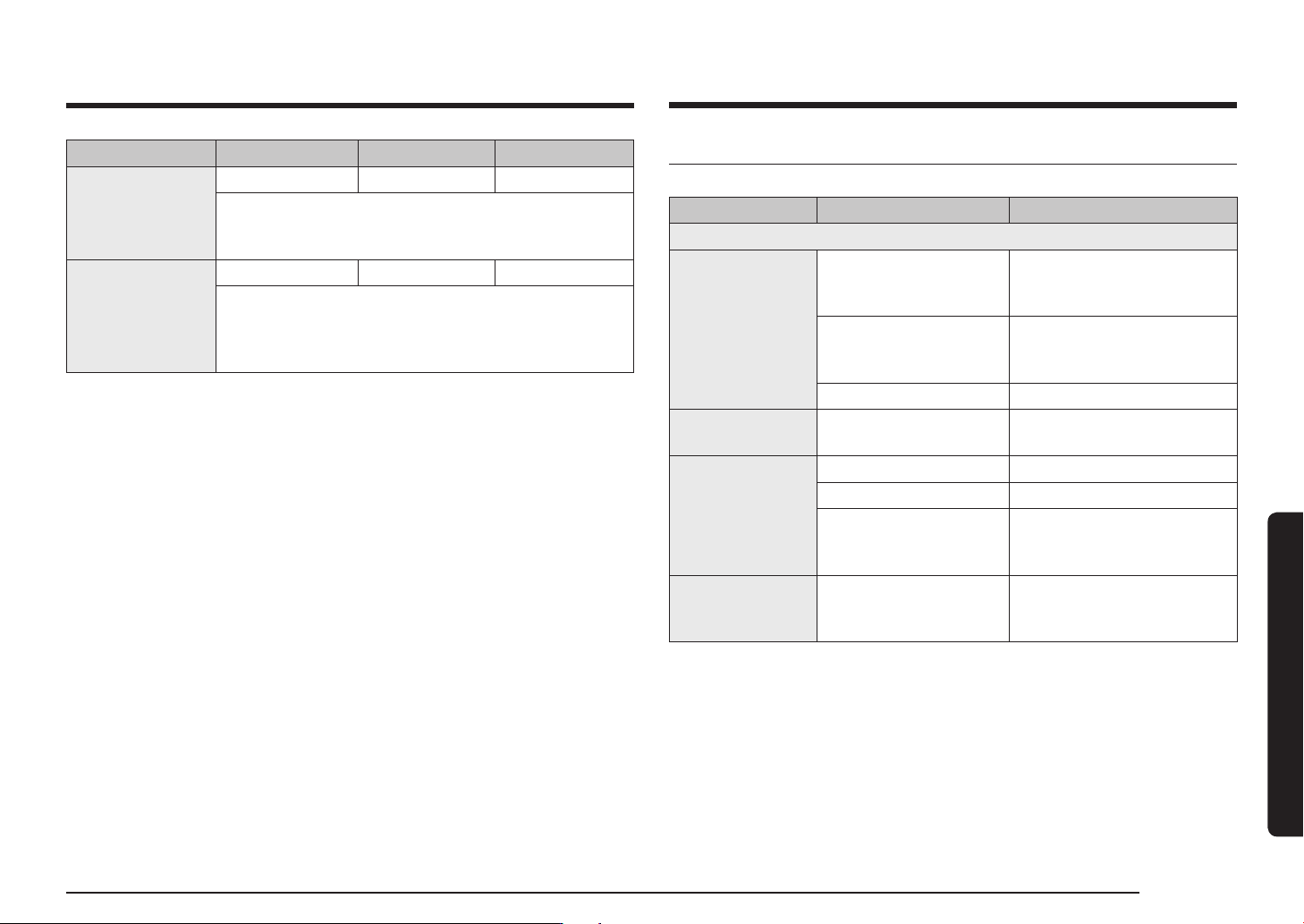
Food Serving Size Power Time (min.)
Plated Meal
(Chilled)
350 g 600 W 5½-6½
Instructions
Plate a meal of 2-3 chilled components on a ceramic dish.
Cover with microwave cling-film. Stand for 3 minutes.
Pasta (Frozen)
(Cannelloni,
Macaroni, Lasagne)
400 g 450 W 16-16½
Instructions
Put frozen pasta into a small flat rectangular glass pyrex
dish. Put the dish directly on the turntable. Stand for
2-3 minutes.
Troubleshooting and information code
Troubleshooting
If you have any of the problems listed below try the solutions given.
Problem Cause Action
General
The buttons
cannot be pressed
properly.
Foreign matter may
be caught between the
buttons.
Remove the foreign matter
and try again.
For touch models:
Moisture is on the
exterior.
Wipe the moisture from the
exterior.
Child lock is activated. Deactivate Child lock.
The time is not
displayed.
The Eco (power-saving)
function is set.
Turn off the Eco function.
The oven does not
work.
Power is not supplied. Make sure power is supplied.
The door is open. Close the door and try again.
The door open safety
mechanisms are covered
in foreign matter.
Remove the foreign matter
and try again.
The oven stops
while in operation.
The user has opened the
door to turn food over.
After turning over the food,
press the START/+30s button
again to start operation.