0197787-01_UM_HeadVerification_708_EN.pdf - 第24页
SIPLACE Head V erification User Manual Edition 01/2015 24 3. Holding circuit switche d off, vacuum disabled. Thi s m easurement is used t o check whether the underpressure is red uced quick ly, after the vacuum has been …
SIPLACE Head Verification
User Manual Edition 01/2015
23
4.2 "Holding Circuit (Sealed Nozzles)" Measurement
The following tools are required for these measurements:
CPP: 12x nozzle type 2069 03094135-01 (vacuum nozzle red, closed)
CP20P: 20x nozzle type 4069 03106244-01 (vacuum nozzle red, closed)
CP20A: 20x nozzle type 1069 03094112-01 (vacuum nozzle red, closed)
4.2.1 Explanation of Measurement – Procedure
Firstly, a star axis reference run is performed to bring the axis into a defined position.
Vacuum is then applied to the holding circuit, so that each segment is in the state it would be in if, after
pickup, there was a component on the nozzle.This can be simulated by using the closed vacuum
nozzle.
The vacuum value for the holding circuit is then measured for each segment.
The results of these measurements provide feedback about the following sources of errors:
1. Defective filter disks
2. Vacuum hoses defective or dirty
3. Vacuum pump defective
4. Vacuum pump loop leaky
5. Holding circuit dirty
6. Leaky vacuum nozzle
7. Bad nozzle seat
4.2.2 Explanation of Measurement Results in "Progress" Menu
After completion of the measurement, the following results appear in the "Progress" menu:
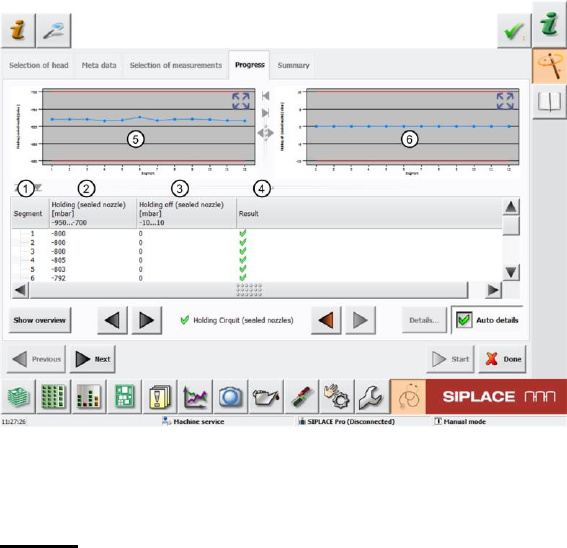
Figure 15: Holding circuit (sealed nozzles) – Progress menu
The results shown are from measuring the holding circuit of a CPP head. The screen will look slightly
different for a CP20P/A, although the result is the same!
Legend:
1. Segment measured
2. Measured holding circuit vacuum value at the segment with closed vacuum nozzle in mbar.
The Holding (sealed nozzle) value must be within a plausible tolerance (in this case -950..-
700mbar).

SIPLACE Head Verification
User Manual Edition 01/2015
24
3. Holding circuit switched off, vacuum disabled. This measurement is used to check whether the
underpressure is reduced quickly, after the vacuum has been switched off. In an ideal case,
the pressure should be 0mbar (atmospheric pressure). The Holding off (sealed nozzle) value
must be within a plausible tolerance (in this case -10..10mbar).
This measurement is only performed for the CPP head.
This measurement is not performed for the CP20P/A and is therefore not shown in these
cases.
4. Results display (OK green tick / NOK red X)
5. This diagram illustrates the "Holding (sealed nozzle)" values for the segments.
Blue line Holding (sealed nozzle) in mbar for the individual segments
Red border Min and max tolerances (in our case -950..-700mbar)
Use the button to zoom in on the diagram.
6. This diagram illustrates the "Holding off (sealed nozzle)" values for the segments.
Blue line Holding off (sealed nozzle) in mbar for the individual segments
Red border Min and max tolerances (in our case -10..10mbar)
Use the button to zoom in on the diagram.
This diagram is only available for the CPP.
This diagram will not be shown for the CP20P/A.
SIPLACE Head Verification
User Manual Edition 01/2015
25
4.2.3 Explanation of Measurement Results Using Results PDF
These results can be seen if you scroll down the "Summary" menu or generate a results PDF!
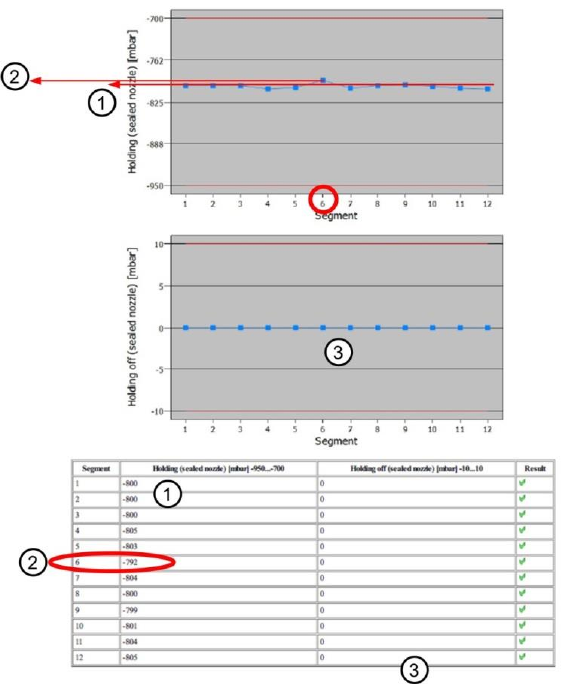
Figure 16: Results PDF for holding circuits
The measurement of the holding circuit vacuum for each segment has shown a relatively consistent
result so that we can assume that the vacuum system for this head is OK and does not have any
leaks.
The slight variation in the lower vacuum value at segment 6 (2) = -792mbar indicates that this value
deviates by approx.-8mbar from the expected vacuum-holding circuit average value of approx. -
800mbar (1). This could be due to a bad nozzle seat, a slightly leaky vacuum nozzle, a defective filter
disk or minor contamination of the holding circuit hose. However, the measurement in our example is
OK.
If you were to perform another measurement after a certain period and would discover a higher
deviation from the average value, this would indicate a trend and the probability that this segment will
sooner or later have a problem with the holding circuit.
Diagram (3) illustrates again the measurement of the absolute pressure after release of the vacuum, to
confirm the correct changeover to air blast.