00198481-01_Technical_Training_E_by_DEK_EN.pdf - 第108页
11 Benchmark Test 108 Technical Training E by DEK 12/2017 Our Goal Exercise Identify common causes of poor performance With the instructor, discuss the typical causes and solutions to any poor results. Summery of Adjus…
11 Benchmark Test
Technical Training E by DEK 12/2017 107
Perform Benchmark Test and record results
Apply small amount of paste or suitable lubricant to stencil to lubricate squeegees.
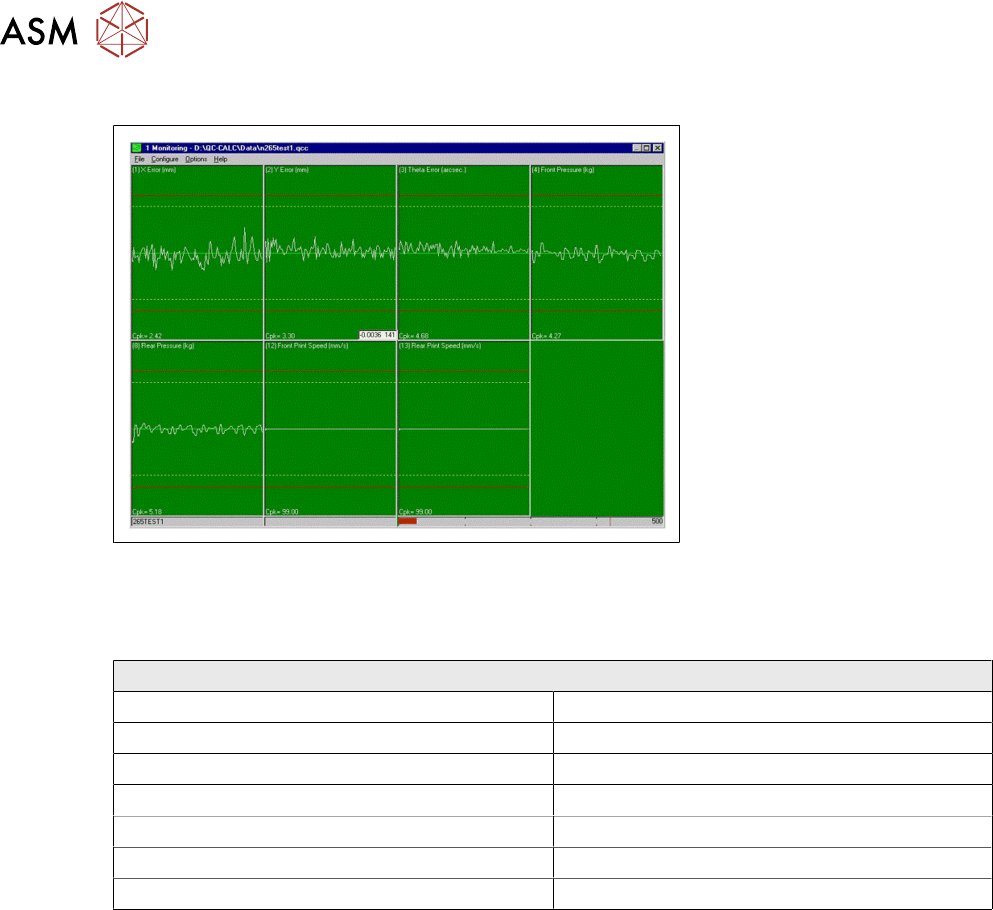
Run QC-Calc package on printer.
Carry out a minimum of 100 full machine cycles.
On completion of the test record the following information:
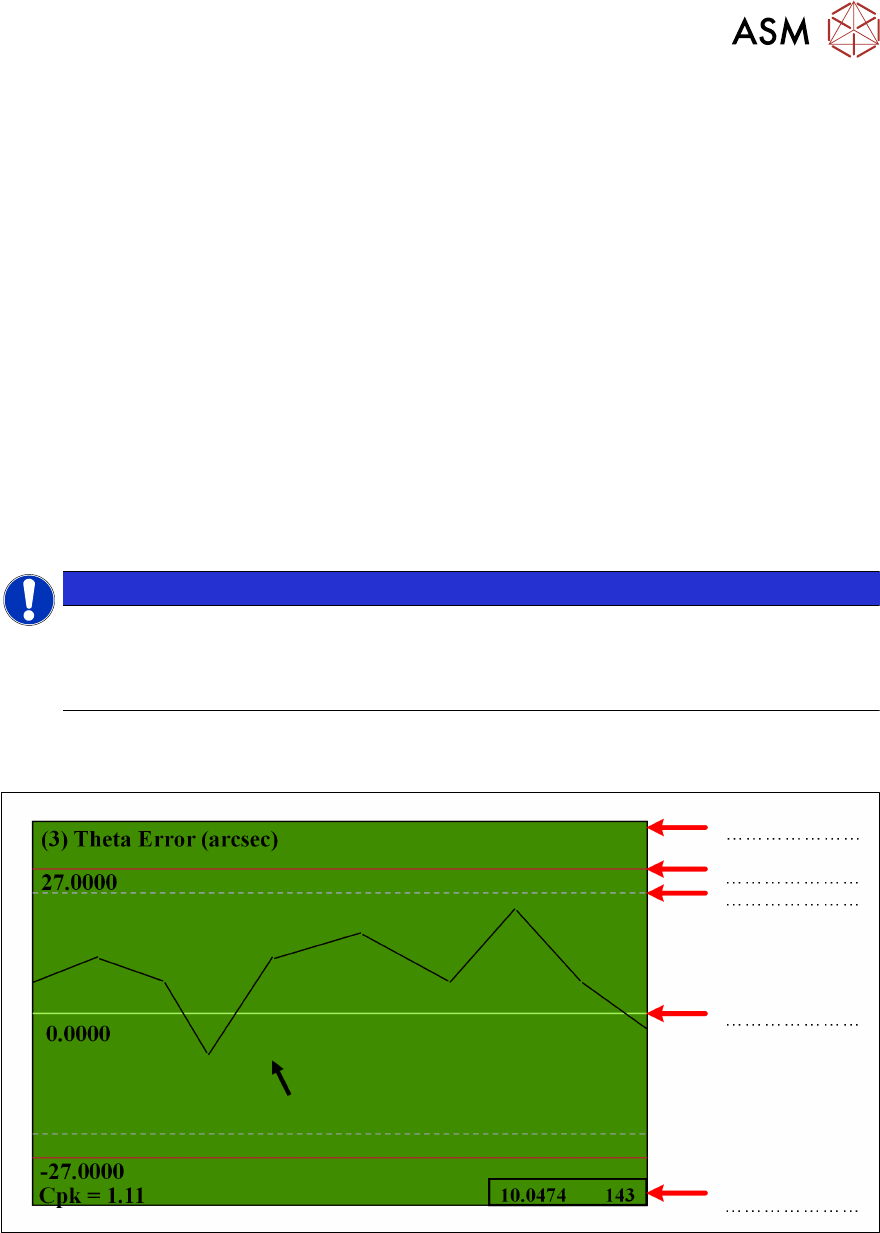
Front Print Speed Cp/Cpk = ………………………………………………………….
Rear Print Speed Cp/Cpk = ………………………………………………………….
Separation Speed Cp/Cpk = ………………………………………………………….
X alignment Cp/Cpk = ………………………………………………………….
Y alignment Cp/Cpk = ………………………………………………………….
Theta alignment Cp/Cpk = ………………………………………………………….
Front Pressure Cp/Cpk = ………………………………………………………….
Rear Pressure Cp/Cpk = ………………………………………………………….
NOTICE
Error message
The error message "No variation in selected data – Increase significant digits" may appear
for pressure and speeds due to the lack of variation. In this instance, no values are re-
quired.
Exercise
Identify the arrowed items below:
11 Benchmark Test
108 Technical Training E by DEK 12/2017
Our Goal
Exercise
Identify common causes of poor performance
With the instructor, discuss the typical causes and solutions to any poor results.
Summery of Adjustment
Board move- Rail parallelism Reduce board width 1mm
Fiducial capture Try video model mode
Board move – belts Remove tooling
Print carriage bearings Run dry align
Screen move –Chase clamps Disconnect chase clamps –no pressure
Calibrations Calibrate
Screen move - Stretch Try new screen
12 The Perfect Print
12.1 The Perfect Print
Technical Training E by DEK 12/2017 109
12 The Perfect Print
12.1 The Perfect Print
It is important that the Technician understands which areas under their control can have a direct
influence over the print quality and how to identify a defect and quickly rectify the problem.
A perfect print is characterized by:
●
Machine critical assemblies flat and level
●
Critical machine settings within tolerance
●
Machine calibrated
●
Machine clean and well maintained
12.2 Exercise
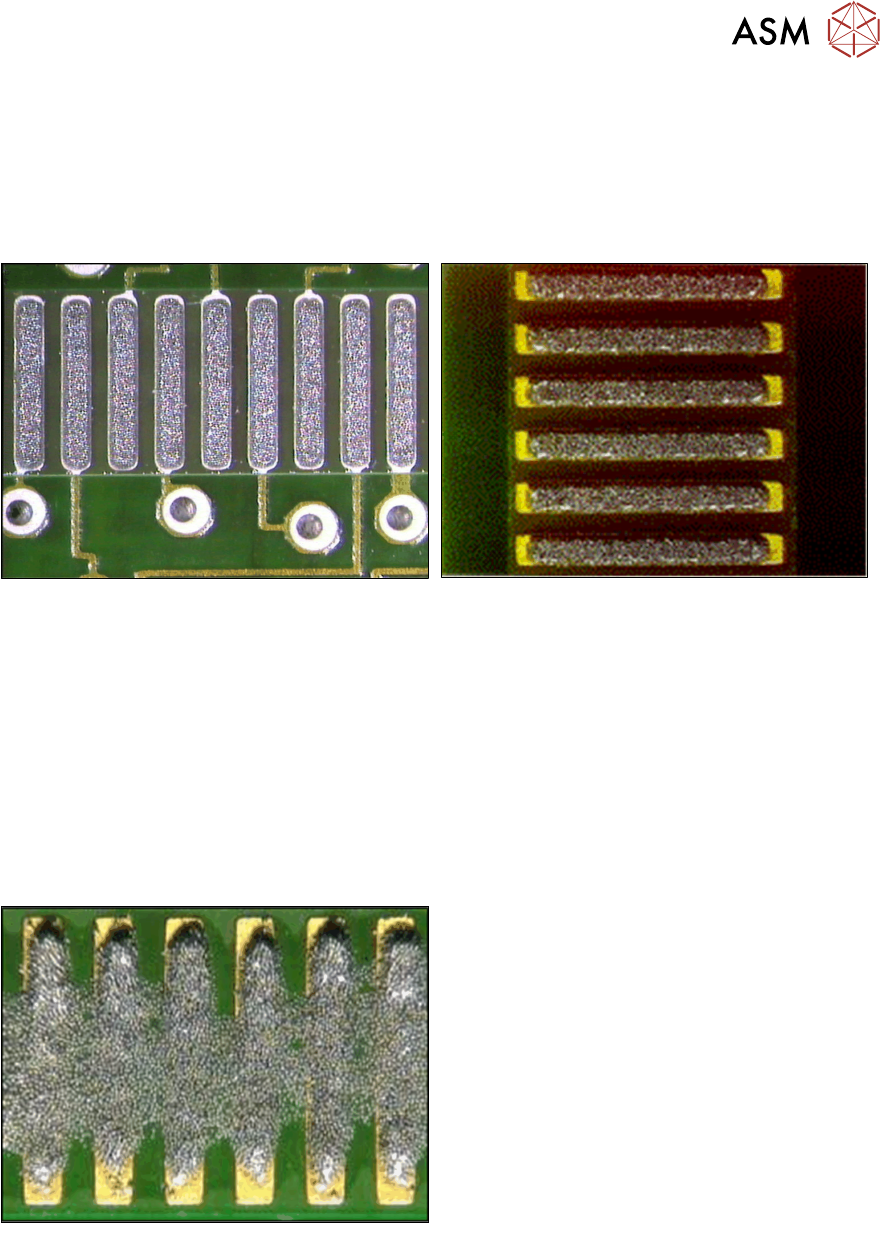
Shown below are some common solder print defects. Suggest some machine related causes of
these defects.
Bridging
Causes:
……………………………………………………
……………………………………………………
……………………………………………………
……………………………………………………
……………………………………………………
……………………………………………………
……………………………………………………
……………………………………………………
……………………………………………………
……………………………………………………