00197674-01-UM-E-Series-EN-05-2015.pdf - 第95页
User manual SIPLACE E 2 Operational safety From software version SC 708.0 05/2015 Edition 2.10 Lock out and tag out procedure 95 Release stored energy Stored energy in the comp ressed a ir supp ly or electrical energy …
2 Operational safety User manual SIPLACE E
2.10 Lock out and tag out procedure From software version SC 708.0 05/2015 Edition
94
2
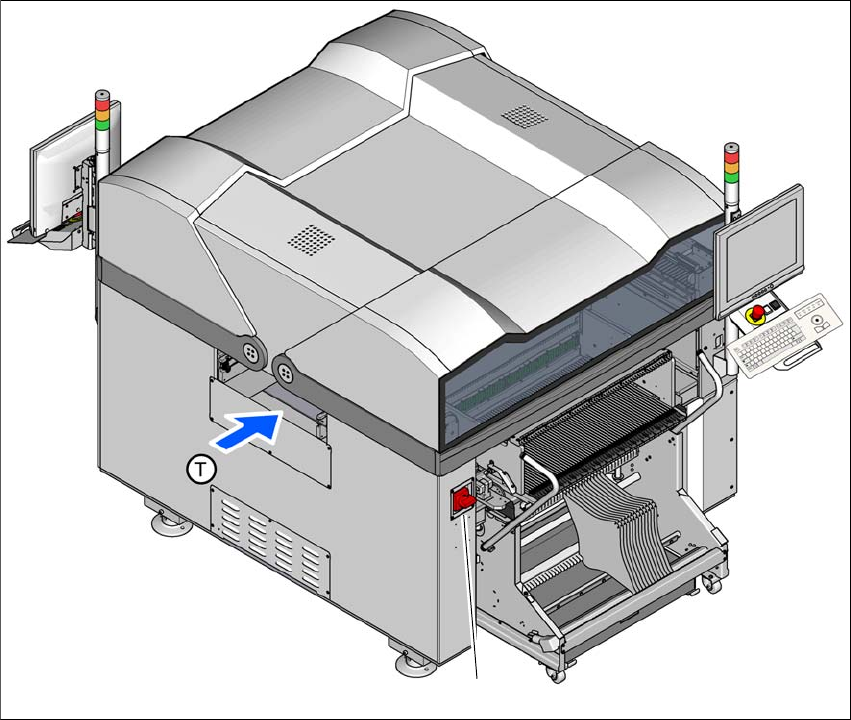
Fig. 2.10 - 1 Position of the main switch
2
(1) Main switch
Alternatively: tag out procedure
If a machine can be locked out, it must be. However, there are situations where energy iso
-
lating devices cannot accommodate locks. In these cases, the energy isolating devices must
be tagged to warn employees that the machine is de-energized for servicing. The tag must
be securely fastened, it must be placed in a position visible to all and it may only be removed
by the person who attached it. 2
(1)
User manual SIPLACE E 2 Operational safety
From software version SC 708.0 05/2015 Edition 2.10 Lock out and tag out procedure
95
Release stored energy
Stored energy in the compressed air supply or electrical energy in electrolytic capacitors must
be released by appropriate means. 2
After switching off the machine, wait the specified discharge or pressure unloading time
(see sections 2.8, page 87, and 2.9, page 91), before the machine can be operated again
without risk.
Verify the lock out.
Testing the lock out can be done simply by pressing the start button.
The following steps must be taken to restore the machine to operation.
Check the area. Authorized employees should remove all of their tools and reinstall all
guards.
Notify all affected employees.
Before removing even one lock or tag, inform all workers in the area that the machine is going
to be restarted.
Remove locks/tags
Each authorized employee must remove his or her own lock. Each authorized employee will
have his or her own lock.
Turn the machine on. Authorized workers should observe the equipment in operation to in
-
sure repairs were done correctly.
2.10.3 Testing
Service personnel may test the circuits by activating them briefly without canceling the locking
method. This may be done only when no other work is being performed by any other person on
the equipment being tested.
It is extremely important that all remote start switches be tagged with the Do Not Operate tag to
prevent inadvertent operation of the equipment during these periods.
2.10.4 Responsibility and obligations
– It shall be the responsibility of the cleaning, checking and service personnel to make sure this
procedure is adhered to.
– It shall be the responsibility of the cleaning, checking and service personnel’s immediate su
-
pervisor to instruct his personnel on this procedure.
– It shall be the responsibility of the Safety Officer with assistance from the Safety Committee,
Health Service Department, and the various managers and Vice-presidents to administer the
Lock Out / Tag Out Procedure.
2 Operational safety User manual SIPLACE E
2.10 Lock out and tag out procedure From software version SC 708.0 05/2015 Edition
96
2.10.5 Training
– Staff training
– The safety regulations require training for every individual. Of course, not every em
-
ployee is exposed to the same degree of danger or is involved with LO/TO as others are.
So extensive training is not necessary for everyone.
– To determine how much training to provide for each worker, the employees are divided
into three groups. Each group has its own level of training.
– Authorized employees.
– These workers actually install the locks and tags and do the cleaning and checking or
service work. So they must know the most about controlled energy. First, they must be
able to recognize all energy sources and measure the amount of energy. Authorized em
-
ployees must look for energy sources out of the realm of the obvious. These energy
sources include electrical, mechanical, hydraulic, pneumatic, chemical, thermal and
gravitational. Once these workers can recognize all energy sources they must be taught
how to isolate, control, and release the energy without any risk.
– Affected employees
– These are workers who operate the machinery or equipment that may be de-energized.
Other employees who may be affected include those who work in an area that contain
equipment that may be locked/tagged out. These employees have to be instructed about
the nature of the energy control program. They must know why lock/tag out is important,
what tags and locks look like and why they must not remove tags or locks.
– All others
– As the name implies, any employee who is not affected or authorized fits into this cate
-
gory. There employees include office personal, managers, and upper management. Al
-
though they do not have a direct relationship to the machinery being locked or tagged,
they have to receive some training.
– To evaluate the lock/tag out procedure, the safety department will conduct periodic in
-
spections. As part of the inspection the safety department will document that all facets of
the procedure are followed. The safety department will follow up with formal classroom
review or retraining of the LO/TO procedure.
2.10.6 Review
This procedure will be reviewed and amended as required, and at least once a year.