Specification E by SIPLACE 规格说明书.pdf - 第28页
28 SIPLACE Vision OnBoard Inspection and Pattern Matching OnBoard Inspection The OnBoard PCB Inspec- tion (SW option) uses the PCB camera to inspect criti- cal areas of the board, spec- ified by the user, e.g. under BGA …
27
Component Feeding
Alternative SIPLACE Modules
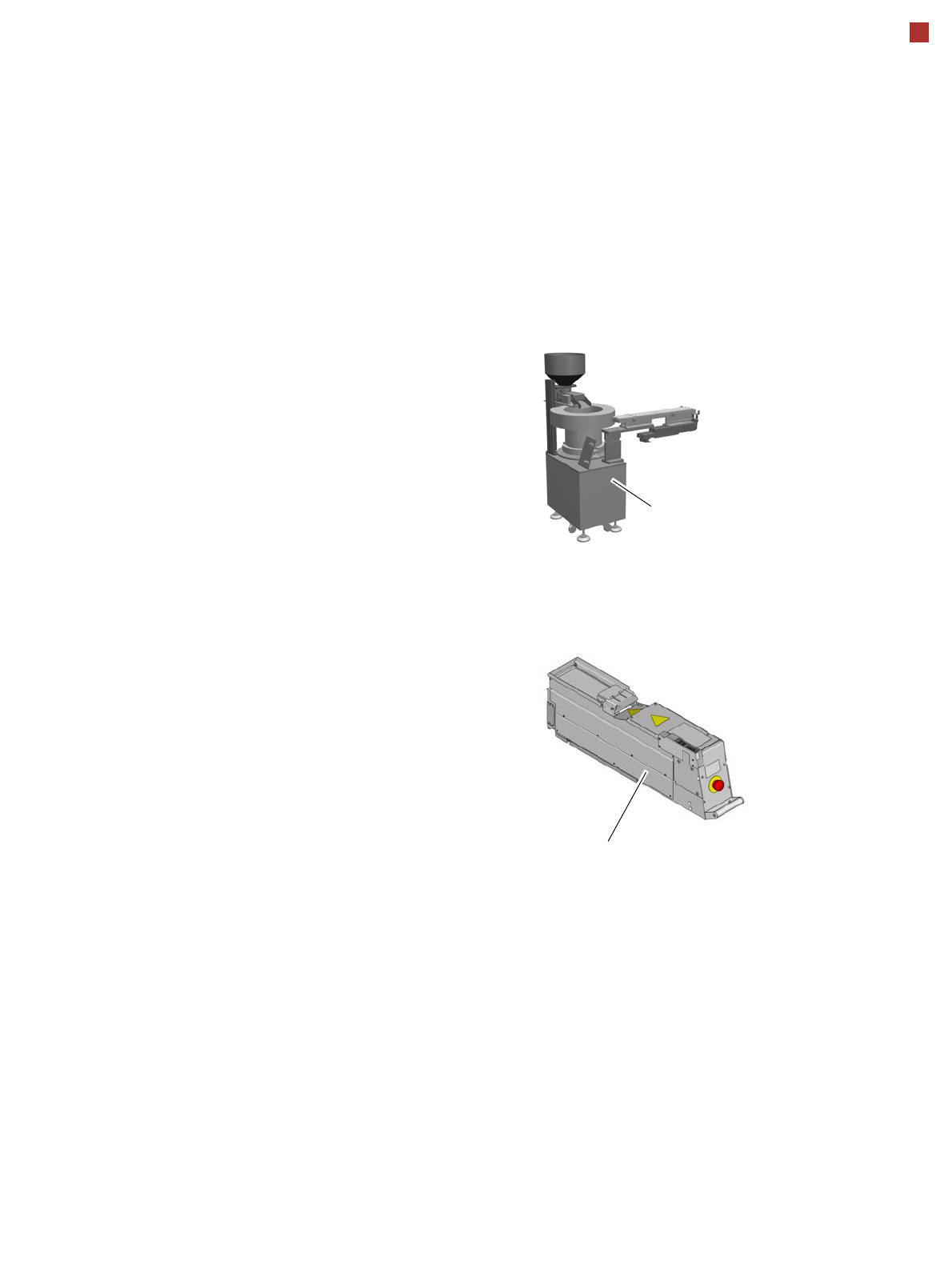
SIPLACE LDU E
The SIPLACE LDU E is used for coating flip
chips and CSP components with flux. The flux
container slides with a linear movement over
the dip plate and coats the cavity in the dip plate
with a layer of flux (predefined layer thickness).
The parameters for coating a component with
flux are prescribed in SIPLACE Pro.
The component is coated and then the flux layer
is renewed.
This sequence guarantees consistent process-
ing conditions for the components. The
SIPLACE LDU E is taken into account as an
independent feeder module type in the setup.
An implemented warming function allows the
viscosity of the flux to be altered. It occupies 9
locations of an 8 mm E feeder module.
SIPLACE LDU E
Bowl Feeder (OEM Product)
Via a single or multiple Feeder Adapter E, the
Bowl Feeders can be setup and used on E by
SIPLACE. For further technical details please
contact your dedicated E by SIPLACE distribu-
tor.
Bowl Feeder
28
SIPLACE Vision
OnBoard Inspection and Pattern Matching
OnBoard Inspection
The OnBoard PCB Inspec-
tion (SW option) uses the
PCB camera to inspect criti-
cal areas of the board, spec-
ified by the user, e.g. under
BGA or shields just before or
after placement, to make
sure that all components
were placed or to make sure
that there are no objects in
the way of the placement
process.
It is also possible to inspect
the solder paste to make
sure that it is present. How-
ever, this must always be
performed at the first place-
ment machine, before any
placement begins.
A requirement for all inspec-
tion tasks is that a "good pat-
tern" has been saved before
starting.
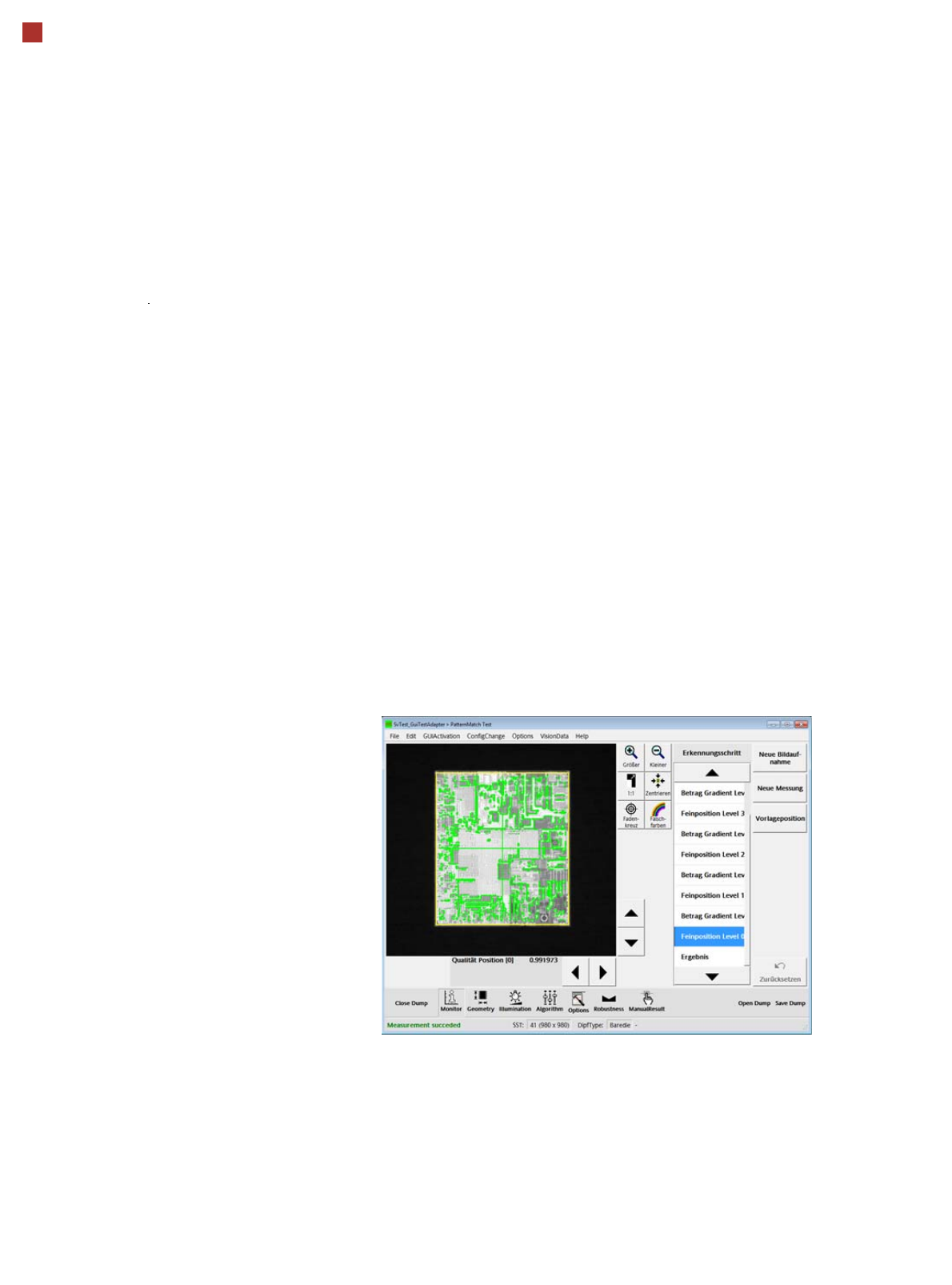
Pattern Matching
Pattern matching can be
used for components with
very fine contact pads, which
can not be detected with the
existing component camera
resolution. Searching and
detection is performed over a
larger area, which contains
unique structures (patterns).
Once the specified area has
been detected, the compo-
nent is aligned and placed
according to the position of
this area and in relation to the
substrate.

29
SIPLACE Vision
PCB position recognition
Fiducial criteria
Fiducial criteria
Locate 2 fiducials
Locate 3 fiducials
X-/Y-position, rotation angle, mean PCB distortion
Additional: shearing, distortion separately in X and Y direc-
tion
Fiducial shapes Synthetic fiducials: circle, cross, square, rectangle, dia-
mond, circular, square and rectangular contours, double
cross, pattern: any
Dimensions of patterns
Min. size
Max. size
0.5 mm
3 mm
Fiducial environment Clearance around reference fiducial not necessary if there
is no similar fiducial structure in the search area
Dimensions of synthetic fiducials
Min. X/Y size for circle and rectangle 0.25 mm
Min. X/Y size for annulus and rectangle 0.3 mm
Min. X/Y size for cross 0.3 mm
Min. X/Y size for double cross 0.5 mm
Min. X/Y size for diamond 0.35 mm
Min. frame width for annulus and rectangle 0.1 mm
Min. bar width / bar distance for cross, double-cross 0.1 mm
Max. X/Y size for all fiducial shapes 3 mm
Max. bar width for cross/double-cross 1.5 mm
Minimum tolerances generally 2% of nominal dimension
Max. tolerances generally 20% of nominal dimension