AQ-2 spec book LR.pdf - 第33页
Options 31 of 44 3. 10 .2 Ba tch traceability T able 24 3. 11 Software interf acing 3. 11.1 Aq da t a interf a ce T he data is collected and stored in a database at the front end. Customers consult the database via repor…

Options
30 of 44
3.10 Traceability
3.10.1 Board
traceability
Primary users of traceability are automotive, medical and military who have strict
traceability requirements but lately also other industries see traceability as a
must.
The AX supports two levels of traceability:
•The first level of traceability is called board traceability. Board traceability
contains traceability information about each individual board produced by a
machine. This product will typically be used together with 3rd party software.
•The second level of traceability is called batch traceability.Atthis level data
contains information about all the boards in a batch.
Both traceability products can make their data available to the user in files or in
messages. In message mode traceability information is send in XML-messages to
a front-end system. In file mode traceability information is written in XML-files to
a location on the factory network (e.g. customers file server). The traceability files
can then be archived on CD-ROM’s for long term storage. The files are easy
readable using for example Excel.
PA 3010/10 Board traceability:
Board traceability combines SVS Pro and BI information into one traceability
dataset per board. The dataset includes information about the machine used to
build the board, the identifier of the PCB (e.g. barcode) and the components used
(a.o. part number, vendor number and lot number).
PA 3010/20 Batch traceability:
Batch traceability combines SVS Pro and BI information into one traceability
dataset per batch. The dataset includes information about the machine used to
build the board, all identifiers of the PCB’s that are processed in the batch and the
components used (a.o. part number, vendor number and lot number) during the
batch.
A traceability solution is built up out of three products:
1. BI: scanner interface that supplies PCB identification data. This is standard
available on the AX/AQ-2.
2. SVS Pro: supplies component identification data. The set-up is crucial for
traceability and therefore we need SVS Pro. SVS Pro is a prerequisite for
traceability: for traceability to work the machine has to be equipped with
SVS Pro (SVS Pro is not included in the traceability PA and should be ordered
separately).
3. Traceability software: combines the PCB-scanner data and SVS Pro data as the
product is built in the machine.
Board traceability delivers a dataset (as specified in) per board. That means that
whenever a board leaves the machine the data interface will deliver a dataset
containing all traceability data for that one board. The dataset contains:
•The production date and time
•The machine type and machine name that produced the board
•The board ID and production status of the board
•The placement program used to build the board
•For each used tape:
a. Partnumber, package-type and reference designators that must be
placed from that feeder-position according to the placement program
b. Partnumber, vendor- and lot-identifier, setup date and time, and
operator according to SVS-Pro
Options
31 of 44
3.10.2 Batch
traceability
Table 24
3.11 Software
interfacing
3.11.1 Aq data
interface
The data is collected and stored in a database at the front end. Customers consult
the database via reports. Two typically queries are:
• Given a board ID print all the used part ID’s
• Given a part ID print all related board ID’s
On an AQ a batch is initiated by starting a placement program. As soon as the
operator presses the ‘Run’-button, the batch is started. The batch is stopped when
the last board of the running placement program leaves the machine.
Additionally a batch report is created every hour, on the hour. An example
scenario could look like this:
Time Event Data
08:35 Start of Job1 —
09:00 — report for 8:35-9:00
10:00 — report for 9:00 – 10:00
10:28 End of Job1 report for 10:00 – 10:28 (end of Job1)
10:32 Start of Job2 —
11:00 — report for 10:32 – 11:00
Etc… — —
The contents of a batch-report contains:
1. The batch production data and time
2. The machine type and machine name that produced the board
3. The board ID and production status of all boards in the batch
4. The placement program used to build the batch
Furthermore the traceablity data contains, for each used tape:
•Partnumber, package-type and reference designators that must be placed from
that feeder-position according to the placement program
•Partnumber, vendor- and lot-identifier, setup date and time, and operator
according to SVS-Pro
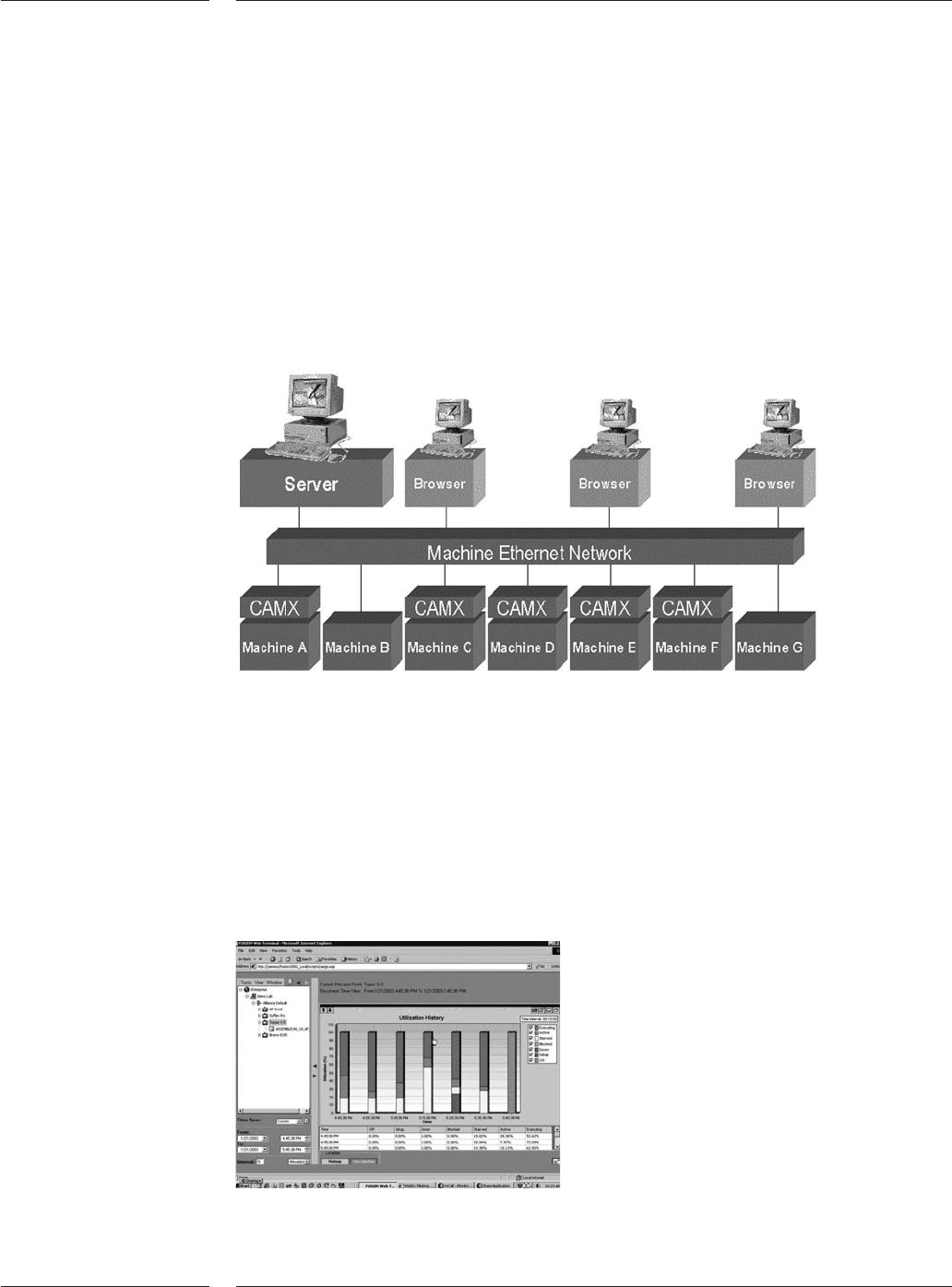
The AQ Data interface is based on the CAMX standard. CAMX is a standard based
on XML format. The standard is created/defined by the IPC committee with the
help of industry leaders and customers. The first release of the standard has
focused on data collection. The AQ-2 supports the IPC 2541 and 2546 standards.
For more information about this standard please look at: http://gencam.ipc.org/
Options
32 of 44
Proprietary interfaces
If users wish to have other interfaces than the two listed above, (for example if
the user has built his own system); this can be quoted for the implementation of
the interface. Please contact your Assembléon sales support representative for
further information.
Performance monitoring
The AQ-2 can be connected to our performance monitoring solution using the
CAMX-interface. With the performance monitoring solution, information can be
viewed anytime and anywhere (using internet technology).
The performance data can be made available both real-time as historical.
The solution offers the following information:
Production rate history (Products per hour)
Cycle time history
Utilization history (Up/down time)
Alarm history
Fault history per head – feeder - part
Component consumption per feeder
CPH vs PPM History
Screens of the performance analysis solution
Setup scheme for performance analysis
Figure 27
Figure 28