2023-0002-ITEC_003_Product-catalogue-Jan-2023_LR.pdf - 第17页
Wor k more e c ien tly , pr oduc t i vely , and acc ura te ly wi th ult r a- high- s pee d 2D v isi on insp ec t io n. T his mo dule is buil t wi t h aut oma t ic high- s pee d r ejec t re mov al t o pr eve nt se quenc …
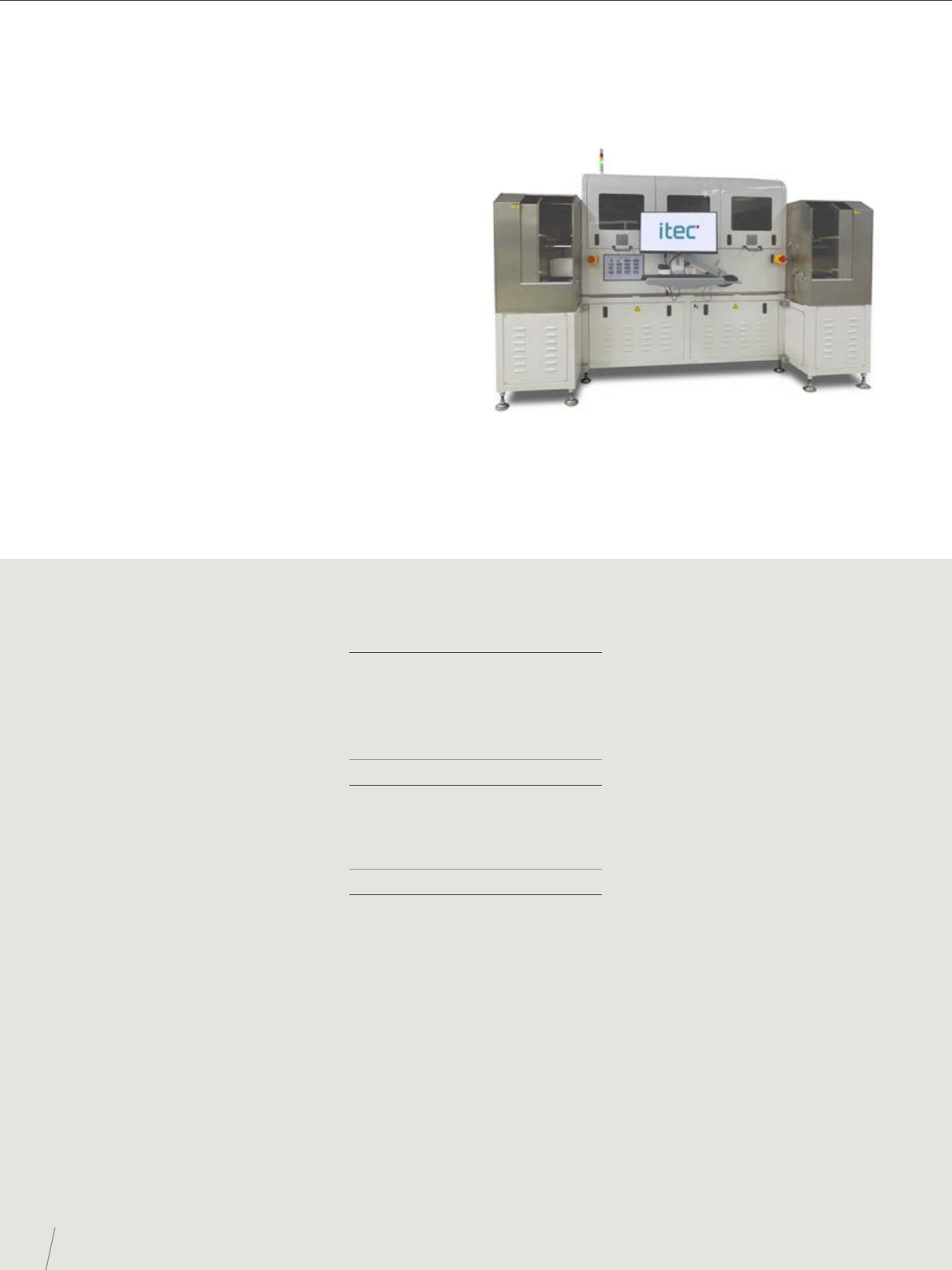
The Strip-to-Strip Inspection after plating guarantees the
quality of WIP products with fast feedback loop. When
manufacturing cost and quality are a concern, the PHIXEL
MIS minimizes waste and loss - enabling early detection
of defects usually only discovered during the nal 4th
Optical inspection of nished products. With ultra-high-
speed vision scan, high-precision for 2D inspection
DFN products, high accuracy laser for reject treatment,
and fast conversion, the PHIXEL MIS supports the largest
strip size: 100x300 mm.
Enables early detection
of production problems
to prevent loss
16
ITEC - PRODUCT PORTFOLIO
Specications
Imaging system
• Camera: 16K color line-scan camera
• Number of cameras: 2
• Resolution/Field of view: 3.17 to 6.3 µm /
pixel, FOV 50 mm to 100 mm
• Minimum object detection: 12 to 25 µm
• Lighting: Compound lighting
Inspection categories
• Program mode: Fast programming
for common reject criteria
• Reject treatment: Electronic map
and auto punching
• Inspection view: Top and bottom view
Inspection items
• Moulded lead-frame defects: Chipping.
Body broken. Scratch. Pin hole or void.
Mold shift. Incomplete mold. Gate remain.
Foreign material. Gate chipping. Rough
surface. Melted Body. Blister. Body crack.
Bubbles
• Lead-frame defects: Flash along lead. Cu
exposure. Contamination. Bend lead or
twisted lead. Mould compound leakage
on lead. Burr. Missing lead. U-shape ash
(mold ash under lead-frame). Indexing
hole deformation. Mold ash. Lead press.
Lead width. Empty (no encapsulation)
Key features
Application
• Inspection of lead-frame substrate
to detect package dimension,
molding and plating defect
Key features
• Dual stations for 2D inspection
and laser marker
• Throughput: 32,000 to 117,000 UPH
(subject to package size
& leadframe density)
• Support max 100 mm x 300 mm
substrate LF size
• 8K or 16K line scan camera resolution
• 3-4 magazines for on/o loaders
• Auto-lead frame QR code reading
• Full strip laser mark option
• Vacuum system and brush clean
for package laser mark
• AOI cellular network architecture
for recipe and e-Map management
• Option: real-time data feeding to MES
and eSPC
• Option: auto email alert (defect/batch
summary)
• SEMI standard with SECS/GEM interface
• Advanced Defect Classication (ADC) by
deep learning
PHIXEL MIS - STRIP-TO-STRIP INSPECTION AFTER PLATING
OPTICAL INSPECTION
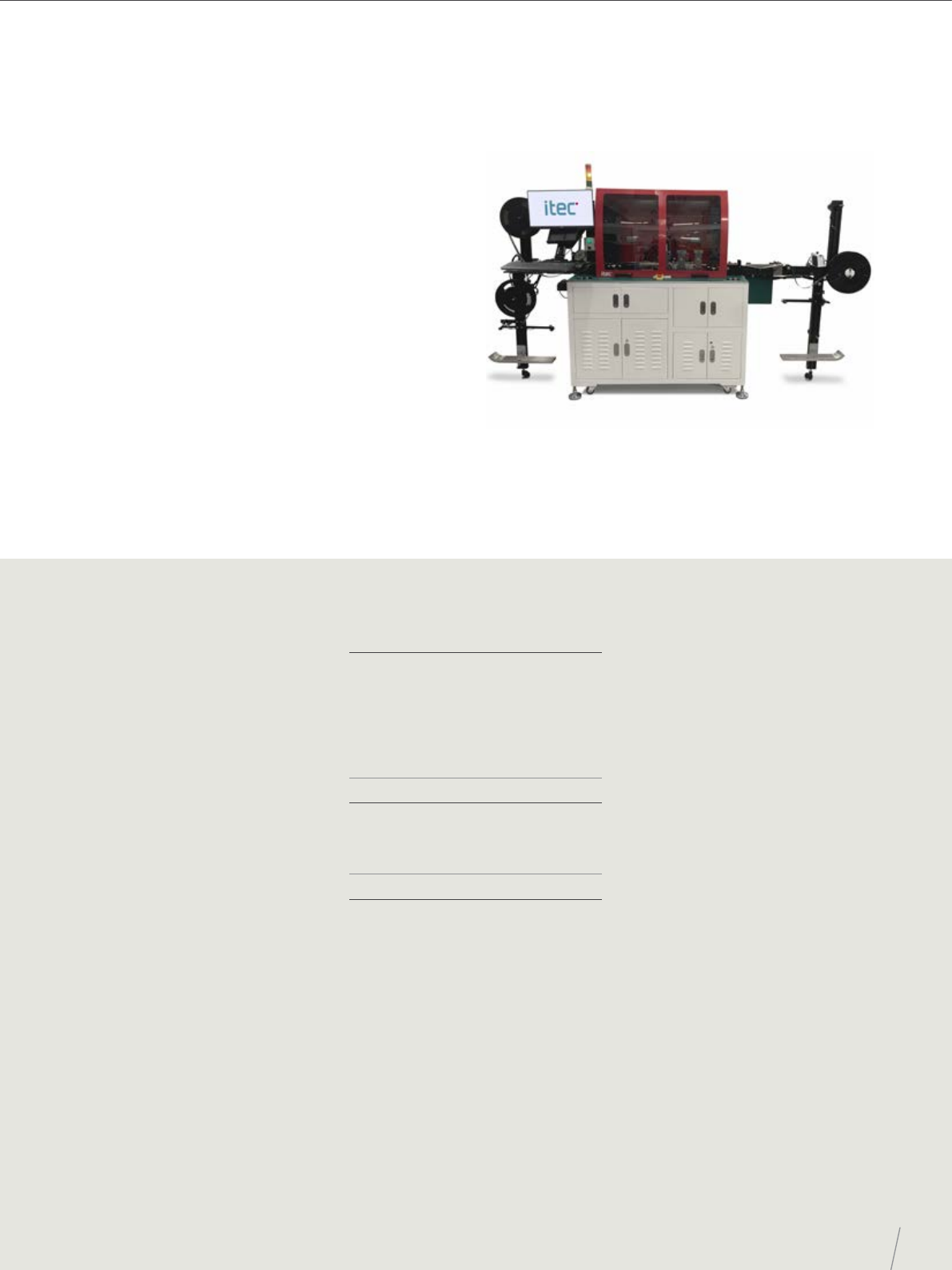
Work more eciently, productively, and accurately with
ultra-high-speed 2D vision inspection. This module is
built with automatic high-speed reject removal to prevent
sequence disruption. The PHIXEL CMR will guarantee your
products’ quality and eliminate product defects and eld
recalls - bringing customer complaints close to 0%.
The only equipment
on the market
providing full ePassport,
bankcard, and e-ID chipset
module inspection
17
Specications
Imaging system
• Imaging system
• Camera: 5M pixels area camera mono
• Number of cameras: 2 (top) + 1 (bottom)
• Resolution/Field of view: 12 µm/pixel
FOV:30 mm
• Minimum object detection: 48 µm
• Lighting: Compound lighting
Inspection categories
• Program mode: Fast programming
for common reject criteria
• Reject treatment: Electronic map
• Inspection view: Top and bottom view
Inspection items
• CDIF defects: Incomplete punch. Incorrect
punch. Contamination. Splicing connection
(distinguish colour, size, and location).
Mold void. Chipping. Die contamination.
Loose wire
• Chip module defects: Bend lead. Chipping.
Mold scratch. Gate remain. Mold
contamination. Crack. Lead scratch. Mold
ash. Incomplete ll. Scratch Ink mark.
Index hole deformation. Cold splicing.
Shift punch
Key features
Application
• Inspection of Contact/Contactless Dual
Interface (CDIF) module substrate to
detect encapsulated die, mold defect,
bonding wire, and plating defect
Key features
• Minimum 5MP colour camera for top
and bottom inspection
• 4 stations for 2D inspection, testing,
reject punch, and validation
• Throughput: up to 70,000 UPH
(subject to package size)
• Post-inspection after reject punch
• Zero balancing capability, total good,
and reject counts
• Customized AOI solution
• ID reader
• AOI cellular network architecture
for recipe and EMAP management
• Lead frame width: up to 35 mm
• SEMI standard with SECS/GEM interface
• Option: real-time data feeding to MES
and eSPC
• Option: auto email alert
(defect/batch summary)
PHIXEL CMR - OPTICAL INSPECTION FOR CONTACT & CONTACTLESS MODULE
OPTICAL INSPECTION
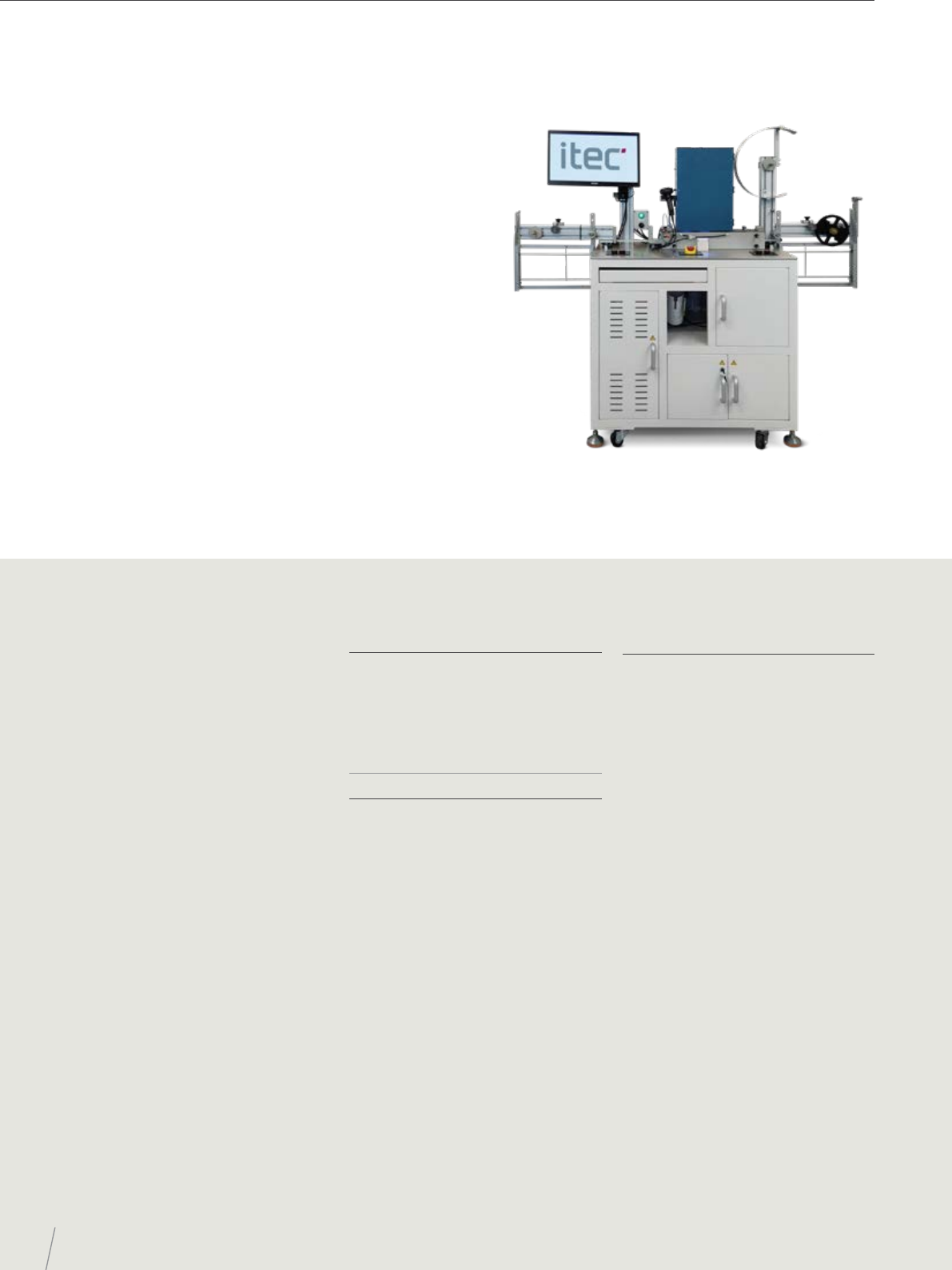
Guarantees the quality of the products you produce
and deliver. The Post-Seal In-Tape Inspection eliminates
quality defects - bringing customer complaints and eld
recall rates close to 0 PPM. The PHIXEL IHW has a fast
convertible for 7-13-inch” carrier tape reel diameter and
auto conversion for dierent carrier tape widths up to
32mm. With AOI cellular network architecture for recipe
management and Advanced Defect Classication (ADC)
by hybrid analysis, the Post-Seal In-Tape Inspection
outperforms market competition to go above and
beyond your customers’ requirements.
The only post-tape
inspection equipment on
the market providing full
inspection capability
18
ITEC - PRODUCT PORTFOLIO
Specications
Imaging system
• Camera: 5M pixels area camera
monochrome
• Number of cameras: 2: 1 (top) + 1 (bottom)
• Resolution/Field of view: 4 - 16 µm/pixel
FOV: 10 mm to 40 mm
• Minimum object detection: 16 µm
• Lighting: Compound lighting
Inspection categories
• Program mode: Fast programming
for common reject criteria
• Reject treatment: Electronic map
• Inspection view: Top (and angle camera
for lead lift-up defect as upgrade option)
Key features
Application
• Inspection after taping to detect
orientation, lead, mark, seal, package
surface defect, reel label and quantity
Key features
• Min. 5 MP camera for top & bottom
inspection
• AOI cellular network architecture
for recipe management
• Reel size: 7” to 13”
• Throughput: up to 120,000 UPH
(subject to package size & pitch)
• Option: tilted lead defect vision
• Cu exposure detection under development
• Package: leaded, leadless, and WLCSP
• Carrier tape width: 8 to 32 mm
(auto track width)
• Advanced Defect Classication (ADC)
• SEMI standard with SECS/GEM interface
• Option: real-time data feeding to MES
and eSPC
• Option: auto email alert (defect/batch
summary)
Inspection items
• Marking defects: Unclear mark (faded
character). Shift mark (misaligned
marking). Incomplete mark. Double mark
(multiple character). Vertical mark (wrong
orientation). No mark. Mixed marking
• Moulded Package defects: Bubbles/
bulge. Voids/pin holes. Crack. Broken body.
Chipping Scratch. Unmoulded. Incomplete
ll. Foreign material
• Lead Package defects: Mould ash
on/along lead. Foreign material and
contamination. Exposed wire/clip. Ejector
mark. Visible wire Solder bridging. Bent
lead/lead angle. Lead sweep. Lead length.
Lead spacing/span. Lead cuts/depressions/
damage. Lead burr. Missing lead. Lead
length. Incomplete lead forming. Metal burr
• Taping defects: Loose/unseal cover tape.
Cover tape misalignment. Damaged/
contamination cover tape. Deformed/
damaged cavity. Damaged bottom tape.
Chipped/broken body. Mixed product. Edge
sealing. Unseal tape. Oset sealing.
• Cover tape tearing. Product tilting
PHIXEL IHW - POST-SEAL IN-TAPE INSPECTION
OPTICAL INSPECTION