QLF08_LaBel.pdf - 第11页
IC and Component Selection for Space Sy stems – Presented by Kenneth A . LaBel 11 T raditional Risk Matrix Risk T olerance Boundary Placed on the profile to reflect Corporate “Risk Appetite ” Caution Zone Risks in the “y…

IC and Component Selection for Space Systems – Presented by Kenneth A. LaBel
10
An Example “Ad hoc” Battle
• Mission requirement: High resolution image
– Flowdown requirement: 14-bit 100 Msps ADC
• Usually more detailed requirements are used such as
ENOB or INL or DNL as well
– Designer
• Searches for available radiation hardened ADCs that
meet the above requirements
• Searches for commercial alternatives that could be
upscreened
– Manager
• Trades the cost of buying Mil-Aero part requiring less
aftermarket testing than a purely commercial IC
• Worries over delivery and test schedule of the candidate
devices
– Radiation/Parts Engineer
• Evaluates existing device data to determine reliability
performance and additional test cost and schedule
• The best device? Depends on mission priorities
IC and Component Selection for Space Systems – Presented by Kenneth A. LaBel
11
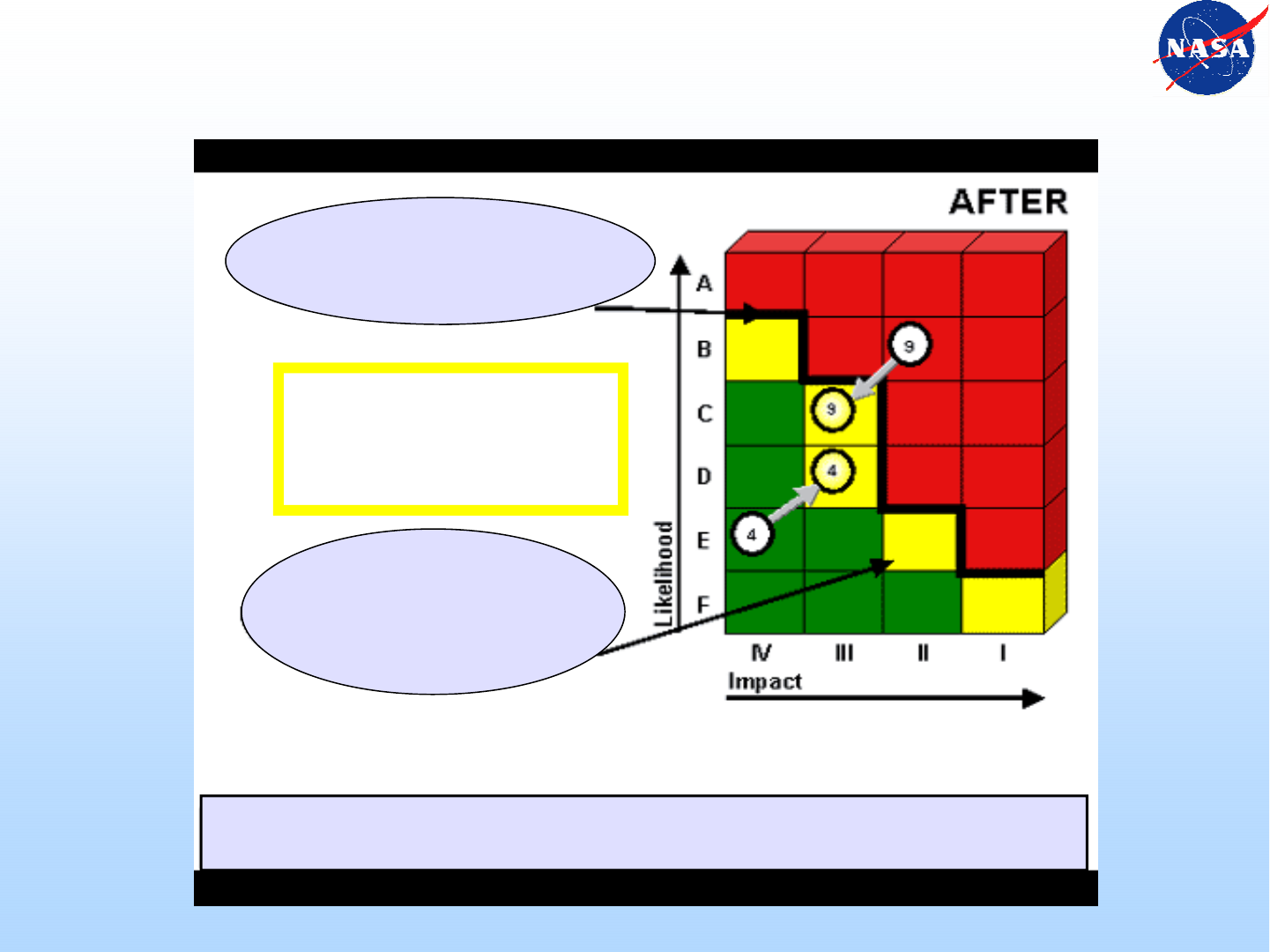
Traditional Risk Matrix
Risk Tolerance Boundary
Placed on the profile to reflect
Corporate “Risk Appetite”
Caution Zone
Risks in the “yellow” area
need constant vigilance
and regular audit
By adjust the level of
currency hedging, resources
can be released to help fund
improvements to protection of
the production facility.
Likelihood Scale: A: Very High B: High C: Occasional D: Low E: Very Low F: Almost Impossible
Impact Scale: I: Catastrophic II: Critical III: Significant IV: Marginal
IC and Component Selection for Space Systems – Presented by Kenneth A. LaBel
12
Reliability “versus” Radiation:
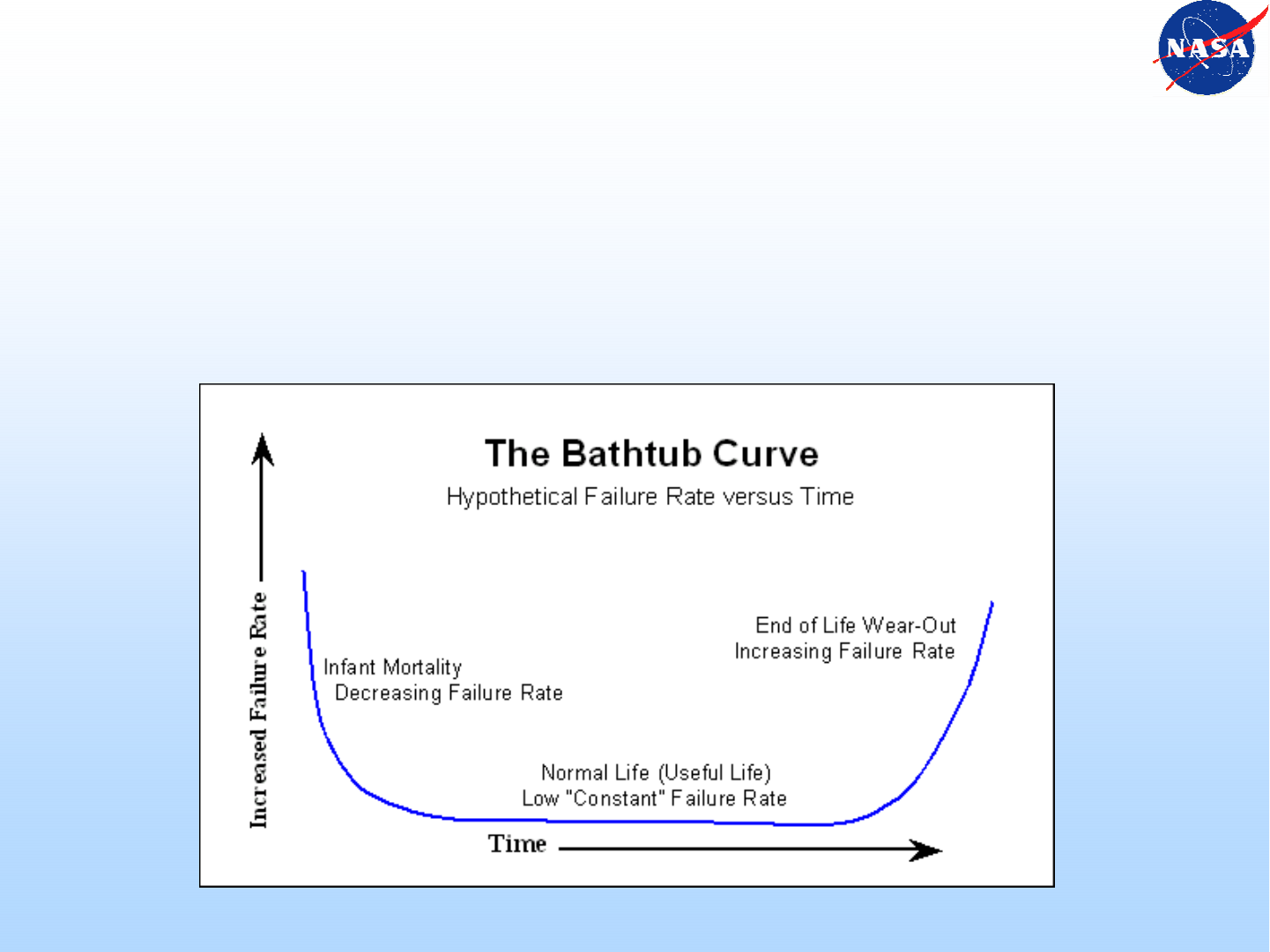
Basic Electronics Reliability
• Reliability of electronics is viewed traditionally using a
“bathtub” curve view of mean time to failure (MTTF)
– This looks at both intrinsic (wearout) and extrinsic (infant
mortality) failure modes
Source: http://www.weibull.com/hotwire/issue21/hottopics21.htm