QLF08_LaBel.pdf - 第26页
IC and Component Selection for Space Sy stems – Presented by Kenneth A . LaBel 26 Sample System Implementation for the Three Styles of FPGAs Non-volatile memory (NVM) – holds configuration of FPGA FPGA FPGA FPGA One-time…

IC and Component Selection for Space Systems – Presented by Kenneth A. LaBel
25
Example: Considerations for Selecting a
“Custom” Device
• Three basic device type options
– Custom ASIC (CA)
• Also called standard cell or just ASIC
• Essentially a fully-custom design IC
– Structured ASIC (SA)
• Newer device that is a semi-custom design using built-in
functional blocks that are interconnected for a user’s design
by the device manufacturer
– Field Programmable Gate Array (FPGA)
• One-time or reprogrammable interconnecting of logic
performed by the user or can be done in-circuit
(reprogrammable options)
• These class of devices now have so much
functionality that they can be classified as system
on a chip (SOC)
• We will use the three discussed selection criteria for
this example.
IC and Component Selection for Space Systems – Presented by Kenneth A. LaBel
26
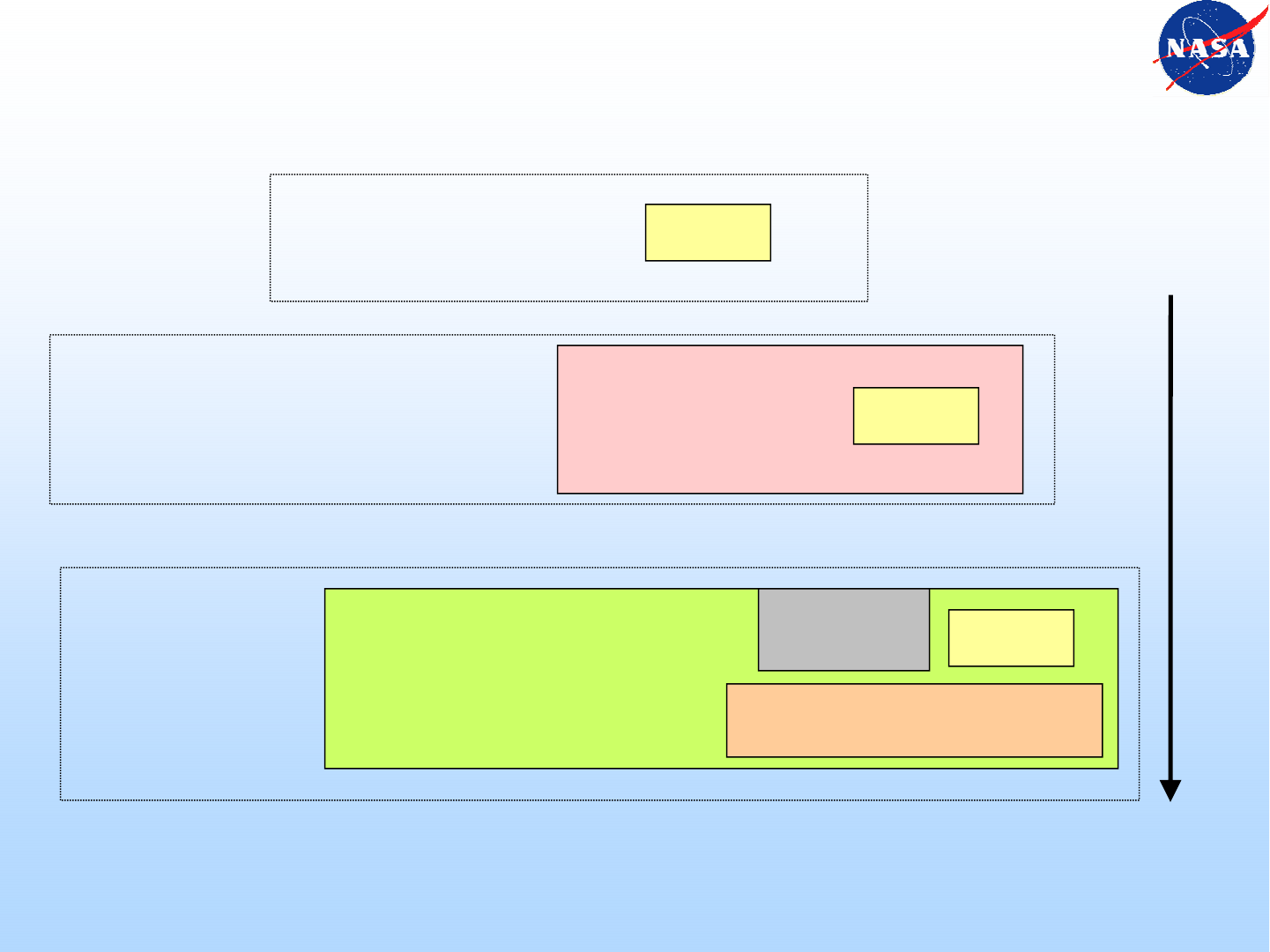
Sample System Implementation for
the Three Styles of FPGAs
Non-volatile memory (NVM) –
holds configuration of FPGA
FPGA
FPGA
FPGA
One-time
Programmable
(OTP)
Non-volatile
Reprogrammable (Flash)
Circuits to interface
between FPGA and
ground for new
configuration uploads
Watchdog/
controller
SRAM-based
Circuits to interface
between FPGA and
ground for new
configuration uploads
Radiation tolerant/hardened options available in all types;
Some are “harder” than others
Increasing
System
Complexity
IC and Component Selection for Space Systems – Presented by Kenneth A. LaBel
27
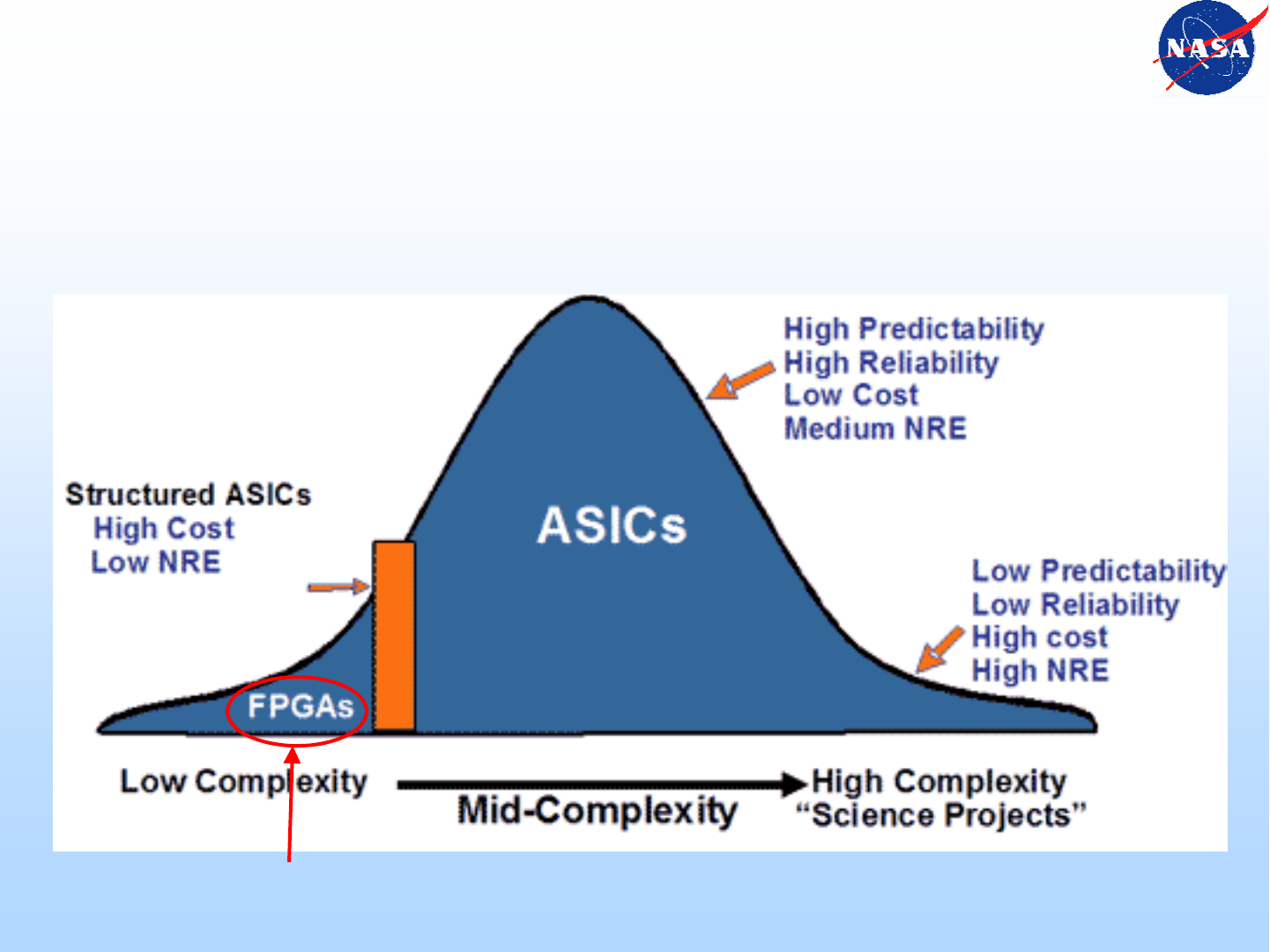
The Trade Space Curve for Performance
• Application-specific trade-offs are often made based on the
design complexity of the application requirements.
– Note: FPGAs and SAs are moving to the right as
semiconductor processes scale to smaller transistor feature
sizes
Source: http://www.fpgajournal.com
Majority of NASA needs