QLF08_LaBel.pdf - 第31页
IC and Component Selection for Space Sy stems – Presented by Kenneth A . LaBel 31 Selection Criteria: Radiation and Reliability • While there is no “generic” answer for radiation tolerance and reliability levels in the t…
IC and Component Selection for Space Systems – Presented by Kenneth A. LaBel
30
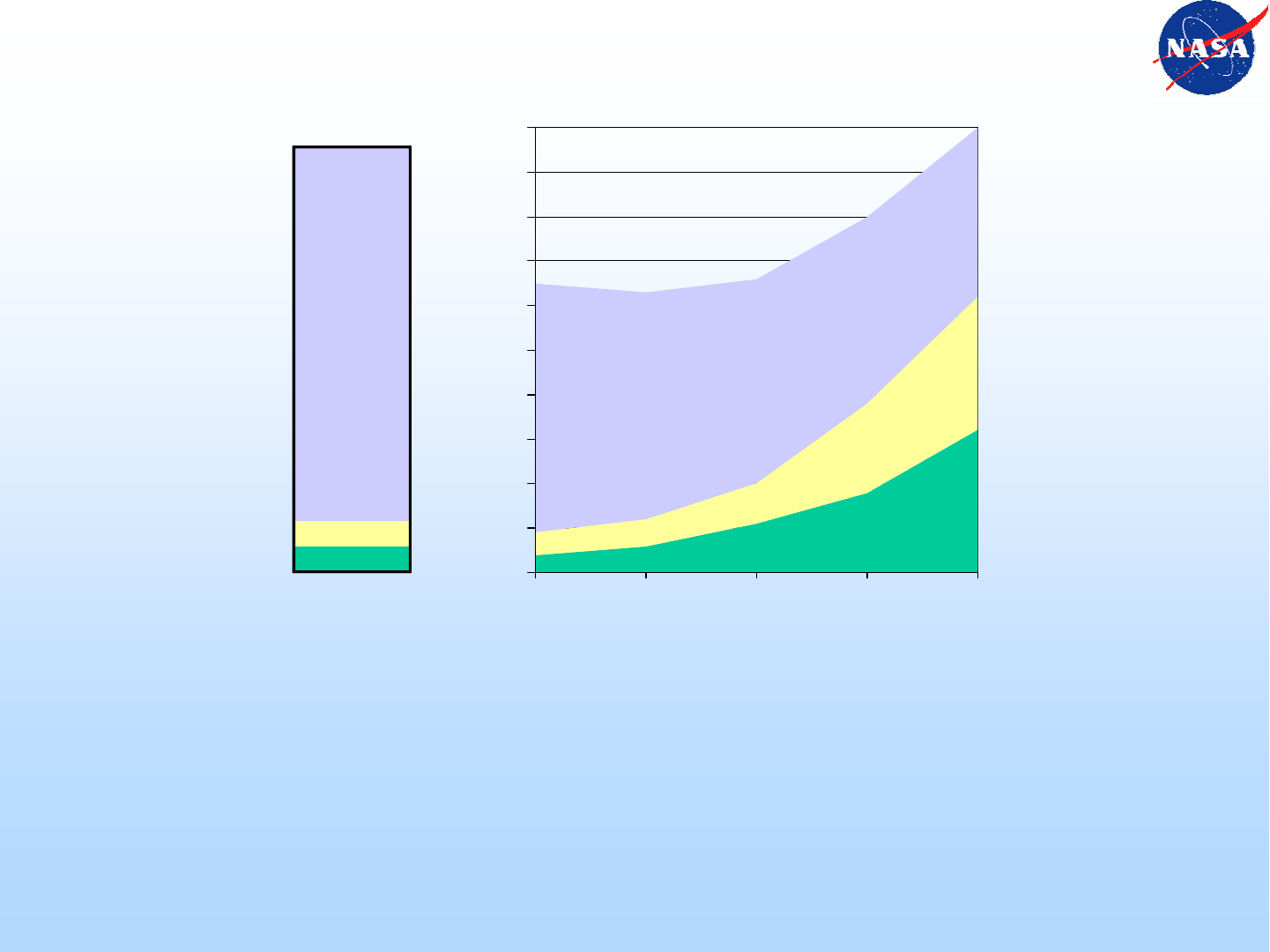
Programmatics: Development Cost
• Overall product development costs are increasing: design, mask, and
manufacturing
– However, the percentage of product cost for both design and masks (>$1M for
90nm!) are also Increasing
• Implies cost effectiveness of minimizing masks and design re-spin costs (advantage
FPGAs and SAs)
Graphic from MIPS Technologies "The Coming Reality for SOC Designers" by John Bourgoin
Design
Costs
Mask
Costs
Mfg.
Costs
$0M
$1M
$2M
$3M
$4M
$5M
$6M
$7M
$8M
$9M
$10M
1995
(0.35um)
1997
(0.25um)
1999
(0.18um)
2001
(0.13um)
2003
(0.10um)
Assumptions: 6M-70M transistors, 3 mask spins, 250K Units, transistor costs and productivity projected from the ITRS
Design
100%
Mfg.
(250KU)
62%
Masks
Design
100%
Masks
Mfg.
(250KU)
1995
13%

IC and Component Selection for Space Systems – Presented by Kenneth A. LaBel
31
Selection Criteria: Radiation and Reliability
• While there is no “generic” answer for radiation
tolerance and reliability levels in the trade, there
are numerous considerations such as
– What is known of the process radiation tolerance?
• Was process/device radiation qualification sufficient for
planned design or application?
– Library? Cells? Speed? Etc…
• Is the process reliable and achieving good yield?
– High-volume commercial fab vs. low-volume niche fab?
• Are there lot-specific or application-specific concerns?
– Is there a specific performance requirement such as
reconfigurability or ultra-low power that forces a non-
radiation tolerant device selection?
• How does a fault-tolerant system architecture enter the
equation?
– How testable is the design/device?
• As has become more evident, trade spaces are
much more complex than “just” an IC
IC and Component Selection for Space Systems – Presented by Kenneth A. LaBel
32
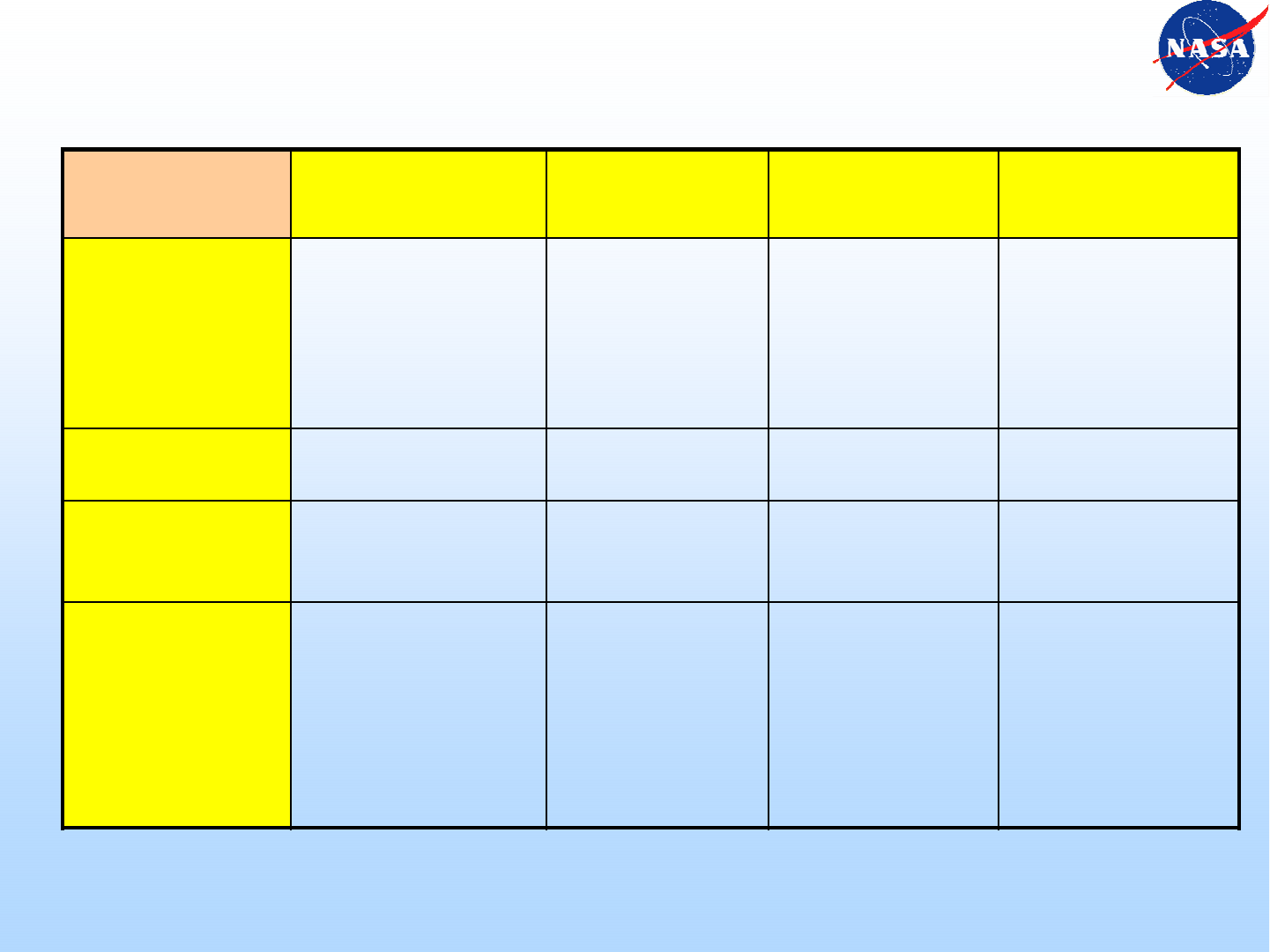
Current Radiation Hardening Considerations
Category Generic CMOS
Technology
CA SA FPGA
RH Availability
Poor Niche vendors
for RH;
Commercial
would rely on
RHBS and
RHBD
Niche vendors –
none currently
available, but
several vendors
are developing
Limited, but new
developments
underway
TID
RHBS; improving
with scaling
RHBS, RHBD,
RHBP
RHBS, RHBP,
partial RHBD
RHBS
SEE
RHBS – not;
increasing
sensitivity; SOI?
RHBS, RHBD,
RHBP
(substrate)
RHBS, RHBD
partial, RHBP
(substrate)
RHBS
Notes
IP: Limited RH IP
available;
Commercial IP?
Commercial
manufacturers
working soft error
rate (SER) issues
RH levels can be
“tuned” via
RHBD or RHBP;
Difficult for
radiation testing
Circuit tiles can
incorporate
mitigation
options
External and
internal SEE
mitigation (TMR,
scrubbing,
reconfiguration,
etc) for logic and
configuration