IPC-7721(S).pdf - 第26页
remove such contaminants. The best solution is to prevent contamination. Handling Electronic Assemblies If no ESDS markings are on an assembly, it still needs to be handled as if it were an ESDS assembly. However, ESDS c…
damage EOS sensitive components or could cause injury to
personnel. Most ESD specifications also require these poten-
tials to be electrically common. The use of ground fault inter-
rupter (GFI) electrical outlets at EOS/ESD workstations is
highly recommended.
2.1.4 Physical Handling
Care must be taken during acceptability inspections to ensure
product integrity at all times. Table 4 provides general guid-
ance.
Physical Damage
Improper handling can readily damage components and
assemblies (e.g., cracked, chipped or broken components
and connectors, bent or broken terminals, badly scratched
board surfaces and conductor lands). Physical damage of this
type can ruin the entire assembly or attached components.
Contamination
Contamination by handling with bare hands or fingers without
some form of protection causes soldering and coating prob-
lems; body salts and oils, and unauthorized hand creams are
typical contaminants. Body oils and acids reduce solderability,
promote corrosion and dendritic growth. They can also cause
poor adhesion of subsequent coatings or encapsulates.
Lotion formulated specifically for use in solder assembly areas
is available. Normal cleaning procedures will not always
IPC-610-002
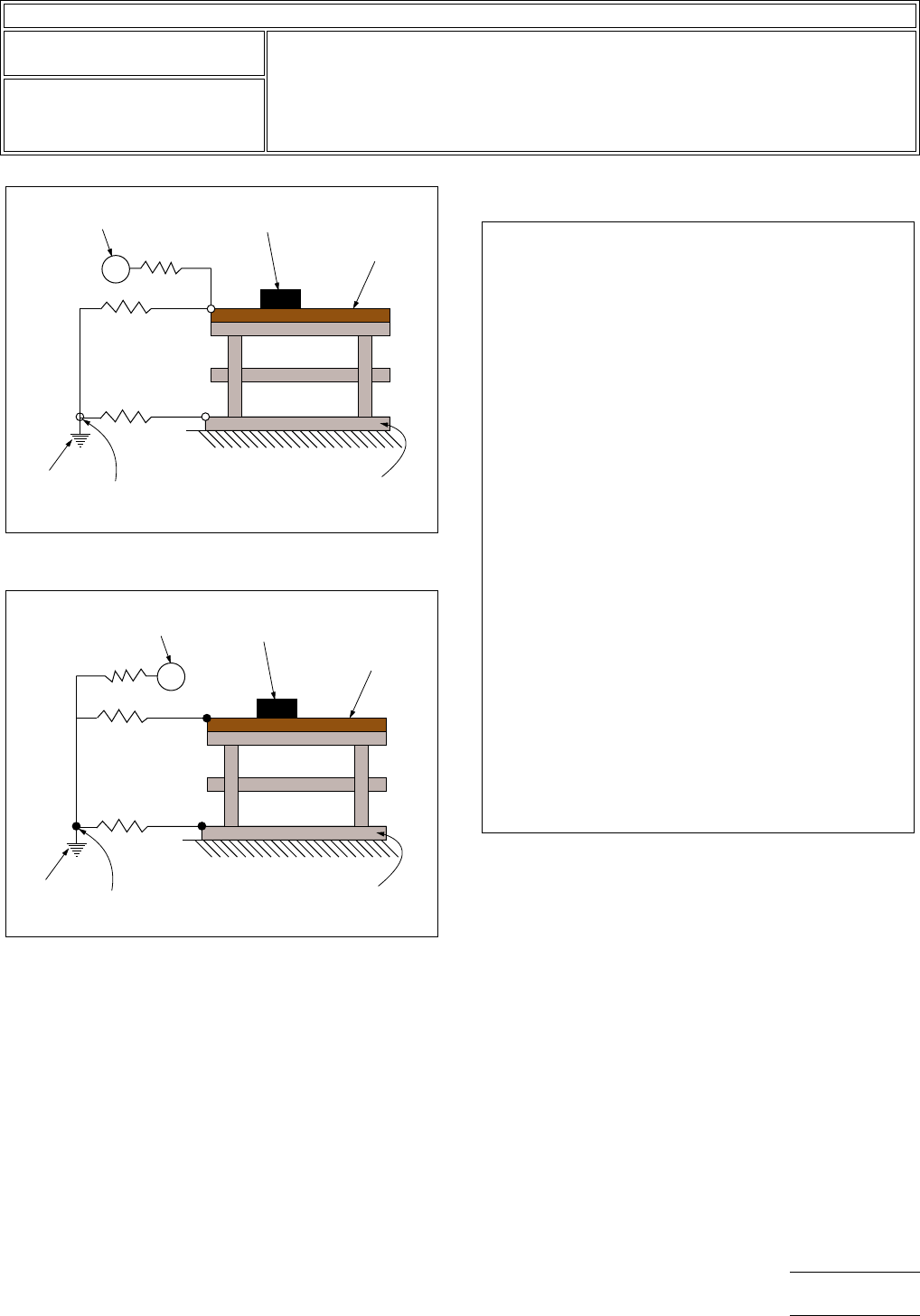
Figure 2 Target condition EOS/ESD Workstation
Building Floor
Common
Ground Point
Ground
Personal
Wrist Strap
EOS Protective
Trays, Shunts, etc.
EOS Protective
Table Top
EOS Protective
Floor or Mat
1 M Ohm 10%
1 M Ohm 10%
1 M Ohm 10%
IPC-610-003
Figure 3 Acceptable EOS/ESD Workstation
Building Floor
Common
Ground Point
Ground
Personal
Wrist Strap
EOS Protective
Trays, Shunts, etc.
EOS Protective
Table Top
EOS Protective
Floor or Mat
1 M Ohm 10%
1 M Ohm 10%
1 M Ohm 10%
Table 4 General Rules for
Handling Electronic Assemblies
1. Keep work stations clean and neat. There must not be
any eating, drinking, or use of tobacco products in the
work area.
2. Minimize the handling of electronic assemblies and
components to prevent damage.
3 When gloves are used, they need to be changed as fre-
quently as necessary to prevent contamination from
dirty gloves. (See Figure 4).
4. Solderable surfaces are not to be handled with bare
hands or fingers. Body oils and salts reduce solderabil-
ity, promote corrosion and dendritic growth. They can
also cause poor adhesion of subsequent coatings or
encapsulates.
5. Do not use hand creams or lotions containing silicone
since they can cause solderability and conformal coat-
ing adhesion problems..
6. Never stack electronic assemblies or physical damage
may occur. Special racks need to be provided in
assembly areas for temporary storage.
7. Always assume the items are ESDS even if they are not
marked.
8. Personnel must be trained and follow appropriate ESD
practices and procedures.
9. Never transport ESDS devices unless proper packaging
is applied.
IPC-7721
Number: 2.1
Revision:
Date: 2/98
Subject: Handling Electronic Assemblies
Page5of8
remove such contaminants. The best solution is to prevent
contamination.
Handling Electronic Assemblies
If no ESDS markings are on an assembly, it still needs to be
handled as if it were an ESDS assembly. However, ESDS
components and electronic assemblies need to be identified
by suitable EOS/ESD labels (see Figure 1). Many sensitive
assemblies will also be marked on the assembly itself, usually
on an edge connector. To prevent ESD and EOS damage to
sensitive components, all handling, unpacking, assembly and
testing must be performed at a static controlled work station
(See Figures2&3).
Avoid contaminating solderable surfaces prior to soldering.
Whatever comes in contact with these surfaces must be
clean. When boards are removed from their protective wrap-
pings, handle them with great care. Touch only the edges
away from any edge connector tabs. Where a firm grip on the
board is required due to any mechanical assembly procedure,
gloves meeting EOS/ESD requirements need to be worn.
These principles are especially critical when no-clean pro-
cesses are employed.
Handling After Solder
After soldering and cleaning operations, the handling of elec-
tronic assemblies still requires great care. Finger prints are
extremely hard to remove and will often show up in confor-
mally coated boards after humidity or environmental testing.
Gloves or other protective handling devices need to be used
to prevent such contamination. Use mechanical racking or
baskets with full ESD protection when handling during clean-
ing operations.
Common Tools and Equipment
Work environments require tools and equipment to conduct
electronic assembly operations. The following information is
provided as guidance regarding the use of common equip-
ment. EIA-625 provides more specific information.
Gloves and Finger Cots
The use of gloves or finger cots may be required under con-
tract to prevent contamination of parts and assemblies.
Gloves and finger cots must be carefully chosen to maintain
EOS/ESD protection.
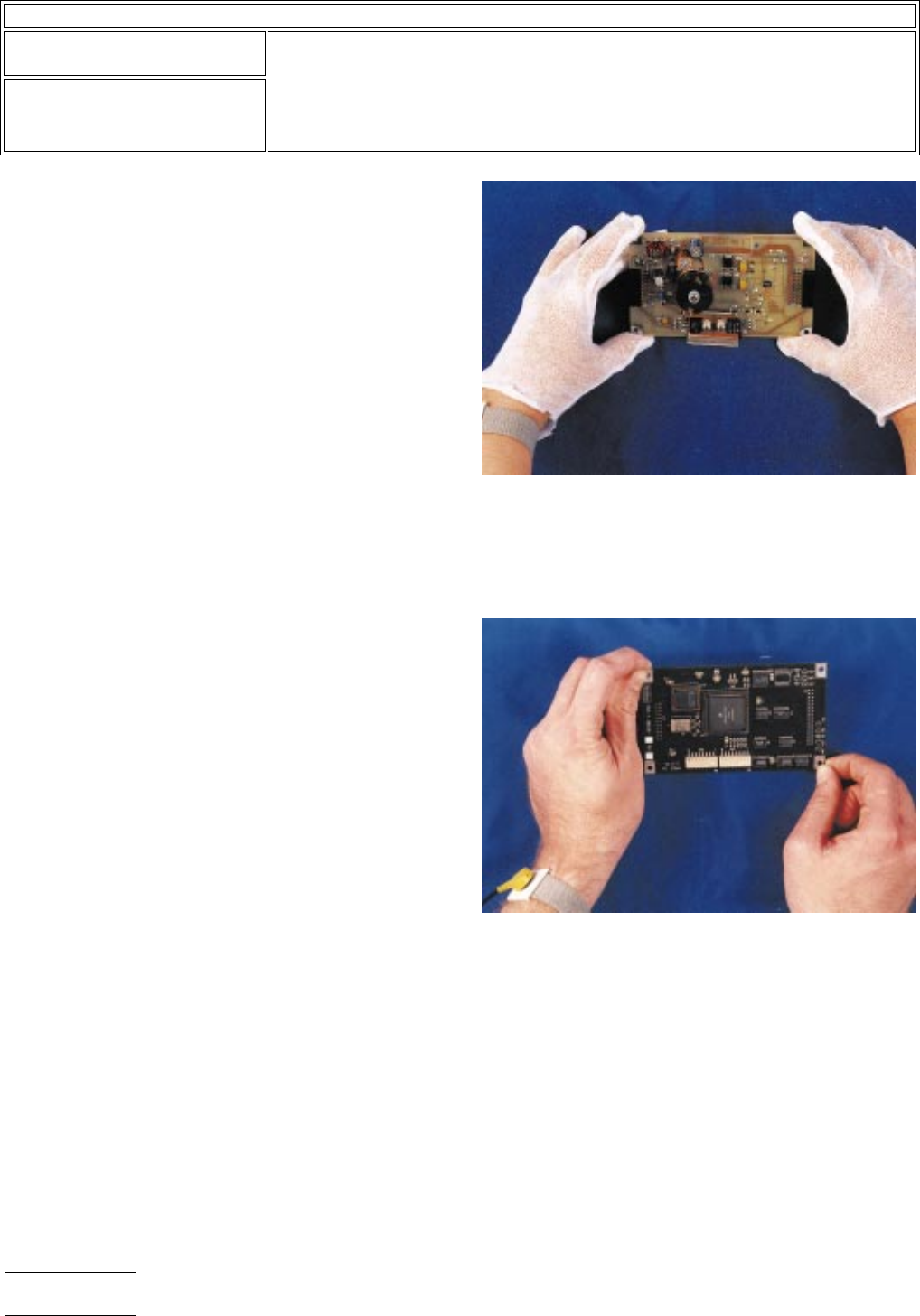
• Handling with clean gloves and full EOS/ESD protection
• Handling during cleaning procedures using solvent resistant
gloves meeting all EOS/ESD requirements.
• Handling with clean hands by board edges using full EOS/
ESD protection
Figure 4 Target Condition - Class 1,2,3
Figure 5 Acceptable - Class 1,2,3
IPC-7721
Number: 2.1
Revision:
Date: 2/98
Subject: Handling Electronic Assemblies
Page6of8
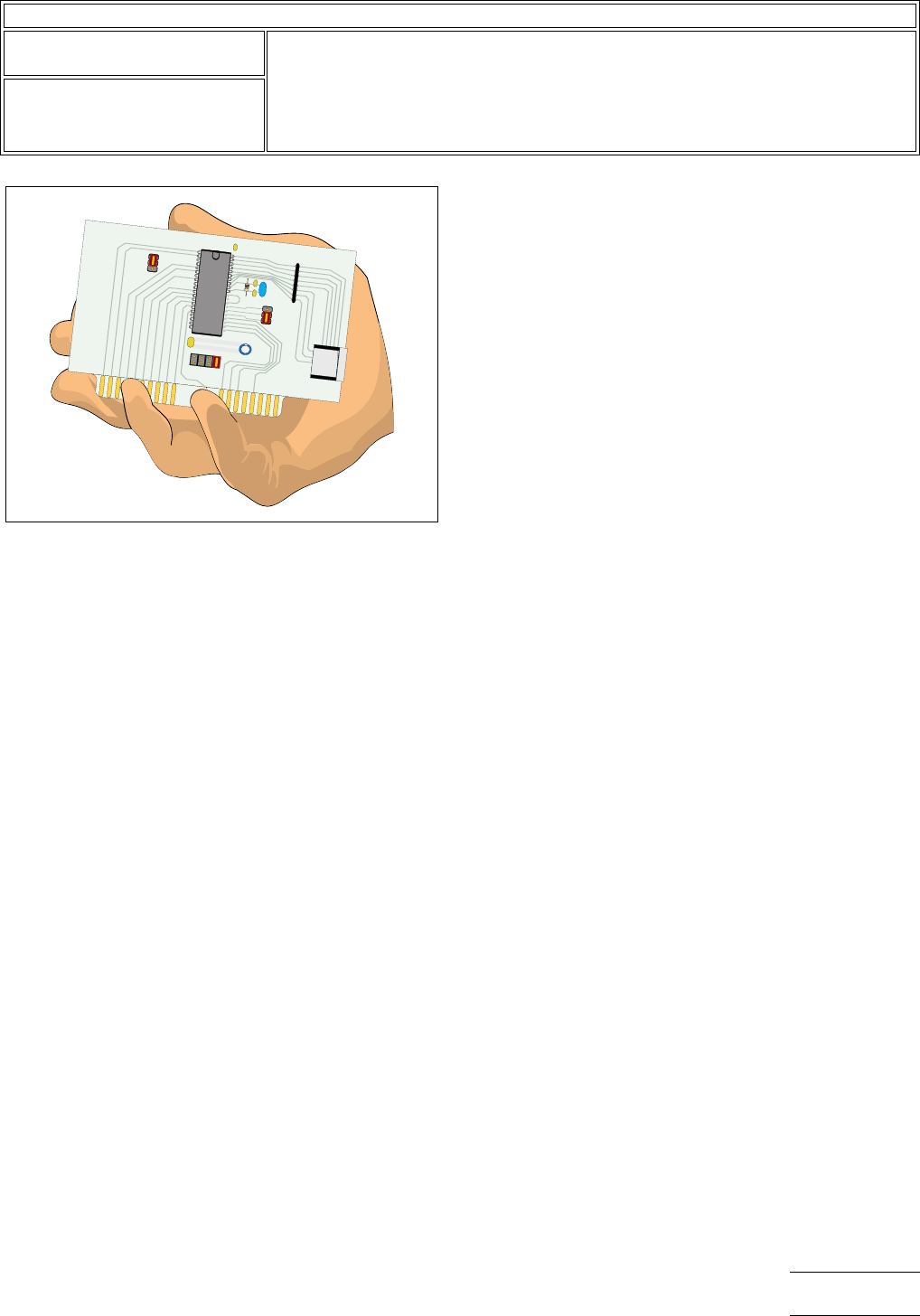
NOTE: Any assembly related component if handled without
EOS/ESD protection may damage electrostatic sensitive com-
ponents. This damage could be in the form of latent failures,
or product degradation not detectedable during initial test or
catastrophic failures found at initial test.
IPC-2-1-1
Figure 6
IPC-7721
Number: 2.1
Revision:
Date: 2/98
Subject: Handling Electronic Assemblies
Page7of8