Portal_Manual_1.2.1_Rev_H-1.pdf - 第36页
Portal PVA Revisio n H ( 2018 ) 36 of 93 8 Setup M ode The optio ns shown in Po rtal depend o n the workcel l configuratio n. Refer to your machine specific manuals and appendices for more information. Fig ure 26 : Setup…
Portal
PVA
Revision H (2018)
35 of 93
7 Auto Mode
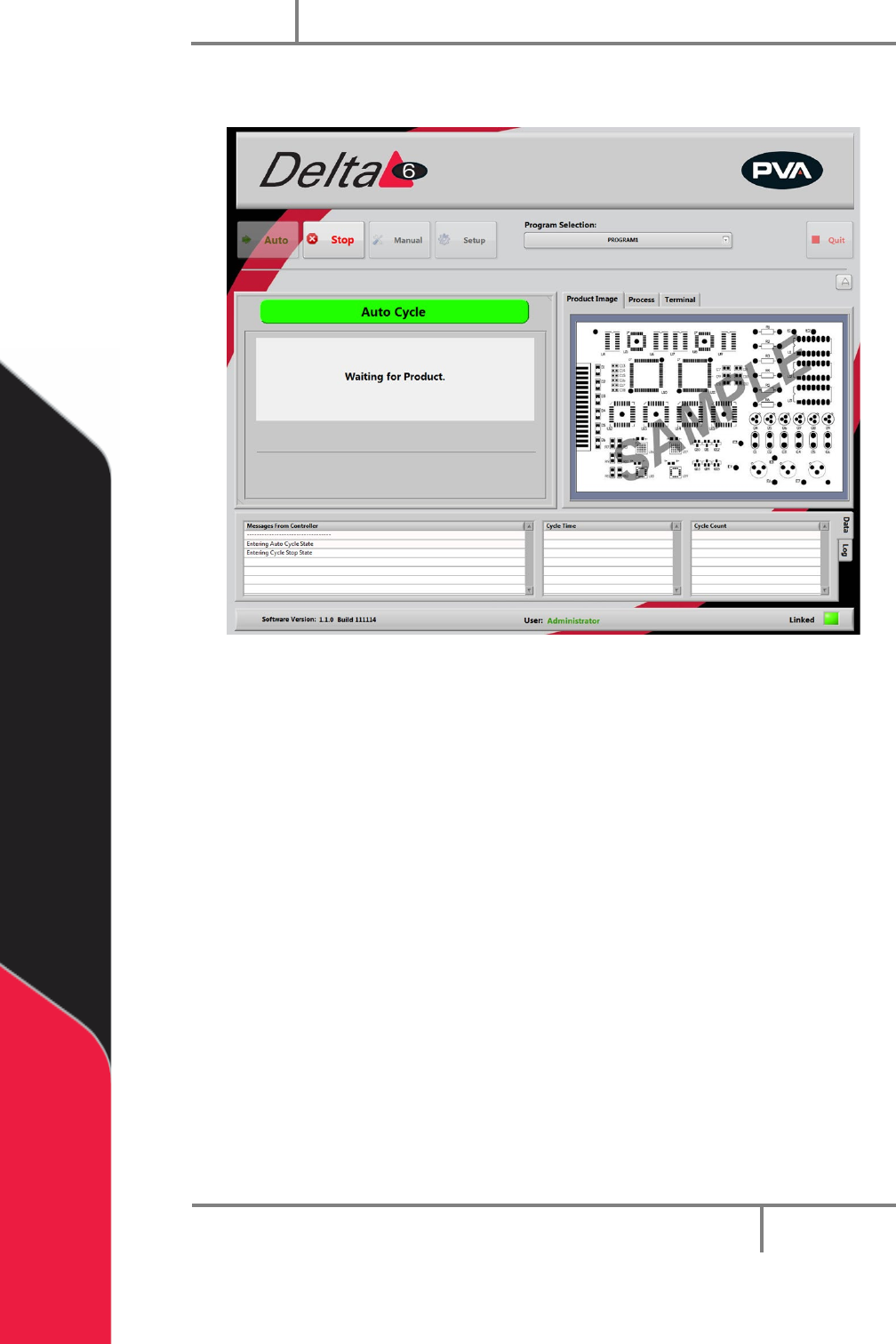
Figure 25: Auto Cycle
In this mode, the workcell automatically processes parts as they are available. Some
possible workcell setups are:
• Conveyor equipped
• Stand-alone with a door
• Stand-alone with a light curtain
For a workcell with a conveyor, the part is put on the conveyor by an operator or
through an upstream process. The part is sensed at the entrance of the workcell and is
sent to the stop. When the part is against the stop, it is sensed and the PathMaster
program will begin. When the PathMaster program is finished, the board is sent to the
end of the conveyor for the next step. When the part is released or removed, the
procedure starts again.
For workcells without a conveyor, all parts must be put in the workcell manually.
Optional part-in-place sensors sense when a part is present. If a part is not sensed, a
“Waiting for Product” message is shown. When the workcell is ready to operate, use the
hand switches to produce parts. Remove all finished parts before the next cycle starts.
If the workcell has a light curtain, the light curtain can be used to initiate cycles.
Portal
PVA
Revision H (2018)
36 of 93
8 Setup Mode
The options shown in Portal depend on the workcell configuration. Refer to your
machine specific manuals and appendices for more information.
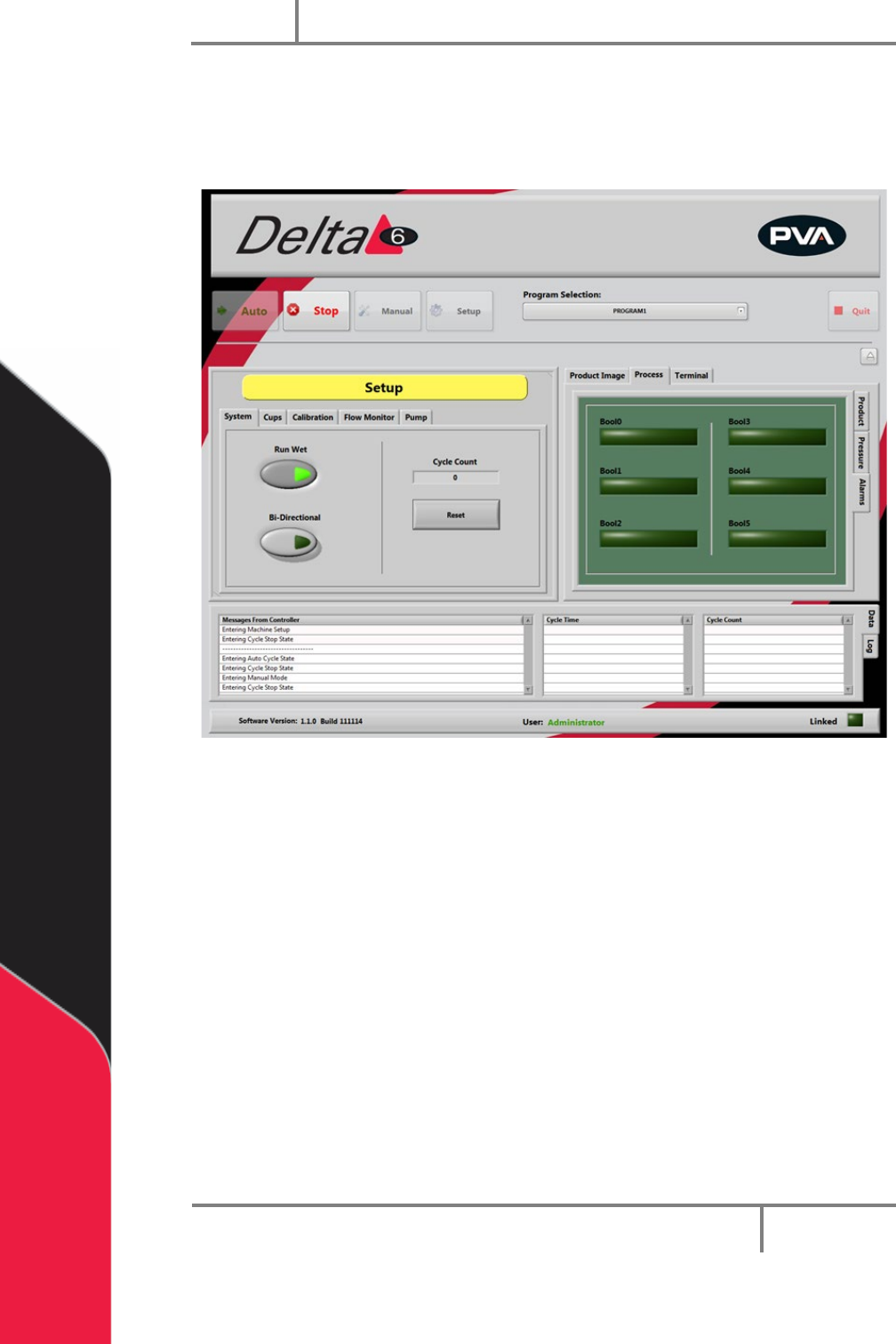
Figure 26: Setup Mode
In Setup mode you can control basic workcell functions. Auto Cycle parameters and
some workcell parameters are set in Setup Mode.
8.1 System
1. Select the “System” tab.
2. Select “Run Wet” to toggle it on or off. Valve operation is off for Auto Cycle
when the Run Wet is set to off. This does NOT affect the run option in the
Manual mode. There is a separate option in Manual mode to select “Wet” or
“Dry”.
3. Select “Bi-Directional” to toggle between single and bi-directional in auto cycle
(on machines that have that option).
4. Select “RESET” to reset the cycle count to zero.
5. Select “Stop” to leave Setup mode and go to Cycle Stop.
Portal
PVA
Revision H (2018)
37 of 93
8.2 Auto Purge/Solvent Cups Setup
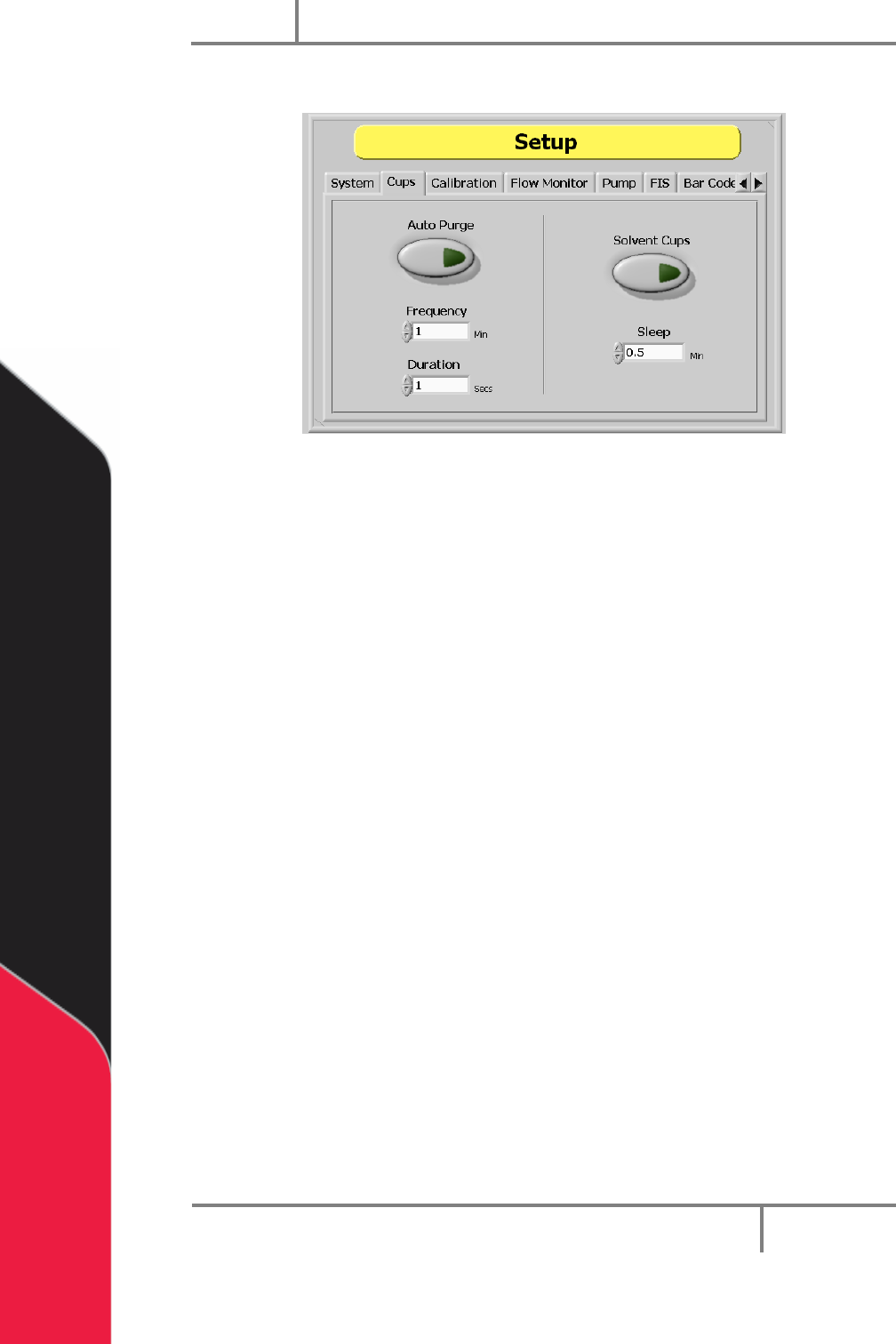
Figure 27: Auto Purge and Solvent Cups Setup
With the cups tab you can set the purge and/or solvent cup features. Auto purge
dispenses material from all valves at specific intervals to stop valves from clogging. The
default setting depends on the material used. The workcell only auto purges when in
Auto Cycle or Cycle Stop. The workcell does not auto purge in other modes but will
immediately auto purge when returned to Cycle Stop or Auto Cycle, if necessary.
NOTE: If the workcell has solvent cups, the solvent cup routine overrides the
auto purge settings. The system will only purge when necessary with the solvent
cup sequence.
1. Select the “Cups” tab.
2. Select “Auto Purge” to set the function to on or off. Solvent cups must be off for
the auto purge function to work.
3. Use the up and down arrows to set the Frequency in minutes of how often the
valves will purge. Or, type the necessary value in the box.
4. Use the up and down arrows to set the Duration in seconds for the time the
valves will purge for (applies to both auto purge and solvent options). Or, type
the necessary value in the box.
5. Select “Solvent Cups” to turn the solvent cups on or off. When the solvent cups
are on, the auto purge function is overridden. The valves will purge any time
they move out of the solvent position (not in manual mode).
6. Use the up and down arrows to set the “Sleep” value in minutes. Or, type the
necessary value in the box. The sleep value is duration of inactivity during auto
cycle before the heads move to the solvent cups.