s26030829.pdf - 第14页
Sensors 2026 , 26 , 829 14 of 21 Figure 11. V elocity-time profiles for dif ferent start acceleration. Figure 12. Displacement–time profiles for dif ferent start acceleration. Figure 13. Acceleration–time profiles for dif f…
Sensors 2026, 26, 829
13 of 21
Displacement/deg
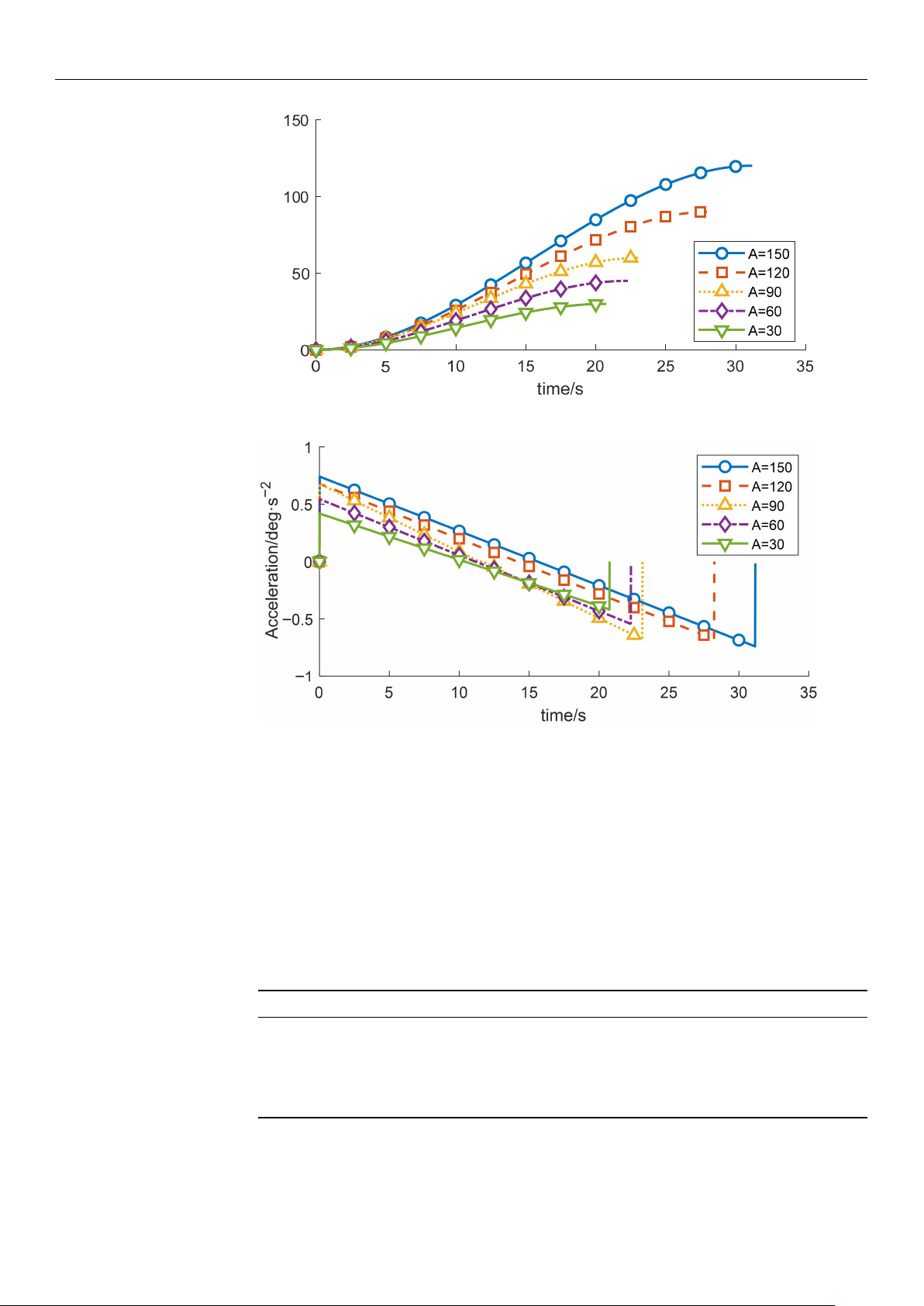
Figure 9. Displacement-time profiles for different planned displacements.
Figure 10. Acceleration-time profiles for different planned displacements.
As indicated in Table 5, the residual vibration energy is strongly influenced by the total
angular displacement. When the angular change increases from 60
◦
to 90
◦
, the residual
vibration energy rises by 103.28%. Therefore, constraining the forearm angular variation to
within 60
◦
can significantly suppress vibrations induced by the flexible joint.
(2) To investigate the influence of the start-up acceleration on the motion performance
and vibration characteristics of the wafer-transfer manipulator, comparative experiments
were conducted by varying the start-up acceleration a while keeping the other control
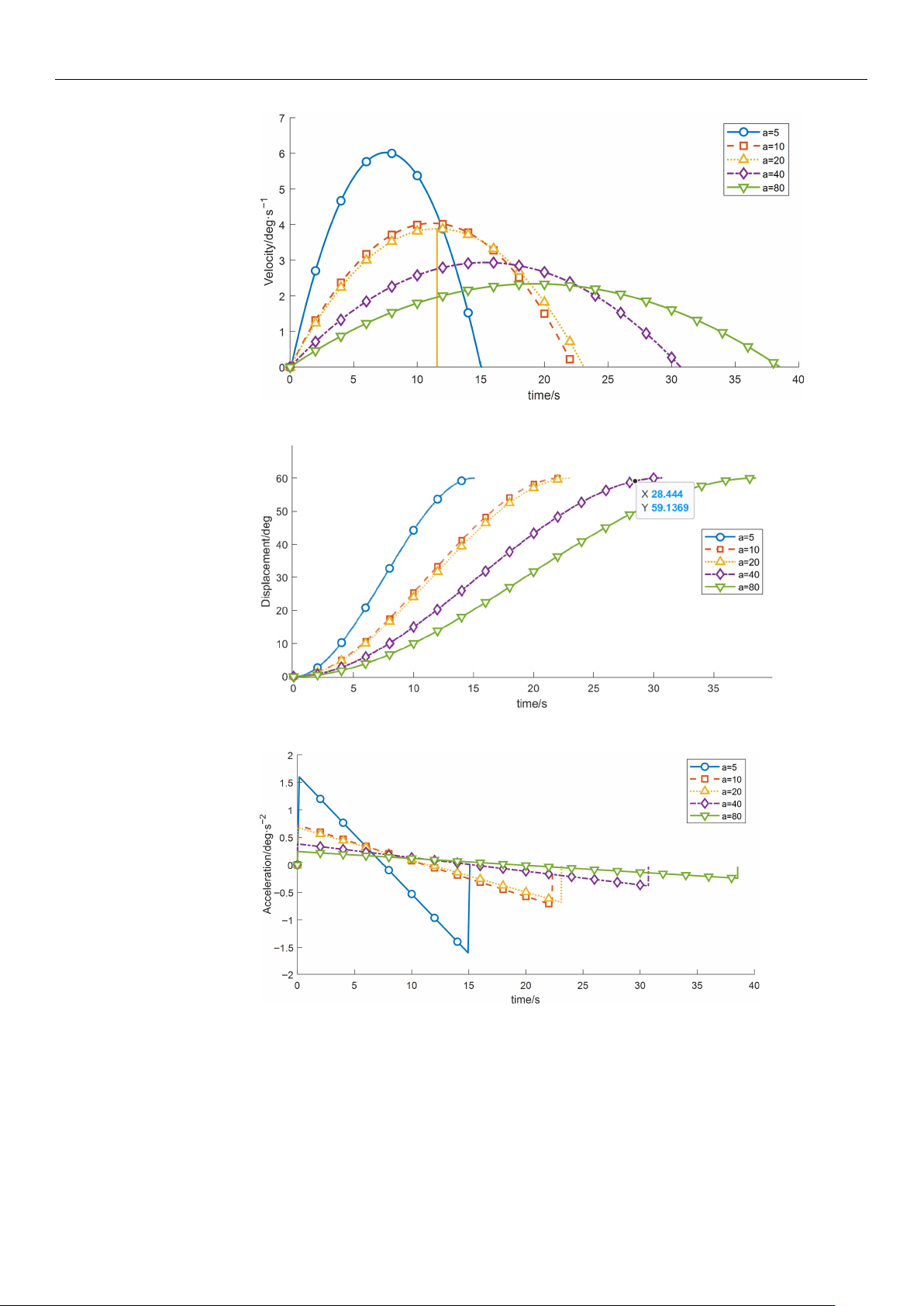
parameters constant. The results are listed in Table 6 and Figures 11–13.
Table 6. Variation in Objective Function Values of Wafer Transfer Robot Arm at Different Startup Acceleration.
Startup Acceleration Runtime Vibration Energy Index E
vib
−5 12.6952 32.8125
10 13.9619 131.2500
20 8.2476 525.0000
40 5.6347 2149.8891
80 2.0144 9029.1039
https://doi.org/10.3390/s26030829
Sensors 2026, 26, 829
14 of 21
Figure 11. Velocity-time profiles for different start acceleration.
Figure 12. Displacement–time profiles for different start acceleration.
Figure 13. Acceleration–time profiles for different start acceleration.
As shown in Table 6, as a increases from 5 to 80, the overall operation time exhibits
a decreasing trend, whereas the vibration energy index increases rapidly in a nonlinear
manner. These results demonstrate that a larger start-up acceleration is beneficial for
reducing the operation time and improving transfer efficiency. However, excessive start-up
acceleration introduces stronger impact loads and excites high-frequency modes of the
manipulator, leading to a substantial increase in vibration. Hence, a typical trade-off exists
between efficiency and vibration suppression. Considering both efficiency and stability,
https://doi.org/10.3390/s26030829
Sensors 2026, 26, 829
15 of 21
a start-up acceleration of approximately a
≈
20 deg/s
2
can be regarded as a compromise
range that balances operation time and vibration mitigation, and this range is advantageous
for subsequent optimization and analysis.
(3) With the other control parameters unchanged, comparative experiments were
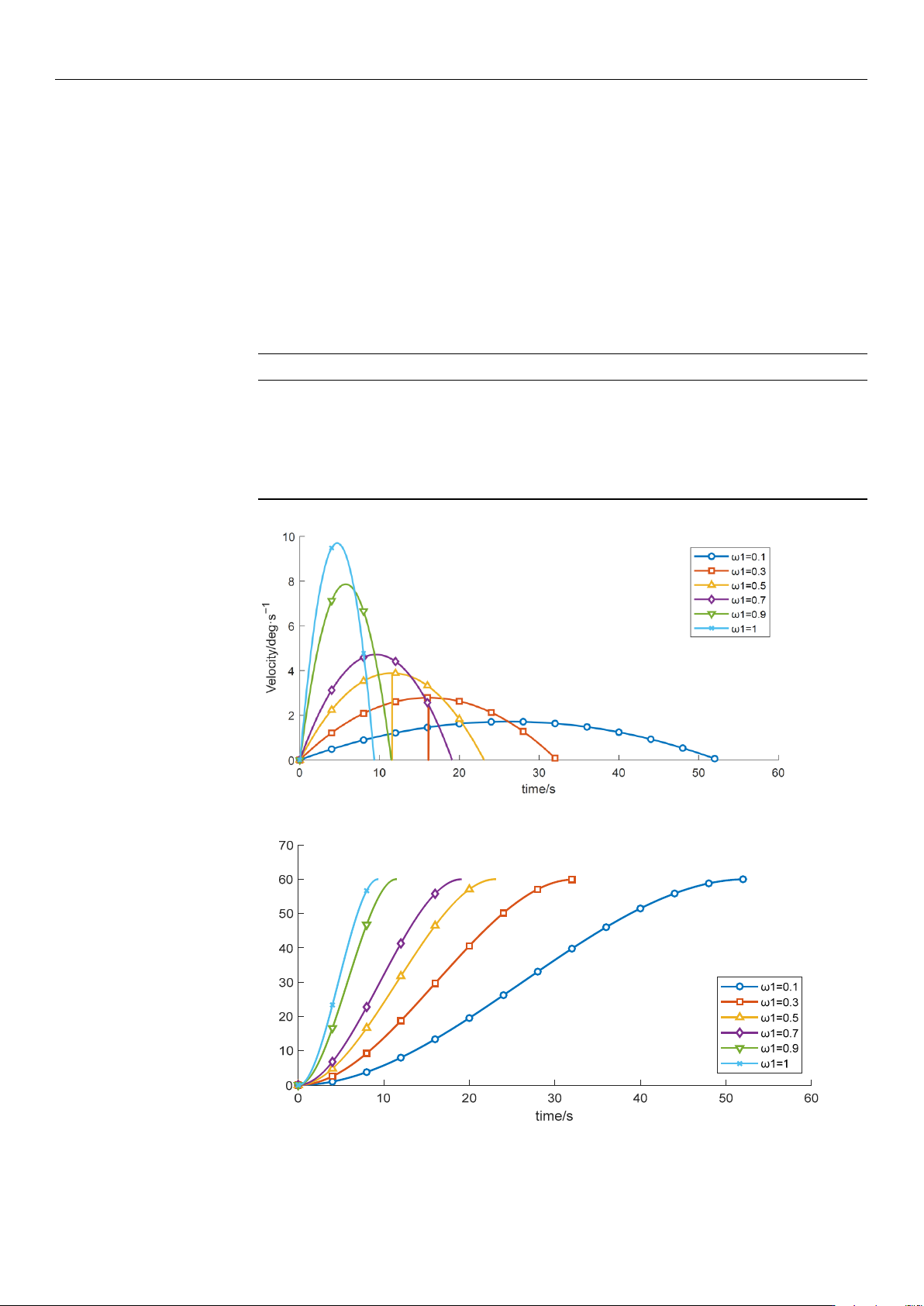
performed by varying the time-weighting factor w1, the results are shown in Table 7
and Figures 14–16. The experimental data indicate that, under the given constraints and
operating conditions, increasing w1 gradually reduces the total time obtained from the
objective function. When w1 > 0.9, the trajectory duration decreases markedly, while the
vibration energy index increases sharply.
Table 7. Variation in Objective Function Values of Wafer Transfer Robot Arm at Different Time Weight.
Time Weight Runtime Vibration Energy Index E
vib
0.1 22.0667 165.5172
0.3 22.0666 165.5172
0.5 21.4938 170.589
0.7 19.583 190.022
0.9 16.1414 239.1657
1.0 4.1635 69,522.553
Figure 14. Velocity-time profiles for different time weight.
Displacement/deg
Figure 15. Displacement–time profiles for different start acceleration time weight.
https://doi.org/10.3390/s26030829