ASM-X-Spec-SX12V2-EN-DMS.pdf - 第13页
13 Machine Performance SIPLACE SX1/SX2 Placement head types SIPLACE S peedS tar (C&P20) SIPLACE MultiS tar (CPP) SIPLACE T winS tar (TH) Placement performa nce The placement pe rformance is i nfluenced by the differ …
12
Modular machine concept SIPLACE SX1/SX2
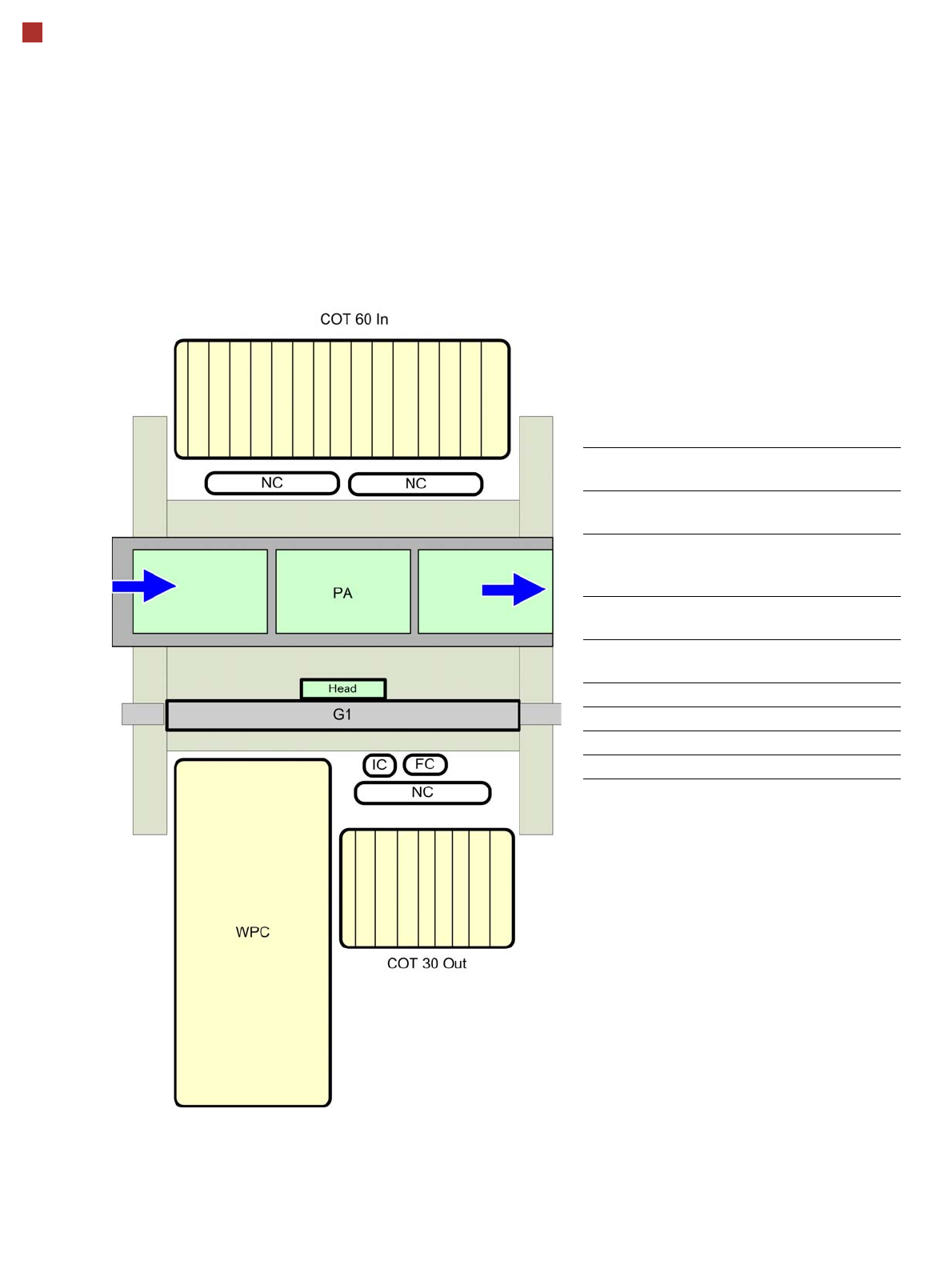
Example of SIPLACE SX1 with WPC5/WPC6
PLEASE NOTE: For all possible head config-
urations please refer to section Machine Per-
formance SIPLACE SX1/SX2 from page 13.
COT 30 Out Component trolley with 30
tracks in the outer position
COT 60 In Component trolley with 60
tracks in the inner position
WPC Waffle Pack Changer,
type
5 or type 6
Head Placement head in acc.
with head configuration
NC Nozzle changer in acc.
with head configuration
IC Stationary camera
FC Flip chip camera
G1 Gantry 1
PA Placement area

13
Machine Performance SIPLACE SX1/SX2
Placement head types SIPLACE SpeedStar (C&P20)
SIPLACE MultiStar (CPP)
SIPLACE TwinStar (TH)
Placement performance
The placement performance is influenced by the different head combinations and head positions, plus the con-
veyor configurations. Individual options and customized applications also influence the placement performance.
On request, SIPLACE can calculate the actual performance of your product on your machine configuration.
IPC value [comp./h]
In line with the vendor-neutral conditions of the IPC 9850 standard published by the Association of Connecting
Electronics Industries.
SIPLACE Benchmark value [comp./h]
The SIPLACE benchmark value is measured during the machine acceptance tests. It corresponds to the condi-
tions specified
in the SIPLACE scope of service and supply.
Theoretical maximum output value [comp./h]
The theoretical maximum output value is calculated from the most favorable conditions for each machine type
and setting, and corresponds to the theoretical conditions normally used in the industry.
SIPLACE SX2 placement
machine
Placement area IPC value Benchmark value Theoretical value
C&P20 / C&P20 48,000 60,000 67,750
CPP / CPP
a
a) MultiStar CPP: low installation position
38,000 46,000 56,000
CPP
b
/ TH
b) MultiStar CPP: high installation position
23,100 27,000 31,000
TH / TH 10,200 11,000 13,000
SIPLACE SX1 placement
machine
Placement area IPC value Benchmark value Theoretical value
C&P20 24,000 30,000 33,875
CPP
a
19,000 23,000 28,000
TH 5,100 5,500 6,500
14
Placement Heads SIPLACE SX1/SX2
Overview
Head modularity
The SIPLACE placement
machines are distinguished
by maximum flexibility in the
production process. This
flexibility is in part due to the
head modularity of the place-
ment machines, which allows
different placement head
variants to be configured to
suit the production require-
ments.
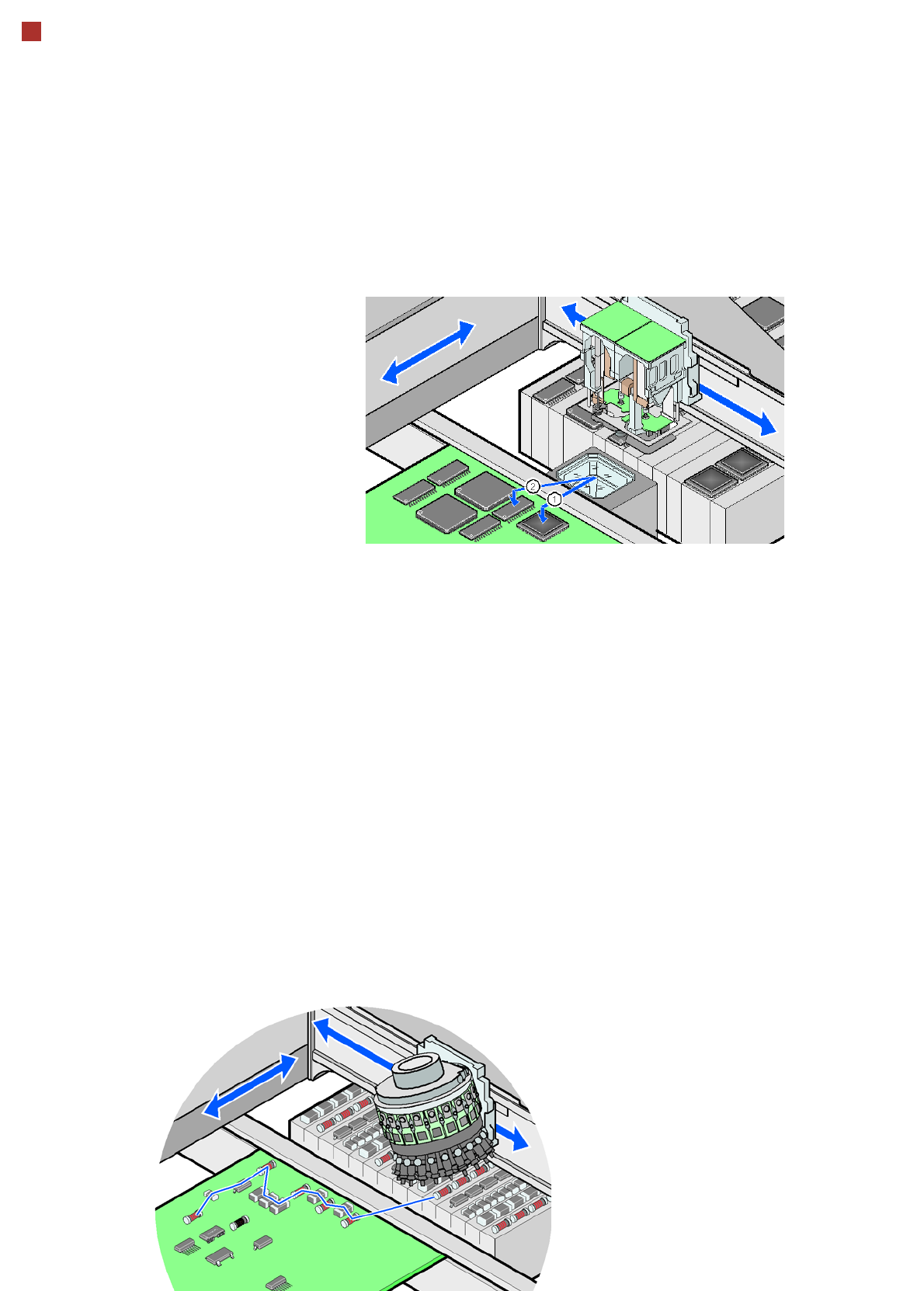
Collect&Place principle
The SIPLACE SpeedStar
operates according to the
Collect&Place principle i.e.
one cycle includes pickup or
"collection" of 20 compo-
nents, their optical centering
on the board and their rota-
tion into the required place-
ment angle and position.
They are then placed gently
and accurately onto the PCB.
This principle is particularly
suitable for high-speed
placement of standard
components.
Pick&Place principle
The high-precision SIPLACE
TwinStar functions according
to the Pick&Place principle.
Two components are picked
up by the SIPLACE TwinStar
placement head, optically
centered on the way to the
placement position and then
rotated into the required
placement angle. This princi-
ple is ideally suitable for fast
and precise placement of
special components in the
fine pitch or super fine pitch
field, plus complex and
heavy components which
may need grippers.
Mixed mode
The new SIPLACE MultiStar
uses both the Collect&Place
and the Pick&Place princi-
ple. Mixed Mode allows com-
bined use of these two
modes, which were previ-
ously separated from one
another, in one placement
cycle.
Control and self-learning
functions
The reliability of the
SIPLACE placement heads
can be enhanced even fur-
ther with various checking
and self-learning functions.
• Component sensor
Checks the presence of
the components on the
nozzle before the pickup
and placement process
• Digital camera
Checks the position of
each component on the
nozzle. This check is per-
formed in a single step,
with no extra time involved
but with optimum scan-
ning of each individual
component.
• Force sensor
Monitors the prescribed
component set-down
force.
The sensor stop proce-
dure enables compensa-
tion of height differences
during pickup and PCB
warpage during place-
ment.
• Vacuum sensor
Checks whether the com-
ponent was correctly
picked up or placed.