46230812.pdf - 第40页
Page 38 TECHNICAL PUBLICATIONS T46230812 Rev . D DH Positioning System Assembly , P/T This Document Supports Assembly 46230812 X Axis Positive Limit 1. In the Table X Axis section, click on the value (18.125) in the entr…
Page 37
TECHNICAL PUBLICATIONS
DH Positioning System Assembly, P/T T46230812 Rev. D
This Document Supports Assembly 46230812
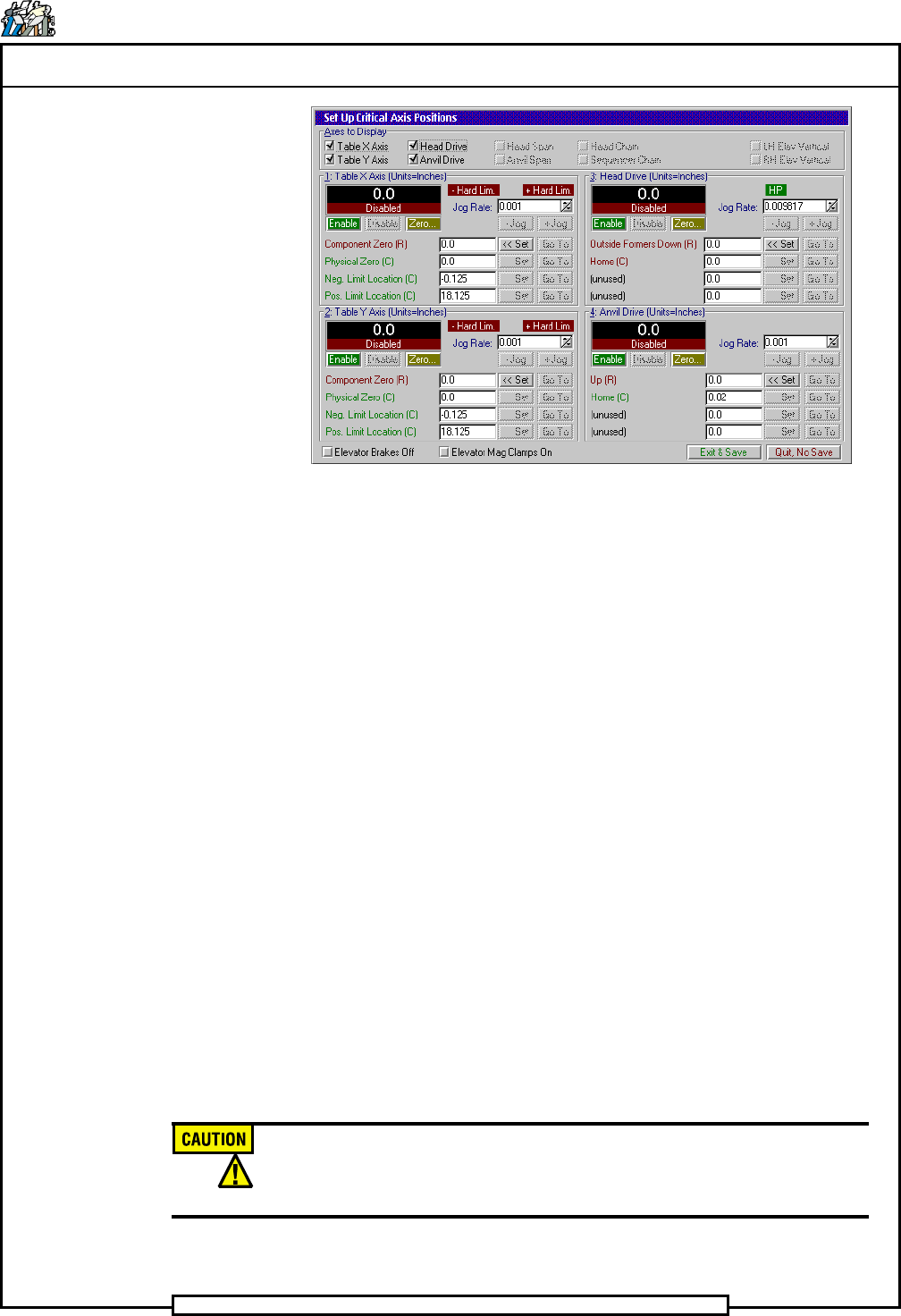
6. If the desired axes in the Axes to Display area of the screen are not
selected, refer to the Critical Axes Position section of the IM
Diagnostics document for information on selecting the desired axes.
7. Select the desired axes to be adjusted, then proceed as follows for each
specific limit adjustment.
X Axis Negative Limit
1. In the Table X Axis section, click on the value (-0.125) in the entry
field then select Go To.
2. The X axis will move at a set speed to the negative axis position.
3. Depending on the limit actuator position, one of the following occurs.
a. The limit actuator fails to contact the limit switch. In this case,
move the limit switch actuator until the negative limit just
actuates, then secure the actuator. Zero the axis and select Go
To again to verify the correct limit position.
b. A negative hard limit occurs, the Hard Limit indicator is
displayed. In this case, move the actuator block slightly away
from the limit switch then repeat steps 1 through 3.
4. The value in the display field, at the end of this procedure, should be
between -0.105 and -0.145.
Do not move the negative limit actuator excessively. Excessive
movement will disrupt the zero position of the axis and may require axis
encoder adjustment.
End of procedure.
Page 38
TECHNICAL PUBLICATIONS
T46230812 Rev. D DH Positioning System Assembly, P/T
This Document Supports Assembly 46230812
X Axis Positive Limit
1. In the Table X Axis section, click on the value (18.125) in the entry
field then select Go To.
2. The X axis will move at a set speed to the positive axis position.
3. Depending on the limit actuator position, one of the following occurs.
a. The limit actuator fails to contact the limit switch. In this case,
move the limit switch actuator until the positive limit just
actuates, then secure the actuator. Zero the axis and select Go
To again to verify the correct limit position.
b. A negative hard limit occurs, the Hard Limit indicator is
displayed. In this case, move the actuator block slightly away
from the limit switch then repeat steps 1 through 3.
4. The value in the display field, at the end of this procedure, should be
between 18.105 and 18.145.
End of procedure.
Y Axis Negative Limit
1. In the Table Y Axis section, click on the value (-0.125) in the entry
field then select Go To.
2. The Y axis will move at a set speed to the negative axis position.
3. Depending on the limit actuator position, one of the following occurs.
a. The limit actuator fails to contact the limit switch. In this case,
move the limit switch actuator until the negative limit just
actuates, then secure the actuator. Zero the axis and select Go
To again to verify the correct limit position.
b. A negative hard limit occurs, the Hard Limit indicator is
displayed. In this case, move the actuator block slightly away
from the limit switch then repeat steps 1 through 3.
4. The value in the display field, at the end of this procedure, should be
between -0.105 and -0.145.
Do not move the negative limit actuator excessively. Excessive
movement will disrupt the zero position of the axis and may require axis
encoder adjustment.
End of procedure.
Page 39
TECHNICAL PUBLICATIONS
DH Positioning System Assembly, P/T T46230812 Rev. D
This Document Supports Assembly 46230812
Y Axis Positive Limit
1. In the Table Y Axis section, click on the value (18.125) in the entry
field then select Go To.
2. The Y axis will move at a set speed to the positive axis position.
3. Depending on the limit actuator position, one of the following occurs.
a. The limit actuator fails to contact the limit switch. In this case,
move the limit switch actuator until the positive limit just
actuates, then secure the actuator. Zero the axis and select Go
To again to verify the correct limit position.
b. A negative hard limit occurs, the Hard Limit indicator is
displayed. In this case, move the actuator block slightly away
from the limit switch then repeat steps 1 through 3.
4. The value in the display field, at the end of this procedure, should be
between 18.105 and 18.145.
End of procedure.
Rotary Disk Slow Down Adjustments
Purpose:
This adjustment ensures that the rotary disk decelerates before contacting the
lock assembly and fully engages the lock assembly without excessive force.
The rotary disk slow down switch assembly is actuated by the stop blocks on
the rotary disk. When a stop block contacts the ball actuator on the slow
down assembly, air flow to the drive assembly is reduced slowing the speed
of the rotary tables.
Correct rotary disk slow down assembly adjustment increases reliability and
longevity of the lock assembly.
Adjustment Procedure:
1. Loosen the screws securing the slow down sensor mounting bracket.
2. Adjust the slow down assembly sensor mounting bracket as far away
from the lock assembly as possible. Ensure the ball actuator is in line
with a stop block.
3. Adjust the ball actuator so the stop blocks on the rotary table fully
actuate the ball but do not deflect the slow down assembly or the
mounting bracket.
4. Manually rotate the rotary table so the stop blocks actuate the slow
down sensor, while adjusting the front/back position of the sensor.