00192169-01.pdf - 第8页
Order No. 00192 169-01 User Manual - Productivity Lift E_SPLFS03_V40_11_0300_200300_V1_14.doc Last update: 20.03.2000 - Version V 1.14 Page 8 2.2.2 Manufacturer and contact address Siemens AG PL EA 1 V MC Rupert-Mayer-St…
Order No. 00192 169-01 User Manual - Productivity Lift
E_SPLFS03_V40_11_0300_200300_V1_14.doc Last update: 20.03.2000 - Version V 1.14 Page 7
2 Operating instructions
The objective of the operating instructions is to provide the user with an introduction as to how
to make proper and safe use of the device.
For this objective to be achieved, it is imperative that the user studies chapter 3 Safety in
detail and follows these operating instructions.
2.1 Definitions
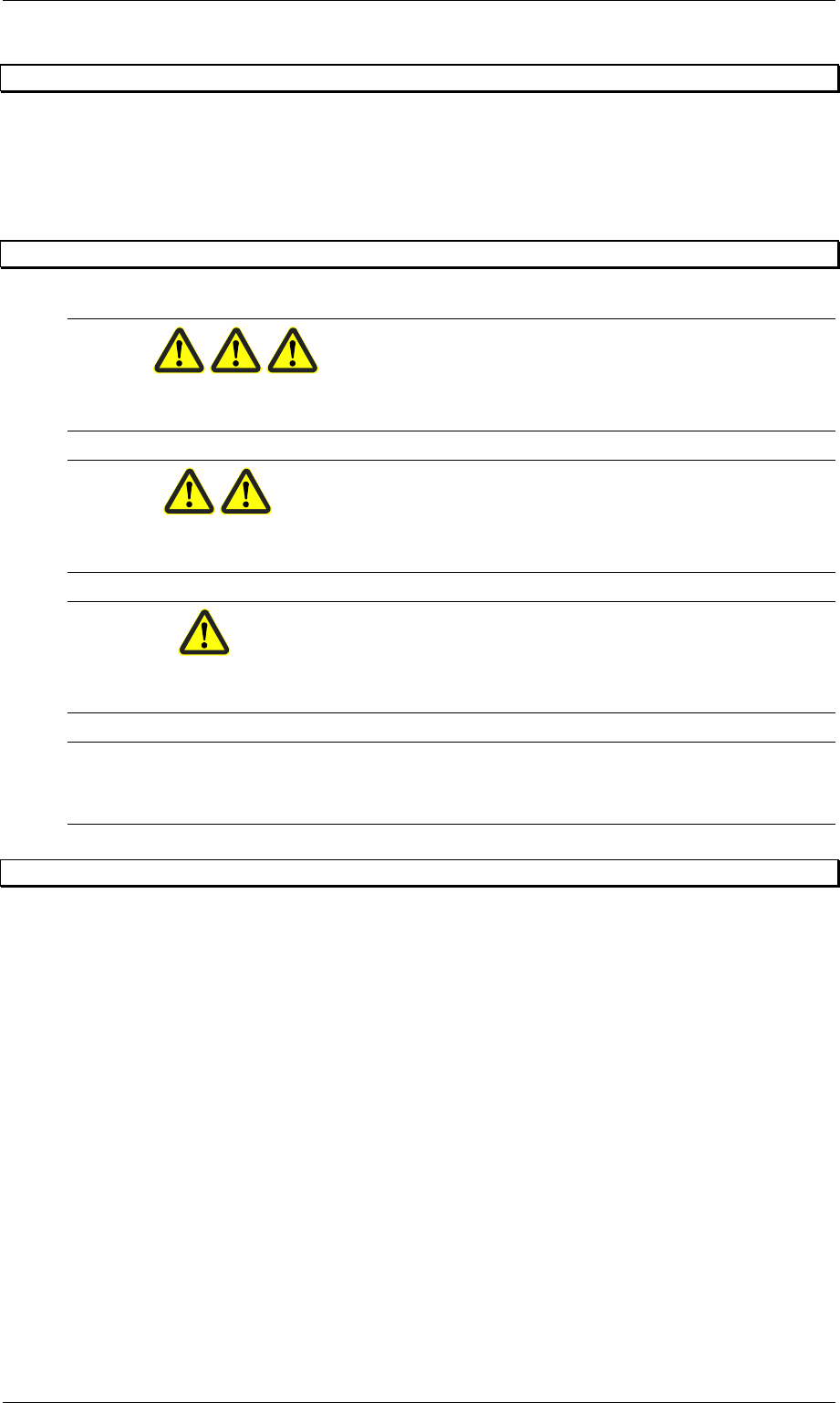
DANGER
Within the context of these instructions, this means that death, serious physical injury or
considerable damage to property will occur if the danger notices are not complied with.
WARNING
Within the context of these instructions, this means that death, serious physical injury or
considerable damage to property can occur if the danger notices are not complied with.
ATTENTION
Within the context of these instructions, this means that slight physical injury or damage to
property can occur if the precautions are not complied with.
N. B.
Within the context of these instructions, this is important information about the product or a
particular part of the instructions that should be consulted in detail.
2.2 Organisational measures
Should you have any questions that are not answered by the operating instructions, please
contact the device manufacturer direct.
2.2.1 Location of the operating instructions
The operating instructions can only be of use if they are available at all times. Therefore
always keep them together with the device.

Order No. 00192 169-01 User Manual - Productivity Lift
E_SPLFS03_V40_11_0300_200300_V1_14.doc Last update: 20.03.2000 - Version V 1.14 Page 8
2.2.2 Manufacturer and contact address
Siemens AG
PL EA 1 V MC
Rupert-Mayer-Str. 44
D-81359 Munich
3 Safety
This chapter contains information on how to make safe and optimum use of the device
described here.
3.1 Overview
This device poses very few risks and is simple and safe for the informed user to operate.
Users who do not possess sufficient knowledge, however, can cause damage to the device by
performing illegal operations. This chapter provides information regarding the requirements for
safe and optimum operation of the device.
All those authorised to operate, maintain and repair the device must read chapter 3 Safety.
3.2 Safety concept
The safety concept controls the authorisation to use the device and the responsibility of the
individual users.
This device has been developed and constructed in accordance with the latest technological
standards and the approved safety regulations. It therefore conforms to EU requirements.
3.2.1 Intended use of the device
The device was designed for its use as prescribed. If it is used for anything other than the
application listed, the manufacturer can not be held responsible for any damage that may
occur as a result.
3.2.1.1 Prescribed use
The prescribed use of the device covers the following:
The Productivity Lift serves to increase the throughput of Siplace automatic placement
machines. Every lift unit has a placement machine of this type. Several lift units arranged in
series thus enable the parallel arrangement of placement machines although these are
physically arranged in a row.
At the inlet of the first lift unit (input module), printed circuit boards can be transferred on two
parallel tracks. They are then delivered to the first subsequent placement machine for
processing. If this placement machine is currently occupied or perhaps even out of service, the
transferred PCBs are forwarded to the next placement machine but one. It is however
necessary that this placement machine is of the same type as the previous one. The type of
placement machine can change within such a line of placement machines by means of the
relevant settings in the device configuration. The final module at the end of such a line hands
the assembled printed circuit boards over to the following production line.

Order No. 00192 169-01 User Manual - Productivity Lift
E_SPLFS03_V40_11_0300_200300_V1_14.doc Last update: 20.03.2000 - Version V 1.14 Page 9
3.2.1.2 Inappropriate use
Any use made of the device, other than the prescribed use, without the written consent of the
manufacturer or operating the device beyond the scope of the technical restrictions, is
considered inappropriate.
N.B.
The technical restrictions can be found in the Technical Data chapter of these operating
instructions.
WARNING
Inappropriate use of this equipment can result in injury. Please comply with these operating
instructions.
3.2.2 Operating modes
The device can be operated in two modes, normal operating mode and special operating
mode.
Normal operating mode
The normal operating mode, all functions and tasks for which the device was designed are
performed automatically. An operator is only required if the device is used as a workstation
(e.g. transport module TM6V), or with a magazine buffer or loading/unloading station where
magazines can be exchanged. Also included in the normal operating mode is the removal of
faults e.g. jammed PCBs from areas of the device, which are accessible via doors or covers
without the usage of tools. If a tool is necessary in order to remove the fault this counts to the
special operating mode.
Special operating mode
The special operating mode covers all activities, which are not included in the normal
operating mode. These are the set-up-operating mode, device maintenance and cleaning and
the removal of faults with tools as well as the repair of the device.
3.2.3 User roles
In order to guarantee safety, the user of the device must fulfil certain requirements. Only those
who fulfil the requirements shall be authorised to use the device.
A user designates anyone who works with the device. Since the user requirements depend to
a large extent on their activity, the following user roles have been defined:
Operator
The operator is the contracting party of the manufacturer. The manufacturer may legally
impose conditions on the contracting party when the device is purchased.
The operator makes prescribed use of the device and authorises those entitled to work with
the device in one of the defined user roles. They too shall be obliged to instruct the users.