Eaton 9155 8-15 kVA.pdf - 第25页
UPS 8 – 15 kV A, 230V 50/60 Hz output User ’ s Guide 1 022403 Revision D 25 Figure 27. Identification of the interface port pins. LanSaf e sof tw ar e The LanSafe sof tware shuts down computers and whole networks in case …
UPS 8 – 15 kVA, 230V 50/60 Hz output
User’s Guide
1022403
Revision D
24
6. Software and connectivity
The software Suite CD-ROM that is bundled with the UPS contains software distributions and
documentation in CD format. Furthermore, the comprehensive connectivity option portfolio
includes Web/SNMP adapters for networked environments, Modem card for 24/7 remote
monitoring, ModBus/Jbus card for building management system integration, relay interface
cards for industrial and facilities use and RS-232 cards for serial communication to one or
multiple computers.
Communication cables
It is recommended that the control cables and power cables be installed on separate trays.
Where control cables will cross power cables make sure they are arranged at an angle as near
to 90 degrees as possible.
All control cables shall preferably be shielded. If the shield is grounded, this shall take place on
only one end of the cable.
The procedure for connecting the control cables is the following:
1. Remove the front cover by lifting the cover from the bottom outwards by releasing the
retaining clip. It’s located in the bottom part of the bezel.
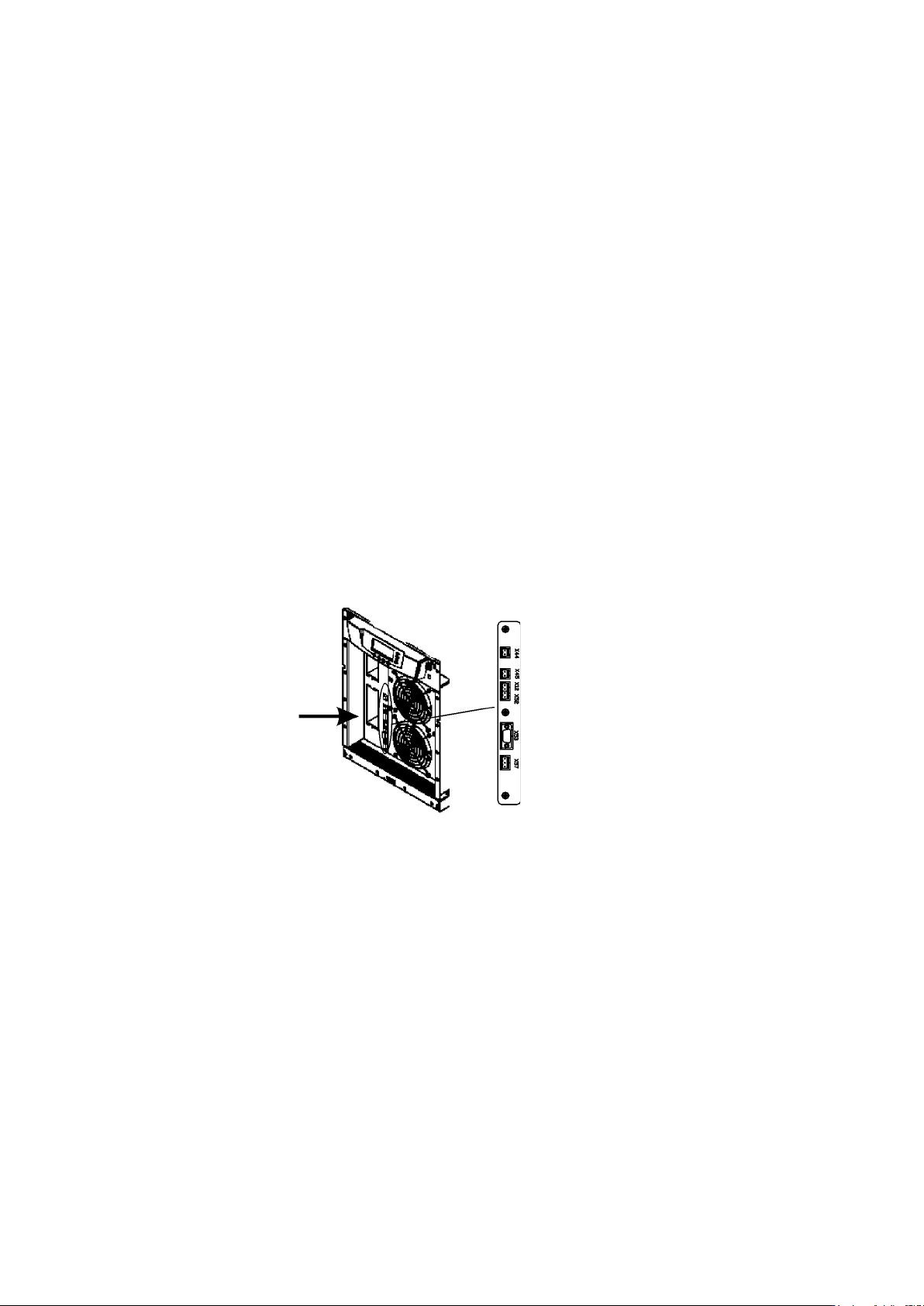
2. Locate the control terminal or XSlot module where you want to install the communications
cable.
Figure 26. Location of control cable terminals: Signal inputs (X44 & X45); EPO (NC (X12) & NO (X52));
RS-232 (X53); Relay output (X57).
Connection to the standard RS-232 port (X53)
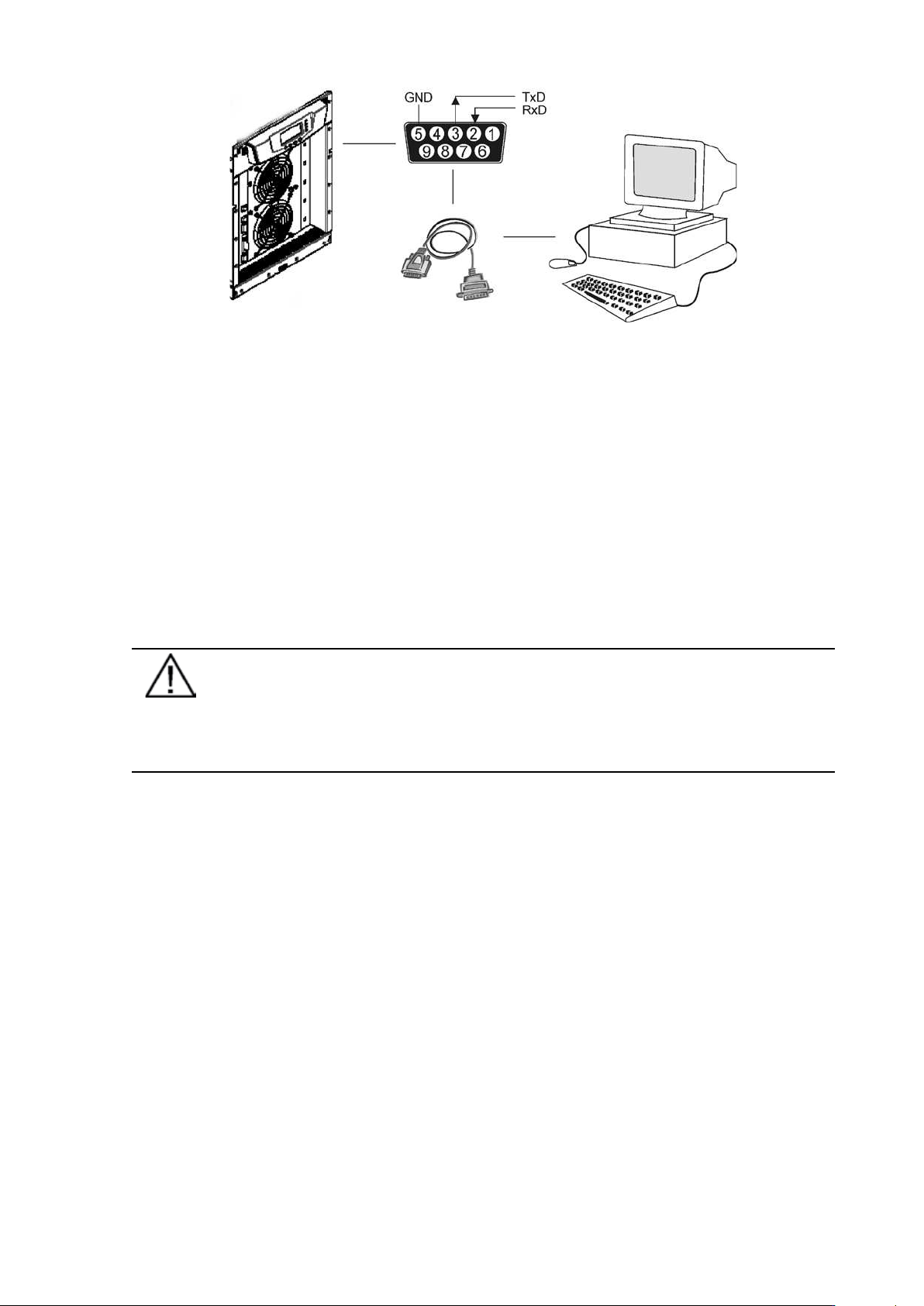
The standard RS-232 interface uses 9-pin female D-sub connector. It shall be used with the
delivered cable for a computer or external modem connection. The data is transmitted with XCP
protocol that includes status and meters information about the UPS. The RS-232 port has the
following format:
• Communication speed 19200 bps*
• Data bits 8
• Parity None
• Stop bits 1
• Handshake None
* Communication speed can be changed via LCD menu
UPS 8 – 15 kVA, 230V 50/60 Hz output
User’s Guide
1022403
Revision D
25
Figure 27. Identification of the interface port pins.
LanSafe software
The LanSafe software shuts down computers and whole networks in case of an extended power
failure. It provides basic monitoring, data logging, notification and event actions for a single
UPS solution. The software is bundled free of charge in Software Suite CD.
The connection procedure for the RS-232 interface port is following:
1. Connect the RS-232 communication cable to the computer.
2. Connect the RS-232 communication cable to the serial interface on the UPS.
3. Run the UPS software installation disk (Software Suite CD) on the computer.
Note!
If communication does not work choose the correct baud rate from the LCD menu
Please refer to the optional software manuals for appropriate bit rate
settings.
External control connections
The UPS has an input/output interface for direct communication with your computer system.
It is located behind the front bezel of the UPS unit. The cables connected to these terminals
should be connected to cable clips.
Input and output terminals have a functional isolation from terminal to terminal. They are
connected to the chassis through individual 1 M resistors.
UPS 8 – 15 kVA, 230V 50/60 Hz output
User’s Guide
1022403
Revision D
26
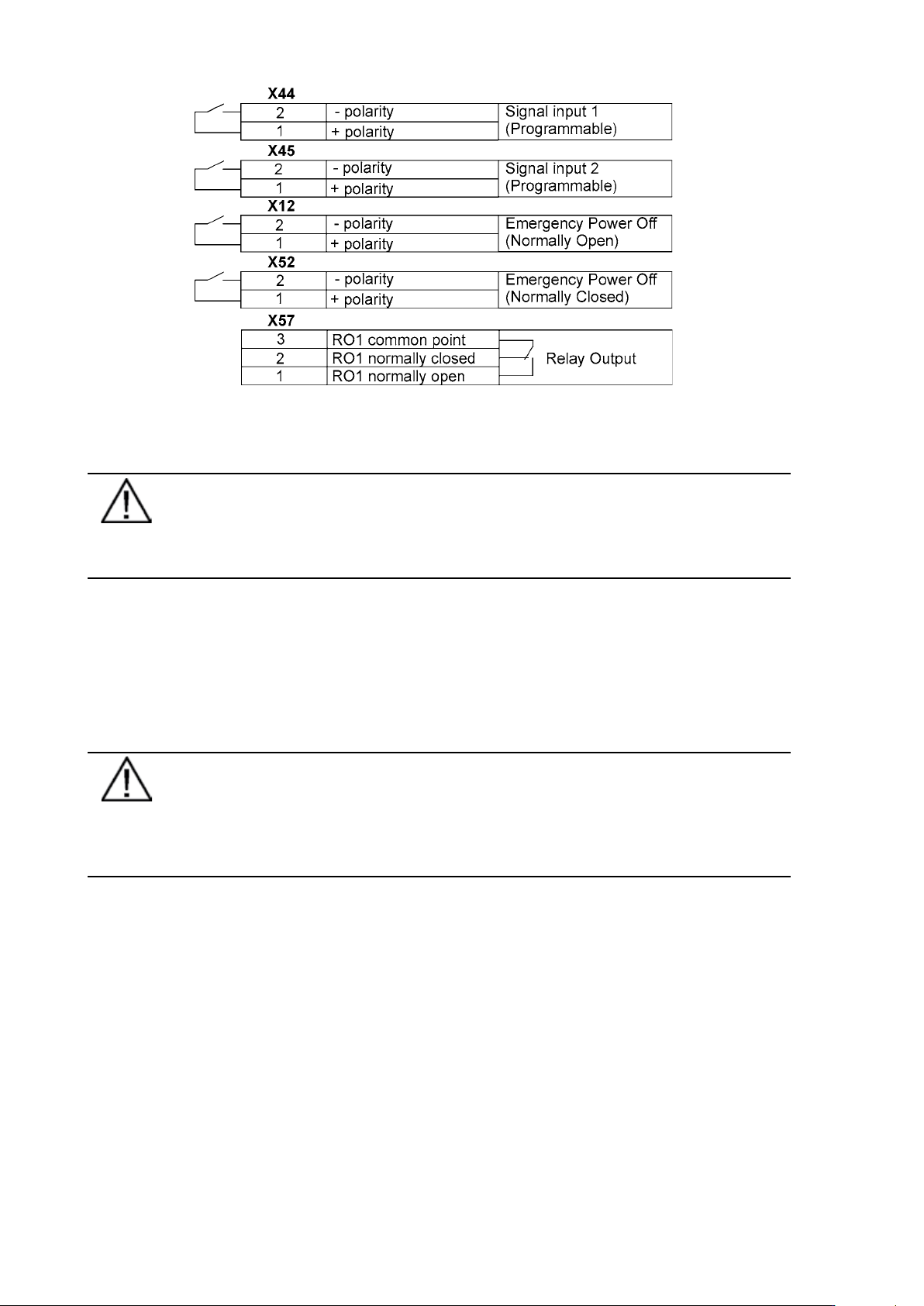
Figure 28. External control cable connections to the UPS.
Note!
Pay attention to proper polarity if one is using a semiconductor switch type. A relay
or other mechanical control is a preferred method.
Emergency Power Off (EPO)
This input is used to shut down the UPS from a distance. This feature can be used for
emergency power down. There are two modes of operation, normally closed at X52 and
normally open at X12. Remote shut down terminal X52 pins 1 and 2 are as factory default linked
(X12 is open). When the loop on X52 is opened, the logic circuitry will immediately shut down
the UPS output and open the battery breaker (F1).
Note!
EPO does not necessarily disconnect supply to load when unit is on internal or
external bypass. Quaranteed disconnection of bypass supply has to be through a
separate disconnect switch located in the supplying switchgear cabinet.
In order to have the UPS running again pins 1 and 2 of connector X52 have to be reconnected and
the UPS started manually. The pins must be shorted in order to keep the UPS running. Maximum
resistance is 10 ohm. The EPO shall not be galvanically connected to any mains connected circuits.
Reinforced insulation to the mains is required. See also “Start-up after EPO”.
If the use of normally open EPO operation is desired, the loop on X52 has to be retained and the
normally open EPO switch connected to X12. Operation is as above.
Relay outputs
The UPS incorporates a programmable relay output with potential free contacts at X57 for remote
alarm indications. It is rated for max. 30 VAC 1 A or 60 VDC 0,2 A nominal values. Additional (4)
relay outputs can be obtained with the XSlot compatible AS/400 Relay Module (optional). For
more information see the section “Using relay outputs”