s25061872.pdf - 第24页
Sensors 2025 , 25 , 1872 24 of 24 25. Qie, X.H.; Kang, C.F .; Zong, S.C.; Chen, S.J. T rajectory Planning and Simulation Study of Redundant Robotic Arm for Upper Limb Rehabilitation Based on Back Propagation Neural Netwo…
Sensors 2025, 25, 1872
22 of 24
Sensors2025,25,xFORPEERREVIEW 23 of 25
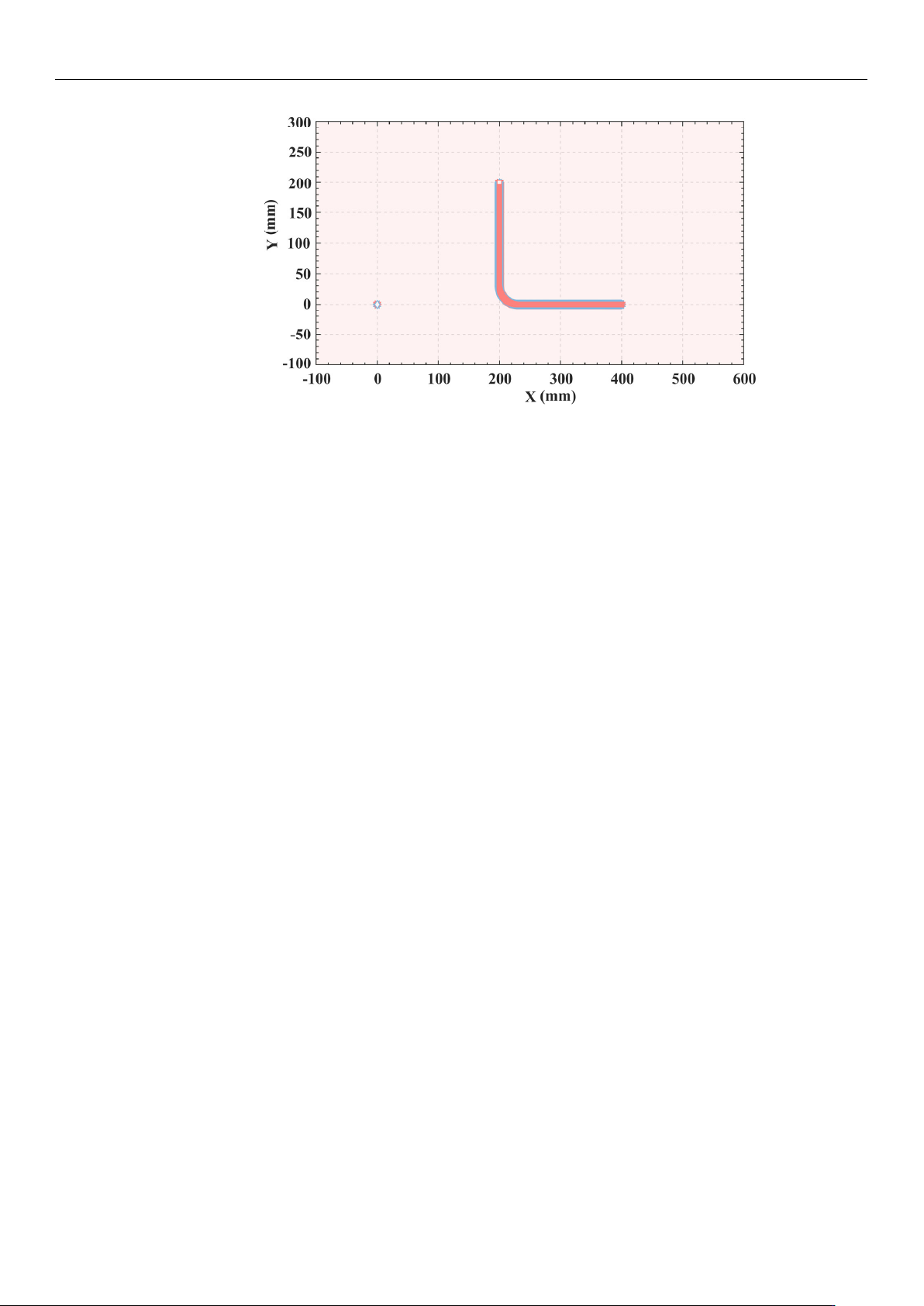
Figure14.Motiontrajectoriesinatwo−dimensionalplane.
4.Conclusions
Thisstudyproposesanimprovedsnakeoptimization(ISO)algorithm.Meanwhile,a
single‐segmentstart–stopS‐shapedspeedcurvewitharctransitionisconstructedbased
onISO,whichisa methodspecificallydesignedfortherapidandstableoperationrequire‐
mentsof thewafer‐handling roboticarm.Thismethod extensively investigates
and
optimizesonthekeyissuesoftimeandimpactwithinthecontextofroboticarmtrajectory
planning.ThroughacomparativeanalysiswiththeoriginalS‐shapedspeedcurvescheme
underthe same para met e r sett ings, the new method improvesthe time efficiencyby
24.1%,therebysignificantlyreducingthetime
requiredfortheroboticarmtocomplete
thetask.Furthermore,theperformanceoftheISOiscomparedwiththatofSO,SA,PSO,
GWO,andWOAonaseriesofbenchmarktestfunctions.Theresultsindicatethat,interms
ofthetwo key performance indicators,averagevalueandvariance,the ISO
algorithm
outperformsthesecondrankedGWOalgorithmbyamarginof38.9%.Theseimproved
simulationsfullydemonstratetheeffectivenessandsuperiorityoftheproposed method
inaddressingthetrajectoryplanning problemforwafer‐handlingroboticarms.
Inthisstudy,theshortcomingsoftheSOalgorithmhavebeenextensivelystudied
andimproved.Whiletheproposedenhancementsimproveglobalsearchcapabilities,the
riskoflocaloptimaconvergencepersists.Additionall y,althoughBayesianopt imization
improvesthesearchefficiency,itconsumesmorecomputerresources.Therefore,future
researchwil l prioritizerefining thesea rchmechanismtoaddresstheseli mitationsofthe
SOalgorithm.Simultaneously,weplanto
explorethecombinationofBayesianoptimi‐
zationandbandit‐basedmethods,aimingtoreducecomputationalcostswhileimprov‐
ingtheoptimizationefficiency.
AuthorContributions:Conceptualization,Y.J.andJ.Y.;methodology,J.Y.;software,J.Y.;validation,
J.Y.;formalanalysis,J.Y.;investigation,Y.J.andJ.Y.Allauthorshavereadandagreedtothepub‐
lishedversionofthemanuscript.
Funding:Thisresearchwasfunded bytheBasicScientificResearchProjectofHigherEducation
InstitutionsofLiaoning
Province(grantnumberJYTQN2023064).
InstitutionalReviewBoardStatement:Notapplicable.
InformedConsentStatement:Notapplicable.
DataAvailabilityStatement:Datasharingnotapplicable.Nonewdatawerecreatedoranalyzed
inthisstudy.Datasharingisnotapplicabletothisarticle.
Figure 14. Motion trajectories in a two−dimensional plane.
4. Conclusions
This study proposes an improved snake optimization (ISO) algorithm. Meanwhile, a
single-segment start–stop S-shaped speed curve with arc transition is constructed based on
ISO, which is a method specifically designed for the rapid and stable operation requirements
of the wafer-handling robotic arm. This method extensively investigates and optimizes on
the key issues of time and impact within the context of robotic arm trajectory planning.
Through a comparative analysis with the original S-shaped speed curve scheme under
the same parameter settings, the new method improves the time efficiency by 24.1%,
thereby significantly reducing the time required for the robotic arm to complete the task.
Furthermore, the performance of the ISO is compared with that of SO, SA, PSO, GWO, and
WOA on a series of benchmark test functions. The results indicate that, in terms of the two
key performance indicators, average value and variance, the ISO algorithm outperforms
the second ranked GWO algorithm by a margin of 38.9%. These improved simulations
fully demonstrate the effectiveness and superiority of the proposed method in addressing
the trajectory planning problem for wafer-handling robotic arms.
In this study, the shortcomings of the SO algorithm have been extensively studied
and improved. While the proposed enhancements improve global search capabilities, the
risk of local optima convergence persists. Additionally, although Bayesian optimization
improves the search efficiency, it consumes more computer resources. Therefore, future
research will prioritize refining the search mechanism to address these limitations of the SO
algorithm. Simultaneously, we plan to explore the combination of Bayesian optimization
and bandit-based methods, aiming to reduce computational costs while improving the
optimization efficiency.
Author Contributions: Conceptualization, Y.J. and J.Y.; methodology, J.Y.; software, J.Y.; validation,
J.Y.; formal analysis, J.Y.; investigation, Y.J. and J.Y. All authors have read and agreed to the published
version of the manuscript.
Funding: This research was funded by the Basic Scientific Research Project of Higher Education
Institutions of Liaoning Province (grant number JYTQN2023064).
Institutional Review Board Statement: Not applicable.
Informed Consent Statement: Not applicable.
Data Availability Statement: Data sharing not applicable. No new data were created or analyzed in
this study. Data sharing is not applicable to this article.

Sensors 2025, 25, 1872
23 of 24
Conflicts of Interest: The authors declare no conflicts of interest.
References
1.
Pu, Q.C.; Xu, X.R.; Li, Q.Q.; Zhang, H. Robotic Arm Time-Jerk Optimal Trajectory Based on Improved Dingo Optimization. J. Braz.
Soc. Mech. Sci. Eng. 2024, 46, 198. [CrossRef]
2.
Zhang, S.B.; Xia, Q.X.; Chen, M.X.; Cheng, S.Z. Multi-Objective Optimal Trajectory Planning for Robotic Arms Using Deep
Reinforcement Learning. Sensors 2023, 23, 5974. [CrossRef] [PubMed]
3.
Ye, J.T.; Hao, L.N.; Cheng, H.T. Multi-Objective Optimal Trajectory Planning for Robot Manipulator Attention to End-Effector
Path Limitation. Robotica 2024, 42, 1761–1780. [CrossRef]
4.
Lu, Z.K.; You, Z.C.; Xia, B.H. Time Optimal Trajectory Planning of Robotic Arm Based on Improved Sand Cat Swarm Optimization
Algorithm. Appl. Intell. 2025, 55, 323. [CrossRef]
5.
Shrivastava, A.; Dalla, V.K. Strategy of Smooth Motion Planning of Multi-Axes Space Manipulator Avoiding Dynamic Singularity
in Cartesian Space. J. Braz. Soc. Mech. Sci. Eng. 2022, 44, 278. [CrossRef]
6.
Tagliavini, A.; Bianco, C.G. A Smooth Orientation Planner for Trajectories in the Cartesian Space. IEEE Rob. Autom. Lett.
2023, 8, 2606–2613. [CrossRef]
7.
Lin, J.J.; Rickert, M.; Knoll, A. Parameterizable and Jerk-Limited Trajectories with Blending for Robot Motion Planning and
Spherical Cartesian Waypoints. In Proceedings of the 2021 IEEE International Conference on Robotics and Automation (ICRA),
Xi’an, China, 30 May–5 June 2021; pp. 13982–13988.
8.
Xiao, P.F.; Ju, H.H.; Li, Q.D. Point-to-point Trajectory Planning for Space Robots Based on Jerk Constraints. Rev. Sci. Instrum.
2021, 92, 09450. [CrossRef]
9.
Zhang, C.; Zhang, Z. Research on Joint Space Trajectory Planning of SCARA Robot Based on SimMechanics. In Proceedings of
the 2019 Electronic and Automation Control Conference (ITNEC), Chongqing, China, 15–17 March 2019; pp. 1446–1450.
10.
Luo, L.; Guo, T.B.; Cui, K.K.; Zhang, Q. Trajectory Planning in Robot Joint Space Based on Improved Quantum Particle Swarm
Optimization Algorithm. Appl. Sci. 2023, 13, 7031. [CrossRef]
11.
Wu, G.L.; Zhang, N. Kinematically Constrained Jerk-Continuous S-Curve Trajectory Planning in Joint Space for Industrial Robots.
Electronics 2023, 12, 1135. [CrossRef]
12.
Hu, Y.H.; Zhang, S.L.; Chen, Y.H. Trajectory Planning Method of 6-DOF Modular Manipulator Based on Polynomial Interpolation.
J. Comput. Methods Sci. 2023, 23, 1589–1600. [CrossRef]
13.
Chen, G.R.; Ma, M.; Guo, S.; Hou, B.W.; Wang, J.Z. An Easy-implemented Optimization Method of Trajectory Planning Based on
Polynomial Interpolation. In Proceedings of the 2021 40th Chinese Control Conference (CCC), Shanghai, China, 26–28 July 2021;
pp. 2802–2807.
14.
Shrivastava, A.; Dalla, V.K. Multi-Segment Trajectory Tracking of the Redundant Space Robot for Smooth Motion Planning Based
on Interpolation of Linear Polynomials with Parabolic Blend. Proc. Inst. Mech. Eng. Part C J. Mech. Eng. Sci. 2022, 236, 9255–9269.
[CrossRef]
15.
Cong, Y.Z.; Jiang, C.R.; Liu, H.; Du, H.B.; Gan, Y.H.; Jiang, C.H. Research on Trajectory Planning Method of Dual-Arm Robot
Based on ROS. In Proceedings of the 2020 Chinese Automation Congress (CAC), Xi’an, China, 6–8 November 2020; pp. 2616–2621.
16.
Ayazbay, A.A.; Gani, B.; Sandugash, O.; Konrad, G.; Algazy, Z. Trajectory Planning, Kinematics, and Experimental Validation of a
3D-Printed Delta Robot Manipulator. Mech. Eng. Robot. Res. 2024, 13, 113–125. [CrossRef]
17.
Wang, G.R.; Xu, F.; Zhou, Z.K.; Pang, Z.H. S-Velocity Profile of Industrial Robot Based on NURBS Curve and Slerp Interpolation.
Processes 2022, 10, 2195. [CrossRef]
18.
Patle, B.K.; Chen, S.L.; Singh, A.; Kashyap, S.K. Optimal Trajectory Planning of the Industrial Robot Using Hybrid S-Curve-PSO
Approach. Rob. Intell. Autom. 2023, 43, 153–174. [CrossRef]
19.
Wu, N.K.; Jia, D.Y.; Li, Z.Q.; He, Z.H. Trajectory Planning of Robotic Arm Based on Particle Swarm Optimization Algorithm. Appl.
Sci. 2024, 14, 8234. [CrossRef]
20.
Du, Y.X.; Chen, Y.H. Time Optimal Trajectory Planning Algorithm for Robotic Manipulator Based on Locally Chaotic Particle
Swarm Optimization. Chin. J. Electron. 2022, 31, 906–914. [CrossRef]
21.
Luo, L.; Guo, T.B.; Zhang, Q. Optimal Trajectory Planning for Robotic Arm Based on Improved Dynamic Multi-Population
Particle Swarm Optimization Algorithm. Int. J. Adv. Comput. Sci. Appl. 2024, 15, 710–718.
22.
Zhong, F.F.; Liu, G.P.; Lu, Z.Y.; Hu, L.Y.; Han, Y.Y.; Xiao, Y.S.; Zhang, X.R. Dynamic Parameter Identification Based on Improved
Particle Swarm Optimization and Comprehensive Excitation Trajectory for 6R Robotic Arm. Ind. Robot 2024, 51, 148–166.
[CrossRef]
23.
Liang, B.Q.; Lin, X.Z.; Liu, G.H.; Lei, J. Trajectory Analysis and Optimization of Sea Buckthorn Fruit Vibration Separation
Manipulator Based on IPSO Algorithm. Sci. Rep. 2023, 13, 20124. [CrossRef]
24.
Lu, Z.G.; Wang, X. Mechanical Arm Trajectory Planning Based on B-Spline and Whale Optimization Algorithm. J. Northeast. Univ.
2024, 45, 683–689.

Sensors 2025, 25, 1872
24 of 24
25.
Qie, X.H.; Kang, C.F.; Zong, S.C.; Chen, S.J. Trajectory Planning and Simulation Study of Redundant Robotic Arm for Upper Limb
Rehabilitation Based on Back Propagation Neural Network and Genetic Algorithm. Sensors 2022, 22, 4071. [CrossRef] [PubMed]
26.
Li, W.; Zhao, J.B.; Wang, J.Z. An Improved Snake Optimization Algorithm and Its Application in Manipulator Trajectory
Planning. In Proceedings of the 2023 35th Chinese Control and Decision Conference (CCDC), Yichang, China, 20–22 May 2023;
pp. 4306–4313.
27.
Lu, S.Y.; He, Q.; Wang, Y.M.; Li, Y.B. Enhanced Snake Optimization Algorithm for Mobile Robot Path Planning. Trans. Microsyst.
Technol. 2023, 42, 127–133.
28.
Liang, X.M.; Shi, L.Y.; Long, W. Improved Snake Optimization Algorithm for Solving Constrained Optimization Problems.
Comput. Eng. Appl. 2024, 60, 76–87.
29.
Li, Q.L.; Ma, Q.H.; Weng, X. Dynamic Path Planning for Mobile Robots Based on Artificial Potential Field Enhanced Improved
Multiobjective Snake Optimization. J. Field Rob. 2024, 41, 1843–1863. [CrossRef]
30.
Jin, R.Y.; Rocco, P.; Geng, Y.H. Cartesian Trajectory Planning of Space Robots Using a Multi-Objective Optimization. Aerosp. Sci.
Technol. 2021, 108, 106360. [CrossRef]
31.
Zhang, X.C.; Chao, Y.S.; Li, C.Y.; Zhou, J.L. Multi-Objective Trajectory Planning for Industrial Robots Based on Machine Learning.
Mod. Manuf. Eng. 2024, 2, 31–37.
32.
Zhu, H.L.; Xiao, W.B.; Zhou, H.; Li, X.R. Parameter Extraction of Photovoltaic Cells Based on Chaotic Adaptive Weight Improved
Snake Optimization Algorithm. Laser Optoelectron. Process 2024, 61, 1525002.
33.
Fu, H.; Shi, H.F.; Xu, Y.S.; Shao, J.Y. Research on Gas Outburst Prediction Model Based on Multiple Strategy Fusion Improved
Snake Optimization Algorithm with Temporal Convolutional Network. IEEE Access 2022, 10, 117973–117984. [CrossRef]
34.
Liu, J.; Deng, Y.H.; Liu, Y.L.; Chen, L.L.; Hu, Z.Z.; Wei, P.Y.; Li, Z.B. A Logistic-tent Chaotic Mapping Levenberg Marquardt
Algorithm for Improving Positioning Accuracy of Grinding Robot. Sci. Rep. 2024, 14, 9649. [CrossRef]
35.
Zheng, W.D.; Ai, Y.B.; Zhang, W.D. Improved Snake Optimizer Using Sobol Sequential Nonlinear Factors and Different Learning
Strategies and Its Applications. Mathematics 2024, 12, 1708. [CrossRef]
36.
Huang, Y.; Liang, F.C.; Fan, C.L.; Song, Z.F. Improved Particle Swarm Optimization Algorithm with Random Mutation and
Perception. J. Northwest. Polytech. Univ. 2023, 41, 428–438. [CrossRef]
37.
Zhang, C.; Shao, Y.C.; Sun, H.J.; Xing, L.; Zhao, Q.; Song, Z.F. The WuC-Adam Algorithm Based on Joint Improvement of Warmup
and Cosine Annealing Algorithms. Math Biosci. Eng. 2024, 21, 1270–1285. [CrossRef]
38.
Liu, X.; Tian, M.; Zhou, J.; Liang, J.Y. An Efficient Coverage Method for SEMWSNs Based on Adaptive Chaotic Gaussian Variant
Snake Optimization Algorithm. Math. Biosci. Eng. 2023, 20, 3191–3215. [CrossRef] [PubMed]
39. Shan, Q.Y.; Jin, H.W.; Jie, C. Gearbox Fault Diagnosis Method Based on PSM-BN. IEEE Access 2024, 12, 39876–39886. [CrossRef]
40.
Hashim, F.A.; Hussien, A.G. Snake Optimizer: A Novel Meta-Heuristic Optimization Algorithm. Knowl. Based Syst.
2022, 242, 108320. [CrossRef]
41.
Shi, W.J.; He, Z.; Tang, W.; Liu, W.F.; Ma, Z.Y. Path Planning of Multi-Robot Systems with Boolean Specifications Based on
Simulated Annealing. IEEE Rob. Autom. Lett. 2022, 7, 6091–6098. [CrossRef]
42.
Zhao, Y.T.; Gan, L.; Li, W.G.; Liu, A. Path Planning of Spot Welding Robot Based on Multi-Objective Grey Wolf Algorithm. J. Intell.
Fuzzy Syst. 2021, 41, 6181–6189. [CrossRef]
43.
Gharehchopogh, F.S.; Gholizadeh, H.A. A Comprehensive Survey: Whale Optimization Algorithm and Its Applications. Swarm
Evol. Comput. 2019, 48, 1–24. [CrossRef]
Disclaimer/Publisher’s Note: The statements, opinions and data contained in all publications are solely those of the individual
author(s) and contributor(s) and not of MDPI and/or the editor(s). MDPI and/or the editor(s) disclaim responsibility for any injury to
people or property resulting from any ideas, methods, instructions or products referred to in the content.