PR8111、PR8112_user_manual_eng_20191015H.pdf - 第24页
2.7 Attaching and Deta ching the Front Cover 21 1 Y ou can keep wind, dust , and other foreign matter out of the inst rument by att aching the front cov er , which also prevent s recording p aper from becoming ent angled…
2.6 Connecting Measurement Cables to the Input Terminals
20
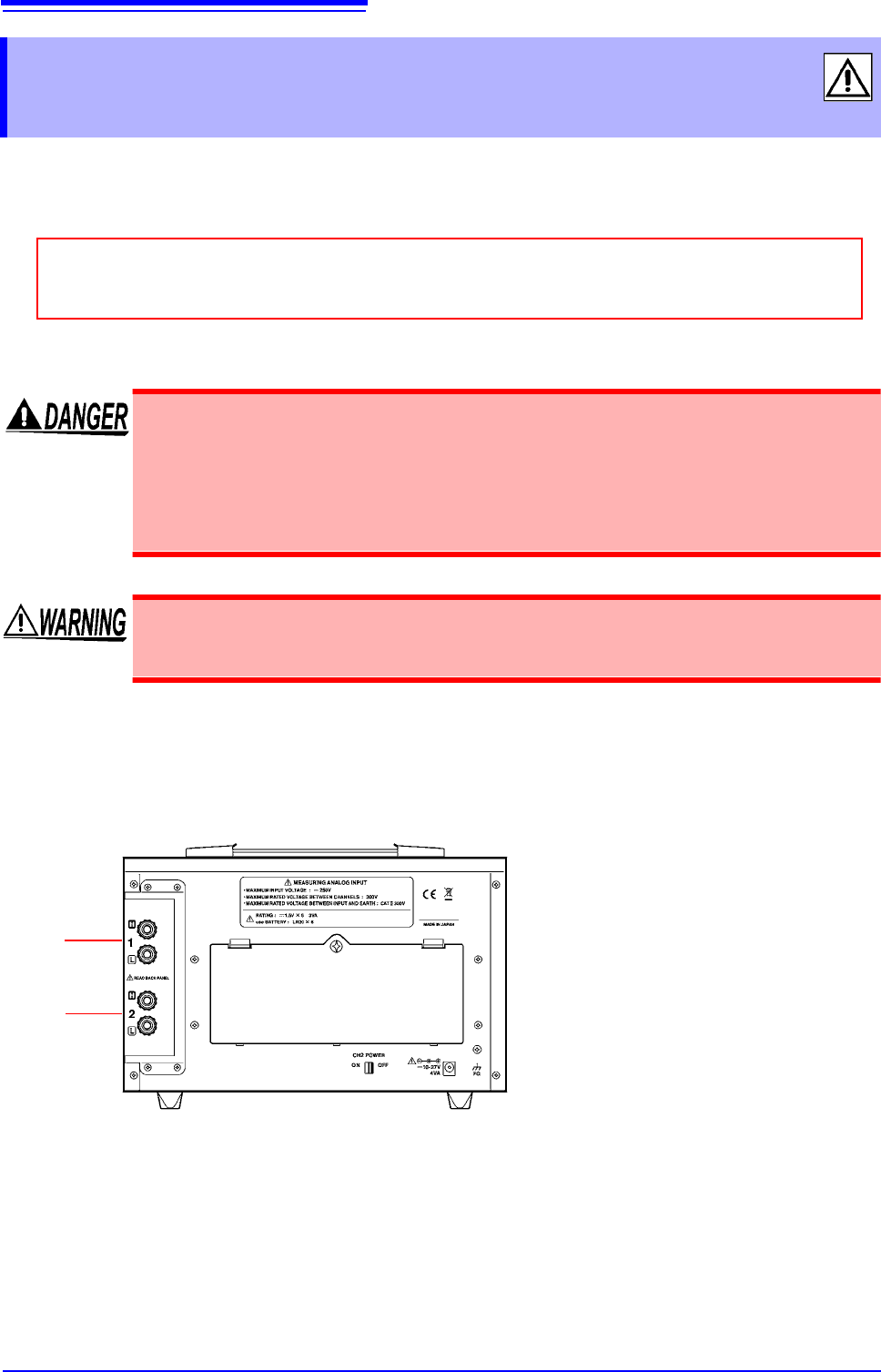
Connect the measurement cables to the measurement terminals on the rear of the instrument.
Wires with either crimp terminals or banana-plug cables can be connected.
How to connect cables
2.6 Connecting Measurement Cables to the
Input Terminals
Before connecting cables, be sure to read "Connecting Cables" (p. 8) and "Handling the
Cords and Cables" (p. 6).
• The maximum input voltage is 250 VDC. Attempting to measure voltage in excess
of the maximum input could destroy the instrument and result in personal injury or
death.
• The maximum rated voltage between input terminals and ground is 300 VAC, DC.
Attempting to measure voltages exceeding 300 V with respect to ground could
damage the instrument and result in personal injury.
To avoid experiencing an electric shock or causing a short-circuit at the input termi-
nals, only insulated crimp contacts should be used on wires being connected to
input pins. (The input terminal pin diameter is M6.)
CH1
(PR8112)
The PR8111 does not have terminals for CH2.
Connect the cables carrying high
signals to the red terminals.
Connect the cables carrying low
signals to the black terminals.
CH2
2.7 Attaching and Detaching the Front Cover
21
1
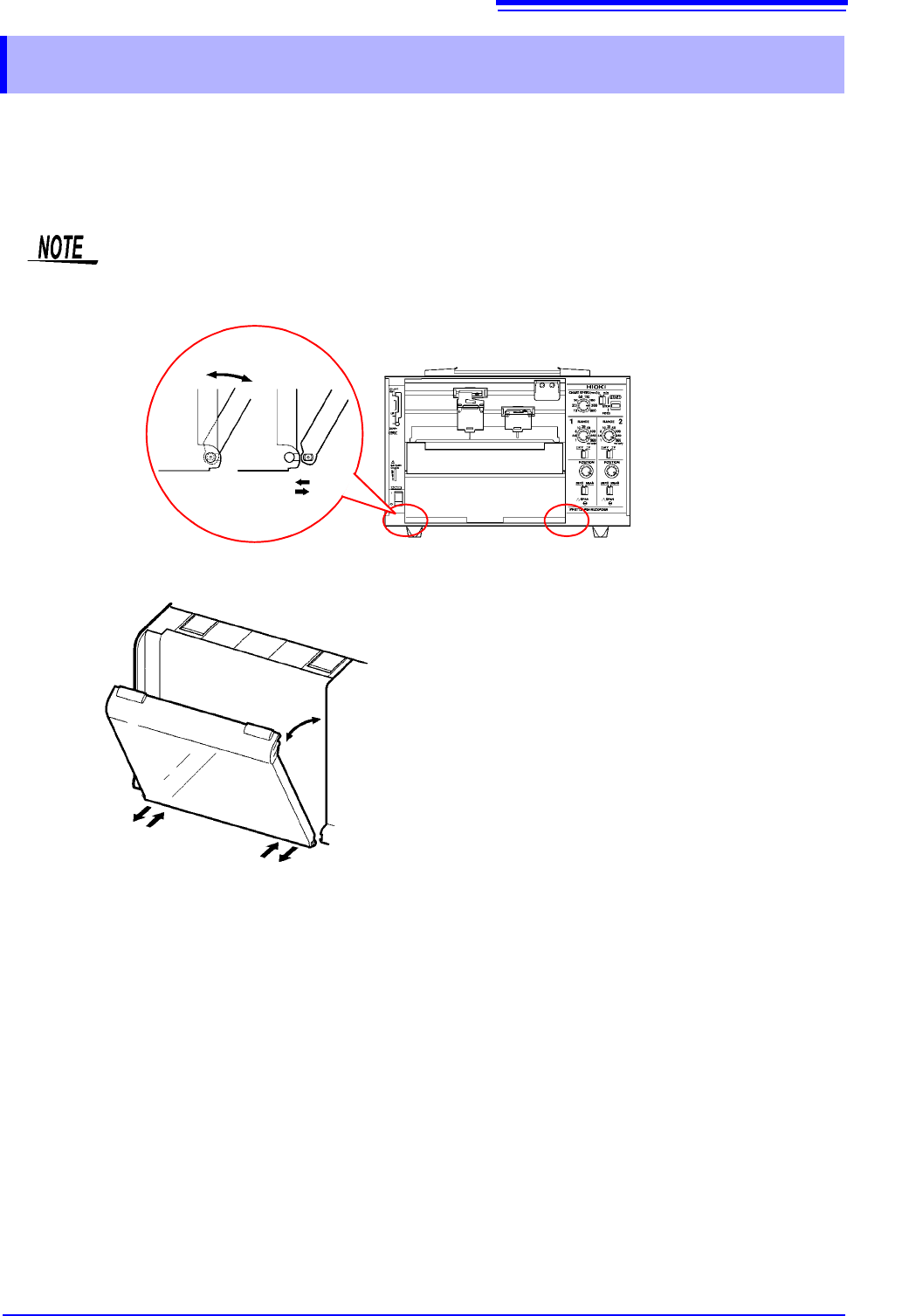
You can keep wind, dust, and other foreign matter out of the instrument by attaching the front cover,
which also prevents recording paper from becoming entangled. The cover also protects the mea-
surement hardware when the instrument is being shipped or transported.
2.7 Attaching and Detaching the Front Cover
When using roll paper, either detach the front cover or use the instrument with the cover
open. Recording data with the front cover closed may cause paper to jam in the chart tray.
Attaching the front cover
Insert the pegs on the cover into the
grooves on the instrument while inclining
the cover at an angle of about 60 from the
horizontal.
Detaching the front cover
Remove the pegs on the cover from the
grooves on the instrument while inclining
the cover at an angle of about 60 from the
horizontal.
2.8 Attaching the Drip-proof Vinyl Cover
22
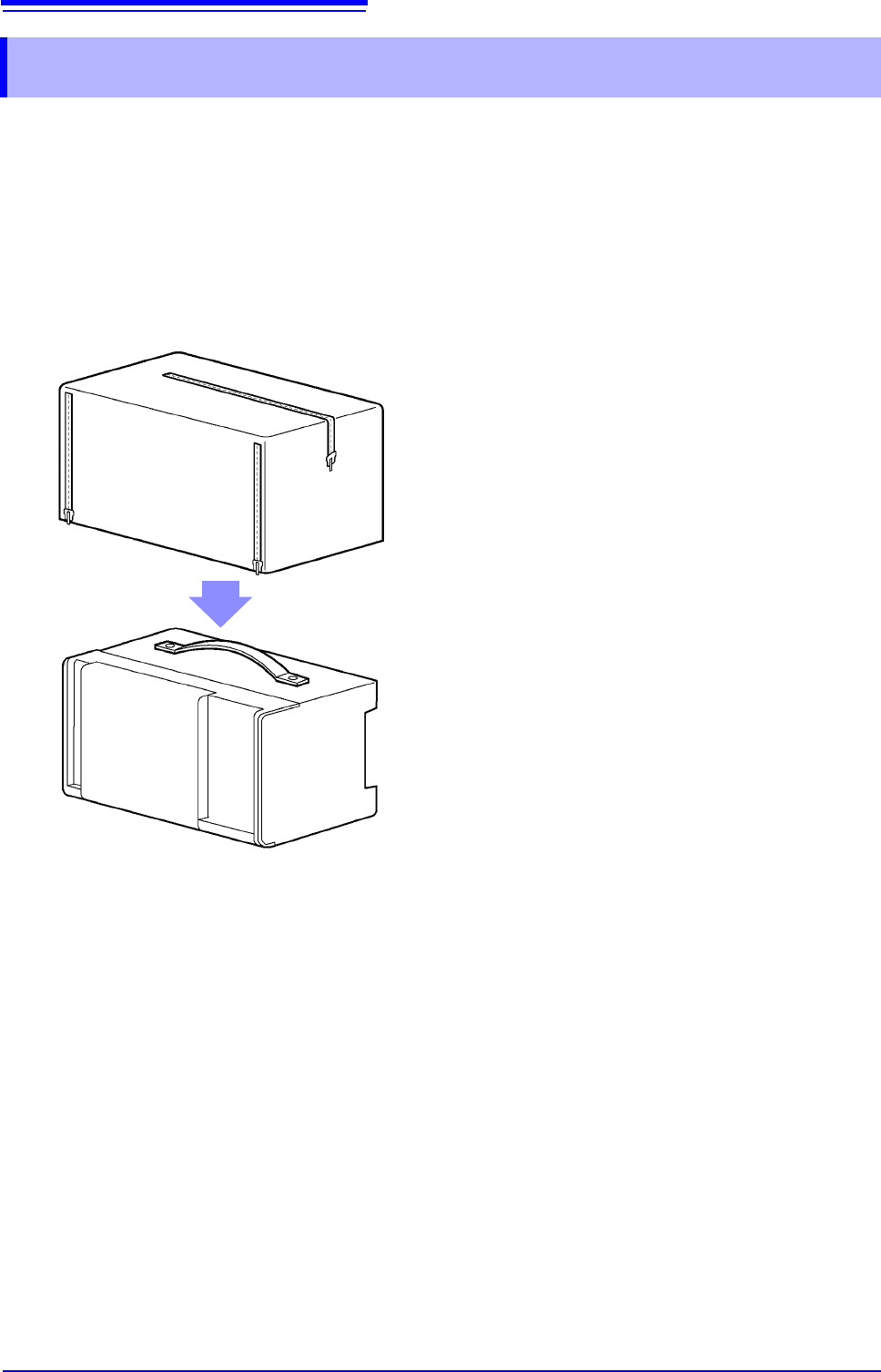
The drip-proof cover can keep the instrument and recording paper from getting wet when using the
device in light rain or locations such as tunnels where dripping water is a concern. It can also help
keep dust, sand, and other foreign matter out of the instrument.
The instrument can be carried with the drip-proof cover on it. Convenient zippers let you easily
check and replace recording paper.
2.8 Attaching the Drip-proof Vinyl Cover
Place the cover over the instrument,
positioning it so that the side that can be
opened and closed covers the front of the
device.