User Manual SIPLACE Linear Dipping Unit 2 X.pdf - 第20页
3 Function description and structure 3.1 Function description 20 User Manual SIPLACE Linear Dipping Unit 2 X 05/2020 Application process 1. The application unit is in its home position. The flux tank is over the park pla…
3 Function description and structure
3.1 Function description
User Manual SIPLACE Linear Dipping Unit 2 X 05/2020 19
3 Function description and structure
3.1 Function description
The LDU is set up on a changeover table in the same way as any other feeder module. The line
software (SIPLACE Pro) can be used to select components for dipping and to set the relevant
parameters. The LDU makes the flux available in a certain area, in the pre-defined amount (layer
thickness). The layer of flux is always renewed by automatically performed application runs. This
ensures that the components are dipped in a fresh layer of flux and that consistent process condi-
tions are maintained.
The LDU can be roughly divided into a mechanical section — an application unit — and an elec-
trical section — the so-called control unit.
Control unit
The control unit contains the electrical parts, such as the power supply, interfaces, the control sys-
tem and the operating unit.
Application unit
The application unit has two movement axes. The squeegee axis moves a slide unit back and forth.
The lifting axis moves the lifting unit up and down. Both of these axes are driven by electrical mo-
tors and a spindle system. A rotary encoder on the motor shaft determines the current position of
the spindle. Both axes have sensors which indicate when the axis reaches its end position.
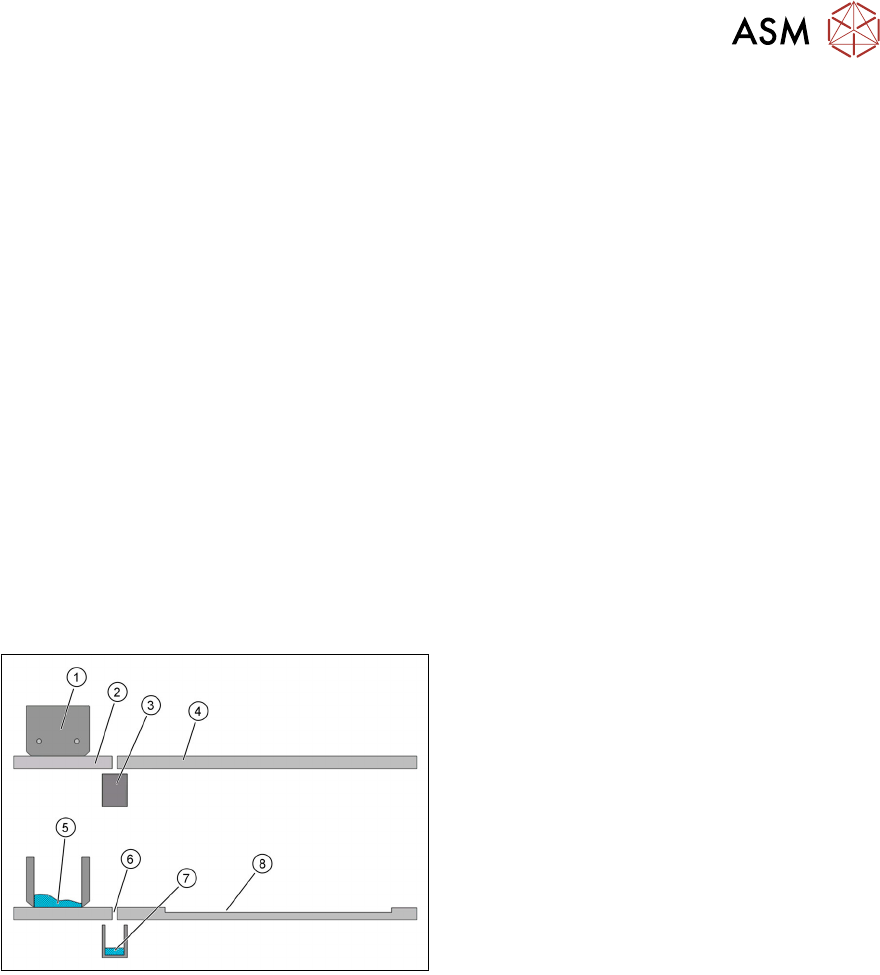
The application unit of the LDU consists of the
following main parts:
1. Flux tank
2. Park plate
3. Drip tray
4. Dipping plate
5. Flux
6. Interface
7. Flux in the drip tray
8. Cavity
3 Function description and structure
3.1 Function description
20 User Manual SIPLACE Linear Dipping Unit 2 X 05/2020
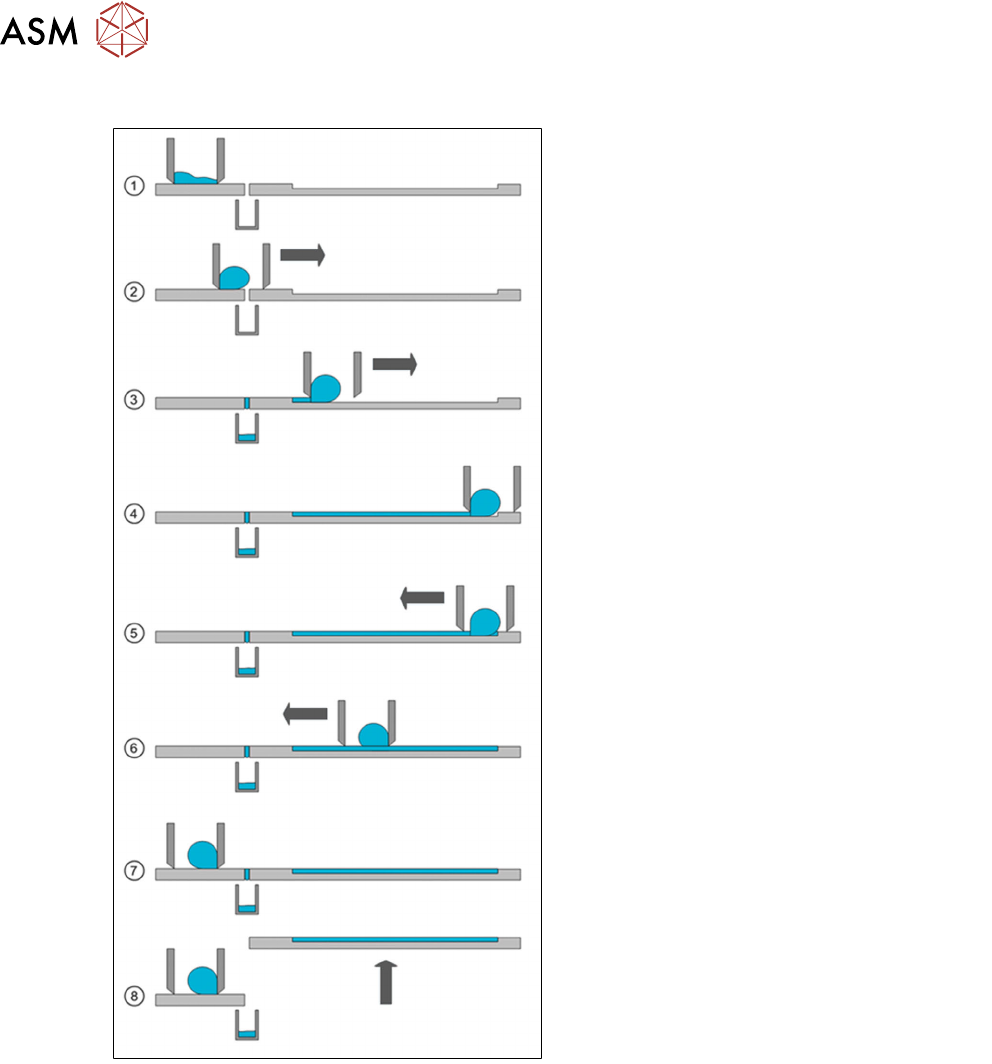
Application process
1. The application unit is in its home position.
The flux tank is over the park plate, in the
park position. The tank has been filled with
new flux, which is now spreading over the
"base" of the flux tank. The dipping plate is
in the application position.
2. The application begins. The slide unit with
the flux tank moves forward in the direction
of the dipping plate. The flux in the tank
forms a roll, depending on its viscosity.
3. The flux tank reaches the dipping plate
cavity. The flux is distributed in the cavity
and wiped off by the bottom edge of the
flux tank.
4. The slide unit moves to its reverse position
at the end of the dipping plate. The whole
cavity is now filled with flux.
5. The slide unit moves back.
6. The flux roll now forms on the other side of
the flux tank. The edge strips off the layer
of flux applied to ensure that the flux layer
height remains constant.
7. The slide unit reaches the home position
above the park plate. Any flux which may
have run into the gap in the interface area
will be caught by the drip tray.
8. The lifting unit moves the dipping plate out
of the application position and into the dip-
ping position. The placement head can
now dip the components into the flux.
For the next application process the lifting unit
moves the dipping plate back in the application
position, then steps 1 to 8 will be repeated.
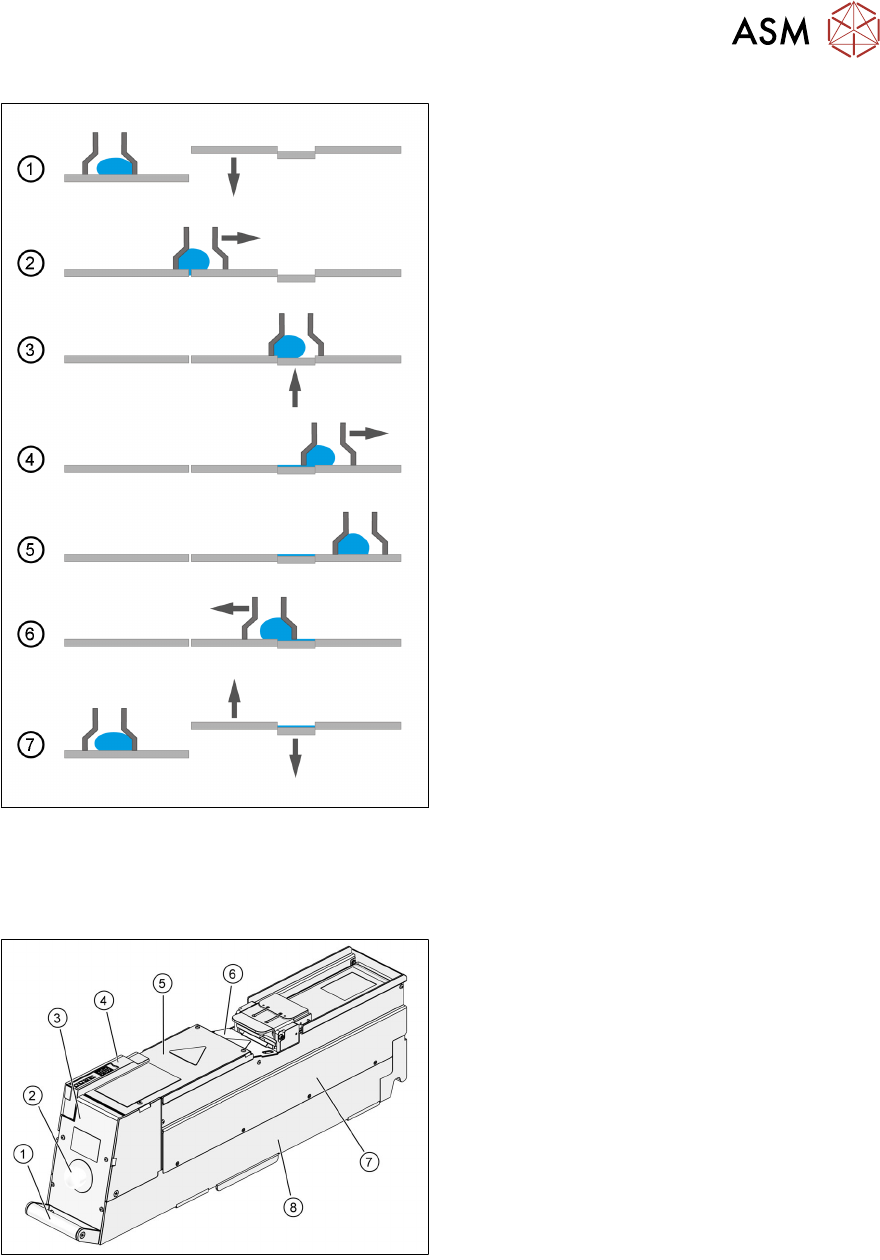
Application process (LDU 2 X with Auto Cavity option)
The squeegee cycle when using an Auto Cavity dipping plate differs from the squeegee cycle for a
standard dipping plate that has a fixed cavity depth.
The placement head applies a force to the cavity plate while it dips a component. For dipping, the
cavity plate is moved down to its lowest position where it is mechanically supported by the stop
plates. This prevents damage to the lifting mechanics. For application, the cavity plate is moved up
to the correct cavity depth in order to obtain the correct amount of flux.
3 Function description and structure
3.2 Structure
User Manual SIPLACE Linear Dipping Unit 2 X 05/2020 21
1. The dipping plate moves down from the
pickup position to the application position.
The cavity stays in the pickup position.
2. The flux tank moves towards the cavity.
3. The flux tank stops above the cavity. The
cavity moves up from the pickup position
to the application position.
4. The flux tank moves to the reverse posi-
tion, thereby filling the cavity with flux.
5. The flux tank reaches the reverse position.
6. The flux tank moves back towards the park
plate.
7. The flux tank reaches the parking position
on the park plate. The dipping plate moves
up from the application position to the
pickup position. The cavity moves down
from the application position to the pickup
position.
3.2 Structure
3.2.1 Housing
1. Handle
2. Emergency stop button
3. Rear cover
4. User interface
5. Top cover
6. Cover of coupling
7. Right side panel
8. Body