9018-18076.pdf.pdf - 第40页
6-8 Site Preparation 6 Power Requirements Figure 6-7 International 3-phase systems Figure 6-8 North American 3-phase systems $&9 ROWDJH6RXUFH PIWRI $:*FRQGXFWRU62FRUG &RUGDQGPDOHUHFHSW…
Power Requirements 6
Site Preparation 6-7
Basic Power Quality Survey
Power quality can affect system performance differently. The following procedure is intended as a
guideline and may not be the total solution. Failure to meet these guidelines should serve as an
indicator that a power quality consultant might be needed to conduct a more in-depth power quality
survey.
1 With the system operating, measure harmonic distortion at the system-input connection. THD
should be less than 5% and less than 3% for any single harmonic.
2 With the system operating, measure the ground-to-neutral voltage at the system-input
connection; the voltage should be less than 4vp-p.
3 Turn the system power off and measure the line voltage at the system-input connection; record
this reading. Turn the system on and begin operating mode. Measure the line voltage at the
system-input connection again. The difference between the two measurements should be less
than 2%.
Other problematic power qualities include momentary voltage interruptions, ground noise, and
voltage spikes. A survey of these problems and others may require the services of a power quality
expert with specialized equipment.
Connecting Power to the PDU
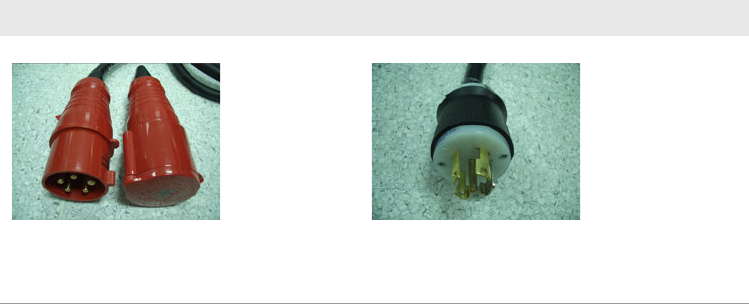
One of two different power cords and plugs are attached to the PDU depending on the country where
the system will be installed.
Table 6-10 Power cord and plugs
International North America
Uses 5 x 6 mm
2
5-conductor cord with a IEC
60309 plug and mating receptacle.
See Figure 6-7 on page 6-8.
Uses #10 AWG 5-conductor cord with NEMA plug that
mates with NEMA L21-30. See Figure 6-8 on page 6-8.
The female receptacle is available locally.
6-8 Site Preparation
6 Power Requirements
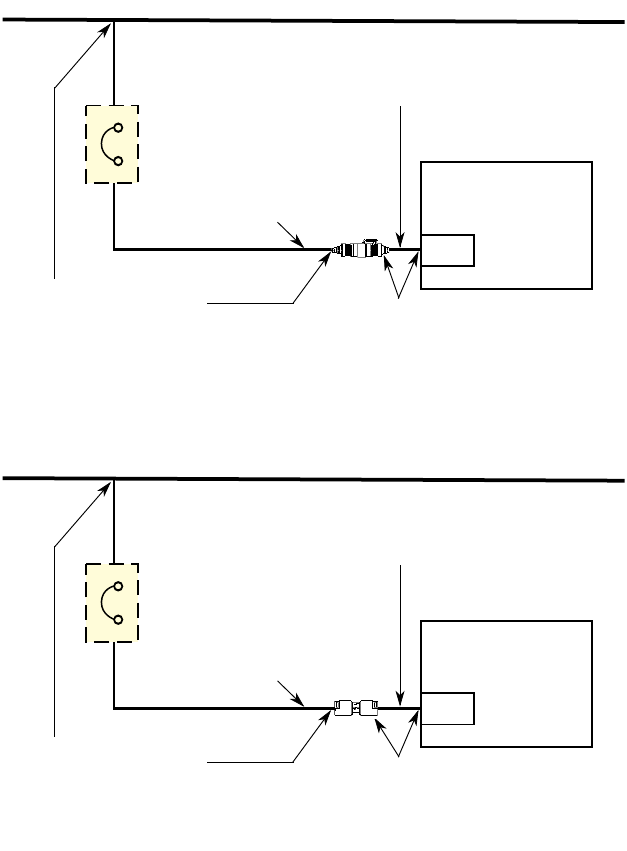
Figure 6-7 International 3-phase systems
Figure 6-8 North American 3-phase systems
$&9ROWDJH6RXUFH
PIWRI$:*FRQGXFWRU62FRUG
&RUGDQGPDOHUHFHSWDEOHVXSSOLHGE\$JLOHQW
$3KEUHDNHU
RUWKUHH$IXVHV
6\VWHP
3'8
9ROWDJHPHDVXUHGDWSRZHUUHFHSWDFOH
RU3'8ZLWKV\VWHPRQVKRXOGEH
WRRIQRPLQDO
3RZHUFRUGZLWKIHPDOHUHFHSWDFOH
VXSSOLHGE\FXVWRPHU
&RQGXFWRUVDQGVHUYLFHVL]HG
LQDFFRUGDQFHZLWKORFDOFRGHV
3UREOHPVVKRXOGEHUHSRUWHGWR
ORFDOHOHFWULFLDQIRUFRUUHFWLYHDFWLRQ
$&9ROWDJH6RXUFH
PIWRI$:*FRQGXFWRU62FRUG
&RUGDQGPDOHUHFHSWDEOHVXSSOLHGE\$JLOHQW
$3KEUHDNHU
RUWKUHH$IXVHV
6\VWHP
3'8
9ROWDJHPHDVXUHGDWSRZHUUHFHSWDFOH
RU3'8ZLWKV\VWHPRQVKRXOGEH
WRRIQRPLQDO
3RZHUFRUGZLWKIHPDOHUHFHSWDFOH
VXSSOLHGE\FXVWRPHU
&RQGXFWRUVDQGVHUYLFHVL]HG
LQDFFRUGDQFHZLWKORFDOFRGHV
3UREOHPVVKRXOGEHUHSRUWHGWR
ORFDOHOHFWULFLDQIRUFRUUHFWLYHDFWLRQ

Power Requirements 6
Site Preparation 6-9
Is PDU Re-wiring Necessary?
Re-wiring the PDU is necessary only if you are connecting it to a different power configuration than it
was wired for, not merely a different voltage. Delta (3PD) and Wye (3PY) are equivalent configurations.
See Table 6-11 and the examples below.
Suppose your system’s PDU is wired for 220 volts wye (option 3PY) and you want to connect it to:
1 208 volts wye (option 3PY)
No re-wiring is necessary; this is merely a voltage change and all internal components will handle
200 to 240 volts.
2 220 volts delta (option 3PD)
No re-wiring is necessary; options 3PY and 3PD have the same internal wiring.
3 220 volts wye with neutral (opt 3PN)
Re-wiring is necessary because the internal circuits are wired phase-to-phase and the internal
components would experience over-voltage. Whenever you switch from a non-neutral to a
neutral configuration, or vice versa, you must re-wire the PDU.
1. Regardless of the power option, the internal system components always operate at 200–240 volts.
If you determine that re-wiring the PDU is necessary, see PDU Wiring Diagrams on page 6-10.
Table 6-11 Power Options / Configurations
Power Options Configuration Description
1
3PD 200–240 volts 3-phase Delta (50/60Hz)
Includes 200V, 220V, 230V, 240V
3PY 208–220 volts 3-phase Wye (50/60Hz)
Includes 208V, 220V
3PN 380–415 volts 3-phase Wye with Neutral (50/60Hz)
Includes 380V, 400V, 415V