4OM-1064-001.pdf - 第76页
9910-001 Tg0249-PM-MM 3.3.4 Head Management Data When the [HEAD MANAGEMENT DA T A] key is pressed at the “MANAGE- MENT DA T A (TYPE 1)” display , the following display appears on the screen. • When one of the data keys i…
9910-001 Tg0249-PM-MM
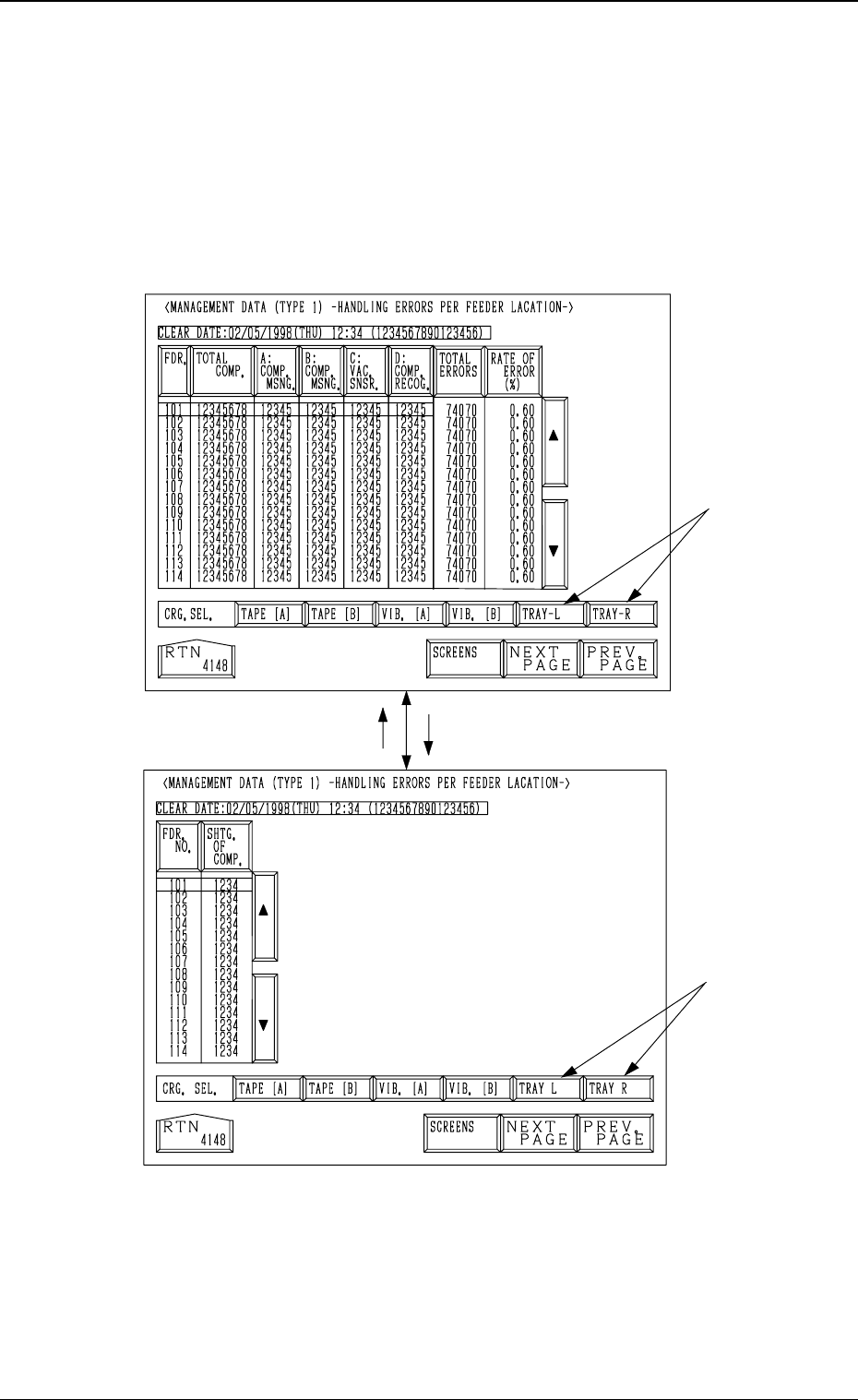
3.3.3. Handling Errors Per Feeder Location
When the [HANDLING ERRORS PER FDR. LOCATION] key is pressed
at the “MANAGEMENT DATA (TYPE 1)” display, the following dis-
play appears on the screen.
Pressing the [SCREENS] key at this display opens another “MANAGE-
MENT DATA (TYPE 1) - HANDLING ERRORS PER FEEDER LOCA-
TION-” display.
Note: The -marked items are optional.
• This display looks similar to the “PATTERN PROGRAM MANAGEMENT
DATA - HANDLING ERRORS PER FEEDER LOCATION” display.
(Refer to “3.1 (3) Handling Errors Per Feeder Location” for details.)
Each parameter is based on management data of the machine (not on each
pattern program).
Fig. 3.16-1
Fig. 3.16-2
3-29
3. MANAGEMENT DATA Display
[SCREENS]
9910-001 Tg0249-PM-MM
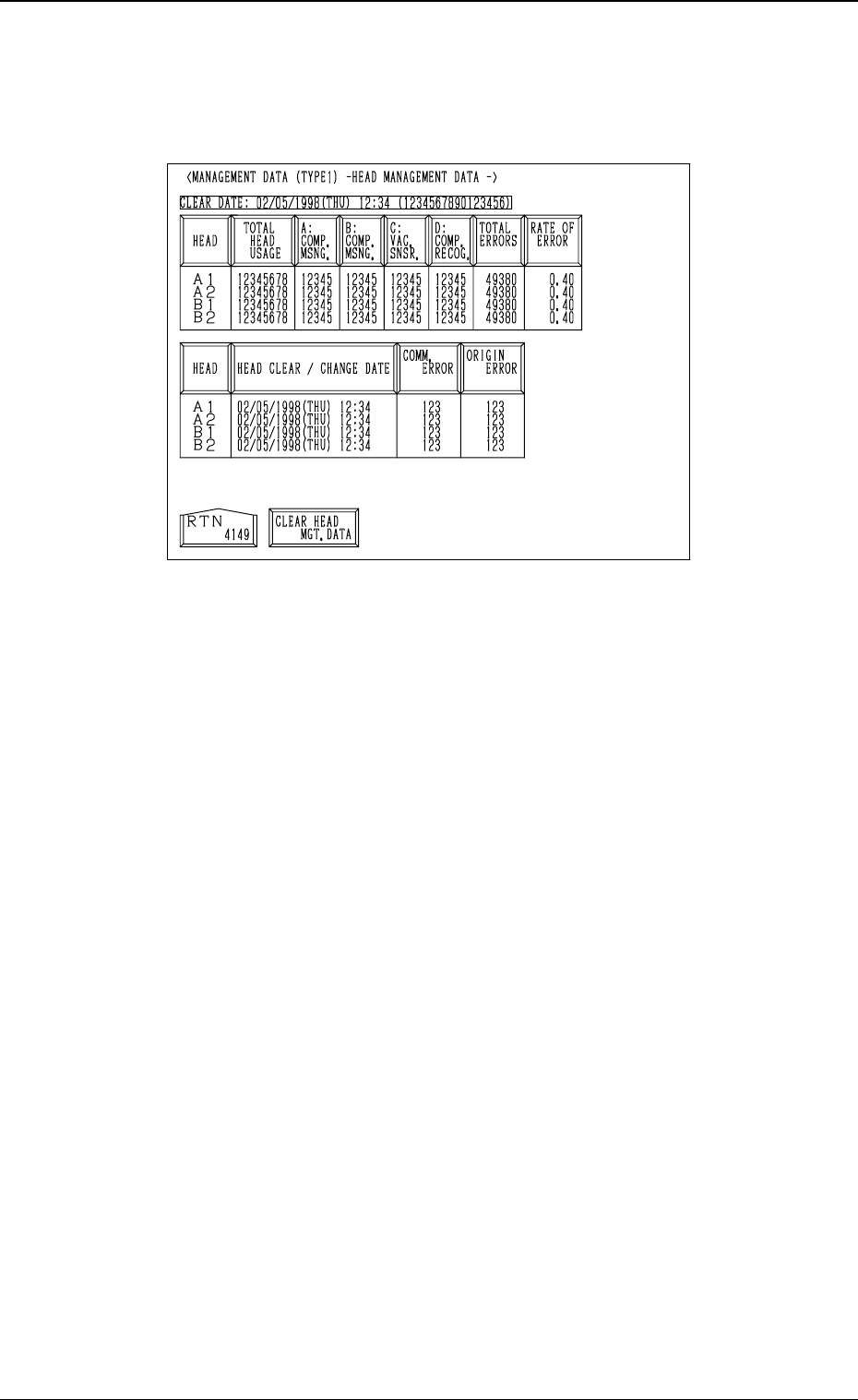
3.3.4 Head Management Data
When the [HEAD MANAGEMENT DATA] key is pressed at the “MANAGE-
MENT DATA (TYPE 1)” display, the following display appears on the screen.
• When one of the data keys is pressed, the feeder No. with the biggest param-
eter under the selected data key is displayed in the first line and feeder Nos.
having the subsequent (second, third, fourth, ...) biggest parameters follow.
When the [HEAD] key is pressed, head Nos. are arranged in their initial
order.
[HEAD] Key
Shown are the head Nos. (A1, A2, B1, B2).
[TOTAL HEAD USAGE] Key
Shown is the number of picked components.
[A: COMP. MSNG.] Key
Shown is the number of missing components detected by the vacuum sen-
sor.
[B: COMP. MSNG.] Key
Shown is the number of missing components detected in the recognition
processing.
[C: VAC. SNSR.] Key
Shown is the total number of component pick-up errors detected by the
vacuum sensor (errors not detected through the component recognition) for
each individual feeders.
[D: COMP. RECOG.] Key
Shown is the number of component recognition errors.
[TOTAL ERRORS] Key
Shown is the total number of errors detected by the above-described func-
tions ([A: COMP. MSNG.] through [D: COMP. RECOG.] keys).
[RATE OF ERROR] Key
Shown are the error rates compared with the number of picked compo-
nents.
3-30
3. MANAGEMENT DATA Display
Fig. 3.17
9910-001 Tg0249-PM-MM
[HEAD CLEAR/CHANGE DATE] Key
Shown are the updated dates for each head. (based on head bypassing, etc.)
[COMM. ERROR] Key
Shown is the number of communication errors for each head.
[ORIGIN ERROR] Key
Shown is the number of head origin errors for each head.
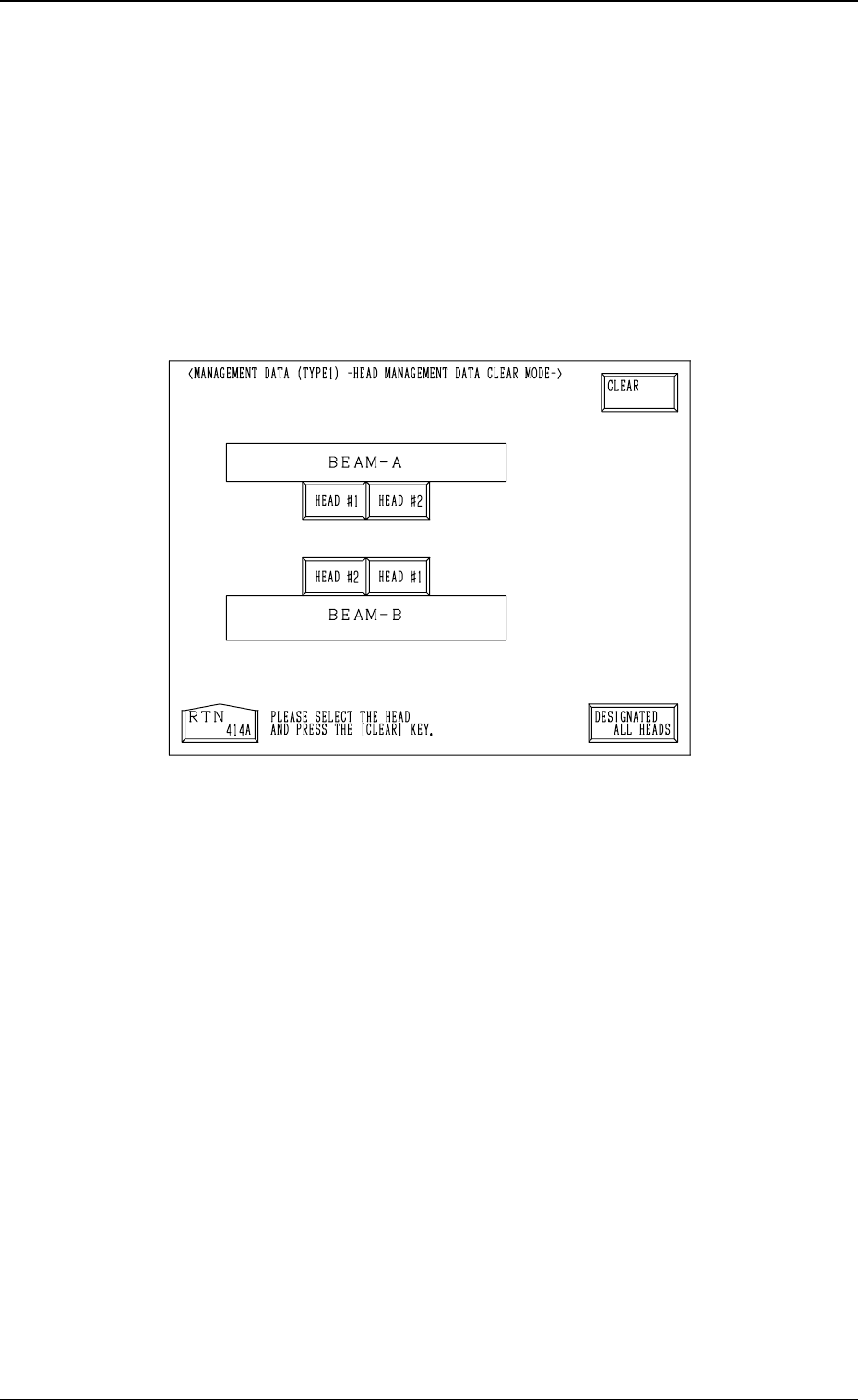
How to Clear the Head Management Data
(1) Press the [CLEAR HEAD MGT. DATA] key.
The following display appears on the screen.
(2) Select one of the head # keys whose management data should be cleared.
• To select the head Nos. individually, press the related head # key.
The selected head # key turns blue.
• To select all head # keys at a time, press the [DESIGNATED ALL
HEADS] key.
All head # keys turn blue, indicating that all heads are designated.
(3) Press the [CLEAR] key.
The management data of the selected head No. is cleared.
(The date when the [CLEAR] key is pressed is displayed in the “HEAD
CLEAR/CHANGE DATE” text field.)
3-31
3. MANAGEMENT DATA Display
Fig. 3.18