YSM10_Mainte_E.pdf - 第62页
2-3 2 Daily maintenance items n How to check for clogged nozzles (on the [Unit] - [Head] tab screen) T he term "clogged nozzle" used here indicates that material such as solder is adhering to the nozzle hole, c…
2-2
2
Daily maintenance items
1. Checking the nozzle
Solder sticking to the nozzle tip or a clogged nozzle hole can cause component pickup errors and
recognition errors. Poor nozzle spring action can also cause pickup and mounting errors. To prevent such
problems, inspect each nozzle daily.
1.1 Checking with software
n
How to check for a dirty nozzle (with the [Tip Dirt Check] button)
The term "dirty nozzle" as used here indicates shiny material such as solder adhering to the nozzle tip. This shiny
portion might be mistaken for a component and cause recognition errors. [Tip Dirt Check] is a tool that judges
the nozzle contamination status by recognizing the nozzle tip in the non-component status with the camera.
n
NOTE
[Tip Dirt Check] is a function that recognizes the reflection of the light around the nozzle center. So, applicable nozzles
are those with a small tip, such as 301A, 302A, and 311A.
n
NOTE
Since the nozzle specification may vary depending on
the machine, some machines may require additional
settings. See the operator's manual, chapter 3 "1.9
Confirming nozzles" for detailed settings.
e
1
(Without nozzle station) Replace
the nozzle.
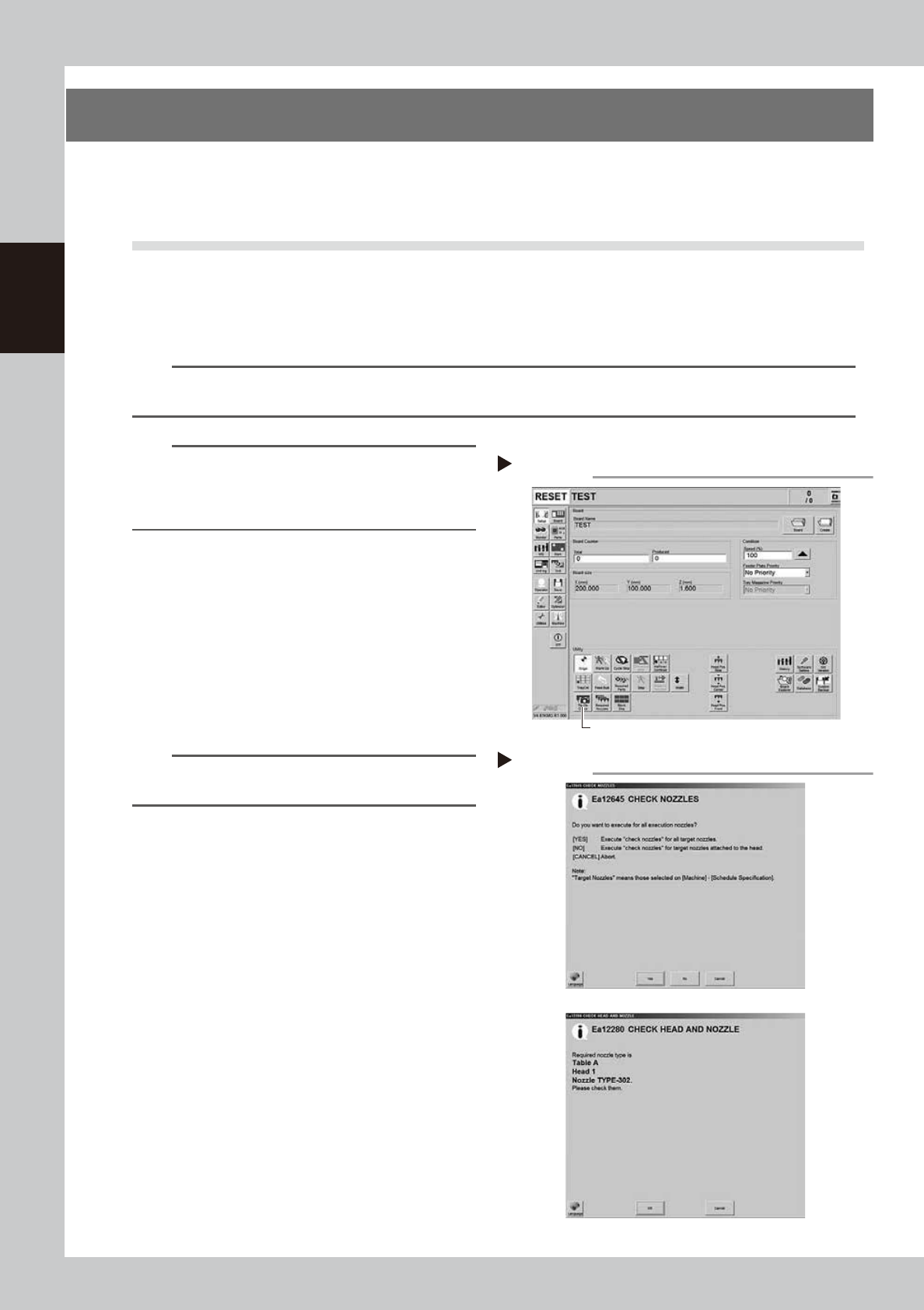
1. Press the [Required Nozzles] button on
the [Setup] screen to check the nozzle to
be used for the production.
2. Press the emergency stop button to open
the machine safety cover.
3. Attach the nozzle to be used for the
production to the head.
n
NOTE
If the machine is equipped with the nozzle station, skip
Step 1.
2
Press the [Tip Cln Check] button.
Press the [Tip Cln Check] button on the
[Setup] screen.
54200-KMG-00
3
Select the item to be executed.
After checking the displayed message,
select the desired button.
n
When [Yes] was selected
Performs auto nozzle change and checks all relevant
nozzles.
n
When [No] was selected
Checks relevant nozzles of all nozzles currently
attached to the head.
54201-KMG-00
4
Check the message.
Check the message after the nozzle
cleanness check. If the result is not OK,
clean the nozzle referring to chapter 3, "1.2
Nozzle cleaning".
Pressing the [Tip Cln Check] button
Step 2
[Tip Cln Check] button
Selecting the item to be executed
Step 3
When [No] was selected
2-3
2
Daily maintenance items
n
How to check for clogged nozzles (on the [Unit] - [Head] tab screen)
The term "clogged nozzle" used here indicates that material such as solder is adhering to the nozzle hole, causing a rise
in negative pressure even if no component is being picked up by the nozzle. This state might cause problems such as
component mounting errors. Check for clogged nozzles with the following procedure using the Type 302A as an example.
n
NOTE
When checking other nozzles and their vacuum levels, see the next section "1.1.1 Vacuum level when nozzle is
open"in this chapter.
e
1
Replace the nozzle.
n
Without nozzle station
1. Press the emergency stop button to open
the machine safety cover.
2. Attach Type 302A nozzles to all the
heads.
n
With nozzle station
Press the [Nozzle Change] button to attach
Type 302A nozzles to all the heads.
54202-KMG-00
2
Reset the numerical value.
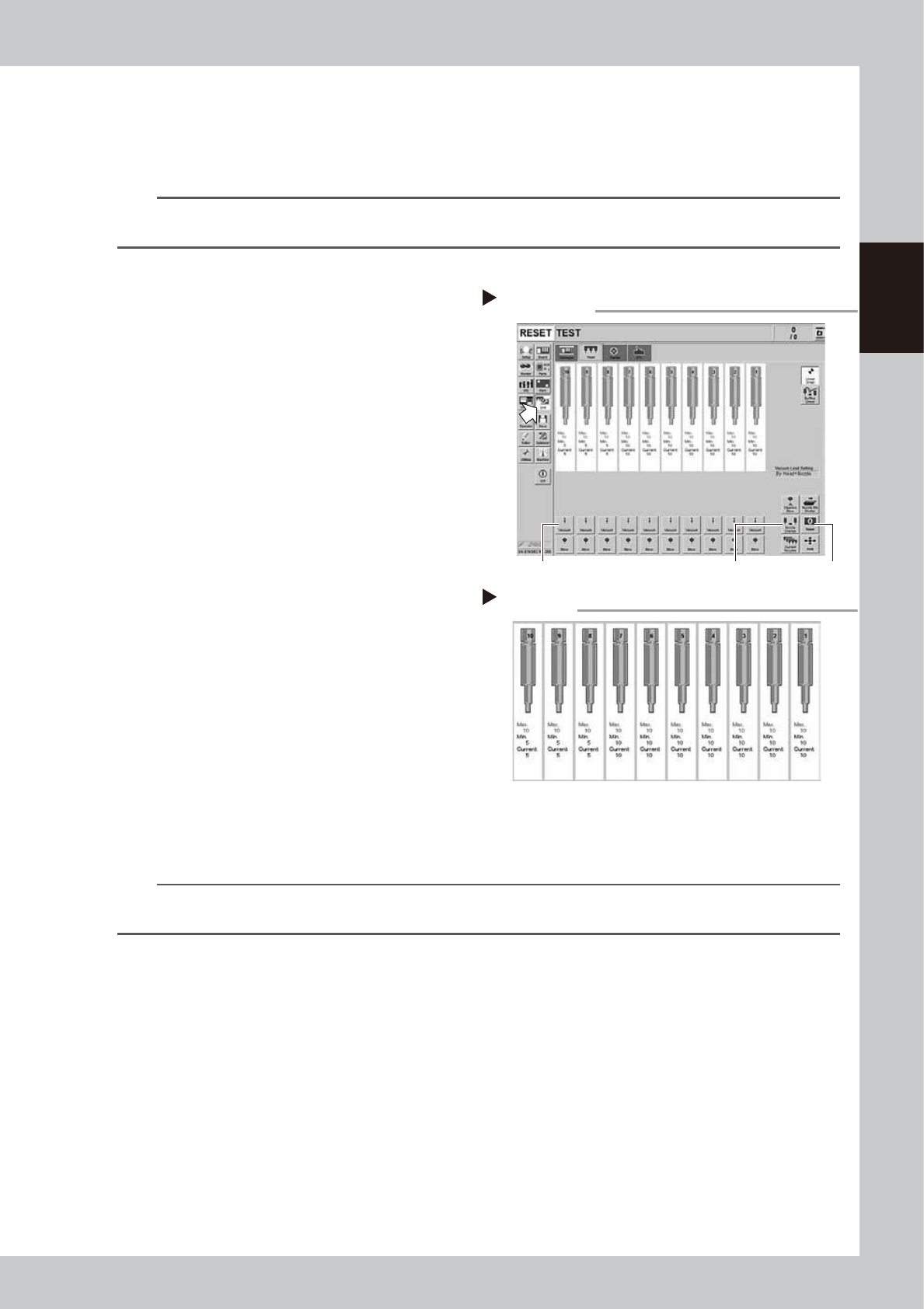
Open the [Unit] - [Head] tab screen. Then
press the [Reset] button on the lower right of
the screen to reset the vacuum level values.
3
Generate negative pressure.
On the [Unit] - [Head] tab screen, set the
[Vacuum] buttons for all heads to ON. When
this value starts rising, wait 5 to 10 seconds
and set to OFF.
4
Check the vacuum levels.
Change the all "Max" values shown in red on
the [Head] tab screen. When using Type 302
nozzle and this value is 60 to 110, it is in the
normal range. If higher than 110, the nozzle
hole might be dirty. Clean the nozzle while
referring to "1.2 Nozzle cleaning"in Chapter
3.
54203-KMG-00
n
NOTE
If a correct value cannot be obtained by performing steps 1 to 4 after cleaning the nozzle, the inside of the spline
shaft might be not clean. See chapter 3, "5.1.1 Cleaning the spline shaft"to clean it.
Negative pressure generation
Step 1 to 3
[Nozzle Change] button
[Vacuum] button [Reset] button
Negative pressure check
Step 4
2-4
2
Daily maintenance items
1.1.1 Vacuum level when nozzle is open
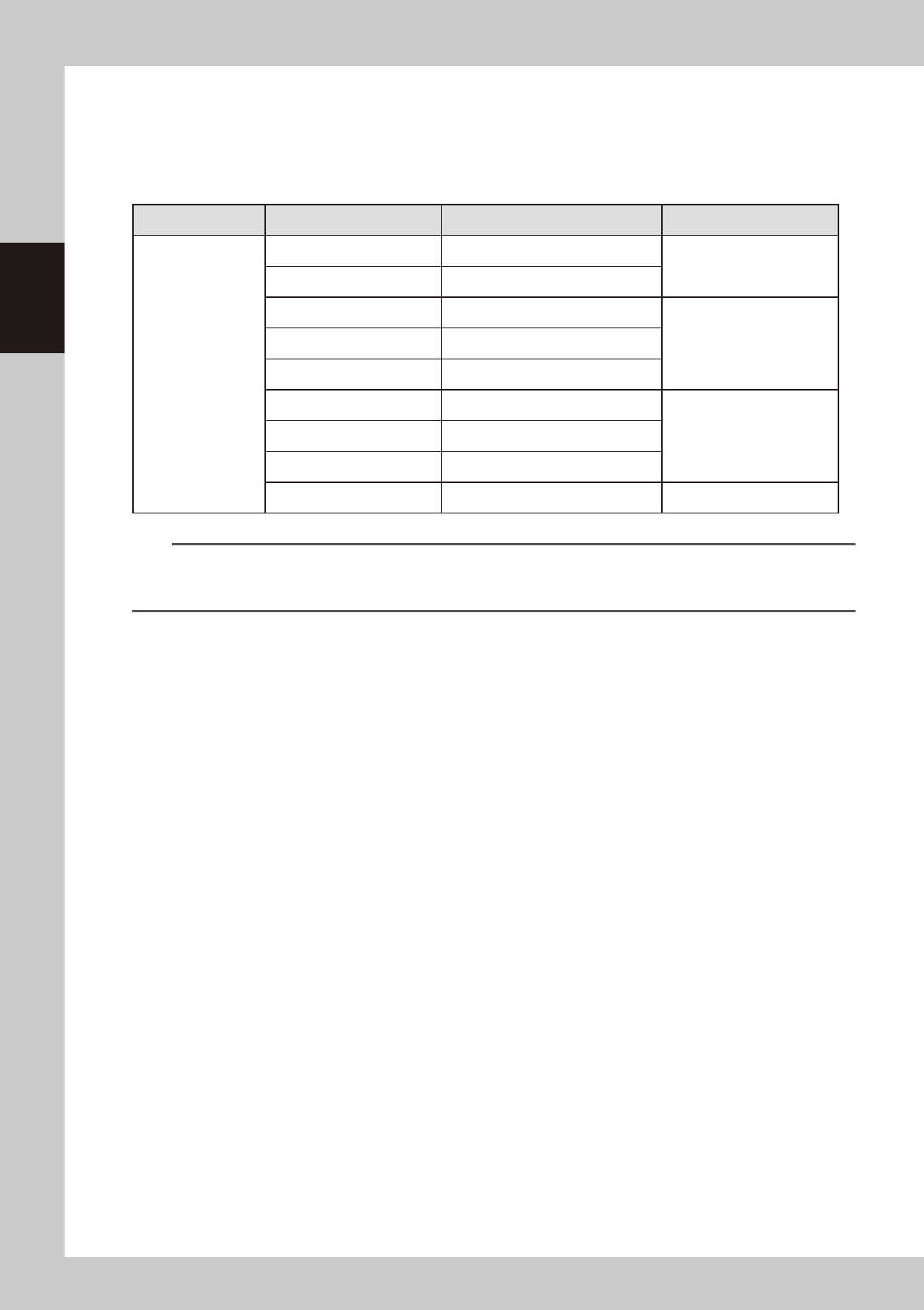
The table below shows the vacuum level measured when each nozzle is open.
The values might differ slightly depending on the air source and operating conditions. Use these values for
reference during maintenance.
n
Standard vacuum level when nozzle is open
Head Type Nozzle Standard value when nozzle is open Remarks
Common to HM /
HM5 head units
Type301A 150 to 190
Standard nozzle
Type302A 60 to 110
Type311A 150 to 190
Narrow-pitch nozzleType312A 130 to 180
Type313A 40 to 80
Type303A/Type314A* 40 to 80
Standard and Narrow-pitch
common nozzle
Type304A/Type315A* 30 to 60
Type307A/Type318A* 30 to 60
No nozzle 30 to 60
n
NOTE
The nozzle holes of the nozzles marked with an asterisk are larger than those of other nozzles. If a nozzle marked with
an asterisk exceeds its standard value shown above, the air path in the head (spline shaft, etc.) may be
contaminated.