IFS-NX_SPE_EN.pdf - 第15页
IFS - NX P rodu ct S pecificat ions 11 Overview of th e soft ware List of funct ions Function Required license Standard fun ctions Parts Ver i ficati on Changing th e setting of the Parts Verific ation software Function …
IFS-NX Product Specifications
10
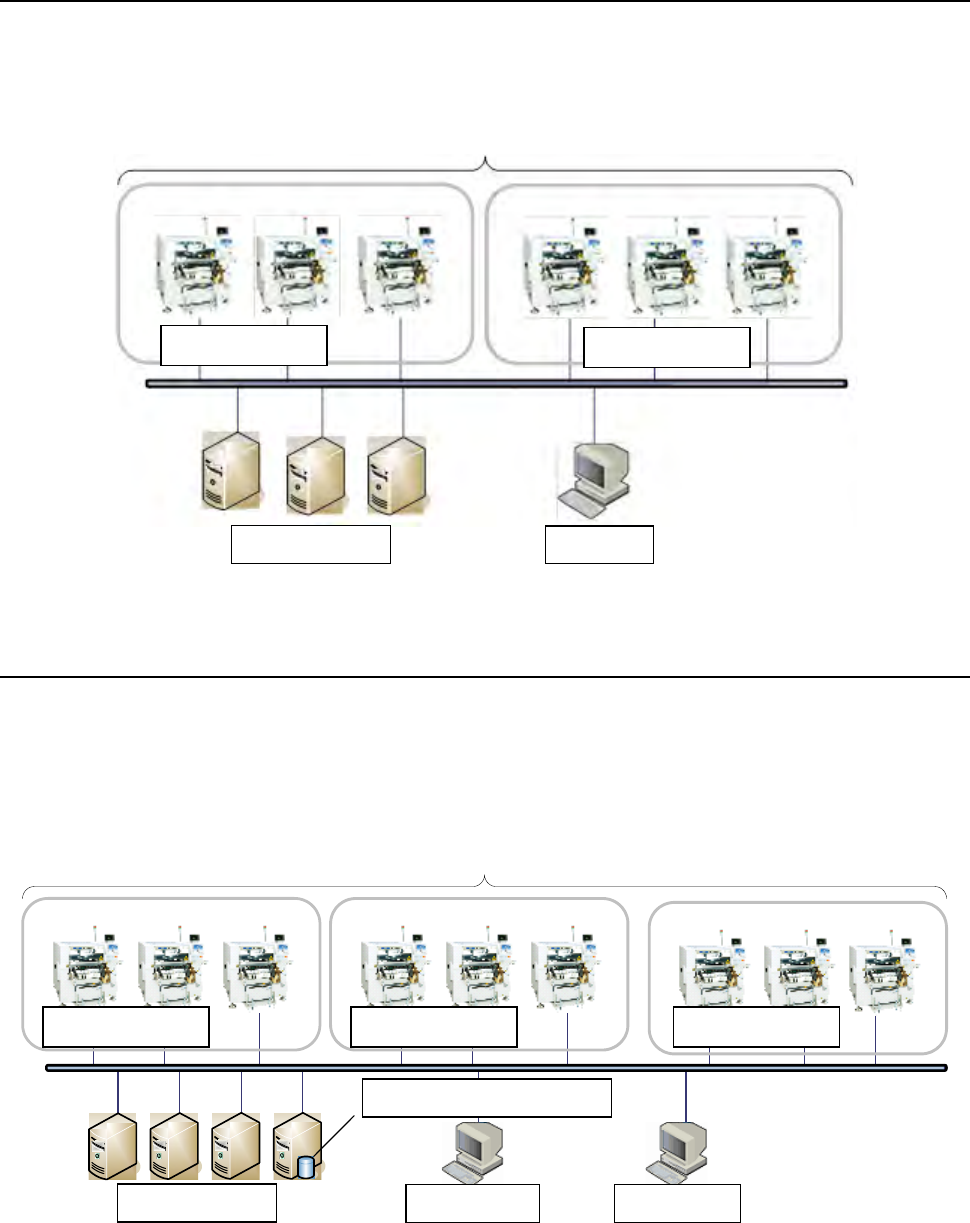
4-4-3 Second medium-scale configuration (number of connected machines: 26 to 35)
When you operate the second medium-scale system to which 26 to 35 machines are connected, three
IFS servers are required.
* The maximum number of machines that can be connected to the system is 35.
Figure 4-4-3-1 IFS system configuration example (medium-scale)
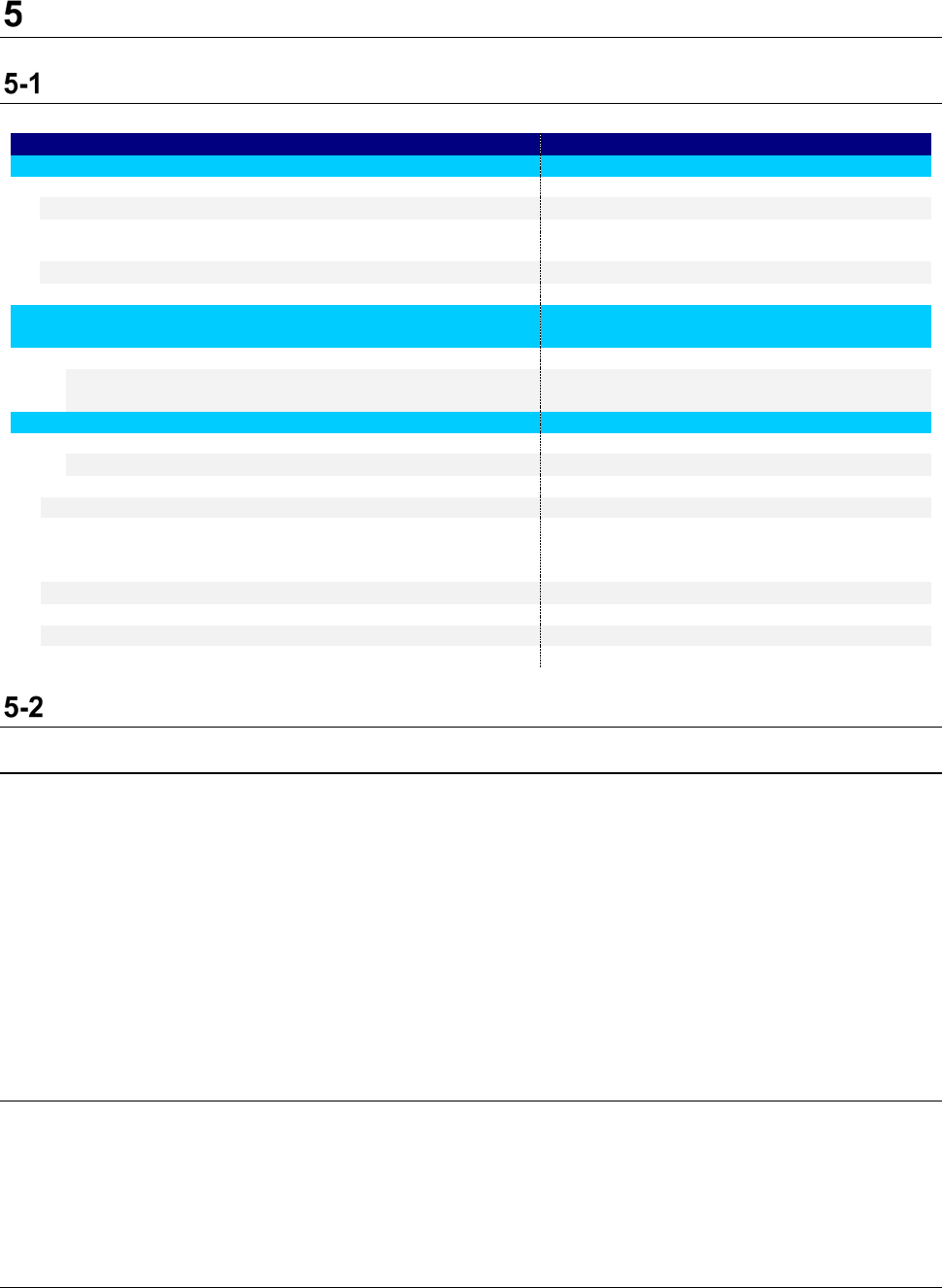
4-4-4 Large-scale configuration (number of the connected machines: 36 to 70)
When you operate a large-scale system to which 36 to 70 machines are connected, four IFS servers
are required. A large-scale configuration system requires the priced DB2 license.
* The maximum number of machines that can be connected to the system is 70.
* The DB2 priced option license is necessary for 1 unit. See 6-1 Sever PC Specification for the
details.
DB 2 LUVS
Figure 4-4-4-1 IFS system configuration example (large-scale)
IFS client
IFS client
DB2 priced option license
UP to 35 machines
Production line 1
Production line 2
IFS server
IFS client
UP to 70 machines
Production line 1
Production line 2
IFS server
Production line 3
IFS-NX Product Specifications
11
Overview of the software
List of functions
Function
Required license
Standard functions
Parts Verification
Changing the setting of the Parts Verification software
Function for displaying an incorrect feeder attachment
position on the screen (for a machine)
Component inventory control/Feeder location search
Random feeder setup
Extended functions (The license is not required for one machine
but is required for two or more machines.)
Job setup function
Job setup license
Function for displaying an incorrect feeder attachment
position on the screen (for a Client PC)
Job setup license
Extended functions (The licenses are required for all machines.)
Traceability
Traceability license
Reading a circuit barcode
Traceability license
MSD control
MSD control license
Management of feeder maintenance history
Feeder maintenance license
Connection of a general-purpose printer
- Machine license for a general-purpose printer
- Traceability license for a general-purpose
printer
Connection to a system conforming to IPC-CFX
License for adding the CFX output function
Kitting Control
Kitting Control license
Linkage with the ISM tower
License for connecting to ISM
Storage function
Storage license
Description of software function
5-2-1 Parts Verification
This is a function for preventing a defective PWB from being produced due to placement of a
component at a wrong position.
At production setup, when components run out or when tapes are spliced, an operator is supposed to
verify components to be placed on a board, and only if he/she decides that they are appropriate, the
system starts a new PWB production or continues the suspended production.
If component verification is not performed yet, production is stopped with the interlock function.
There are three kinds of methods, a barcode, an RFID, and CAN, to verify components. Moreover, they
can be used even when a barcode and RFID or a barcode and CAN are intermingled with each other in
the same machine or same bank. A CAN and RFID can be intermingled with each other only when the
electric bank is used for the CAN and MTC/MTS is used for the RFID. The RFID and CAN cannot be
intermingled with each other in the same bank.
5-2-2 Changing the setting of the Parts Verification software
If you want to exclude a particular component from the target components that are to be verified with
the Parts Verification software, you can change the setting of the Parts Verification software on the
operation panel of the mounter.
You can set the target to be verified with the Parts Verification software among a component, a bank, a
feeder type and MTC/MTS.
5-2-3 Component inventory control/Feeder location search
By registering each component when it is put in storage, you can search the component location and
the number of remaining components by serial number. This function leads rationalization of inventory
control and inventory clearance.
IFS-NX Product Specifications
12
5-2-4 Random feeder setup
This is a function for a user to place a feeder at arbitrary position and enable production.
Even when the feeder is placed at any position during an initial setup, a machine acquires the feeder
arrangement situation and updates the pick data of the production program.
5-2-5 Job setup
This software allows you to check components and their positions at offline setup with a feeder
exchange trolley before production starts to improve the production efficiency.
5-2-6 Function for displaying an incorrect feeder attachment position on the screen
When a feeder has been wrongly attached, the original correct position to place it is displayed on the
screen.
5-2-7 Splicing function
An RF feeder can use a splicing sensor to detect a spliced point on a tape. The splicing sensor is
optional. When any splicing sensor is not used, the system detects a spliced point with the specified
number of successive empty pockets.
5-2-8 Traceability (Option)
This is a function that records the serial number and lot number of the components placed on each
PWB and enables tracking of them.
A PWB code or a circuit code is read, and then preserved in the database of the IFS server as
traceability information.
This preserved information can be browsed and exported with the Reporting through a terminal that
can access to the server.
5-2-9 Reading a circuit barcode (Option)
A circuit barcode (circuit code) is a barcode or 2D code that has been stuck on each circuit of a
multi-place matrix PWB or multi-place non-matrix PWB. The traceability information can be
accumulated for every circuit by reading this circuit code and doing a production.
5-2-10 MSD (Moisture Sensitive Device) control (Option)
It is possible to prohibit the use of out-of-date MSD components according to the setting off the IS
server. This prevents the unauthorized use of out-of-date components.
5-2-11 Management of feeder maintenance history (Option)
This software controls the maintenance schedule of devices such as a feeder and a trolley, and issues
the corresponding warning.
5-2-12 Connection to a general-purpose printer (Option)
This software provides the system with the following functions: connection to a general-purpose
printer, obtaining of the production result of a general-purpose printer, and output of the result to
Reporting as the traceability information.
5-2-13 Connection to a system conforming to IPC-CFX (Option)
This software allows the IFS system to participate in a system (such as JaNets) that outputs data
externally according to IPC Connected Factory Exchange (IPC-CFX) standard.