PC200_Manual_REV_G-1.pdf - 第6页
PC200 PVA Revis ion G (201 9) 6 of 56 Safety Certain warning symbols ar e affixed to the machine an d co rrespond to notations in this manual. Before operating the system, identify these warning labels and read th e noti…
PC200
PVA
Revision G (2019)
5 of 56
1. Introduction
Before you operate this system, read the operation and setup manual. This will help you
to become familiar with the product and ensure successful operation.
If any questions or problems arise, contact PVA’s Customer Service Department for
support.
PVA Contact Information
Main Office
Technical Support
PVA
Six Corporate Drive
Halfmoon, NY 12065
Tel +1-518-371-2684
Fax +1-518-371-2688
Website http://www.pva.net
Email info@pva.net
Tel +1-518-371-2684
Email cs@pva.net
Document History
Revision
Revision Date
Reason for Changes
Revision G
March 2019
Part Number Updated
Revision F
February 2016
Initial Release of New Template
NOTE: All photographs and CAD model representations in this document are a
“general representation” of the valve and its components. The actual
appearance of the valve and its components can differ based upon customer
specific configuration.
PC200
PVA
Revision G (2019)
6 of 56
Safety
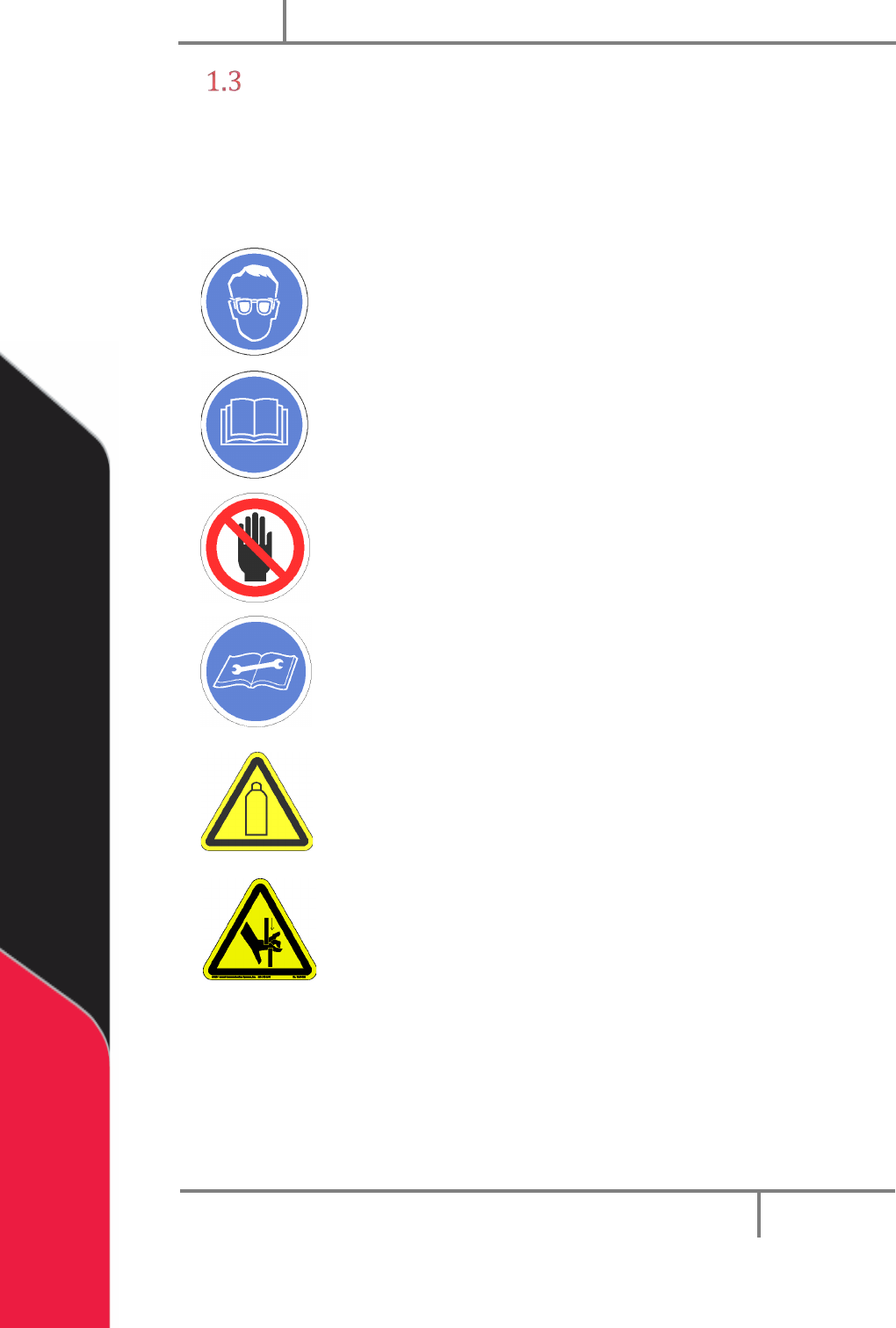
Certain warning symbols are affixed to the machine and correspond to notations in this
manual. Before operating the system, identify these warning labels and read the
notices described below. Not all labels may be used on any specific system.
Always wear approved safety glasses when you operate or
work near the workcell.
Before you operate the system, read and understand the
manuals provided with the unit.
Never put hands or tools in areas with this symbol when the
machine is in operation. A dangerous condition may exist.
Read and understand the manuals provided with the unit
before any repairs or maintenance is done. Only a qualified
individual should do service.
Use caution when there are pressurized vessels. Find and
repair any leaks immediately. Always wear appropriate safety
equipment when you work with pressurized vessels or vessels
that contain chemicals.
Shear hazard from moving parts. Avoid contact.
PC200
PVA
Revision G (2019)
7 of 56
Theory of Operation
The PC200 is a rear closing, two component dispensing valve. Applications include
potting, bead placement, and gaskets where a low to medium flow rate is required. This
valve has adjustable snuff back to prevent drips or strings at the end of the static mixer.
Part A and part B materials flow into the valve separately and out of the valve separately
into a disposable static mixer. It is not necessary to disassemble and clean the valve at
the end of each day. The PC200 has a divorced design made of two major sections: the
air section and the fluid section
Air Section
The air section is an aluminum body with a simple piston/cylinder combination used to
open and close the valve. The stroke adjustment screw in the upper air body controls
how far the piston and rod assembly can retract and controls snuff back.
Fluid Section
The fluid section is available in two materials:
• Stainless steel
• Aluminum (decreased weight for handheld applications)
The fluid section includes two rods with lip seals on each side of the valve to control
fluid flow of part A and part B. Fluid dispenses as the rods move to the forward position
past the lip seals. When the rods retract back into the lip seals the fluid flow stops and
creates a snuff back action on the fluid.
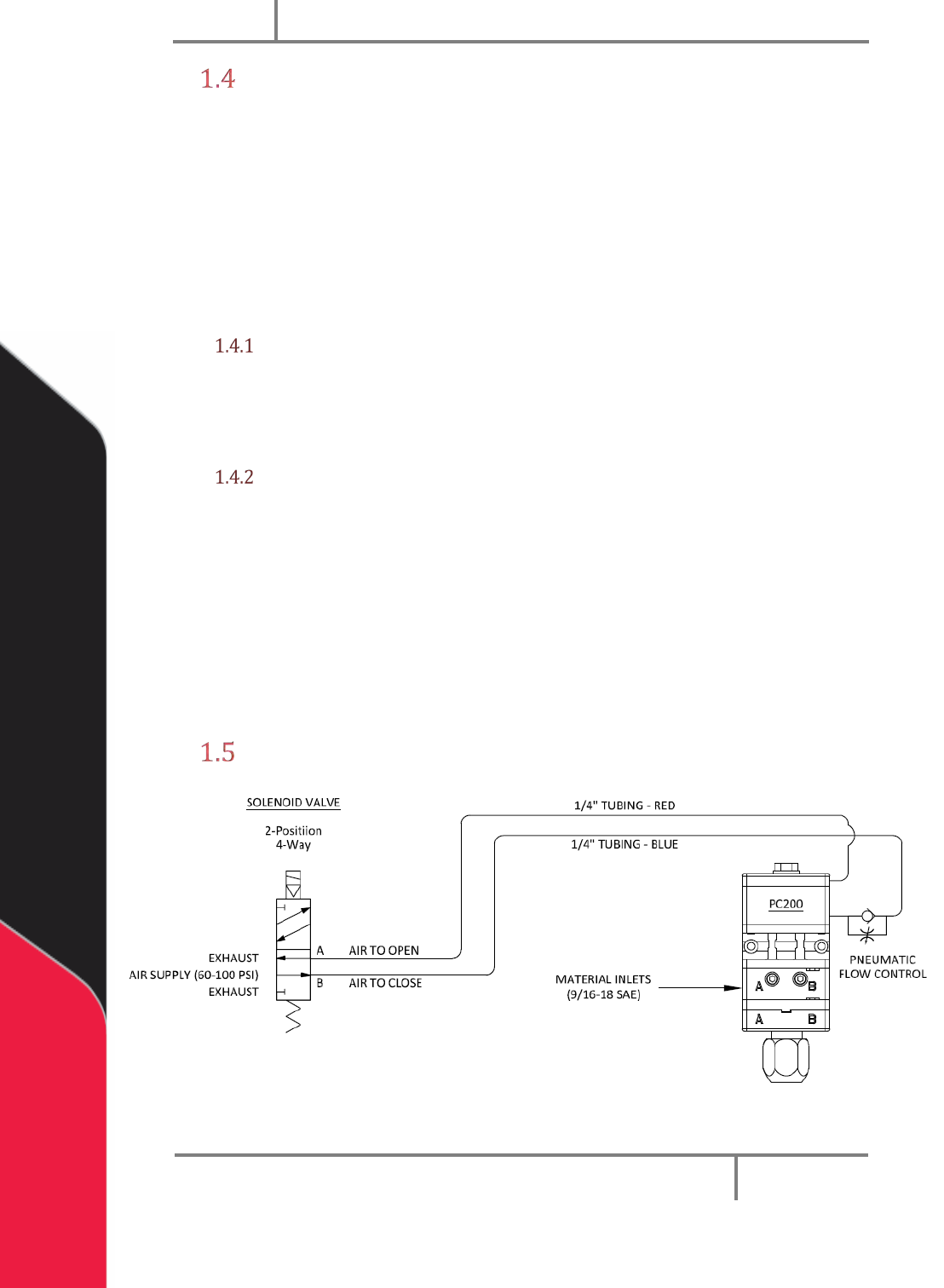
Pneumatic Schematic
Figure 1: General PC200 Pneumatic Schematic