00197295-01_UM_D4i_SR605_EN.pdf - 第203页
User manual SIPLACE D4i 5 Tasks for the operating personnel From software version SR.605.03 SP2 10/2012 EN edition 5.6 Setting up the feeder modules 203 5.6 Setting up the feeder modules 5 Fig. 5.6 - 1 Component table wi…
5 Tasks for the operating personnel User manual SIPLACE D4i
5.5 Carrying out a walk-through inspection From software version SR.605.03 SP2 10/2012 EN edition
202
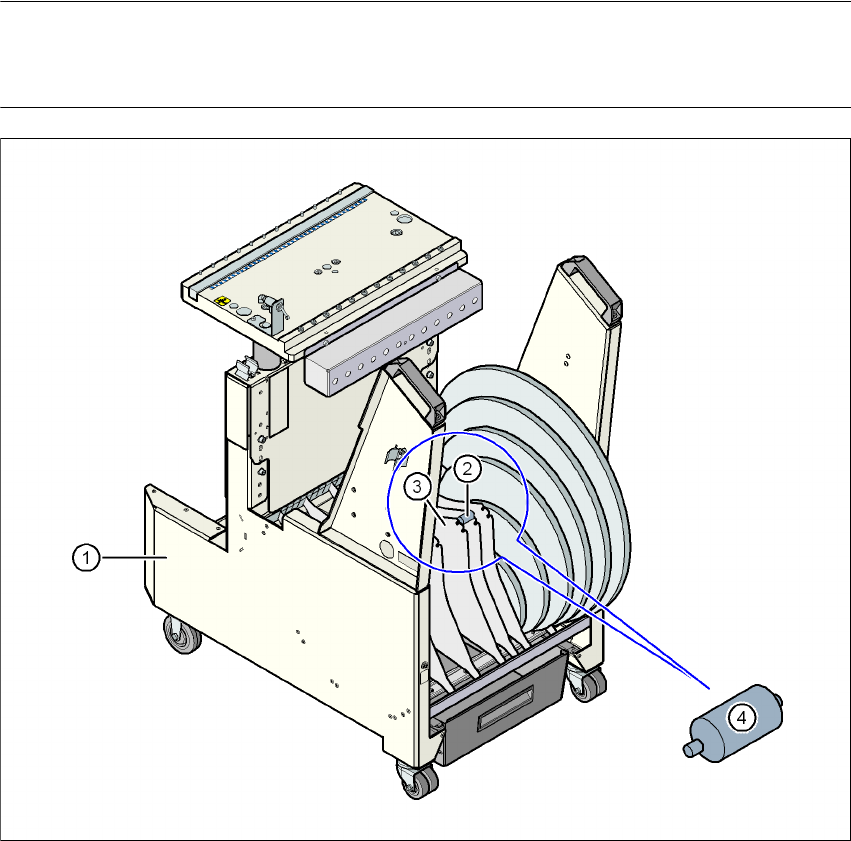
5.5.5 Using spindles for large tape reels
→ Insert spindles into the separating plates when using large tape reels.
PLEASE NOTE 5
We recommend that you use spindles if the tape reel diameter exceeds 15" (381 mm). This will
ensure that the feeder modules operate reliably.
5
Fig. 5.5 - 3 Inserting spindles for large reels
5
(1) Component trolley
(2) Position of the spindles
(3) Separating plate
(4) Spindle (enlarged)
User manual SIPLACE D4i 5 Tasks for the operating personnel
From software version SR.605.03 SP2 10/2012 EN edition 5.6 Setting up the feeder modules
203
5.6 Setting up the feeder modules
5
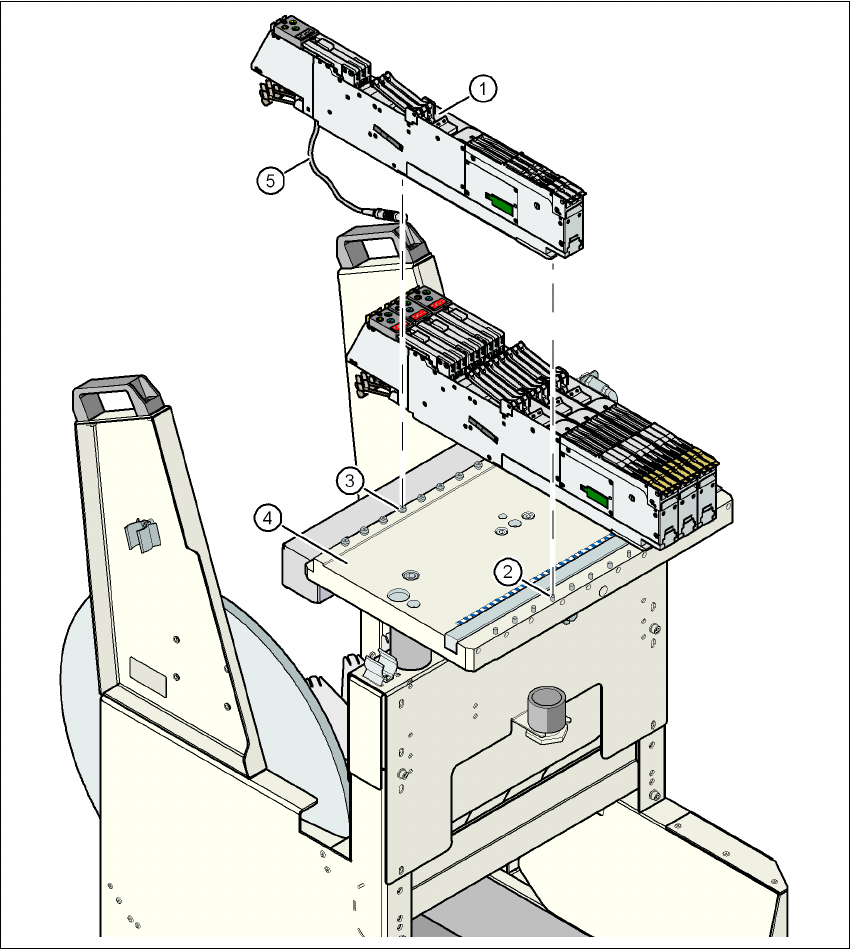
Fig. 5.6 - 1 Component table with 12 locations for S feeder modules
(1) S feeder module
(2) Centering pin
(3) Centering ball
(4) Component table
(5) Connecting cable for the S feeder module
5 Tasks for the operating personnel User manual SIPLACE D4i
5.6 Setting up the feeder modules From software version SR.605.03 SP2 10/2012 EN edition
204
5.6.1 Preparing the component table and S feeder modules
for set-up
→ Clean the contact surface for the feeder module.
→ Clean the contact surface on the component table.
→ Remove loose components from the component table with a brush or use a vacuum cleaner
with appropriate nozzle.
→ Remove any firmly attached components with the screwdriver.
CAUTION 5
Avoid removing components from the component table with your fingers. You may hurt your-
self with tiny splinters of metal.
5.6.2 Inserting S feeder modules
→ First place the front of the feeder module (item 1 in Fig. 5.6 - 1, page 203), i.e. the side with
the slotted foot, onto the component table (item 4 in Fig. 5.6 - 1
, page 203), so that the cen-
tering pin (item 2 in Fig. 5.6 - 1
, page 203) on the component table slides into the slot in the
feeder module foot.
→ Then lower the back of the feeder module until the centering ball (item 3 in Fig. 5.6 - 1
, page
203
) disappears completely into the hole in the feeder module.
→ Make sure that the feeder modules are placed correctly on the component table to suit their
width (see Fig. 5.6 - 2
, page 205).
→ Check that the feeder module is firmly seated on the component table by tapping the side of
the feeder module with your finger. You should not be able to move it.
→ Connect the feeder module plug (item 5 in Fig. 5.6 - 1
, page 203) to the socket beneath the
location. The red dot on the plug must point towards the red dot on the socket.
PLEASE NOTE 5
When you connect the feeder module, make sure that you use the right socket for the location
since the feeder module receives the control pulse via this socket. The feeder module may
not work correctly if it is not connected to the right socket. The user manual for the feeder
modules used will contain detailed information on the assignment of plugs to sockets.