Workcell-Installation-Guidelines-Troubleshooting-Maintenance-REV-F.pdf - 第9页
Workcell Installation and General Guidelines Revision F / Janu ary 2021 Page 9 of 59 System Description This manual ap plies to the foll owing Pr ecision Valve & Auto mation, Inc. workcells: PVA350™ PVA6000™ PVA650™ …
Workcell Installation and General Guidelines
Revision F / January 2021
Page 8 of 59
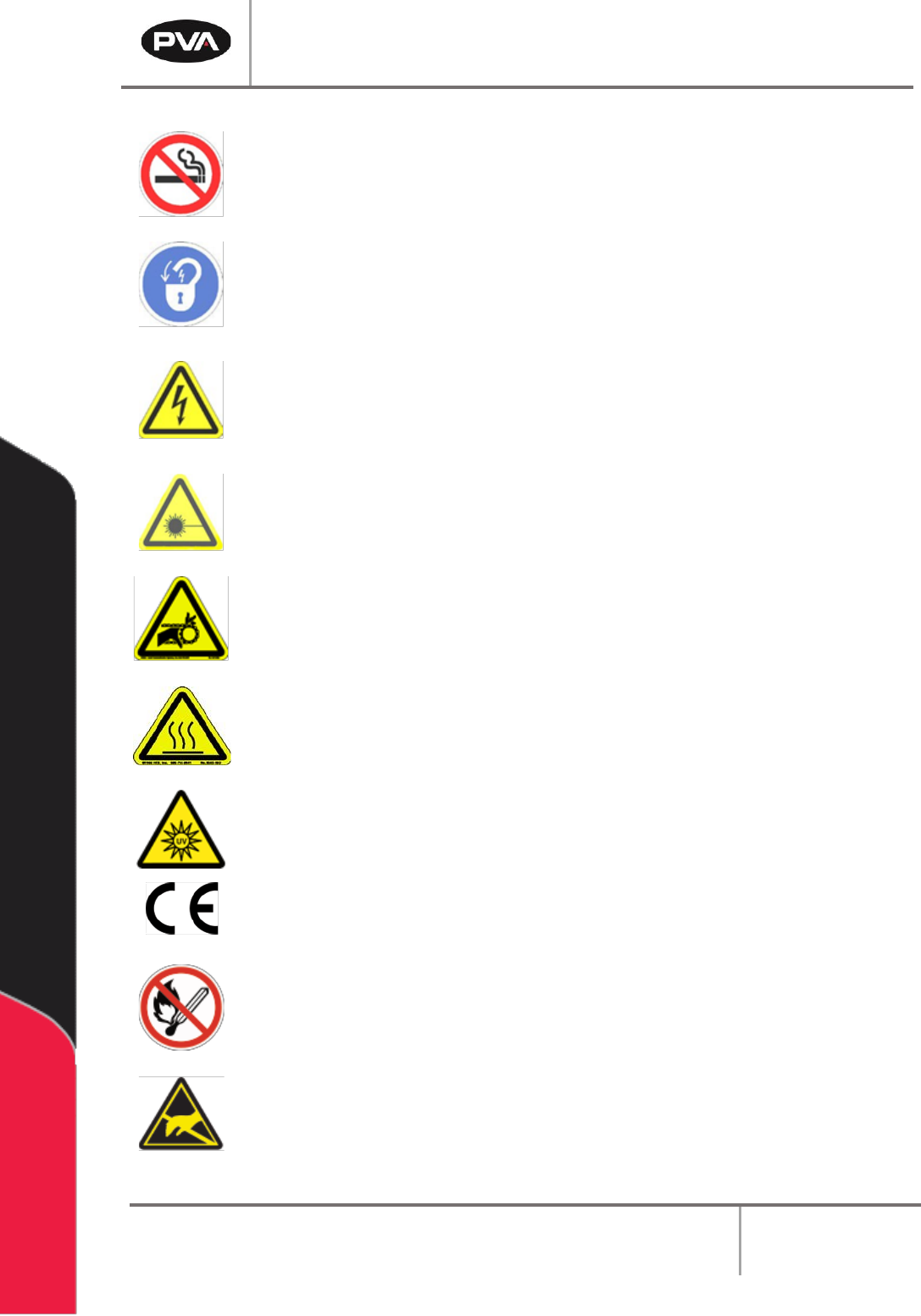
Do not smoke near the PVA UV cure machine. Always have a fire
extinguisher available for emergency use.
Before performing any repairs or maintenance to the system, turn off power
and lock out the power disconnect switch.
Warning notices are used to emphasize that hazardous voltages, current,
temperatures, or other conditions that could cause personal injury exist in
this equipment or may be associated with its use. Only qualified personnel
should enter areas designated with this symbol.
Laser light source present. Do not stare directly into the beam. Do not use in
the presence of highly reflective surfaces
Pinch hazard from moving parts. Avoid contact.
Hot surface. Avoid contact.
Warning, Ultraviolet (UV) light hazard. Do not look directly at the UV light
source.
This product meets EU standards for health, safety, and environmental
protection.
Warning, no open flames.
Electrostatic sensitive device warning. Observe precautions for handling.
Workcell Installation and General Guidelines
Revision F / January 2021
Page 9 of 59
System Description
This manual applies to the following Precision Valve & Automation, Inc. workcells:
PVA350™
PVA6000™
PVA650™
Delta 6
PVA2000™
Delta 8
PVA3000™
The valves are mounted to the end effector of a two, three, or four axis Cartesian robot. All
dispensing is done in the work area enclosed with safety glass or polycarbonate. The axes
have limits to prevent damage to the machine. The dispense path and active heads are
controlled by a program stored in the motion controller. The motion controller can save up
to 30 programs at one time.
The operator controls the workcell with PVA Portal software. This includes machine setup,
manual operation, program selection, and automatic operation. Machine status and error
messages are shown in the program window and the light tower. The operator(s) must
have read this manual, or have been trained and understand the operation of the machine.
Any uses that are not approved could result in dangerous conditions that the safety
features on the system cannot prevent.
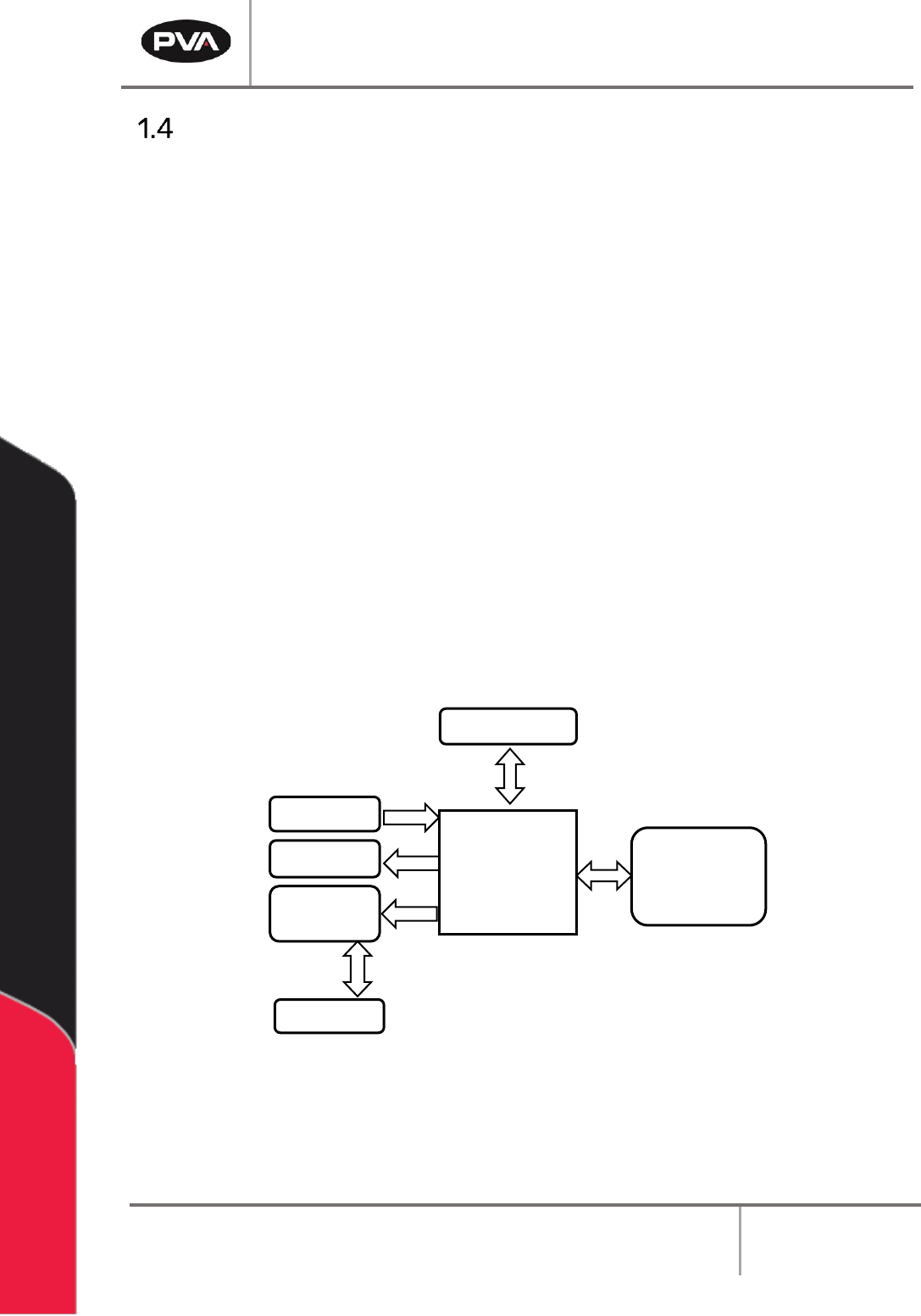
Figure 1: Workcell Functional Block Diagram
MOTION
CONTROLLER
X-Y-Z-W
ELECTRO-
MECHANICAL
COMPONENTS
PC INTERFACE
SENSORS
ACTUATORS
CONVEYOR
CONTROL
CONVEYOR

Workcell Installation and General Guidelines
Revision F / January 2021
Page 10 of 59
Personal Protective Equipment
Workcell operation includes air pressure, electrical power, mechanical devices, and the use
of hazardous materials. Only qualified personnel can operate and service workcells.
Operators must use eye protection because material contents are under pressure. Always
wear gloves when handling materials and solvents. Refer to MSDS sheets on the material
that is used for other precautions.
Notices and Warnings
• You must wear safety glasses, gloves, and long sleeves.
• Lock-out and tag the air and power supplies before you service or clean the workcell
• Release the pressure before any hose (air or fluid) is removed
• All hoses must have the correct pressure rating
• Use only replacement parts recommended or supplied by the manufacturer
• Stay away from all parts that move when the system is in operation
Best Practices
• Do not wear loose clothes or jewelry when you operate the workcell
• Do not touch the dispense head while it is moving
• Make sure cables and pneumatics hoses are attached and do not cross walkways
• Immediately engage the Emergency Stop button if personnel is in danger
• Locate and define all safety labels on and around the workcell before you turn the
machine “On”
• There must be two people during maintenance procedures
• Dispose of all used parts and materials in accordance with local laws and
regulations
Safety is a joint responsibility between the OEM and the end-user. All precautions and
practices should be in accordance with local regulations.
Do Not: Use incompatible tools, remove door interlocks or bypass safety devices,
make custom mechanics or fluid delivery modification or change material from the
original design.